REVIEW · NEW DELHI
Delhi Agra Overnight
Book on Viator →Operated by Agra Voyage · Bookable on Viator
One early-morning alarm turns into real magic. This Delhi–Agra overnight trip is built for travelers who want the big sights without feeling rushed, with an organized flow, air-conditioned pickup/drop, and time your eyes can actually enjoy. I love that the schedule covers the most famous monuments plus the photo-friendly spots like Mehtab Bagh for Taj views from the back side. I also like that you get an early Taj Mahal start, because that’s when the building looks its best and you can breathe before the crowds roll in. One thing to consider: the drive is long, and the sunrise timing means you’ll want to be ready for an early start the next day.
On Day 1, the day feels like a guided story of Mughal power and craftsmanship, moving from Agra Fort to the “baby Taj” marble work and then toward sunset scenery. On Day 2, the focus stays on Taj Mahal, including time connected to the monument’s decorative craft, before you head to Fatehpur Sikri and return to Delhi. The main drawback is that some inclusions can depend on the options you choose, so double-check whether monument fees and hotel are included in your selected package.
In This Review
- Key Points to Know Before You Go
- Two Days, One Goal: See the Taj Mahal Without the Panic
- Day 1 in Agra: Agra Fort, Baby Taj, and Sunset Photos at Mehtab Bagh
- Agra Fort: Mughal Power in Red Sandstone
- Itmad-ud-Daula (Baby Taj): Marble Inlay and Fine Detail
- Mehtab Bagh: The Backside Taj Moment at Sunset
- Overnight in Agra
- Day 2: Sunrise Taj Mahal, Work Demonstration, Then Fatehpur Sikri
- Taj Mahal at Sunrise: Your Best Shot for Calm and Clarity
- Taj Mahal Work Demonstration: Seeing How the Beauty Is Built
- Fatehpur Sikri: The Ghost City of Akbar’s Capital
- Price and Logistics: How This Tour Adds Value at a Low Price
- What the Tour Feels Like: Guided, Efficient, and Built for First Timers
- Who Should Book This Delhi–Agra Overnight Trip
- Should You Book This Tour?
- FAQ
- FAQ
- How long is the drive from Delhi to Agra?
- Is pickup and drop-off included?
- What monuments and places does the tour cover?
- Are entrance tickets included?
- Is breakfast included?
- Is there a hotel included?
- Is water provided during the tour?
- Is this tour private or shared?
- What’s the cancellation policy?
Key Points to Know Before You Go
- Sunrise Taj Mahal helps you see the monument at its calmest, not in peak-day chaos
- Mehtab Bagh sunset views give you a second angle of Taj Mahal for photos and atmosphere
- Agra Fort + Itmad-ud-Daula adds variety beyond the Taj, especially marble details
- Private group experience means you’re not stuck waiting on strangers
- Air-conditioned pickup and drop keeps the long Delhi–Agra transfers manageable
Two Days, One Goal: See the Taj Mahal Without the Panic
If Taj Mahal is on your bucket list, this kind of overnight plan is the smart way to do it. A same-day run can work, but it’s usually rushed and exhausting. Here, you trade speed for breathing room: you drive to Agra, check in, see the key sights at a comfortable pace, sleep, then return to Taj Mahal early the next morning.
You’ll spend your time on the places that change your perspective. The Taj isn’t just a photo. You start to understand why people describe it as emotional: the scale is hard to process at first, and then the details pull you in. This itinerary supports that shift because it doesn’t cram everything into one day and then throw you back into the bus.
The tour also seems designed around a practical reality: you’re traveling from Delhi. The pickup and drop by air-conditioned vehicle matters here. You’re not just moving between cities—you’re moving between mornings, heat, and schedules, and comfort helps you keep your energy for the sights.
One more value point: you get unlimited water. In North India’s sun, that’s not a luxury; it’s basic survival gear.
You can also read our reviews of more tours and experiences in New Delhi.



Day 1 in Agra: Agra Fort, Baby Taj, and Sunset Photos at Mehtab Bagh
Agra Fort: Mughal Power in Red Sandstone
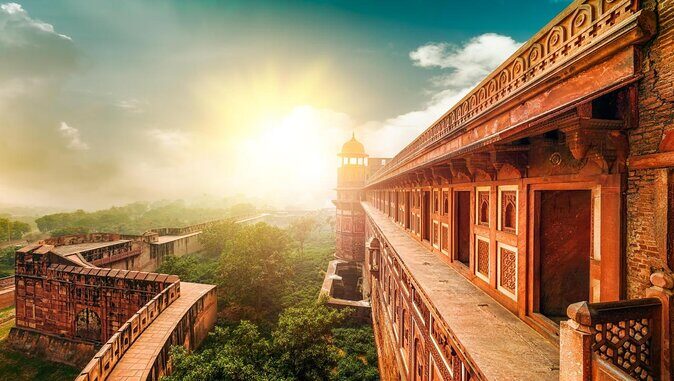
Agra Fort is your first stop, and it sets the tone. This fort was built by Mughal Emperor Akbar, and the red sandstone is a huge part of its look. You’ll spend about 1 hour here, including admission.
What I like about this stop is the way it connects to the Taj Mahal visually. From within the fort area, you can get a view toward the Taj, which helps you place the city’s layout in your head. It’s not just history behind glass; it’s a living-feeling complex where you can walk, look out, and understand why rulers cared so much about location and defense.
Practical note: forts mean stairs and uneven walking in places. Wear shoes you trust, not sandals you hope will hold up.
Itmad-ud-Daula (Baby Taj): Marble Inlay and Fine Detail
Next comes Itmad-ud-Daula, often called the baby Taj, and for good reason. You’ll have around 1 hour here, with admission included.
This tomb is known for white marble and impressive decorative work, including pietra dura-style inlay and well-finished surface details. If you’re the type of person who gets distracted by ornamentation, this is your payoff. It’s a smaller scale than the Taj, but the craftsmanship is the main event.
If you care about how the Taj Mahal’s look is made—not just what it looks like—this stop helps you train your eyes. You start noticing patterns, borders, and the way different materials create contrast. That makes the next day’s Taj visit far more satisfying.
Mehtab Bagh: The Backside Taj Moment at Sunset
Then you head to Mehtab Bagh, and this is where the itinerary turns into “okay, now I get it” territory. The point here is simple: you go for photos and for that classic sunset angle, with views of Taj Mahal from the back side.
The tour schedule includes time for the sunset experience, and after that you can also explore art and craft in Agra. That’s a nice shift after tomb and fort sightseeing. You move from stone and geometry to local making—small objects, design, and the kind of souvenirs that feel less like mass-produced clutter.
A consideration: sunset spots can be a little crowded depending on timing. Plan on spending some time waiting for the light, not just taking one quick photo and leaving. That’s normal here.




Overnight in Agra
After day 1, you stay overnight in Agra. The package notes breakfast as included, and hotel options are available if selected (3/4/5 star). This matters because it changes how you enjoy Day 2. A real overnight stay lets you see the Taj calmly in the morning instead of doing a tired scramble that feels like a race.
Day 2: Sunrise Taj Mahal, Work Demonstration, Then Fatehpur Sikri

Taj Mahal at Sunrise: Your Best Shot for Calm and Clarity
Day 2 begins with Taj Mahal early in the morning for a sunrise view. The idea is clear: see the monument when light is soft and the crowds are lower. This is also when the Taj’s white marble looks most alive. Harsh afternoon sun can flatten it, but early morning helps everything look sharper.
You’ll spend a few hours here (the tour lists about 3 hours for the Taj Mahal segment including the work-related part). Morning timing plus guided context is a strong combo. It’s the difference between staring at a landmark and actually understanding what you’re looking at.
If you’re wondering whether sunrise is worth it, here’s my practical take: sunrise is not just for photographers. It’s for anyone who wants to feel like they’re in on a secret moment before the day gets busy. Also, yes, it means an early alarm. Think of it as paying an entrance fee to the quiet.
Taj Mahal Work Demonstration: Seeing How the Beauty Is Built
After you return for breakfast, the tour includes a demonstration related to Taj Mahal work. The details provided point to the monument’s decorative craftsmanship—so this is the part that helps you connect the visuals you saw outside with the methods behind the surface.
The best benefit here is mental. After seeing Itmad-ud-Daula’s marble work, this demonstration can make the Taj feel less mysterious. You’re not only admiring; you’re learning the logic of the design.
Fatehpur Sikri: The Ghost City of Akbar’s Capital
Next you head to Fatehpur Sikri, described as an abandoned city or ghost city built by Mughal Emperor Akbar. This site served as a Mughal capital, and the vibe of a former imperial center—now quieter and more open—can feel like stepping into a historical what-if.
The tour lists admission free for Fatehpur Sikri, which is good value if you’re tracking costs. The schedule then has your driver return you to Delhi, dropping you at your preferred hotel or the airport.
Two practical tips if you go:
- Bring a light layer even if mornings are warm. Morning temps can shift fast.
- Keep water on hand, even if the package includes unlimited water, because you may want it during longer walking stretches.
Price and Logistics: How This Tour Adds Value at a Low Price
This trip is listed at $10 per person, which is strikingly low for a two-day, overnight, intercity plan. The catch is that travel packages often look cheap at the base level and then depend on options.
Here’s what the inclusion list tells you:
- Breakfast is included.
- Pickup and drop are included by air-conditioned vehicle.
- All Monument fees are included only if the option is selected.
- Hotel (3/4/5 star) with daily breakfast is also listed as conditional on the selected option.
- Unlimited water, plus tolls, taxes, and parking, are covered.
So the real value equation is this: you’re paying for organization, transportation, and scheduled sightseeing time. If your chosen option includes the monument fees and a hotel, the value can become excellent for a short itinerary. If those options aren’t selected, you might pay separately at the sites.
My practical advice: before you book, scan the fine print for what your $10 rate includes versus what’s an optional add-on. That one minute of checking can prevent surprise expenses and make the price make sense.
Group discounts and a mobile ticket are included, and it’s also described as a private tour/activity where only your group participates. That combination usually means you get structure without getting stuck in a large crowd during every decision point.
Also, you’ll want to plan around timings. The day 1 drive is about 3 hours from Delhi, and day 2 includes early Taj time before you head back. This is not an itinerary for sleeping in.
What the Tour Feels Like: Guided, Efficient, and Built for First Timers
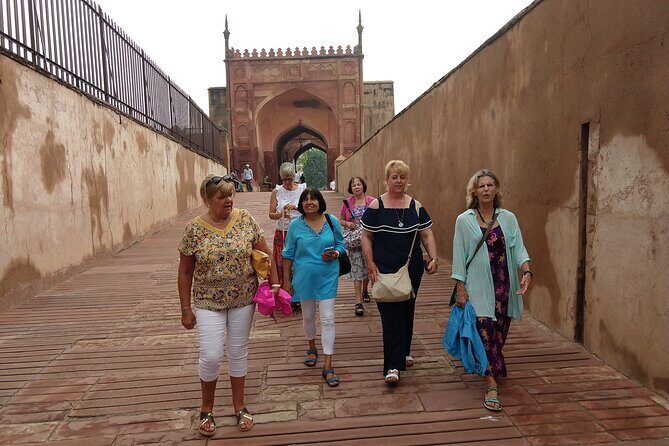
This is a good fit if you’re a first-timer to Agra and you want to see the main landmarks without turning the trip into a scavenger hunt. The stops are logically grouped:
- Day 1 builds context (fort + tomb detail + a sunset viewing angle).
- Day 2 capitalizes on Taj Mahal’s best lighting (sunrise) and adds craft understanding.
- Fatehpur Sikri rounds out the Mughal story before you head back.
The most praised part in the provided feedback is the combination of Taj Mahal and Agra Fort, plus the way the guide explains craftsmanship. Names like Sameer and Kaleem show up in customer experiences, with one highlighted for history talk and another for being friendly and helpful. You can’t guarantee a specific guide, but you can reasonably expect the operator to assign someone who can talk through what you’re seeing.
If you enjoy understanding the why behind the what, that’s where this tour gets strong.
Who Should Book This Delhi–Agra Overnight Trip
You’ll like this tour if:
- You want a two-day pace instead of a sprint.
- Taj Mahal is your top priority and you want the sunrise experience.
- You’re curious about Mughal architecture beyond the Taj’s iconic silhouette.
- You want air-conditioned transport and a guided schedule that reduces planning stress.
You might reconsider if:
- You hate early mornings and long drives.
- You want lots of free time to wander without any schedule.
- You prefer to choose your own monument tickets and timing rather than rely on a set plan.
Should You Book This Tour?
If you’re choosing between a rushed day trip and an overnight plan, I think this is the cleaner choice. The sunrise Taj Mahal setup is a big deal, and pairing it with Agra Fort and Itmad-ud-Daula means your time isn’t only spent on one building. The Mehtab Bagh sunset angle also gives you that second look at Taj Mahal that makes the whole visit feel bigger than a single stop.
I would book it if you confirm what’s included in your selected package—especially monument fees and whether the hotel is part of your rate. Once you’ve checked that, this looks like a practical, well-organized way to see the highlights with less stress.
FAQ
FAQ
How long is the drive from Delhi to Agra?
The drive from Delhi to Agra is listed as about 3 hours.
Is pickup and drop-off included?
Yes. The tour includes pickup from your hotel or the airport in Delhi, and drop-off back to your Delhi hotel or airport.
What monuments and places does the tour cover?
You’ll visit Agra Fort, Itmad-ud-Daula (Baby Taj), Mehtab Bagh, Taj Mahal, and Fatehpur Sikri.
Are entrance tickets included?
Admission is indicated as included for multiple stops (Agra Fort, Itmad-ud-Daula, Mehtab Bagh, and Taj Mahal). The package also notes that all monument fees are included if you select that option, so it’s worth double-checking your chosen add-ons.
Is breakfast included?
Yes. Breakfast is included, and the hotel option also lists daily breakfast when selected.
Is there a hotel included?
A hotel is included only if you select the hotel option (3/4/5 star). The itinerary includes an overnight stay in Agra after day 1.
Is water provided during the tour?
Yes. Unlimited water is included.
Is this tour private or shared?
It’s described as private, meaning only your group will participate.
What’s the cancellation policy?
Free cancellation is available up to 24 hours in advance for a full refund. If you cancel within 24 hours of the start time, the amount paid is not refunded.