REVIEW · AURANGABAD
Day Tour of Ajanta Caves From Aurangabad
Book on Viator →Operated by 5 Senses Walks · Bookable on Viator
Ajanta caves don’t do small impressions. This day trip gives you a focused look at India’s UNESCO rock-cut Buddhist site, with the chance to see both the older and later phases in one calm morning-to-afternoon rhythm. I especially loved the ancient murals in remarkable preservation and how the guiding makes sense of what you’re looking at, including a standout guide named Sanjay. One thing to consider: it’s a long day on the road, with about 2.5 hours each way to Ajanta.
You also get more than sightseeing. Ajanta’s caves are famous for how they explain Buddhist life through story—especially the Jataka tales—and this tour gives you enough time to connect the paintings and sculptures to the broader shift in Buddhism over centuries. Your best bet is to plan for early start energy and a bit of patience with travel time, because the payoff is worth it.
In This Review
- Key Highlights You’ll Care About on This Ajanta Caves Day Tour
- One Long Day From Aurangabad (And Why It Still Works)
- Ajanta’s Two Eras: Hinayana Caves First, Mahayana Caves Second
- Cave 1’s Guardians: Padmapani and Vajrapani at the Entrance
- Jataka Tales on Stone: Stories of the Buddha Before Enlightenment
- Tempera Paint, Mud Plaster, and Why the Colors Still Matter
- The Drive, the Timing, and How the Tour Keeps You From Rushing
- Price and Value: What $145 Buys You Here
- Who Should Book This Ajanta Caves Tour
- Should You Book This Ajanta Day Trip or Go Another Way?
- FAQ
- FAQ
- How long is the Ajanta Caves day tour from Aurangabad?
- What time does the tour start, and when is pickup?
- Is pickup included?
- Is this a private tour?
- How many hours will I spend at Ajanta?
- Is admission included?
- Do I need to print tickets?
- Is there a group discount?
- Is free cancellation available?
- Is the tour suitable for most travelers?
Key Highlights You’ll Care About on This Ajanta Caves Day Tour
- Two-phase Ajanta in one visit: Hinayana-era caves first, then the later Mahayana approach around 400 AD
- Cave 1’s famous guardian figures: Padmapani and Vajrapani flanking the shrine entrance
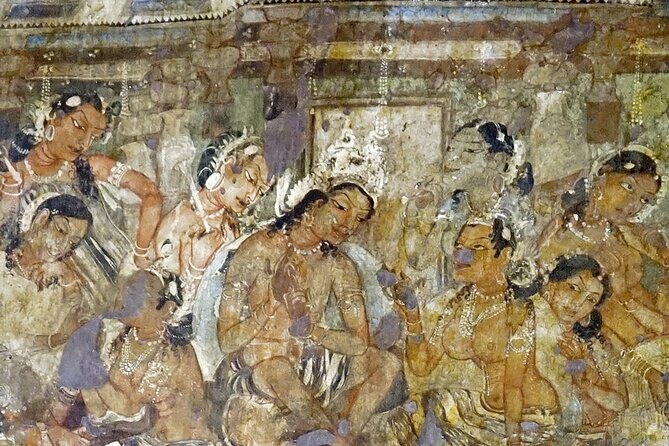
- Jataka stories in paint: more than 500 stories shown using tempera on mud plaster
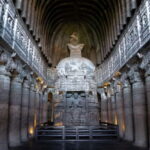
- Meaningful architecture changes: vihara-style prayer/living spaces shift toward a rear sanctuary with a large Buddha statue
- Private-group feel with pickup: you’re not getting shuffled with strangers
- Top guide praise: Sanjay is specifically mentioned for making the visit click
One Long Day From Aurangabad (And Why It Still Works)

Ajanta is not a quick stop. You’ll start early and spend time on the road—about 2.5 hours to Ajanta, then roughly another 2.5 hours back to Aurangabad. The total day is listed at about 8 hours, with a block of time dedicated to the caves themselves.
For me, that structure is the whole point. You aren’t trying to do Ajanta as a half-hearted detour. You reach the site while it still feels fresh, then you get around 4 hours to actually look—walk a bit, take in details, and not just rush from one cave doorway to the next.
If you’re the kind of traveler who hates being on a schedule, this may feel like too much driving. But if you want a guided day that’s efficient and still gives you real viewing time, this format is a good fit.
You can also read our reviews of more tours and experiences in Aurangabad.
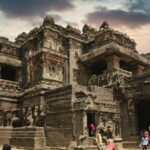
Ajanta’s Two Eras: Hinayana Caves First, Mahayana Caves Second
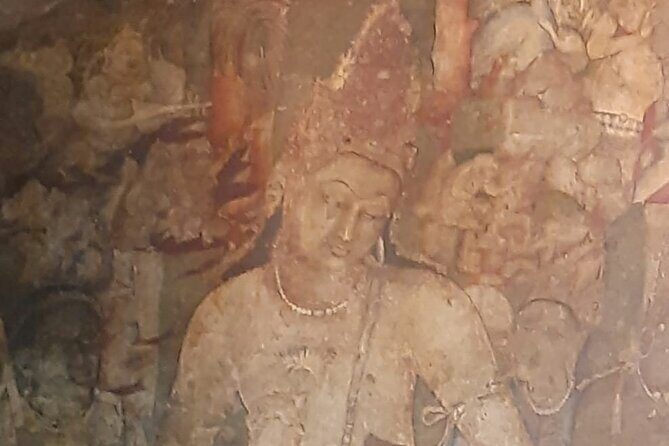
One of the most helpful parts of this tour is that it doesn’t treat Ajanta like one uniform thing. It’s built in two major phases, and you’ll get guided through the change in Buddhist ideas you see on the stone.
The first phase dates to the 2nd century BC, during the time of the Satavahana Empire (around 230 BC). In these caves, the older form of Buddhism known as Hinayana is reflected in how the Buddha is shown. Instead of a human Buddha figure, you’ll see the Buddha represented using symbols like pillars, stupas, and footprints.
Then the tour moves you into the later phase, around 400 AD, tied to the Mahayana tradition. Here, Emperor Harishena of the Vakataka dynasty is identified as the patron behind that second wave of carving and painting. The big takeaway is that Mahayana gives the Buddha a more human form, and you can literally see that shift expressed in the artwork and the layout of the caves.
You also get a clear architectural story. In the earlier period you encounter vihara-style halls—spaces that served prayer and also living—with rectangular shapes and small dormitory-like cells cut into the walls. In the later phase the design shifts toward a more focused sanctuary area, often centered on a large statue of the Buddha at the rear.
That’s why the tour feels more satisfying than a simple ticket-and-wander day. You’re watching a change in style, belief, and priorities unfold inside the rock.
Cave 1’s Guardians: Padmapani and Vajrapani at the Entrance
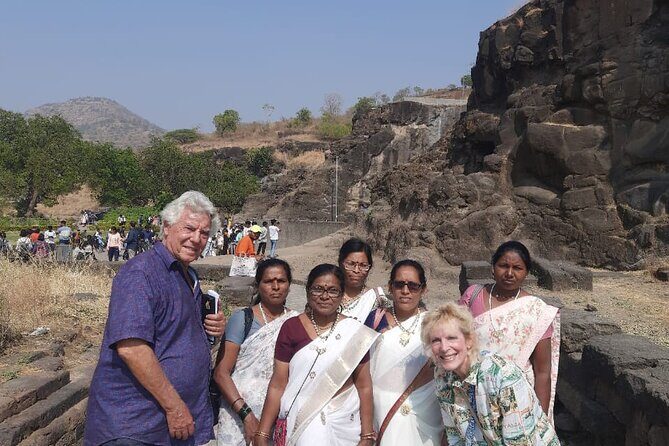
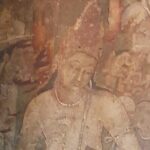
If you only remember one “spotlight” from Ajanta, make it Cave 1. In the guided experience, Cave 1 is called out for having the two most famous images at Ajanta placed on either side of the entrance to the Buddha shrine.
Those guardians are identified as Padmapani and Vajrapani. They flank the entrance in a way that makes sense the moment you see it: they act like visual sentries at the threshold between the everyday and the sacred space inside.
Why this matters for you is simple. Without a guide, Ajanta can feel like a blur of cave fronts and painted panels. With a guide, those recurring motifs click. You start to realize that certain images are not random decorations—they’re part of a bigger religious and artistic plan.
This is also where the review praise lands. One guide is specifically praised by name—Sanjay—for making these kinds of details understandable fast.
Jataka Tales on Stone: Stories of the Buddha Before Enlightenment
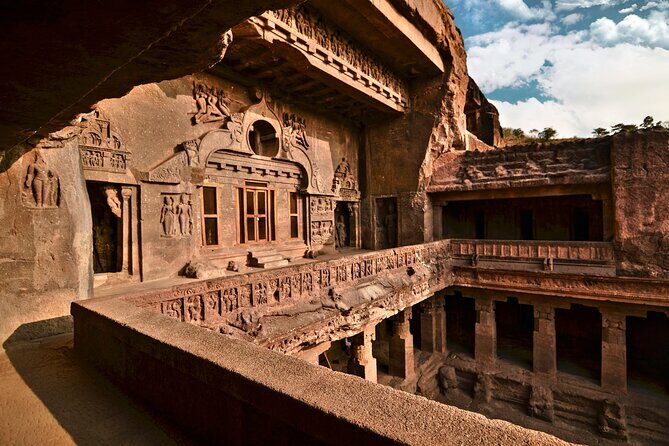
Ajanta is famous for Buddhist murals and sculpture, and the key to the murals is the story cycle they tell: the Jataka tales. These are accounts of the Buddha’s life before enlightenment, and many of the caves follow themes pulled from those narratives.
You’ll learn that these tales relate to the Buddha’s earlier journeys and qualities, shown through scenes painted across walls and panels. The effect is surprisingly readable, even if you’re not fluent in the story tradition. Once your guide points out what you’re looking at, you can start to follow the character-and-scene logic.
The real wow factor is the scale. More than 500 Jataka tales are mentioned as being painted on the walls. That number is almost hard to picture until you’re standing there, scanning sections and realizing you’re seeing a huge sequence of moments laid into stone architecture.
Tempera Paint, Mud Plaster, and Why the Colors Still Matter
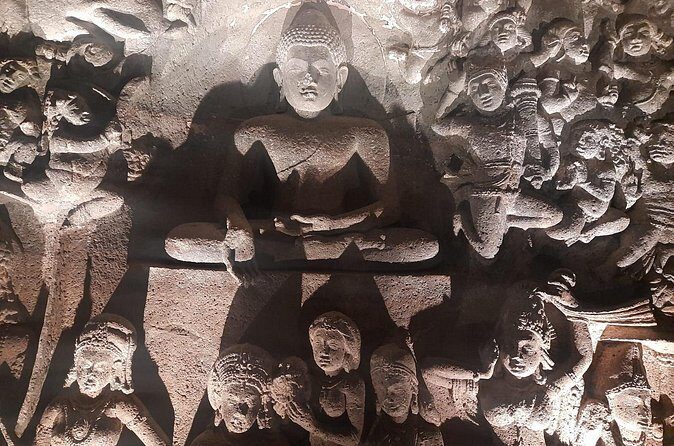
Ajanta’s paintings don’t just survive; they’re described as being in a remarkable state of preservation. That’s a big deal, because painted caves are often fragile. Here, the technique matters.
The paintings are noted as being created using tempera on a ground of mud plaster. Tempera typically means pigments bound in a way that can hold up in certain conditions, but the real point is how the artists prepared the surface and planned the visuals to last.
When you’re standing there, you’re not just seeing “old art.” You’re seeing a method. You can spot how the painting sits on the plaster background and how the scenes were laid out for the cave walls.
And this is where that standout guide praise makes sense. The best Ajanta guides don’t just say what the mural is. They explain how the art relates to the cave function—prayer spaces, living spaces, then sanctuary spaces—so the murals feel like part of a system, not isolated panels.

The Drive, the Timing, and How the Tour Keeps You From Rushing
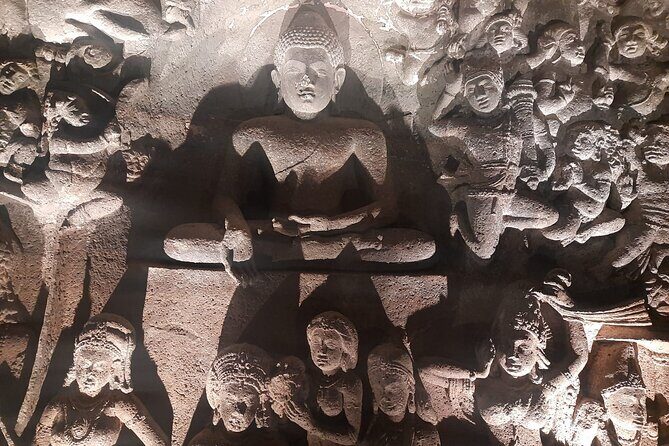
This tour is built around a simple rhythm: travel in the morning, cave time in the middle, then return to Aurangabad. The tour duration is listed at about 8 hours, and the caves segment includes a guided viewing block of about 4 hours.
You also get practical support: pickup is offered, and the experience uses a mobile ticket. That matters on a day like this, because you don’t want to waste time sorting paperwork while you’re already racing the clock.
It’s also set up as a private activity. The “only your group will participate” detail changes the feeling. You tend to move at a pace that fits your group size and attention span rather than getting swept along with a larger crowd.
One more detail I appreciate: group discounts are mentioned. If you’re traveling with friends or family, that can make the price feel more reasonable without cutting corners on guidance.
Price and Value: What $145 Buys You Here
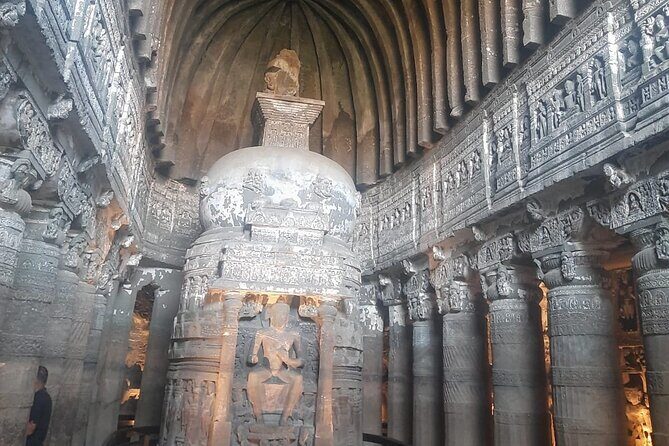
At $145 per person, you’re paying for more than a ride and entry. This price is tied to a guided Ajanta day with pickup and time inside the caves, not just a sightseeing transfer.
To judge value, I look at three things:
1) Time on site: the experience gives about 4 hours at Ajanta, which is enough to actually take in details rather than check boxes.
2) Interpretation: Ajanta is complex—two eras, changing architecture, symbol-based Buddha representations, and story-based murals. A good guide (Sanjay is specifically praised) helps you understand what you’re seeing.
3) Logistics handled: pickup and a mobile ticket reduce small-friction problems that can ruin a long day.
If you were planning to self-drive or hire a driver on your own, you might save some money. But you’d still face the hard part: figuring out how to connect what you see to what it means. Here, that meaning comes with the tour.
So yes, it’s not cheap. It’s also not random. For Ajanta, guided time has real value because the site rewards attention.
Who Should Book This Ajanta Caves Tour
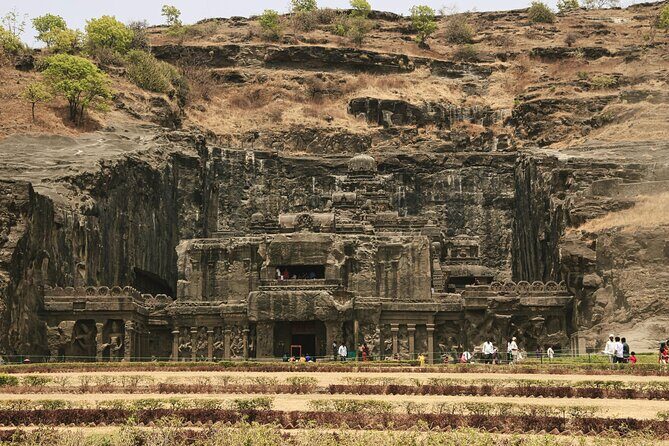
This tour makes the most sense if you want structure and interpretation without needing to become an Ajanta scholar.
You’ll likely enjoy it if you:
- like museum-style learning but prefer it outdoors in actual caves
- want to understand the Hinayana-to-Mahayana shift rather than just take photos
- appreciate being guided through major motifs like Padmapani and Vajrapani
- are traveling in a group and can benefit from the mentioned group discounts
It may feel less ideal if you:
- want a totally free-form schedule with no guidance
- hate long drives and would rather stay closer to Aurangabad
- plan to spend hours in one cave at a slow, meditative pace
Should You Book This Ajanta Day Trip or Go Another Way?
I’d book this tour if your priority is seeing Ajanta well in one day. The combination of pickup, private-group feel, and a praised guide named Sanjay gives you a better chance of coming away with understanding—not just images. The way Ajanta’s two phases are explained also helps you avoid the common mistake of treating the whole site as one style.
If you’re on the fence, here’s the decision shortcut: if you want guidance and story-based clarity, this is a solid choice. If you’d rather wander slowly and you don’t care much about historical and artistic context, you might be happier going more self-directed.
FAQ
FAQ
How long is the Ajanta Caves day tour from Aurangabad?
The tour is listed at about 8 hours.
What time does the tour start, and when is pickup?
The start time is listed as 8:00 am, and the pickup is described as timed to the tour start with 9:00 am mentioned. It’s smart to confirm the exact pickup time with the provider when you book.
Is pickup included?
Yes, pickup is offered.
Is this a private tour?
Yes. It’s described as private, with only your group participating.
How many hours will I spend at Ajanta?
You’ll have about 4 hours at Ajanta.
Is admission included?
Admission is stated as included for the Ajanta caves visit.
Do I need to print tickets?
No. Mobile ticket is included.
Is there a group discount?
Group discounts are listed as a feature.
Is free cancellation available?
Yes, you can cancel for a full refund up to 24 hours before the experience’s start time.
Is the tour suitable for most travelers?
Most travelers can participate.