REVIEW · NEW DELHI
Bestseller of India, de lux tour
Book on Viator →Operated by Paylesstoursindia · Bookable on Viator
Five days, three cities, and a lot of wow. This private car Golden Triangle tour strings together Delhi, Agra, and Jaipur in a tight loop, with Akshardham temple as the big day one headline stop. It also gives you a mix of iconic monuments and reflective moments like Raj Ghat, so the days feel more human than rushed box-ticking. One watch-out: entrance tickets to monuments are not included in the price.
On the ground, local guides in Delhi, Agra, Jaipur, and Fatehpur Sikri help you connect what you see to who built it and why. The driver experience matters too, and names like Prakash and Mithun show up in the strongest praise—good news if you value smooth driving in traffic-heavy cities. You’ll just want to budget for ticketed stops ahead of time so nothing surprises you mid-day.
In This Review
- Key highlights at a glance
- Why this Golden Triangle loop works (and feels efficient)
- Day 1 in Delhi: Akshardham, Old Delhi rickshaws, and the calm after crowds
- Akshardham: a big first wow
- Jama Masjid and Chandi Chowk by rickshaw
- Red Fort picture stop
- Raj Ghat: a quieter turn in the story
- Gurudwara Bangla Sahib and India Gate after lunch
- Day 1’s value pattern
- Day 2: Agra Fort and Taj Mahal with ticket budgeting in mind
- Taj Mahal: time to see more than one angle
- A practical tip for this day
- Day 3: Fatehpur Sikri and Galtaji Temple views (with some walking energy)
- Fatehpur Sikri: a whole palace-city story in two hours
- Galtaji Temple: monkey temple with a viewpoint option
- Day 4 in Jaipur: Amber Palace, Hawa Mahal photos, and royal tomb atmosphere
- Amber Palace: the big fort experience (with ticket not included)
- Jal Mahal: a quick photo at Water Palace
- City Palace: palaces complex time in town
- Hawa Mahal: Palace of Wind, mostly for the classic look
- Royal Gaitor Tumbas: an atmospheric ending
- Day 5: back to Delhi with a simple, no-fuss finish
- What you get for $700: value beyond the headline price
- The main thing not included: entrances and meals
- Drivers and guides: the human factor that shapes the whole trip
- Practical tips so the schedule doesn’t steamroll you
- Should you book this Golden Triangle tour?
- FAQ
- What cities are included in this tour?
- How long is the tour?
- Is this a private tour or a shared group?
- Is hotel pickup and drop-off included?
- What type of transportation do I use?
- Is accommodation included, and what level of hotel?
- Are entrance tickets to monuments included?
- Is there a rickshaw ride included?
- What about meals—what is included besides breakfast?
- Is there free cancellation?
Key highlights at a glance
- Akshardham Temple on day one: a modern, massive temple complex to set the tone for India right away
- Old Delhi by rickshaw: you get a Chandi Chowk ride experience, not just a roadside stop
- UNESCO-style highlights in three cities: Delhi, Agra, and Jaipur are handled with local guiding in each location
- 4-star hotel base with breakfast: accommodation and breakfasts are included, so you can travel lighter
- AC private vehicle plus pickup/drop-off: easier logistics than DIY when you’re short on time
Why this Golden Triangle loop works (and feels efficient)
The Golden Triangle is famous for a reason: you’re stacking the big sights of India—Delhi’s power and history, Agra’s Mughal masterpieces, and Jaipur’s regal architecture—into one straightforward route. The smart part here is that the tour uses a private car plus local guides in the key cities, so you’re not just watching traffic go by.
This itinerary also avoids the common mistake of only chasing one famous photo after another. Day one alone mixes grand religious architecture (Akshardham, Jama Masjid, Gurudwara Bangla Sahib) with a remembrance stop at Raj Ghat and then a city landmark at India Gate. That variety helps the trip feel like a story, not a checklist.
And yes, you’ll be moving a lot. But it’s built around sight-heavy days with clear, timed stops—so you can plan meals, water breaks, and photo pauses instead of wondering what comes next.
You can also read our reviews of more tours and experiences in New Delhi.



Day 1 in Delhi: Akshardham, Old Delhi rickshaws, and the calm after crowds
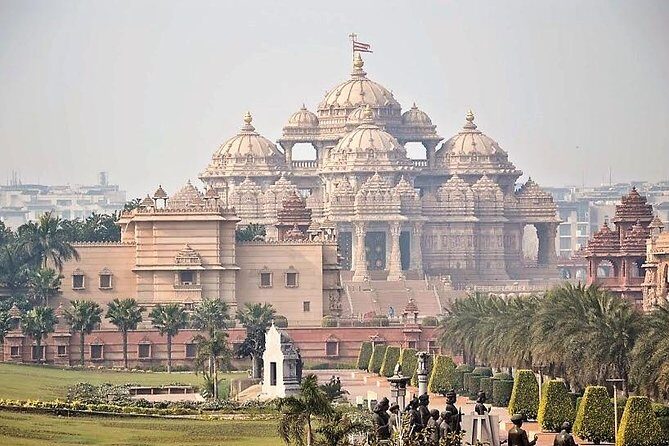
Day one is where the tour earns its reputation for pacing. You start with the Payless Tours Akshardham stop—about two hours at one of the largest and most modern temple complexes in India. Think bright stonework, intricate carvings, and a big sense of order in the way the space is laid out. It’s a strong first impression and a good warm-up before the busier streets of Old Delhi.
Akshardham: a big first wow
Akshardham is more than a quick photo stop here; you’re given time to actually see it. Since admission is listed as free for this stop, it’s one of the “best value per hour” parts of the day. If you like architecture, symmetry, and symbolism, you’ll likely slow down naturally.
Jama Masjid and Chandi Chowk by rickshaw
Next up is Jama Masjid, tied to the Old Delhi experience. The tour includes a ride in the rickshaw area and sightseeing around Friday mosque on the way. You’ll also get time in the market streets around Chandi Chowk—this is where Delhi feels alive, loud, and full of motion.
One practical note: Old Delhi streets can be bumpy and crowded, so this is the stop where comfy shoes matter. Since the schedule gives you about an hour here and the admission is free, you can focus on the street scene without feeling like you’re spending half the day in a line.
Red Fort picture stop
After that, you get a short Red Fort stop—mostly for photos. Fifteen minutes sounds brief, and it is. But as part of a longer day that already includes major landmarks, it’s a reasonable “see it, snap it, move on” moment.



Raj Ghat: a quieter turn in the story
Then comes Raj Ghat, the cremation site of Mahatma Gandhi, with about an hour on-site. This is one of those stops that changes the tone of the day. The crowds can still be present, but the mood is naturally reflective, and it gives you a mental reset before more places of worship.
Gurudwara Bangla Sahib and India Gate after lunch
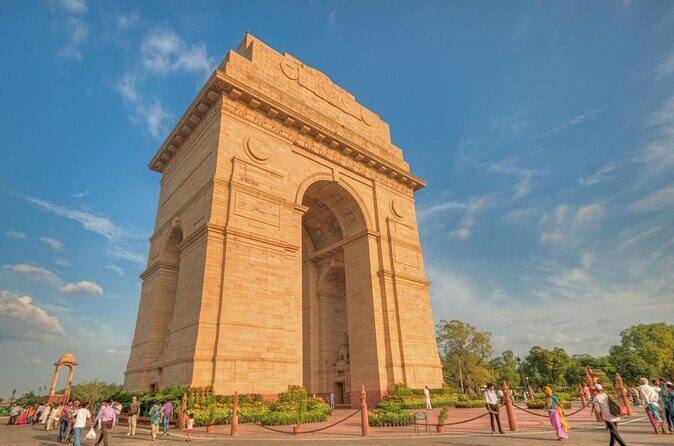
The day wraps with Gurudwara Bangla Sahib, a well-known Sikh temple, and then India Gate after lunch. You’re given around an hour for Bangla Sahib and about thirty minutes at India Gate. Admission is listed as free for these stops, which is nice if you’re trying to keep ticket budgeting under control.
Day 1’s value pattern
The best thing about this day is how many stops are listed as free. You’re getting a lot of major sights in a structured order without paying entry fees every time your day changes neighborhoods.
Day 2: Agra Fort and Taj Mahal with ticket budgeting in mind
Day two is all about Agra. You’ll start with Agra Fort for about two hours. Admission is not included here, so treat this day as your first realistic ticket-cost checkpoint.
Agra Fort is impressive because it’s a strong example of Mughal-era power made stone and ramparts. Even if you’re not a total history nerd, you can still appreciate the layout and how the fort sits with purpose in the city.
Taj Mahal: time to see more than one angle
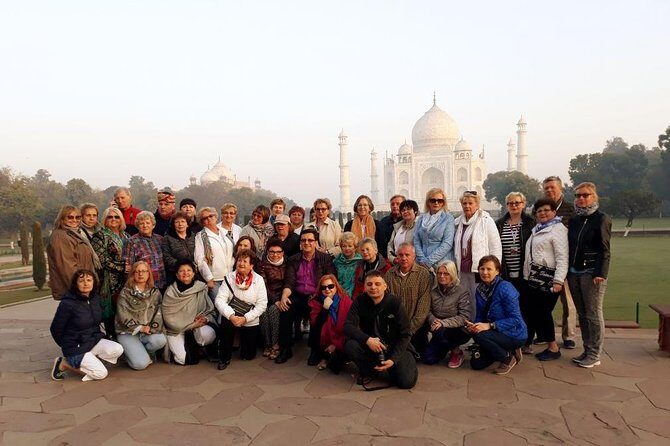
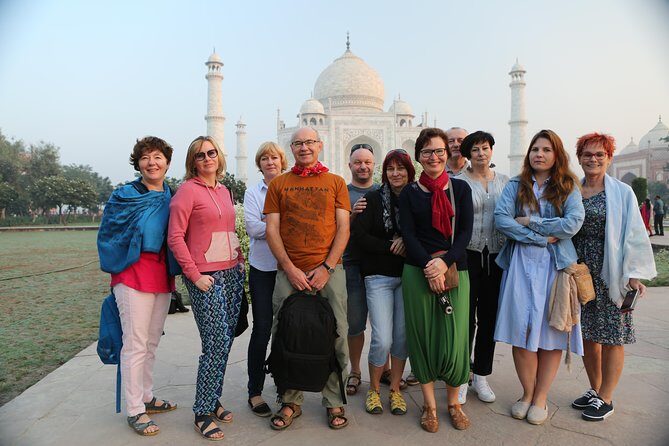
Then you move to the main event: Taj Mahal, about two hours. Again, the entry ticket is not included, so plan for that expense before you go. The tour description frames it as the symbol of love, but what you’ll notice is how the experience changes as you walk and look from different positions.
You’ll likely spend time taking photos, but the two-hour block is key. It gives you enough space to let the first impact settle, and that’s where Taj Mahal becomes more than just a postcard.
A practical tip for this day
Because both Agra Fort and Taj Mahal are ticketed, you’ll feel the best if you travel with a clear idea of what you’ll pay at the monuments. The tour includes bottled water and AC transport, but it doesn’t cover monument entry—so keep some money set aside and you’ll stay calm.
Day 3: Fatehpur Sikri and Galtaji Temple views (with some walking energy)
Day three shifts gears to two very different kinds of sights: a former Mughal capital and a temple with a famous monkey presence.
Fatehpur Sikri: a whole palace-city story in two hours
You’ll visit Fatehpur Sikri (spelled Fatehpur Sikri / Fathepur Sikri in different places), about two hours. Admission is listed as free for this stop, which makes this day feel budget-friendly compared to the ticket-heavy Agra segments.
Fatehpur Sikri can feel like a big open lesson. The best way to enjoy it is to let the guide connect the dots: what it used to be, what it meant, and why it matters. When local guidance is included, you’re not stuck guessing at why certain structures are where they are.
Galtaji Temple: monkey temple with a viewpoint option
After that, you go to Galtaji Temple, also known as the monkey temple area, with about an hour. Admission is listed as free, and the description notes the possibility of walking up to a view point.
This is where your moderate physical fitness level matters. The tour doesn’t demand athleticism, but you should be ready for some steps and uneven ground. If you’re traveling with knee issues, go slowly and take breaks—this is one of those places where pacing helps more than forcing speed.
Day 4 in Jaipur: Amber Palace, Hawa Mahal photos, and royal tomb atmosphere
Jaipur day is where the trip leans into palaces and viewpoints. You start outside the city at Amber Palace, then work your way through photo stops and major complexes in town, finishing with an atmospheric tomb area.
Amber Palace: the big fort experience (with ticket not included)
You’ll visit Amber Palace for about two hours. Admission is not included, so yes, this is another day where you’ll want ticket budget ready.
Amber is all about scale and detail—fort walls, courtyards, and a sense of where royal life took place. Two hours is a good length: enough to see the main highlights without feeling like you’re sprinting through rooms.
Jal Mahal: a quick photo at Water Palace
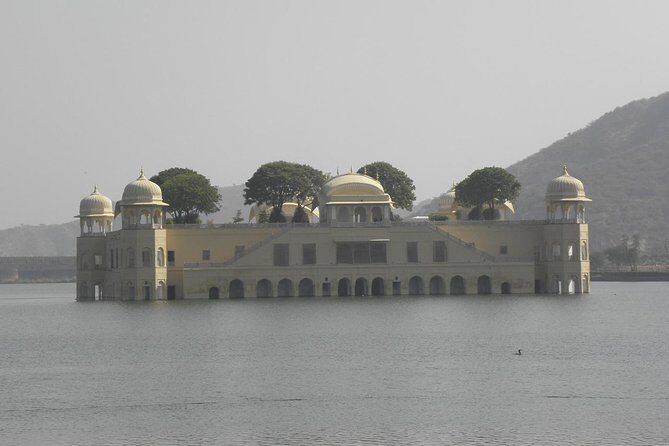
Next is Jal Mahal, the Water Palace, with a short picture stop of about fifteen minutes. Admission is free for this stop, which helps keep the schedule efficient. Even if your time here is brief, it’s worth using your camera time well, because the waterside setting is part of what makes Jal Mahal memorable.
City Palace: palaces complex time in town
Then you move to City Palace of Jaipur, about two hours. Admission is not included here either. This is one of those stops where the payoff often comes from understanding what you’re seeing. With local guiding included, you should get better context than simply wandering hallways.
Hawa Mahal: Palace of Wind, mostly for the classic look
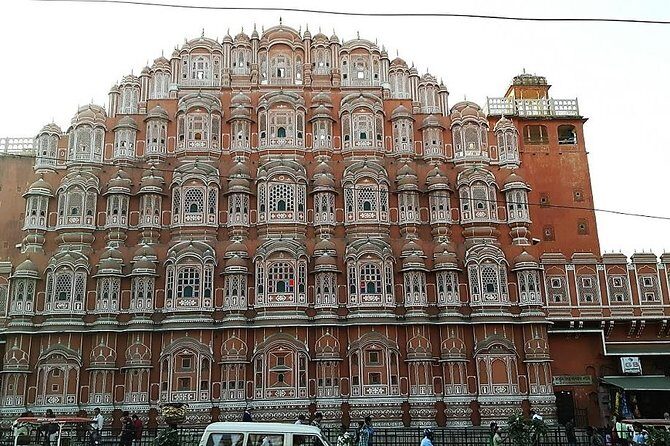
You’ll stop at Hawa Mahal for about fifteen minutes. This is primarily a photo stop of the pink façade with many small windows. Admission is listed as free for this stop, so you’re not paying entry just to stand outside and capture it. It’s short, but it fits the way the day is structured.
Royal Gaitor Tumbas: an atmospheric ending
Finally, you go to Royal Gaitor Tumbas for about an hour. Admission is not included. The description calls it an atmospheric place—the tombs of the kings of Jaipur—so it’s a strong way to end the day without forcing another high-energy museum-style stop.
Day 5: back to Delhi with a simple, no-fuss finish
Day five is straightforward: you drive back to Delhi and you’re dropped off at the airport or another central location. This is the kind of ending I like when I’m on a tight schedule. No last-minute surprises, no “one more thing” added at the end—just a smooth exit so you can connect to your next flight or hotel plan.
What you get for $700: value beyond the headline price
At $700 per person for about five days, the tour isn’t the cheapest way to see the Golden Triangle, but it’s not pretending to be either. The price starts making sense when you break it into what’s included.
You get:
- Private AC transport by car
- Hotel pickup and drop-off
- Driver/guide plus local guides in Delhi, Agra, Jaipur, and Fatehpur Sikri
- 4-star hotels with breakfast for 5 days
- Bottled water
- Rikshaw ride in Delhi
- Mobile ticket
- All taxes, fees, and handling charges
That’s a lot of “hidden DIY costs” removed. If you were doing this by yourself, you’d spend time figuring out transport between cities, locating guides, and managing hotel changes while also dealing with busy routes and traffic. Here, the structure is built-in.
The main thing not included: entrances and meals
The big non-included items are:
- Entrance tickets to monuments
- Food and drinks
Souvenir photos are also sold separately, if you choose them. So the budget planning becomes: you’re paying for transportation, lodging, and guiding up front, and you’re paying for monuments and meals as you go.
If you like to eat out each day or shop along the way, that’s fine. Just don’t assume every stop is covered.
Drivers and guides: the human factor that shapes the whole trip
In a good Golden Triangle tour, the driver is more than a taxi. They’re traffic timing, route choices, and a calm presence when the day gets long.
In the strongest feedback tied to this style of tour, I see praise for drivers such as Mithun, Vivek, Prakash/Prakesh, Aamir/Aamir-like guides named in the mix, Amir, and Neeraj. I’m not promising you’ll get any specific person, but I am saying the pattern is clear: when the human team clicks, the whole itinerary feels easier.
Local guides are also included in multiple cities, and that matters. When you’re standing in front of a fort, palace, or temple, the explanation helps you spot the details that your eyes would otherwise skate over.
Practical tips so the schedule doesn’t steamroll you
A few things from the tour info that are worth taking seriously:
- Moderate physical fitness is enough, but you should be ready for walking and some steps, especially at the temple viewpoint option at Galtaji.
- It operates in all weather conditions, so pack for heat, rain, or cooler evenings and dress appropriately.
- Monument tickets aren’t included, so keep some cash or card flexibility for Agra Fort, Taj Mahal, Amber Palace, City Palace, Royal Gaitor Tumbas, and any other ticketed stops.
- Food isn’t included, so plan meal breaks around the day’s fixed stops—especially on day one, which goes from major sites to lunch and then onward.
And one more reality check: Delhi Old Delhi areas can be intense. Give yourself a mental “slow down” cue and you’ll enjoy it more.
Should you book this Golden Triangle tour?
If you want the classic Delhi–Agra–Jaipur hits with AC private transport, 4-star hotels, and local guides, this is the kind of plan that makes sense. It’s especially good if you’d rather spend your energy on the sights than on navigation, booking, and timing between cities.
I’d book it if:
- You want a structured 5-day route with pickup and drop-off
- You like a mix of big monuments and a few reflective stops
- You’re okay paying monument entrances separately
I’d think twice if:
- You want a fully ticketed, all-in price with zero on-the-spot spending
- You’re sensitive to long sightseeing days and lots of movement
For most people, though, the balance here is strong: you get transport, lodging, guiding, and key free highlights in Delhi, while the ticketed masterpieces are clearly part of the Agra and Jaipur pricing picture.
FAQ
What cities are included in this tour?
The tour covers New Delhi, Agra, and Jaipur, with an additional stop that includes Fatehpur Sikri.
How long is the tour?
It runs for 5 days (approx.).
Is this a private tour or a shared group?
It’s described as a private tour/activity, and only your group will participate.
Is hotel pickup and drop-off included?
Yes. The tour includes hotel pickup and hotel drop-off.
What type of transportation do I use?
You’ll travel with AC transport by private vehicle, driven by the included driver/guide.
Is accommodation included, and what level of hotel?
Yes. Accommodation is included in 4-star hotels, and breakfast is included for 5 days.
Are entrance tickets to monuments included?
No. Entrance tickets to the monuments are not included.
Is there a rickshaw ride included?
Yes. The itinerary includes a rickshaw ride in Delhi.
What about meals—what is included besides breakfast?
Only breakfast is included. Food and drinks are not included.
Is there free cancellation?
Yes. You can cancel up to 24 hours in advance for a full refund. If you cancel within 24 hours of the start time, there is no refund.