Backwaters can feel personal here. This Kochi day tour pairs non-motorised boats with a real village-side stop: a covered cruise through waterways, a short village walk, spice plants, and then narrow-canal paddling. You also get hands-on crafts—coir rope making and coconut leaf weaving—plus a proper homemade vegetarian lunch at a village house.
I also like the human pace. An English-speaking guide (provided on the day) explains what you’re seeing—flora, backwater life, and local ways of using the land and water—while an air-conditioned vehicle handles the driving. One thing to consider: this is more about culture and scenery than wildlife spotting, so if you’re mainly hunting for animals, you may want to adjust expectations.
In This Review
- Key things that make this backwater tour work
- From Kochi to Murinjapuzha: starting at the old bridge and a traditional boat
- The first three hours: covered kettu vallam through villages and spice-growing pockets
- Village lunch after the river time: vegetarian food at the village house
- The one-hour open canoe cruise: narrow canals, closer to the water
- Coir rope making and coconut leaf weaving: learning by watching and asking
- The guide, the small group size, and how the explanations land
- Price and value: why $20 is a fair deal for a full 7-hour day
- Who should book this backwaters day—and who might want a different option
- Final call: should you book the Backwater Tour from Kochi?
- FAQ
- How long is the backwater tour from Kochi?
- What’s included in the $20 price?
- Is hotel pickup offered?
- What kind of boats are used during the day?
- How many people are in a group?
- What happens if weather is bad or I need to cancel?
Key things that make this backwater tour work
- Non-motorised boat time for a quieter, village-focused ride
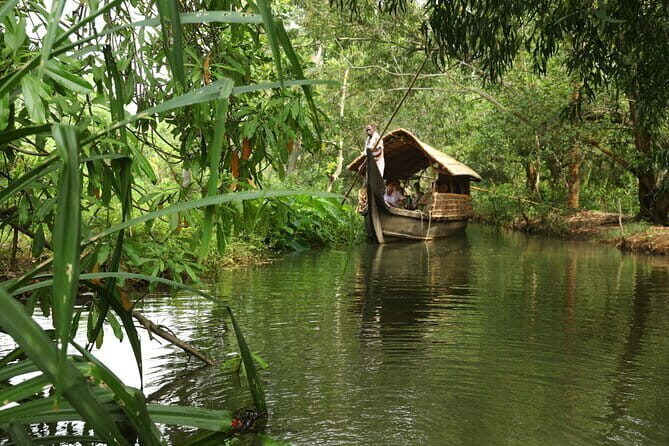
- Covered kettu vallam for the first leg, then an open canoe on narrow canals
- Village walk and spice plants growing right where people live
- Village lunch plus tea/coffee and snacks in a home setting
- Craft demonstrations: coir rope making and coconut leaf weaving
- Small group cap (18) with an experienced English-speaking guide
From Kochi to Murinjapuzha: starting at the old bridge and a traditional boat
Most days start with pick-up, and you’ll ride out from Kochi in an air-conditioned vehicle. The trip to the village area takes about an hour, which matters because the “backwater part” really begins once you’re out of the city. Your first stop is Murinjapuzha Old Bridge View Point—useful as a quick orientation. Even before you get on the boat, you can get a sense of how the water channels slice through the villages.
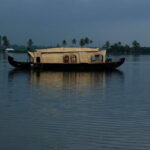
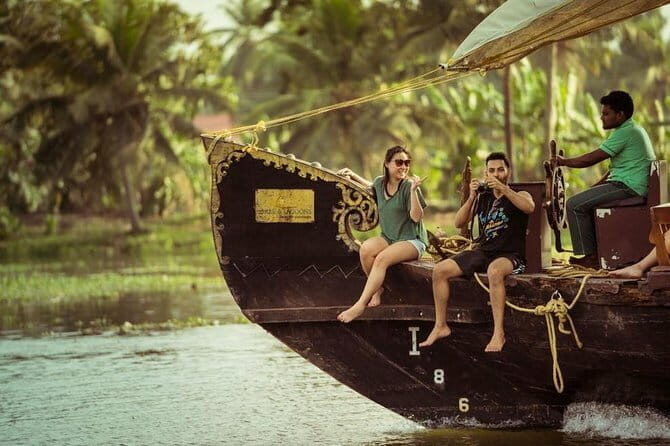
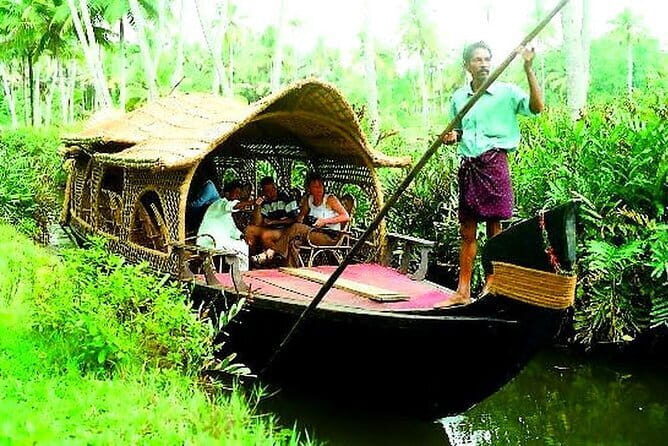
Then you shift gears into the traditional boating style. The experience uses a non-mechanised covered boat (kettu vallam) for the early cruise. That word sounds technical, but what you’ll feel is simple: slower movement, lower noise, and better chances to notice what people actually do along the water’s edge.
If you’re the type who likes seeing how daily life connects to the canals—fishing, planting, small-scale craft—this opening sets the tone.
You can also read our reviews of more tours and experiences in Kochi.
The first three hours: covered kettu vallam through villages and spice-growing pockets
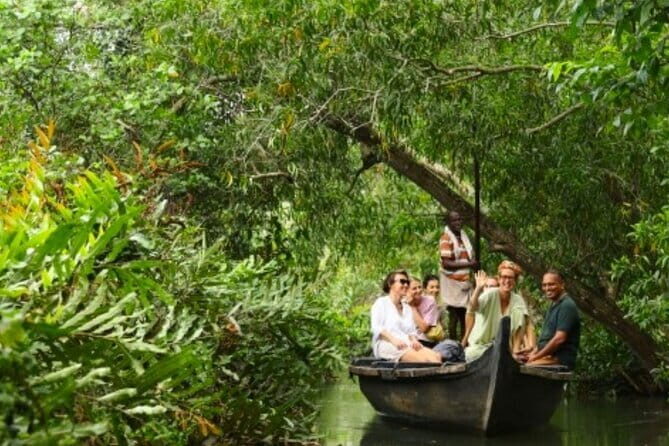
The early portion is about three hours on the covered traditonal boat, and it’s designed for comfort. The canopy keeps you from harsh sun and gives you a calmer ride while you float past village-side waterways. This is where the “relaxing” part is real. You’re not rushing from photo spot to photo spot. You’re just traveling through the channels at a human pace.
Along the way, there’s also a small village walk. That’s one of the best parts of this format. Instead of only watching from the boat, you get to step into the village rhythm and learn how locals live with these waterways. The guide points out spice plants growing in the area. Even if you know some Indian spices already, seeing the plants where they grow makes it click—because you can connect the spice you buy later with the plant you walked past today.
What you’ll likely love here: the combination of a gentle boat ride and short, guided walking time. It’s not strenuous, and it keeps the day from turning into “sit, look, repeat.”
A practical consideration: the first boat segment is long enough that you’ll want to be okay with scenery and village life being the main show. One previous group felt the early part didn’t offer much wildlife viewing. That doesn’t mean the ride is boring—it just means wildlife isn’t the headline.
Village lunch after the river time: vegetarian food at the village house
After the cruise and village time, you reach the village house for lunch. You’ll also get breaks like tea/coffee as part of the visit later, but lunch is the meal anchor of the day.
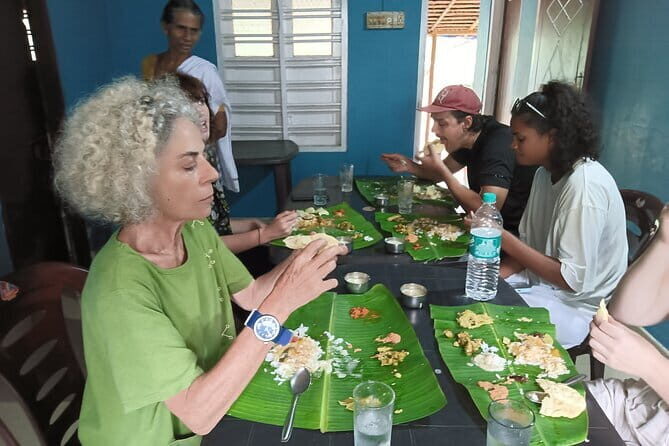
Expect traditional vegetarian lunch served in a village setting. In the feedback, the lunch keeps coming up as a standout—people describe it as some of the best food they had in India, which is a strong signal that the cooking quality is taken seriously. For a day tour that costs $20, it’s also a big value driver: a lot of “boat + transport” tours charge extra for meals or feed you something basic. Here, lunch is included, and it’s treated as part of the cultural experience.
During the broader village program, you may also see how fresh-water muscles are processed. That’s not a showy add-on; it ties directly to how people use local water resources. If you’re curious about how villages handle food from the water, this stops you from staying in the abstract.
Tip for your stomach and your comfort: even if it’s vegetarian, this is still an all-day activity. Eat at the meal time they provide so you don’t get hungry later during the canoe portion. Bring a bottle of water if you’re the kind who likes staying hydrated between tea and snack breaks.
The one-hour open canoe cruise: narrow canals, closer to the water
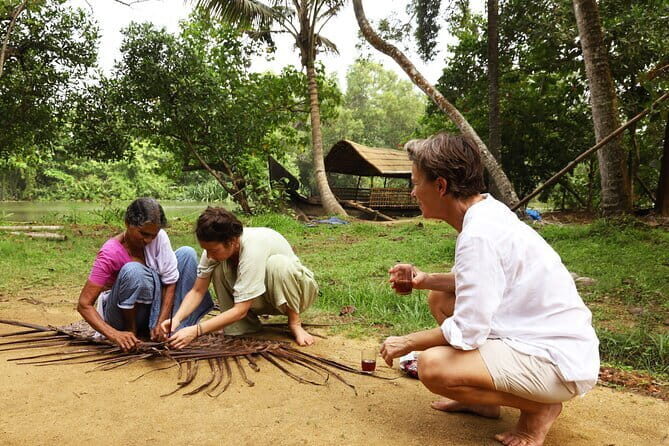
After lunch and village demonstrations, you switch boats. The tour includes about one hour in an open canoe through narrow canals around the village area. This section changes the feel of the day.
With an open canoe, you’re closer to the water’s edge. You’ll notice details you might miss from a covered boat: the way the banks tighten in narrow channels, the small bends, and the quiet corners where water and vegetation meet. Because it’s open, it can also mean more sun exposure. If the weather is bright, you’ll feel it more than you would on the covered portion.
This is also the part of the day where patience pays off. The narrow canals are not a fast ride; it’s slow, thoughtful movement that lets the environment come into focus.
One more note: the experience requires good weather. If rain or bad conditions show up, the operator will offer a different date or a full refund. That’s important for this style of boating. You’re not just walking through a museum—you’re moving through water channels—so weather truly matters.
Coir rope making and coconut leaf weaving: learning by watching and asking
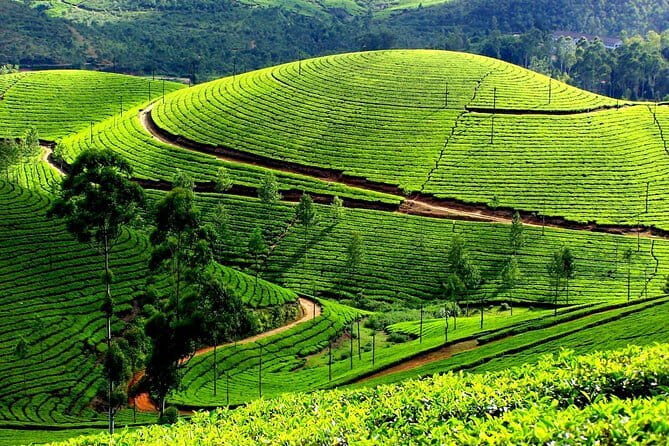
The craft demonstrations are where this tour earns extra points for being more than a passive sight-seeing day.
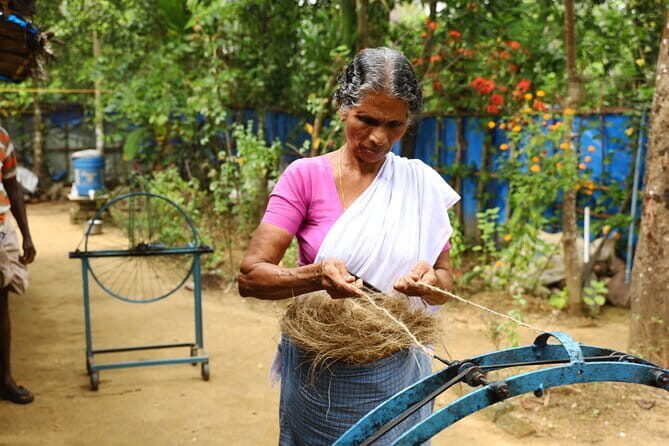
You’ll see coir rope making, which is tied directly to coconut products. Coir comes from coconut husk fibers, and the work involved is hands-on and practical. You’ll also get to watch coconut leaf weaving, a skill that turns plant materials into useful forms. Even if you don’t buy anything, these demos explain the logic behind what you see in village markets and homes.
Why this matters: crafts like these aren’t just “cultural entertainment.” They show how communities create everyday items using local materials and simple tools. That gives you a better understanding of village life than pictures alone.
In the best moments of the day, you’ll catch yourself connecting dots: boat + canals + plants + food processing + fibers. It’s all part of the same local system.

The guide, the small group size, and how the explanations land
A key part of the day is the English-speaking guide. The tour description makes it clear you’ll get explanations about backwater specialties, flora, fauna in the area, and the way locals use what grows and lives here.
The group size matters too. This tour caps at a maximum of 18 travelers. Smaller groups make it easier to ask questions, hear the guide over conversation, and keep the day from feeling chaotic. In day trips, that can make the difference between “overheard facts” and real learning.
Also, since pick-up is offered and the vehicle is air-conditioned, you’re not spending your limited energy wrestling with local transport schedules. The vehicle component may feel like a “logistics detail,” but it helps you arrive settled enough to enjoy the boats rather than just surviving the commute.
Price and value: why $20 is a fair deal for a full 7-hour day
At $20 per person, the price is easier to justify once you look at what’s bundled.
You’re paying for:
- both boat experiences (covered boat + open canoe)
- a village visit and a village walk
- craft demonstrations (coir and coconut weaving)
- a guide
- air-conditioned vehicle transport
- admission ticket included
- lunch plus tea/coffee and snacks
For Kochi day tours, that’s a lot included. Many tours price low but then add costs for meals, boat fees, or guide time. Here, the meal and guide support are part of the day, and that’s a big value marker.
The one cost you may still plan for is tips, since tips are not included. Keep that in mind if you want to thank your guide or driver. Beyond that, you should be able to budget the day around the ticket price.
Who should book this backwaters day—and who might want a different option
This tour is a strong match if you:
- want a calm, low-impact way to experience Kochi’s backwaters
- enjoy village-side culture more than wildlife
- like learning how locals use coconut and water resources
- prefer day trips with included lunch and guided explanations
It may not be ideal if your top priority is:
- big wildlife action or long stretches of animal spotting
- a high-adrenaline boat experience (this is slow, traditional travel)
- going out no matter what the weather looks like (good weather is required)
Also, it’s designed for most travelers who can participate. While the details of physical accessibility aren’t spelled out here, the activities listed—boat rides, a short walk, and demos—suggest it’s meant to be approachable for a wide range of ages.
Final call: should you book the Backwater Tour from Kochi?
I’d book this if you want an authentic-feeling day that mixes boats + village life + lunch + crafts. The non-motorised approach is a big plus for anyone who hates crowded, noisy tours. And the craft demonstrations make it more memorable than just floating past scenery.
If you’re traveling with people who love food, local skills, or gentle cultural experiences, this is one of the easiest “yes” decisions in the Kochi backwaters category. The only caution is expectations: the day is not built around wildlife sightings. It’s built around how the backwaters shape everyday life—and that’s exactly the kind of value that makes $20 feel reasonable instead of cheap.
FAQ
How long is the backwater tour from Kochi?
The duration is about 7 hours.
What’s included in the $20 price?
Lunch, evening tea/coffee, snacks, an English-speaking guide, an air-conditioned vehicle, and coffee and/or tea. An admission ticket is included as well.
Is hotel pickup offered?
Yes, pickup is offered, and you’ll travel by air-conditioned vehicle to the village area.
What kind of boats are used during the day?
You ride on a non-mechanised covered traditional boat (kettu vallam) for the first part, then you do an open canoe cruise through narrow canals.
How many people are in a group?
The tour has a maximum of 18 travelers.
What happens if weather is bad or I need to cancel?
The experience requires good weather. If it’s canceled due to poor weather, you’ll be offered a different date or a full refund. Free cancellation is available up to 24 hours in advance for a full refund.