REVIEW · KOCHI
Kochi: Kathakali, Theyyam, and Kalaripayattu Evening Show
Book on GetYourGuide →Operated by Trip Buggy · Bookable on GetYourGuide
Three Kerala art forms in one night.
This evening show packs Kathakali face-painting and mythic storytelling with Theyyam-style ritual intensity, plus live martial art action that you can hear in your chest.
I like that you get a clear, English-speaking explanation while the performers work with real skill, real rhythm, and real stage presence. The value is strong at around $11 because you also get round-trip hotel pickup in an air-conditioned vehicle. One thing to consider: flash photography is not allowed, and the venue isn’t suitable for wheelchair users.
Key highlights you’ll actually notice
- Kathakali makeup demonstration showing how natural pigments turn a person into a character
- Mudras, facial expressions, and live vocal + percussion that make epic stories readable even if you’re new to the art
- Kalaripayattu (Kalari) performance with agility, speed, weapon mastery, and acrobatics
- Theyyam as a ritual “dance of the gods” with drumbeats and chants that feel trance-like
- Interaction time after the show for questions, performer photos, and a closer look at dedication
In This Review
- Hotel Pickup and Timing: How the Evening Gets You to the Theater
- Kathakali Makeup: The Transformation Before the Story Starts
- Kathakali Performance: Mudras, Navarasas, and Epic Tales
- Kalaripayattu (Kalari): When Martial Arts Becomes Theater
- Theyyam: Ritual Dance of the Gods on a Stage
- Interacting After the Show: Questions, Photos, and Closure
- Price and Value: What About $11 Really Covers
- Who This Triple-Bill Fits Best (and Who Might Want a Different Plan)
- Should You Book This Kochi Cultural Evening?
- FAQ
- How long does the show last?
- Do I get hotel pickup and drop-off?
- Is the guide available in English?
- Can I take photos during the performances?
- Is this tour wheelchair accessible?
- Are food and drinks included?
- What are the cancellation and payment options?
Hotel Pickup and Timing: How the Evening Gets You to the Theater
This is one of the easier cultural evenings in Kochi. You’re not figuring out buses, maps, or tuk-tuk bargaining after dark. Instead, you get round-trip transfers from your hotel in Kochi or Ernakulam (depending on the option you pick), using an air-conditioned vehicle.
The show itself is designed as a focused block—often around 3 hours of performances—with total duration listed as 1 to 7 hours based on the start time available. In the most common evening rhythm, you may see a Kathakali makeup demo first (often around the 5–6 pm window), then the main performances afterward (often around 6–8 pm). Times can vary, so it’s smart to confirm the exact start with your operator the moment you book.
Group size is kept small or private, which matters here. These are not background performances. You’ll get more from it if you can hear the English guidance and watch the performers’ eyes and hand gestures without fighting for a view.
Kathakali Makeup: The Transformation Before the Story Starts
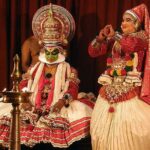
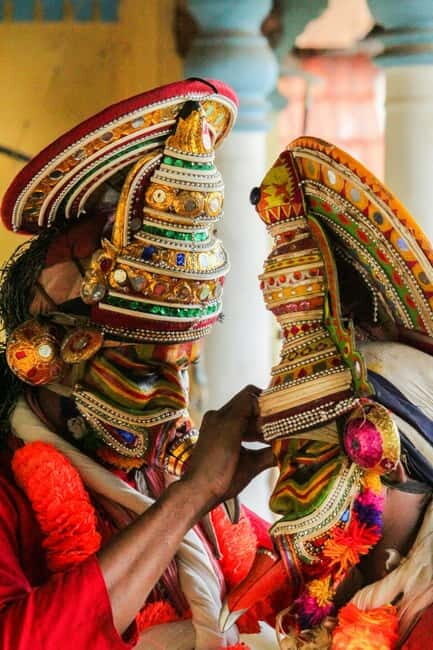
Kathakali starts long before the first drumbeat. You begin with a makeup demonstration, where performers show how they’re transformed through layered facial painting made with natural pigments. It’s a rare chance to see the process instead of only the finished character.
I like that this moment isn’t treated like a quick gimmick. The makeup is part of the meaning: it’s built from ritual symbolism and precise artistic choices, and it signals that you’re about to watch a highly coded performance.
As you watch, keep your eye on details. Kathakali characters aren’t created randomly. The shapes, colors, and facial emphasis are what later support the storytelling—especially the intense use of the eyes and expressions.
A practical tip: since the show forbids flash photography, your camera settings should be ready for lower light. If you plan to take photos during this stage, switch off flash well in advance and test your exposure mode.
You can also read our reviews of more evening experiences in Kochi

Kathakali Performance: Mudras, Navarasas, and Epic Tales
After the makeup work, the main Kathakali performance unfolds under the warm glow of traditional oil lamps. This matters more than it sounds. The lighting supports the drama, and it makes the face and costume stand out in a way you don’t get from a brightly lit stage.
You’ll see the dancers narrate scenes from Indian epics such as the Mahabharata and Ramayana. Even if those stories are new to you, you’ll have help. There’s live narration and English guidance, plus vocalists and powerful percussion that push the emotion of each moment.
Kathakali relies on a few core tools:
- Mudras (hand gestures) to spell out ideas and actions
- Elaborate costumes that separate characters and roles
- Exaggerated facial expressions, often described through the concept of navarasas (different emotional states)
- Stylized movement that reads like storytelling you can almost translate without language
The performers go from gods to demons to heroes and back again, and the energy can swing fast. One minute you’re watching controlled, precise gestures; the next you’re hit with bigger expressions designed to land clearly from the audience.
If you want a simple way to follow along, focus on the face and hands first, not the whole movement. In Kathakali, the emotion is in the eyes and expressions, and the meaning rides the gesture work.
Kalaripayattu (Kalari): When Martial Arts Becomes Theater
Next comes Kalaripayattu, often called the mother of all martial arts. This part of the evening isn’t a gentle demo. It’s built around agility, speed, strength, and controlled power.
The performance showcases ancient combat techniques, weapon mastery, and acrobatic moves. You’ll likely see fighters transition quickly between forms, then demonstrate techniques that look both athletic and dangerous—because they are.
What I really like about this section is the discipline behind the spectacle. These are trained movements meant to work with weapons and physical impact, not just choreographed poses. The audience energy rises here too; even if you can’t identify every stance, you can recognize effort and timing.
Safety context matters. Kalaripayattu training is serious, and even with skill, wrong timing can cause injury. That reality helps you respect what you’re watching—these performers aren’t treating it as a casual showpiece.
If you’re the type who likes to watch action with a “how do they train for this?” brain, this is the segment that rewards that instinct. Pay attention to balance, footwork, and how they maintain control while speed increases.
Theyyam: Ritual Dance of the Gods on a Stage
Then you get something very different from the martial art intensity: Theyyam. This ritualistic dance form comes from North Kerala, and while it’s rooted in sacred practice, it’s also presented for cultural audiences on stage.
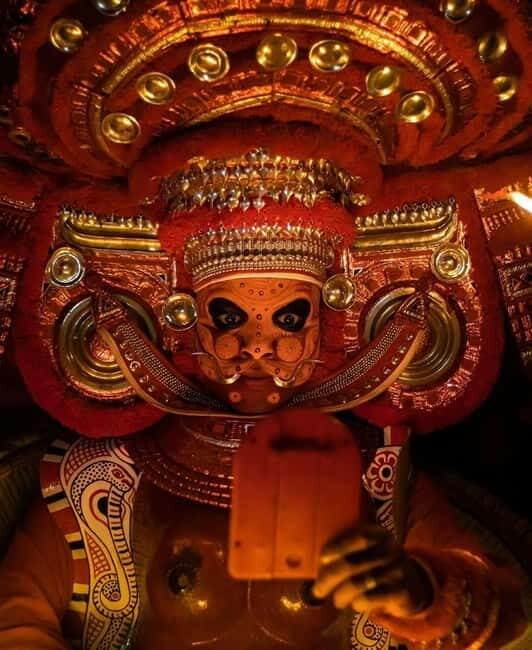
You’ll often hear Theyyam described as a dance of the gods. The performer doesn’t just play a role. They embody a deity through elaborate headgear, dramatic makeup, and costume work that signals transformation.
The atmosphere shifts with the soundtrack. Drumbeats and ritual chants guide the performance, and the dancer’s trance-like movements plus piercing expressions can feel startlingly direct. It’s not “background entertainment.” It’s closer to witnessing belief made visible.
A helpful note for expectations: since Theyyam originates as a ritual tradition, what you see here may be a stage presentation rather than a full ritual context. Still, the core power remains—the look, the rhythm, and the intensity of the performer’s presence.
For photos, remember the rule: photography is allowed, but flash is not. Low-light conditions can make flash tempting, so keep your flash turned off to follow venue rules and avoid distracting others.
Interacting After the Show: Questions, Photos, and Closure
After the final segment, you usually get a window to interact with performers. This is one of the best parts of a cultural show like this because it turns your viewing into something more human.
You can often ask questions and take photographs during the designated interaction time. It’s also a good chance to connect what you saw—makeup layers, gesture codes, trance rhythms, and martial forms—to the effort behind them.
If you want to make this time count, keep your questions simple. Ask what each style demands physically and mentally, or what the makeup and music are meant to communicate.
Then your driver is waiting to bring you back to your hotel in comfort. It’s a real advantage in Kochi evenings, when traffic and finding your way back can be annoying.
A few more Kochi tours and experiences worth a look
Price and Value: What About $11 Really Covers
At around $11 per person, the value here is mostly about what’s bundled. You get:
- Three major art forms in one evening: Kathakali, Kalaripayattu, and Theyyam
- Round-trip hotel transfers from Kochi or Ernakulam
- A Kathakali makeup demonstration (not just the performance)
- English guidance and a live guide presence
- An opportunity for interaction and photos
- Theater-style benefits like skipping the ticket line
What you do not get is food and drinks, plus personal expenses. So if you’re hoping to “show up and forget dinner,” plan ahead. Pick up water beforehand or plan to eat after you return, because the cultural evening does take up your appetite.
Also, note what’s included is performance-focused, not a full-day tour. If you want more meals, stops, or a longer sightseeing schedule, you’ll need to add that separately.
Still, for the specific combo you’re buying—triple-bill culture plus transportation—this is priced in the range of a good local outing rather than a tourist-only splurge.
Who This Triple-Bill Fits Best (and Who Might Want a Different Plan)
This experience is a strong match if you like:
- Live performance with clear explanation, not just sitting in silence
- Art that depends on hands, face, rhythm, and body discipline
- Seeing how Kathakali’s story language, Kalaripayattu’s physical language, and Theyyam’s ritual energy all work differently
It’s also a smart choice if you’re short on time in Kochi. Instead of hunting down separate events, you get a focused evening in one place, with transfers handled for you.
On the other hand, skip or rethink it if:
- You use a wheelchair (the tour is not suitable for wheelchair users)
- You’re sensitive to loud percussion and chanting, since both Kathakali and Theyyam lean heavily on live sound
- You’re expecting food included, because it isn’t
Should You Book This Kochi Cultural Evening?
If you’re in Kochi and you want one evening that covers a lot of Kerala’s performing traditions without the hassle, I’d book it. The best part is the structure: makeup first, then Kathakali storytelling, then martial arts intensity, then the ritual force of Theyyam. It’s variety that still feels connected through discipline, rhythm, and transformation.
Book it especially if you care about watching closely—the eyes in Kathakali, the balance in Kalaripayattu, and the ritual focus in Theyyam. If you prefer lightweight entertainment with no rules, remember flash photography is not allowed and the venue isn’t wheelchair accessible.
FAQ
How long does the show last?
The overall experience is listed as 1 to 7 hours, and it’s described as a 3-hour showcase of Kerala’s art forms. Specific start times vary by availability.
Do I get hotel pickup and drop-off?
Yes. You get round-trip transfers from your hotel in Kochi or Ernakulam, depending on the option you select. Your driver returns you after the event.
Is the guide available in English?
Yes. English-language guidance is provided by a live tour guide.
Can I take photos during the performances?
Photography is allowed, but flash photography is not permitted.
Is this tour wheelchair accessible?
No. It’s not suitable for wheelchair users.
Are food and drinks included?
No. Food and drinks are not included in the experience.
What are the cancellation and payment options?
There is free cancellation up to 24 hours in advance for a full refund. You can also reserve now and pay later.