REVIEW · KERALA
Authentic local vegetarian Kerala cooking class in Wayanad
Book on GetYourGuide →Operated by Centre Home Wayanad · Bookable on GetYourGuide
Spice-stained hands teach you flavor fast. This Kerala vegetarian cooking class in Wayanad, hosted by Rahul at his home, blends a walk through gardens and plantations with real kitchen time with chef Sharadha. The spice garden portion alone is worth it, because you see ingredients up close and talk about how people actually use them.
What I really loved was the home-kitchen feel. You work with classic Kerala staples like coconut and ingredients such as rava, papadam, and vegetables, then you get a recipe print-out so you can recreate the flavors for your family at home. One heads-up: this is not a sit-and-watch class, and it’s not suitable for children under 16, so plan for walking and hands-on chopping.
In This Review
- Key things I’d bet on before you book
- Why Rahul’s Wayanad home cooking feels real (not staged)
- 3.5 hours in Wayanad: how the day actually runs
- Coconut, garden walks, and spice spotting with Rahul
- Temple, coffee plantation, and banana fields: food grows with the scenery
- Back in the kitchen with Sharadha: hands-on Kerala technique
- Ingredients that matter: rava, papadam, and the Kerala flavor logic
- Eating what you made: the payoff that sticks
- Price and value: is $15 a smart deal in Wayanad?
- Who this Kerala vegetarian class is best for
- Practical tips so you get the most out of it
- Should you book this Kerala cooking class in Wayanad?
- FAQ
- Is this cooking class vegetarian?
- What will I cook, and what ingredients will I work with?
- What language is the class taught in?
- How big is the group?
- How long is the experience?
- Do I get anything to take home?
- Is there an age limit, and can I cancel for a refund?
Key things I’d bet on before you book
- Rahul’s local perspective: he guides you around Wayanad life, agriculture, and food habits.
- Sharadha runs the cooking: clear technique, kitchen confidence, and lots of Q&A.
- Fresh ingredients, not mystery packets: you start with coconut and encounter plants/spices in the garden.
- Plantation-style scenery: you’ll visit areas like a coffee plantation and banana plantation.
- Take-home recipe print-out: you leave with the steps to cook it again later.
Why Rahul’s Wayanad home cooking feels real (not staged)
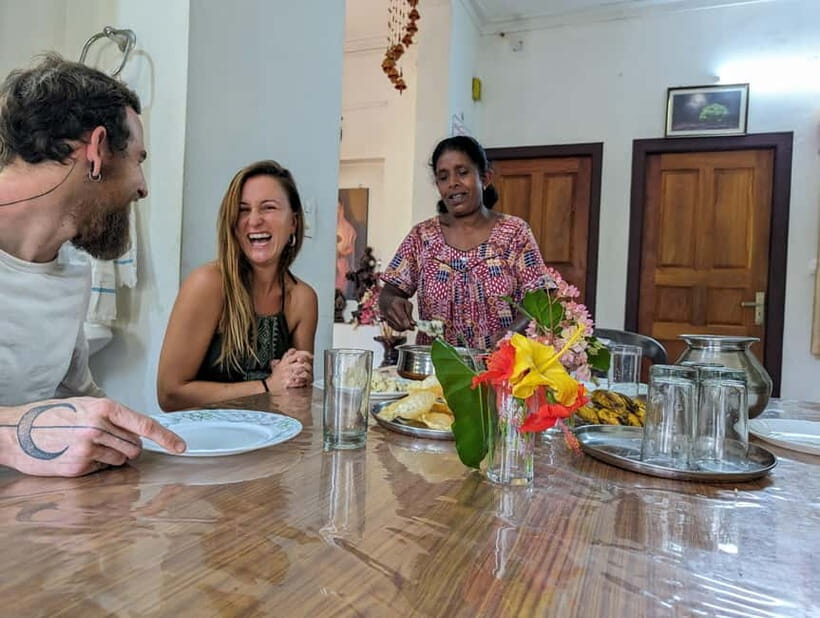
There are cooking classes, and then there are cooking classes that feel like a day in someone’s life. This one is the second kind. You start at Rahul’s place in Wayanad, and the day has a gentle rhythm: morning-air calm outside, then serious learning in the kitchen with Sharadha.
The best part is that food here is explained as a system, not just a dish. You’ll talk about ingredients people grow and buy locally, and you’ll connect that to what ends up on the plate. When you finally cook, it makes more sense than memorizing a recipe.
You also get a strong local-host energy. Rahul is a Wayanad native, so the stories aren’t tourist rewrites. When he points out plants and foods, it’s the kind of knowledge that comes from daily life, not a script.
The class is small too, limited to 6 participants, which helps the kitchen feel personal and makes it easier to get answers while you’re working.
You can also read our reviews of more tours and experiences in Kerala.


3.5 hours in Wayanad: how the day actually runs
In total, plan on about 3.5 hours. The flow is intentionally simple, and it works well even if you’re not a fearless cook.
First, you meet at Centre Home Villa Wayanad. Then the experience moves into the outdoors: you’ll begin with a refreshing coconut moment, followed by a guided walk that includes garden and farm areas. This is where you see ingredients and plants connected to Kerala cooking.
After that comes the kitchen portion. You cook a traditional Kerala vegetarian dish with Sharadha, and you eat what you make together. The day ends with you leaving with the recipe print-out, which is the practical part that turns the experience into something you can repeat later.
Coconut, garden walks, and spice spotting with Rahul
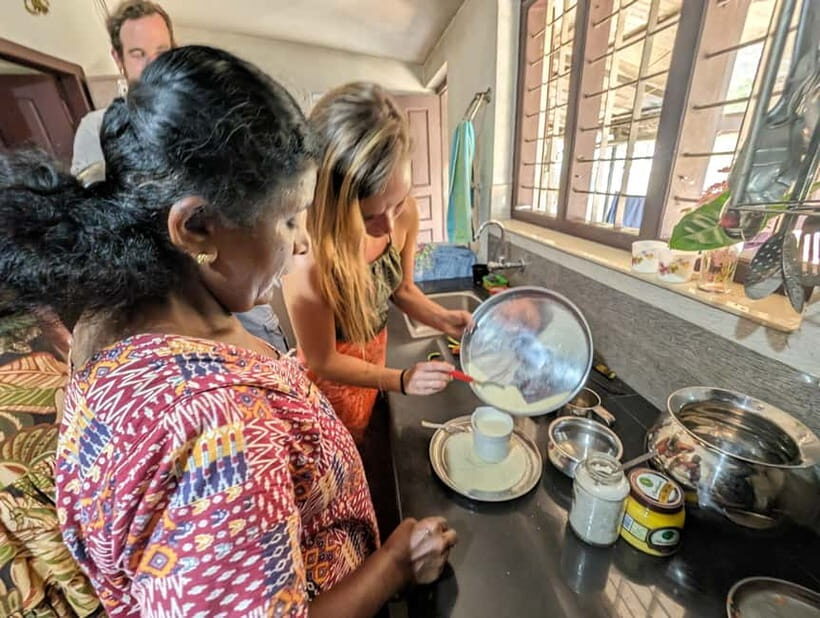
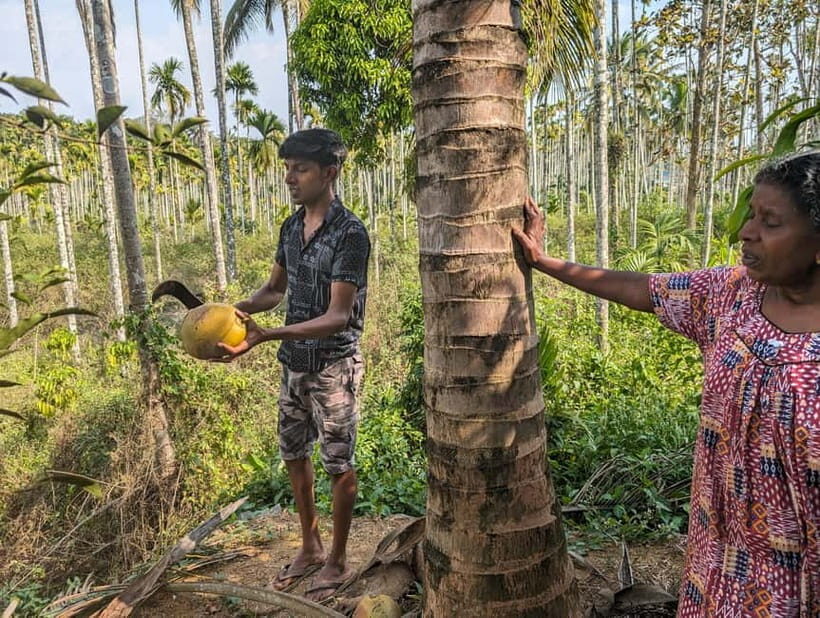
The morning start matters here because it sets your mindset. You begin with coconut, which instantly grounds the class in a Kerala ingredient you’ll actually recognize and want to use again.
From there, you walk through Rahul’s garden and farming areas. Expect to see plants and fruits in their real settings, and you’ll learn how people pick and use ingredients. One of the standout parts for me is that it’s not vague. Rahul shows you what’s there and explains how it connects to cooking.
In the kitchen later, that matters because you already understand what those ingredients look like before they turn into food. It also makes you more attentive while Sharadha teaches technique—like how spices are used, when things are chopped, and what texture you’re aiming for.
If you like hands-on moments, this portion is where you get them. A few people in past groups have mentioned chopping coconuts and even pineapples as part of the process, so don’t show up expecting everything to be “watch only.”
Temple, coffee plantation, and banana fields: food grows with the scenery
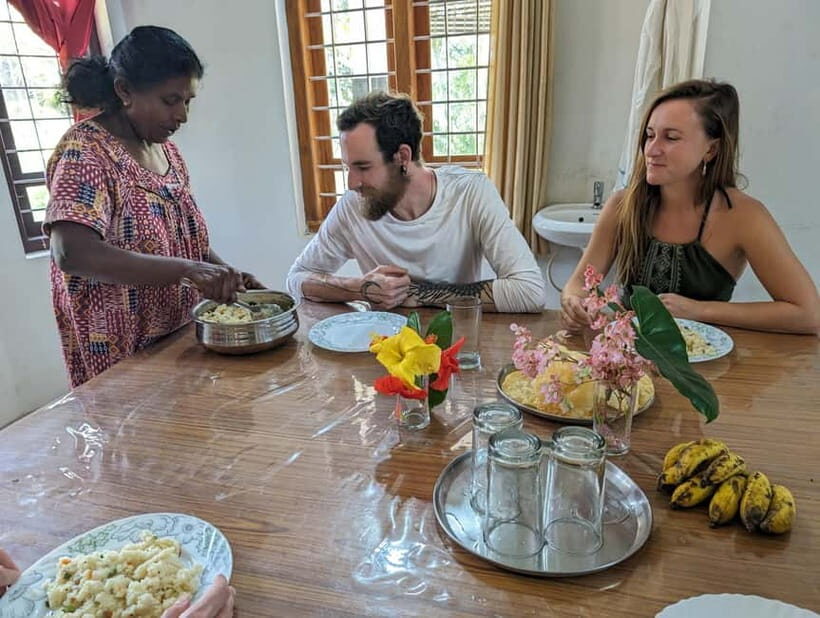
Kerala cuisine is tied to land, weather, and farming. That’s why the class includes stops beyond the kitchen: you’ll visit a coffee plantation area and a banana plantation, plus you’ll pass through other places like fields, farm areas, and a temple stop.
Even if you’re short on time in Wayanad, these are the kinds of stops that teach you more than a photo. You get a sense of how agriculture shapes what ends up in daily meals—especially in a vegetarian kitchen where plant ingredients carry the whole flavor load.
The coffee stop also gives you a broader lens. Kerala is known for spices and coffee, and seeing the plantation approach helps you understand why coffee-adjacent agriculture exists alongside other crops and kitchen staples.
There’s a practical side too: these outdoor sections gently prepare your appetite for the cooking portion. You’ll come inside with that calm, ready feeling that makes learning easier.
Back in the kitchen with Sharadha: hands-on Kerala technique
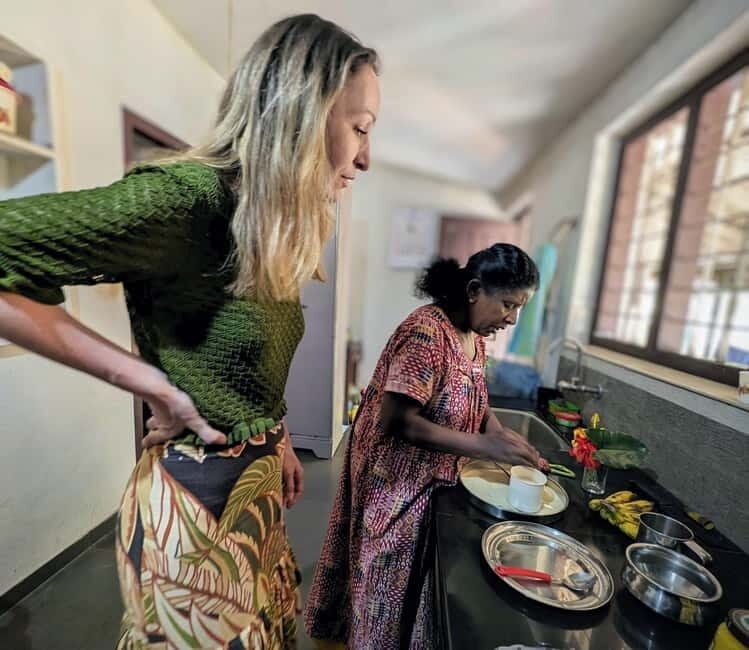
When you shift from the garden to the kitchen, the energy changes. Sharadha focuses on teaching you the steps and the “why,” not just the final dish.
You’ll cook together as a group, and the goal is simple: make a traditional Kerala vegetarian dish the way the family kitchen would. You’ll gather around, follow Sharadha’s instructions, and work through the process as the ingredients come together.
This is the part where the class feels like a real lesson. Sharadha isn’t just showing you how to assemble—she’s guiding how to handle texture, spice timing, and the kind of balance Kerala cooking leans on.
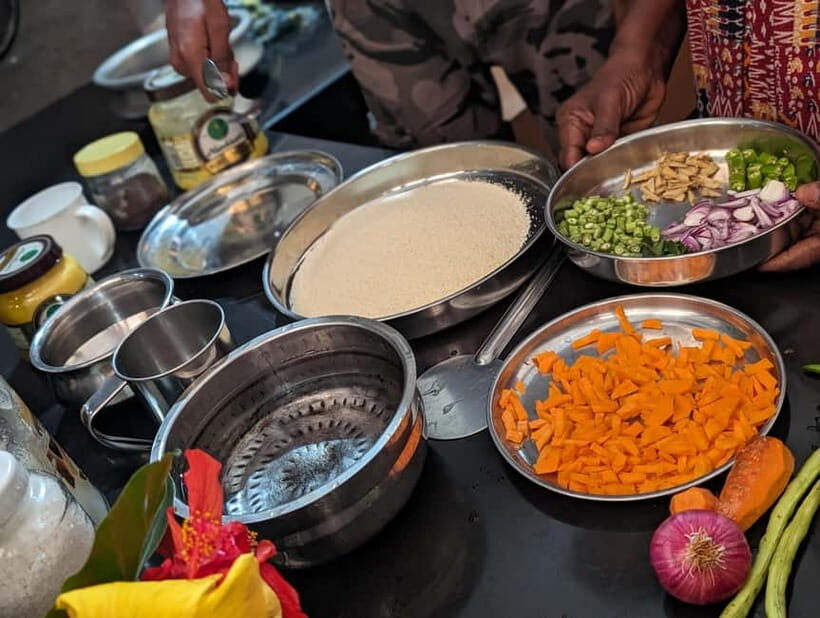
From what you’re offered, you can expect to work with ingredients that show up often in Kerala vegetarian meals. The class specifically mentions Indian spices and staples like rava, vegetables, and papadam, plus other ingredients that support the dish’s texture and crunch.
One more detail I like: you’re not thrown into uncertainty. You get an instructor who explains clearly in English, and because the group is small, you can ask questions while you cook.




Ingredients that matter: rava, papadam, and the Kerala flavor logic
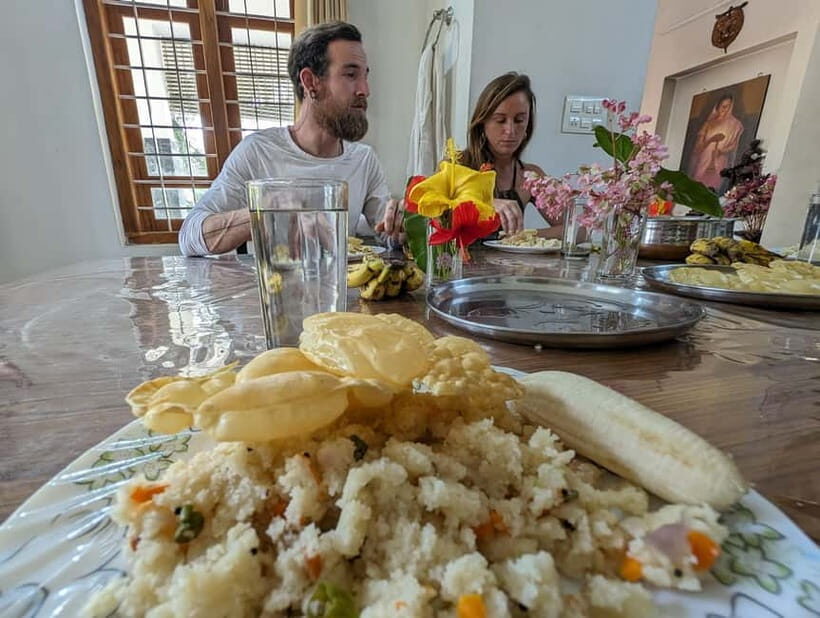
Kerala vegetarian cooking has a distinctive feel. It’s not just “spice-forward.” It’s also about texture—crisp, soft, and crunchy elements working together—and about how spices behave in fat and heat.
Here’s what you can take away from the ingredients used in this class:
- Rava (often linked with roasted textures): it helps create body and a more layered feel than plain flour-based cooking.
- Papadam: it brings crunch and that satisfying snap, which is crucial in many Kerala meals even when the dish is vegetarian.
- Vegetables and spice mixes: the balance is usually about building flavor gradually, not dumping everything in at once.
The kitchen teaching style helps you notice these patterns. Instead of only asking what’s in the dish, you learn how the dish is built so you can adapt at home. That’s the real value of a home-class format: you’re learning technique you can reuse, not chasing a one-time recipe.
Eating what you made: the payoff that sticks
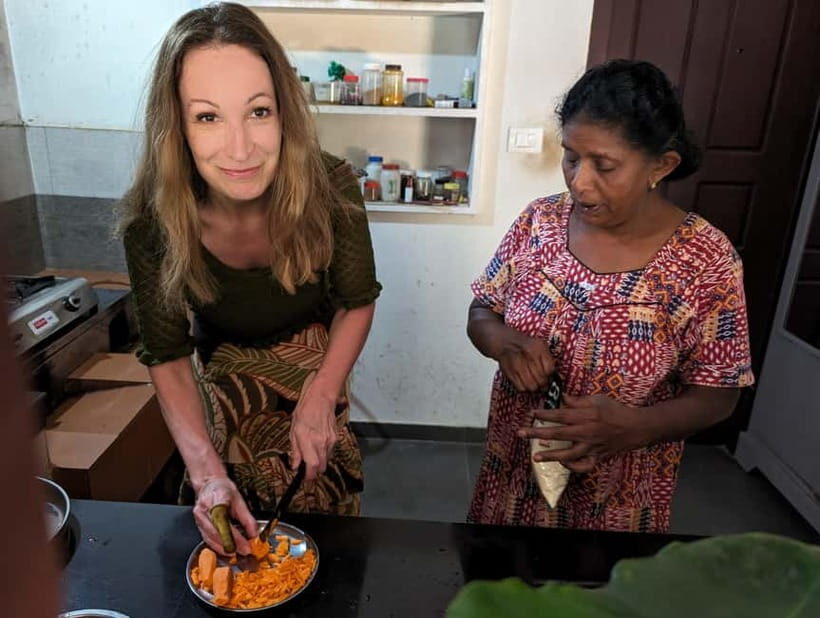
After cooking, you eat the meal you prepared. This matters more than it sounds. Many classes end with the food vanishing or feeling like an afterthought. Here, the structure is: you cook, then you enjoy.
And because it’s eaten right away, you get a clearer sense of what success tastes like. If something is too spicy, under-salted, or missing texture, you’ll notice immediately—and that helps you connect instruction to result.
You also get to share the table with the group. With a limit of 6 participants, the meal feels like a conversation, not a line of strangers.
Price and value: is $15 a smart deal in Wayanad?
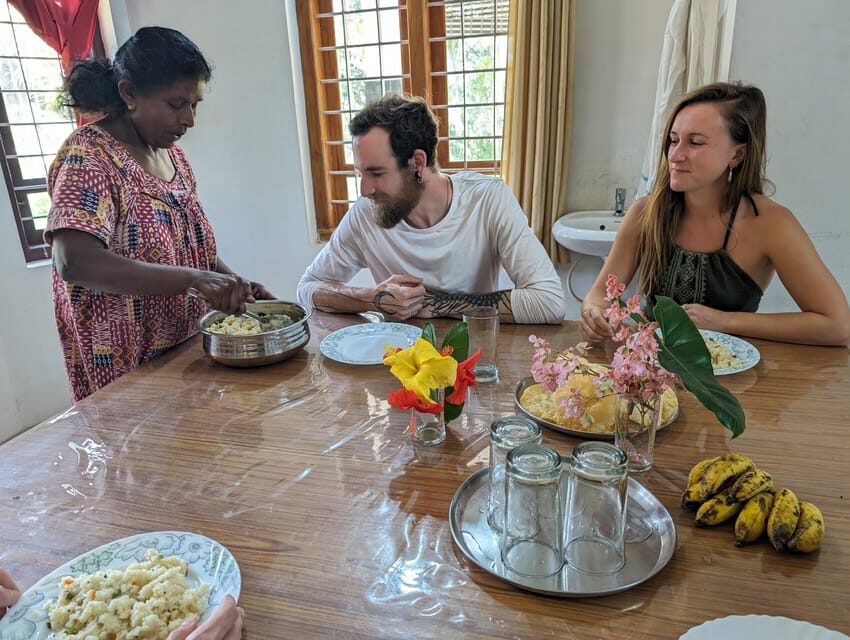
At $15 per person for about 3.5 hours, this class is strong value—especially when you factor in what you’re getting.
You’re not just paying for a recipe. You’re paying for:
- a guided outdoor walk through garden/farm areas,
- a coffee plantation and banana plantation visit,
- a cooking lesson led by Sharadha,
- the meal you cook,
- plus a recipe print-out to take home.
In practical terms, you get a full “half-day experience,” not a quick kitchen workshop. You also get small-group attention, which is hard to find at this price point.
The only potential mismatch is expectations. If you want a high-end restaurant cooking style with lots of equipment and a showy presentation, this won’t match that vibe. It’s a real home kitchen with a real agricultural setting. That’s the charm—and also the only “type mismatch” I’d warn about.
Who this Kerala vegetarian class is best for
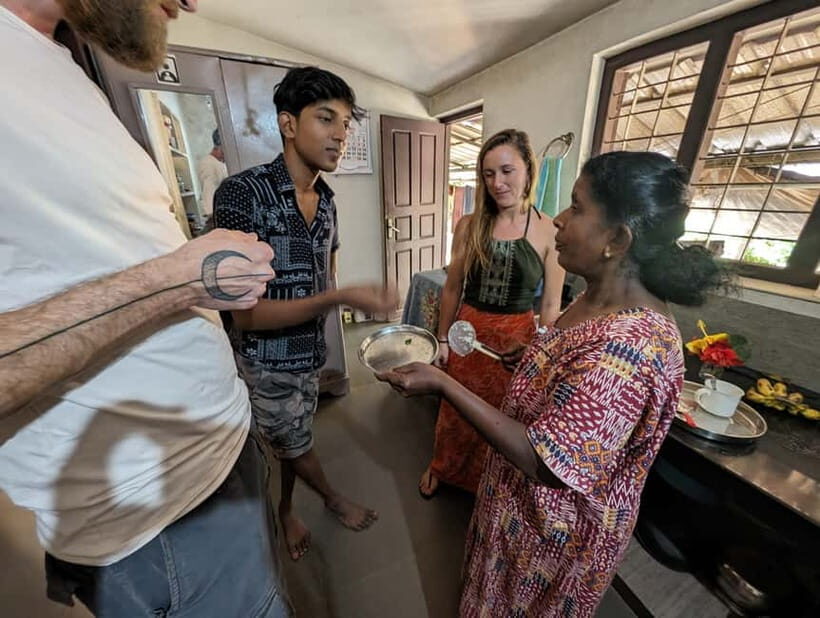
I think this is ideal if you want food + place in one package.
You’ll probably enjoy it most if:
- you like vegetarian cooking and want Kerala flavor you can recreate,
- you enjoy local hosts and farm-to-food storytelling,
- you want hands-on cooking with space to ask questions,
- you’re traveling solo or in a small group and want personal attention.
It may be less ideal if:
- you’re expecting a kid-friendly activity (it’s not suitable for children under 16),
- you dislike walking through garden/farm areas,
- you want a purely indoor experience.
Practical tips so you get the most out of it
A few basics will help you enjoy the day without stress:
- Wear comfortable shoes for garden and field walking. Even when it’s not extreme, you’ll likely be on uneven ground.
- Plan for hands-on work. If you’re not used to chopping or spice handling, take your time and let Sharadha guide you.
- Bring a light layer. Kerala mornings can feel different depending on weather and the day.
- If you want to cook later, take photos of your setup while cooking. Then use the recipe print-out to match what you learned.
Should you book this Kerala cooking class in Wayanad?
If you’re looking for a local, vegetarian Kerala cooking class that includes garden walking, plantation scenery, and real home-style instruction, this is an easy yes. The combination of Rahul’s local knowledge and Sharadha’s kitchen guidance is the core reason it’s memorable.
Book it if you want more than recipes. You’ll leave with a clear sense of how Kerala cooking connects to ingredients grown nearby—plus a dish you can repeat at home with confidence.
Skip it only if you’d rather keep things strictly indoor, or if your group includes children under 16.
FAQ
Is this cooking class vegetarian?
Yes. It’s described as an authentic local vegetarian Kerala cooking class.
What will I cook, and what ingredients will I work with?
You’ll cook a traditional Kerala dish with guidance from the kitchen chef Sharadha. The experience includes working with Kerala cooking ingredients such as rava, vegetables, papadam, and Indian spices, plus other ingredients used in the dish.
What language is the class taught in?
The class is taught in English.
How big is the group?
It’s a small group limited to 6 participants.
How long is the experience?
The duration is 3.5 hours.
Do I get anything to take home?
Yes. You receive a recipe print-out, and you also eat the meal you prepare.
Is there an age limit, and can I cancel for a refund?
The activity is not suitable for children under 16. You can cancel up to 24 hours in advance for a full refund.