REVIEW · NEW DELHI
Agra tour by Train
Book on Viator →Operated by Trek India Tours · Bookable on Viator
Agra by train is a low-stress way to see the big sights. This small-group day keeps you moving with Gatimaan Express and a guided plan that hits the Taj Mahal, Agra Fort, and Itimad-ud-Daulah without wasting your whole day in logistics. One thing to plan for: entrance fees aren’t included, so you’ll pay separately at each site.
What I really like is the human side of the trip: an English-speaking guide who can make Mughal-era details click, plus the practical extras that keep the day smooth. In the guide notes people highlight Khan as kind, welcoming, and well prepared, and that matters when you’re touring major monuments back-to-back.
In This Review
- Key highlights at a glance
- Why the Gatimaan Express Makes Agra Feel Manageable
- Pickup From Your Delhi Location and the Nizamuddin Train Handoff
- Taj Mahal: Two Hours to See More Than the Postcard
- Agra Fort: Mughal Power Up Close (and Why It Complements the Taj)
- Itimad-ud-Daulah (Baby Taj): The One-Hour Stop That Often Wins People Over
- Lunch and Bottled Water: The Hidden Value of a Real Day Plan
- English-Speaking Guide: What You Gain Beyond the Facts
- Price and What You’re Actually Getting for $100.98
- Practical Tips Before You Go (So the Day Stays Fun)
- Who This Tour Is Best For
- Should You Book This Agra Tour by Train?
- FAQ
- How long is the Agra tour by train?
- What pickup and drop-off is included in Delhi?
- What train is used for the journey to Agra?
- Is lunch included?
- Are entrance fees to the monuments included?
- Do I need a passport for this tour?
- Is there a guide, and what language do they speak?
- Is the tour private or shared with others?
- What is the cancellation policy?
Key highlights at a glance
- Gatimaan Express timing that fits a full sightseeing day
- English-speaking guide who helps the sites make sense fast
- Taj Mahal + Agra Fort + Itimad-ud-Daulah in one organized loop
- Lunch and bottled water included, so you’re not hunting midday
- Private group setup, meaning it’s just your group, not a huge crowd herd
- Mobile ticket and group discounts that can make the planning feel easier
Why the Gatimaan Express Makes Agra Feel Manageable

Agra can be a “good idea” that turns into a “long day” if you try to DIY it. The smart move here is using the Gatimaan Express instead of piecing together schedules, buying train tickets on your own, and hoping everything lines up. Your day is built around a train connection, then topped off with city touring by private vehicle.
That structure does two things for you. First, it reduces decision fatigue. Second, it gives your guide a clear rhythm: move, see, explain, and then move again. When you’re tackling three monument stops in one day, that rhythm helps you actually enjoy what you’re seeing instead of just surviving the schedule.
You’ll still want to keep your expectations realistic. This is a day trip, not a slow travel weekend. But with the train portion handled for you, the experience feels like a focused highlights tour—more “done right” than “rushed chaos.”
You can also read our reviews of more tours and experiences in New Delhi.



Pickup From Your Delhi Location and the Nizamuddin Train Handoff
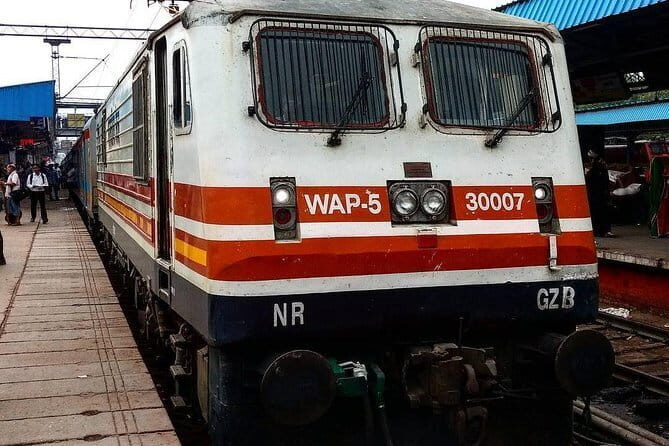
The day starts with hotel or port pickup in Delhi, then a drop at Nizamuddin railway station so you can catch the train for Agra. It’s the kind of detail you’ll feel grateful for once you’re in Delhi traffic—having someone manage that timing is a real value.
Two practical reminders that matter:
- Carry a valid photo ID on travel day.
- You’ll need passport details at booking, and you’ll need a current valid passport on the day of travel.
That might sound intense, but it’s common for travel that involves passenger details and ticketing requirements. If you’re traveling with multiple people, double-check names and passport numbers early, so nothing causes delays later.
Also note the tour is described as near public transportation. That’s useful as a backup if you’re trying to plan your own buffer, but the tour itself already includes pickup and drop-off, so you likely won’t need to rely on transit.
Taj Mahal: Two Hours to See More Than the Postcard
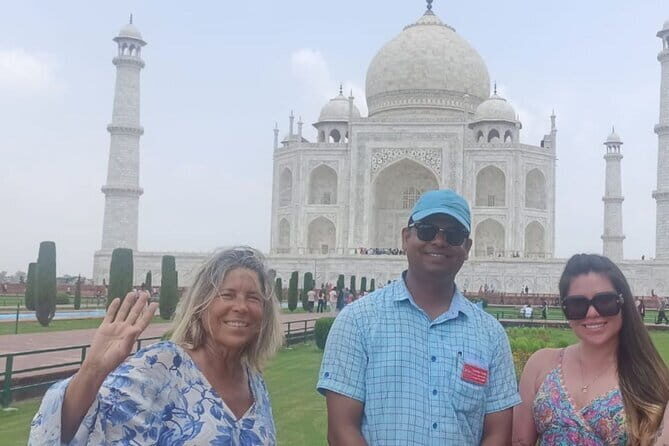
The Taj Mahal is the headline stop for a reason. It’s an ivory-white marble mausoleum on the south bank of the Yamuna River, commissioned in 1632 by Mughal emperor Shah Jahan for his wife Mumtaz Mahal. It also holds Shah Jahan’s tomb. That’s a lot of meaning for one building, and your guide’s job is to translate it into something you can actually follow while you’re there.
You’re given about two hours at the Taj Mahal. That’s a good window for a guided loop where you learn the big story, then have enough time to look around on your own. The Taj isn’t just one view—it’s layered with perspectives, symmetry, and lots of architectural detail. Two hours is enough to get your bearings and then spend a bit of time focusing on what hits you personally.
One drawback to plan around: entrance fees aren’t included. So set aside time in your mental budget for ticket payment and the site entry process. If you’ve never visited major monument sites in India, you might also find security and entry steps take longer than expected. Build flexibility into your mood—this is a famous place, so expect it to be popular.
Agra Fort: Mughal Power Up Close (and Why It Complements the Taj)
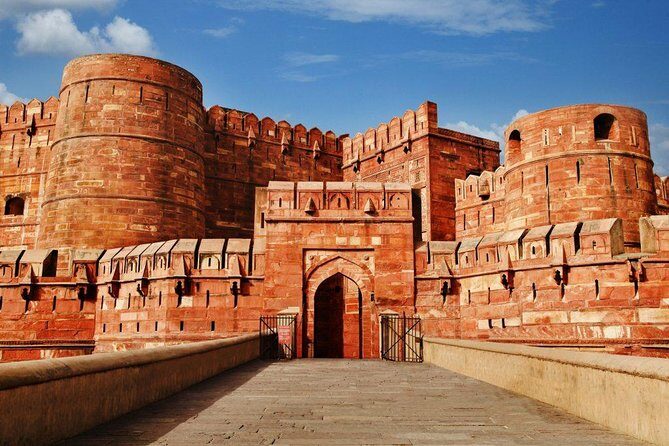
After the Taj, you’ll head to Agra Fort, a UNESCO World Heritage site about 2.5 km northwest of the Taj Mahal. This is where you see the Mughal world as more than romantic marble. Agra Fort served as the main residence of Mughal emperors until 1638, when the capital shifted from Agra to Delhi.
You’ll have about two hours here. The value of this stop is balance. The Taj Mahal often pulls all your attention. Agra Fort gives you the other side of the same era: walls, fortification, and the sense of rule and control. It helps you understand why the Taj Mahal could be commissioned at all—because this was a place where power was concentrated and resources could be directed toward monumental building.
Potential consideration: since entrance fees aren’t included, you’ll be making quick decisions about ticket payments as you go. It’s not a dealbreaker, but it does mean you should carry some cash or a payment method you know works.
If you’re the type who likes architecture and history in layers, Agra Fort is where your interest can deepen. If you’re mainly a “photos and move on” person, you may still enjoy it, but you’ll likely appreciate it more if you let your guide point out the story behind the stones.
Itimad-ud-Daulah (Baby Taj): The One-Hour Stop That Often Wins People Over

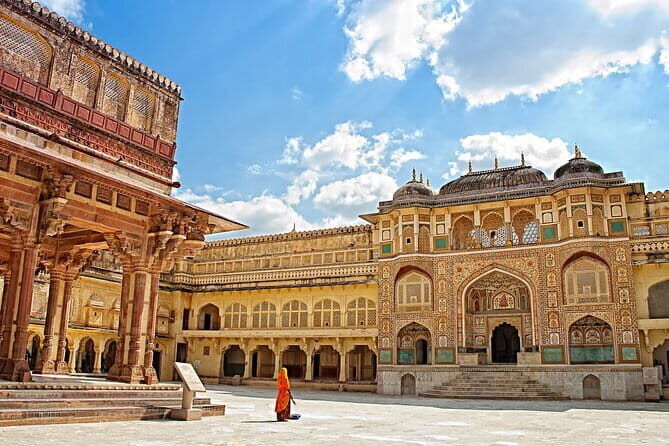
Next comes Tomb of Itimad-ud-Daulah, sometimes called the Baby Taj. It’s a Mughal mausoleum in Agra, often described as a “jewel box,” and it’s frequently considered something of a draft for the Taj Mahal.
This stop is about one hour, which is exactly the right amount of time. It’s not a “bigger is better” site. Instead, it’s the kind of place where smaller details and careful decoration catch your eye. The guide’s explanations help you see the craftsmanship and understand why this tomb earned its nickname and reputation.
The big advantage of including it is variety. After the Taj’s scale and Agra Fort’s fortress feel, Itimad-ud-Daulah adds finesse. It’s also a great counterpoint if you’ve had enough of huge monumental spaces for one day and want something more intimate.
Entrance fees still aren’t included here, so again, just plan for ticket costs at each stop. But if you want one site that feels different from the rest, this is your best bet in the itinerary.





Lunch and Bottled Water: The Hidden Value of a Real Day Plan

One reason this tour feels practical is that lunch is included, along with bottled water. That’s not a small detail. For day trips, hunger and dehydration are what turn a “great plan” into a grumpy afternoon.
Lunch inclusion means you’re not scrambling to find something quickly between monument visits. And bottled water helps you stay comfortable while walking and standing in sun, shade, and changing crowds.
Is it going to be fine dining? The tour doesn’t promise that. But it does promise you won’t spend your best hours negotiating where to eat. For most people, that’s the difference between enjoying Agra and feeling like you’re constantly managing logistics.
English-Speaking Guide: What You Gain Beyond the Facts

The sites on this itinerary are famous enough that you could read a guidebook and figure them out. But a good guide does something else: they help you notice what you’d otherwise miss and they connect the dots while you’re standing in the right spot.
In the feedback around this tour, the guide experience gets high marks for being fun, knowledgeable, and well prepared. A key name you’ll see associated with the guide service is Khan, described as kind and welcoming. That matters because the day is packed—Taj Mahal, Agra Fort, and then Itimad-ud-Daulah—so you want someone who can keep the energy up and explain without turning it into a lecture.
Also, the guide language matters. This tour specifically includes a professional English-speaking guide, which is a real quality-of-life perk when you’re learning quickly in a limited time window.
Price and What You’re Actually Getting for $100.98

At $100.98 per person, the best way to judge value is by what’s covered versus what you still pay on your own.
Included:
- Delhi pickup and drop-off
- Train tickets (Delhi to Agra and Agra to Delhi)
- Professional English guide
- Private vehicle transport for the city portion
- Lunch and bottled water
- All taxes and handling charges
Not included:
- Entrance fees for the monuments
So you’re paying for a bundled day where train travel and sightseeing logistics are handled, not just for someone to walk beside you. For many visitors, the hardest part of Agra isn’t the monuments—it’s the timing, ticketing, and getting between places without losing your whole day. This tour tackles those pain points directly.
If you were to do it separately—book trains, arrange guide time, and coordinate city transfers—the total usually trends higher once you add up the effort and last-minute pricing. Here, the packaged feel makes it easier to control your schedule and enjoy the highlights without constant problem-solving.
Practical Tips Before You Go (So the Day Stays Fun)
Here are the key things you should do before you step into the plan:
1) Handle your passport details early.
You’ll need passport name, number, expiry, and country at booking, and you’ll need a current valid passport on the day of travel.
2) Carry your valid photo ID.
The day includes a train handoff and requires identification, so don’t pack your ID in a place you can’t reach easily.
3) Expect to pay monument entrance fees on-site.
Admission tickets are not included, so plan for that budget item.
4) Give yourself a flexible mindset.
This is a full day with multiple major sites. Even when everything is organized, entry lines, photo stops, and walking pace can affect timing. Having a guide and transport reduces risk, but the day is still busy.
5) Use the mobile ticket.
The tour includes a mobile ticket, which you’ll want accessible on your phone. If your phone battery is always at 20% by afternoon, bring a charger or power bank.
One more thought: if you’re the kind of person who loves to linger, you may feel a bit pressed by the set time windows (two hours at Taj, two at the fort, one at the tomb). The tradeoff is that you get the full set of highlights in a single day.
Who This Tour Is Best For
This fits best if you want to see the “musts” without turning your trip into a logistics project.
You’ll probably love it if:
- You have limited time in India and want a high-value day trip
- You prefer small-group guidance over wandering on your own
- You want train travel handled and a clear plan for each site
- You care about comfort—pickup, private city transport, lunch, and bottled water help
You might not love it as much if:
- You want lots of free time at just one site (this is structured and time-based)
- You’re trying to minimize extra on-site payments (entrance fees aren’t included)
- You don’t like group pacing, even when it’s small
Should You Book This Agra Tour by Train?
If your goal is to see the Taj Mahal and also cover Agra Fort and Itimad-ud-Daulah in one day, this is a solid pick. The biggest strengths are practical: train tickets included, a real guide in English, and the day is organized so you’re not stuck solving transport and timing between monuments. The lunch and bottled water also reduce the usual day-trip stress.
My advice: book it if you’re ready to handle entrance fees on-site and you’re fine with a guided schedule. If you’re choosing between doing Agra independently or with support, this tour leans toward the “smoother and easier” option—especially helpful when you’re dealing with passport requirements and a specific train connection.
If you want an Agra day that feels like you planned it well (because you did), this is the kind of tour that delivers.
FAQ
How long is the Agra tour by train?
The duration is approximately 10 hours.
What pickup and drop-off is included in Delhi?
Hotel or port pickup and drop-off in Delhi are included, with drop-off at Nizamuddin railway station to catch the train.
What train is used for the journey to Agra?
The tour uses the Gatimaan Express for travel between Delhi and Agra, and then back to Delhi.
Is lunch included?
Yes, lunch is included in the package.
Are entrance fees to the monuments included?
No. Entrance fees for the monuments are not included.
Do I need a passport for this tour?
Yes. Passport details are required at booking, and a current valid passport is needed on the day of travel.
Is there a guide, and what language do they speak?
Yes. A professional English-speaking guide is included.
Is the tour private or shared with others?
It is private in the sense that only your group participates.
What is the cancellation policy?
Free cancellation is available. You can cancel up to 24 hours in advance for a full refund.