REVIEW · NEW DELHI
7 Days Private Tour to New Delhi, Agra, and Jaipur
Book on Viator →Operated by Rajasthan Cab · Bookable on Viator
Three cities can feel like a magic trick.
This 7-day Golden Triangle tour strings together Delhi, Agra, and Jaipur in one smooth route, with private transportation and guided stops that hit the big landmarks plus a little breathing room. I like that the plan mixes iconic sights (including sunrise Taj Mahal) with practical time for local markets and food stops, so the trip doesn’t feel like a museum sprint.
Two things I really like: first, you get true guidance, not just a driver with a map. In the feedback tied to this tour style, drivers such as Kedar Singh/Kedhar Singh, Dheeraj, and Shailu Agrawal come up often for being careful, punctual, and helpful, including arranging local guides and suggesting what to do next. Second, you’re not locked into one pace. The schedule leaves room for side streets in Old Delhi and chances to snack along the way, which is where the day-to-day India feeling shows up.
One consideration: the distances add up, and you’ll spend a lot of time in the car between cities. You’ll also need an early wake-up for Agra’s sunrise visit, and that can be annoying if you’re the type who treats sleep like a sacred ritual.
In This Review
- Key highlights worth your attention
- Airport pickup and your first night in Delhi
- Old Delhi to Qutub Minar: Day 2’s Delhi big hits
- Red Fort and Jama Masjid: power, scale, and stonework
- Chandni Chowk and India Gate: the everyday city rhythm
- Qutub Minar and Humayun’s Tomb: UNESCO-style architecture lessons
- Lotus Temple and Birla Mandir: calmer stops before the evening
- Agra Fort and Taj Mahal: the drive south and what to expect
- Sunrise Taj Mahal and Fatehpur Sikri on the way to Jaipur
- Sunrise Taj Mahal: why early time matters
- Fatehpur Sikri: Akbar-era city planning
- Road to Jaipur and an easy evening
- Jaipur palaces, Jantar Mantar, and Albert Hall Museum
- Jal Mahal: a palace in the lake
- Hawa Mahal: the building with hundreds of windows
- City Palace: Rajput and Mughal blending in one complex
- Jantar Mantar: the astronomer’s toolkit
- Albert Hall Museum: ending with artifacts
- Jaipur to New Delhi transfer: the day you’ll mostly ride
- Departure day in Delhi
- Price and value: what you’re really paying for
- Who this private tour is best for
- Should you book this 7-day Delhi, Agra, Jaipur private tour?
- FAQ
- Do I get picked up at the airport?
- Is this a private tour or shared group?
- What’s included in the tour price?
- Are lunch and dinner included?
- How long does the transfer take between Jaipur and New Delhi?
- Can I get a full refund if I cancel?
Key highlights worth your attention
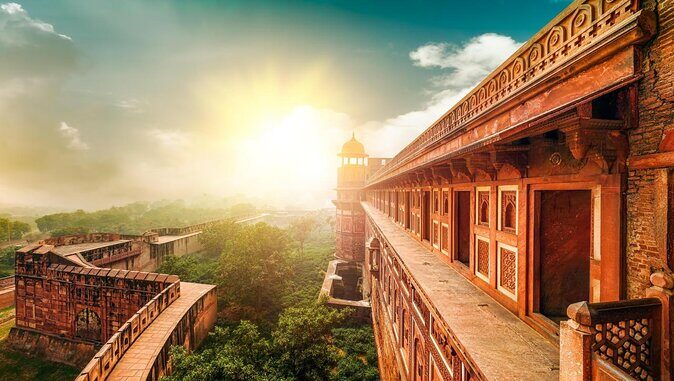
- Sunrise Taj Mahal in Agra: an early start that pays off with calmer viewing and better light for photos.
- Old Delhi, Old Markets, and major Mughal monuments: Red Fort, Jama Masjid, and Chandni Chowk on the same day.
- A smart mix of Jaipur icons and lesser-known stops: from Hawa Mahal and City Palace to Jantar Mantar and Albert Hall Museum.
- Private comfort with air-conditioned transport: it helps a lot when the days get hot or you simply want less friction.
- Service that adapts when you ask: multiple reviews mention customization and extra practical stops like food or pharmacy runs.
Airport pickup and your first night in Delhi
Day 1 is all about getting you settled. When you land at Indira Gandhi International Airport, a representative meets you and takes you to your pre-booked hotel. After check-in, you’re free to reset before the sightseeing starts in earnest.
I like this opening because Delhi can be confusing the first few hours. Having someone handle the handoff means you start the week with less stress and more energy for the days ahead. It also sets the tone for the rest of the tour: guided when you need it, flexible when you don’t.
If you arrive early, you might have time to do something simple that makes the city feel real—like a short walk near your hotel area or grabbing a quick drink before bed. If you arrive late, the best move is to hydrate, eat something light, and sleep.
You can also read our reviews of more private tours in New Delhi


Old Delhi to Qutub Minar: Day 2’s Delhi big hits
Day 2 is packed, but it’s also varied, which is what makes it worthwhile. You’ll start with the Mughal-heavy sights in Old Delhi and then move out toward iconic landmarks across the city.
Red Fort and Jama Masjid: power, scale, and stonework
The day kicks off with the Red Fort, an architectural showpiece tied to Mughal rule. It’s the kind of place where details reward you if you slow down: arched gateways, massive walls, and the feeling of walking inside a grand story.
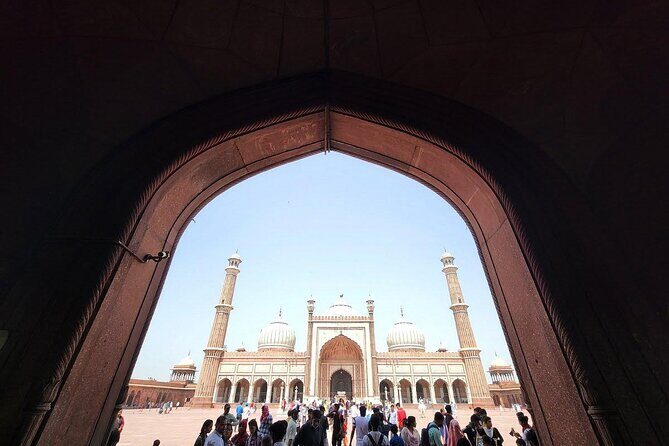
Next is Jama Masjid, India’s largest mosque. Even if you’re not a religious-site person, it’s worth seeing for sheer size and the way it’s built for crowds. The plan notes opening hours, which is useful because timing matters if you don’t want to feel rushed.
Practical tip: bring water and keep a light layer handy. Religious sites involve lots of walking and shaded areas aren’t always guaranteed.
Chandni Chowk and India Gate: the everyday city rhythm
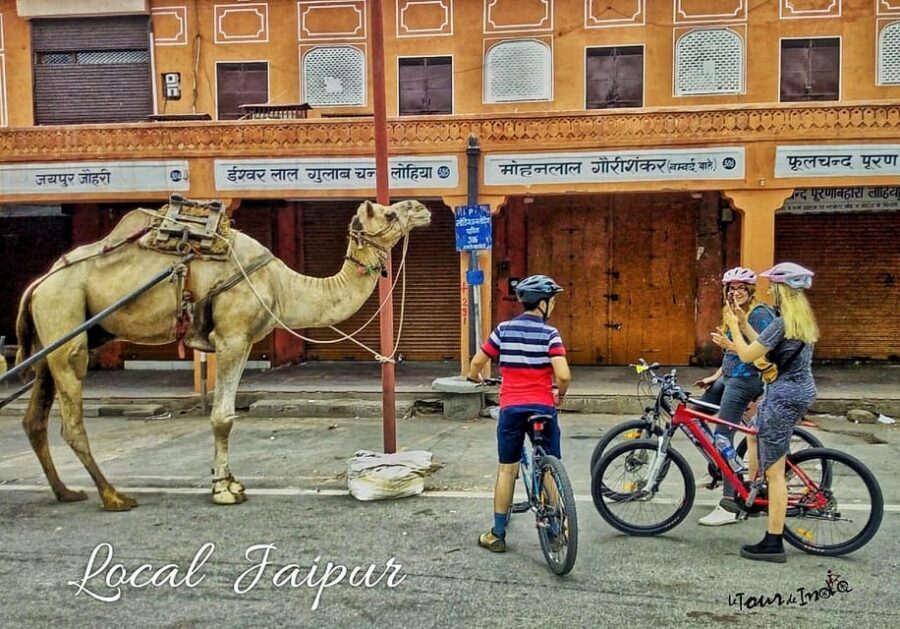
Then you’ll get to Chandni Chowk, a classic Old Delhi market area with narrow lanes and a huge mix of shops. This is one of those moments where you stop thinking in checklists and start paying attention to real life: bargaining energy, street snacks, and the constant motion of people.
After that, you’ll pass by India Gate, built as a memorial. The gardens around it are part of the experience, since it gives you a breather after the intensity of Old Delhi.
A quick note: the route also mentions Rashtrapati Bhawan next to Rajpath, but access can be restricted. So don’t plan your day like you’ll definitely get inside. Think of it as a viewpoint moment.
Qutub Minar and Humayun’s Tomb: UNESCO-style architecture lessons
Later comes Qutub Minar, a tall brick minaret with layered stories in its carvings. It’s the kind of monument where you can see styles evolve as you look upward.
Then you’ll visit Humayun’s Tomb, a UNESCO World Heritage site. It’s one of those stops that helps you understand why later Mughal architecture gets compared the way it does. The grounds and symmetry make it feel calm even when the city around it keeps moving.
A few more New Delhi tours and experiences worth a look




Lotus Temple and Birla Mandir: calmer stops before the evening
To round out the day, you’ll see the Lotus Temple, known for its flower-like shape and its connection to multiple faiths. After that, there’s Birla Mandir (Lakshmi Narayan), a shrine dedicated to Laxminarayan.
I like ending with these because they change the mood. If you want a mental reset, this is it.
Agra Fort and Taj Mahal: the drive south and what to expect
Day 3 is your transition into Agra. The road trip is about 250 kilometers, roughly 5 hours. You’ll have time to settle in the AC vehicle, which matters when the day feels long before you even start sightseeing.
Agra’s first stop is Agra Fort. It’s a reminder that Taj Mahal wasn’t the only big idea on the board. Fort architecture gives you perspective on control, security, and the scale of Mughal engineering.
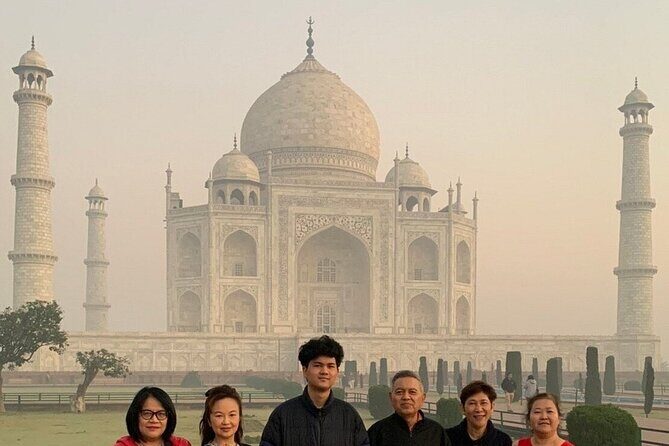
Then comes Taj Mahal itself. The tour plan includes around 1 hour at the site. That’s enough time to see the main view, walk the main areas you can access, and also notice the symmetrical planning people often overlook when they’re rushing for photos.
You’ll also stop at Itmad-ud-Daula, a tomb on the Yamuna river. This is a great “secondary” stop because it shows a different mood than Taj Mahal—more intimate, and often easier to experience without the same level of global attention.
Practical note: in Agra, you’ll want comfortable shoes and a small bag you can keep close. The Taj area is photo-famous, but it’s still a real working place.
Sunrise Taj Mahal and Fatehpur Sikri on the way to Jaipur
Day 4 starts with one big “yes” and one big “wow.”
Sunrise Taj Mahal: why early time matters
You’ll visit Taj Mahal for sunrise. The plan explicitly points out you need to wake up early to get the best shots. I agree with that logic. Sunrise changes the mood: softer light, fewer people at the start, and photos that don’t look like everyone else’s flashback.
Don’t expect the early morning to be romantic if you hate mornings. But if you’re willing to trade sleep for light, it’s one of the strongest parts of the whole route.
Fatehpur Sikri: Akbar-era city planning
After Agra, you’ll drive about 40 kilometers to Fatehpur Sikri, founded by Emperor Akbar. The plan notes it was a fortified city built by the king and tied to his empire for around 15 years.
This is a great stop for two reasons. First, it’s historically meaningful. Second, it’s built like a city, so you get a sense of how people lived and organized power beyond the single landmark spotlight.
Road to Jaipur and an easy evening
Then you’ll head to Jaipur, about 240 kilometers and around 4 hours by road. Once you arrive, you’ll be escorted to your pre-booked hotel.
This is the kind of day where you’ll likely want to keep evening plans simple. Shower, eat something easy, and sleep early, because Jaipur hits you with visual overload the next day.
Jaipur palaces, Jantar Mantar, and Albert Hall Museum
Day 5 is your “see it all” Jaipur day. The plan focuses on iconic landmarks, but it also includes enough variety to keep it interesting.
Jal Mahal: a palace in the lake
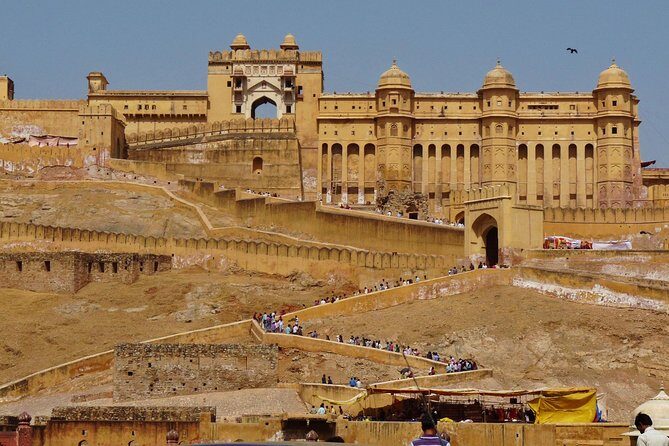
Start with Jal Mahal, standing in the middle of Man Sagar Lake. It’s a visually striking idea: Rajput-style architecture that looks like it’s floating. Even when you can’t spend forever here, the viewpoint is memorable.
Hawa Mahal: the building with hundreds of windows
Next is Hawa Mahal, the Palace of Wind. The plan notes it’s a red and pink sandstone structure with 953 small windows and built in 1799 by Maharaja Sawai Pratap Singh.
Here’s how I’d approach it: look at the windows and ask yourself why so many openings exist. Even if you don’t get a full lesson on the spot, you can feel the logic of ventilation, observation, and street-level presence baked into the design.
City Palace: Rajput and Mughal blending in one complex
Then comes City Palace, located in the heart of the city. The plan highlights the blend of Rajput and Mughal styles, and that’s exactly why it’s worth your time. It’s not just one style copied over another; it feels like a conversation between eras.
Jantar Mantar: the astronomer’s toolkit
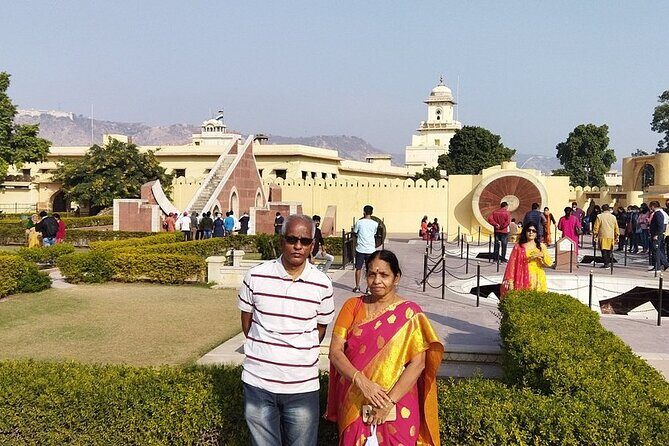
After that is Jantar Mantar, an astronomical observatory. The tour notes it has the world’s largest sundial made of stone, plus nineteen architectural instruments.
If you like science as much as architecture, this stop can be a fun surprise. It’s like seeing a practical engineering mindset turned into public art.
Albert Hall Museum: ending with artifacts
Finally, you’ll visit Albert Hall Museum, described as Rajasthan’s oldest museum and a place to see artifacts tied to local heritage.
I like museum stops after big monument days because it gives your brain a new category to file things under. Not everything has to be outdoors and Instagram-heavy.
Jaipur to New Delhi transfer: the day you’ll mostly ride
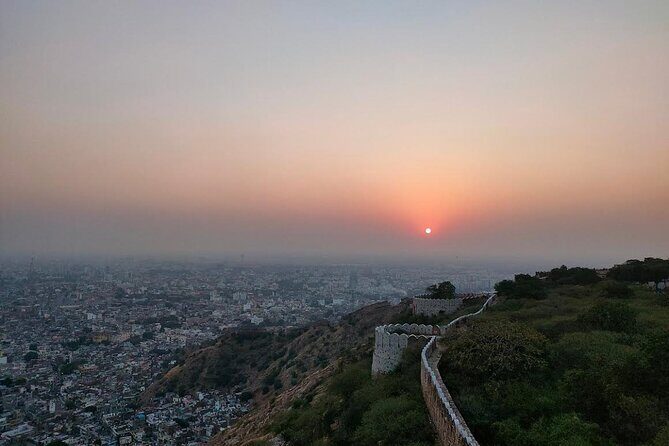
Day 6 is dedicated to assisted transfer back to New Delhi. The route is about 308 kilometers, typically around 6 hours by road.
This is a “keep it simple” day. The value here is that you’re not stuck figuring out logistics on your own. You’re using the tour’s private vehicle to handle the long road, which makes it easier to enjoy the next few hours instead of wrestling with directions.
If you’re someone who gets car-sore, use the time for stretching stops when possible, and keep water and snacks easy to access. The tour doesn’t include lunch and dinner on this package style, so plan your meals thoughtfully.
Departure day in Delhi
On Day 7, you’ll head back to Indira Gandhi International Airport for your onward destination. The experience ends back at the meeting point.
This is the calm finish. If you packed smart on Day 6, you’ll be able to leave luggage stress behind and concentrate on travel.
Price and value: what you’re really paying for
At $339.23 per person for about 7 days, this tour sits in a “good organization for a full route” category. You’re not just paying for transportation—you’re paying for the coordination that makes a Golden Triangle trip less chaotic.
Here’s the value logic based on what’s included:
- Private transportation with air-conditioning: helps keep the week comfortable.
- Professional private tour guides and structured sightseeing: saves you from planning each stop minute-by-minute.
- Accommodation with breakfast if you choose the suitable option: breakfast reduces daily planning load.
- Mineral water bottle: small thing, useful thing.
- Monument entrance fees for sights mentioned: reduces surprise costs at many gates.
- Pickup offered and mobile ticket: convenience that matters when you’re crossing multiple cities.
What’s not included is also important for budgeting:
- Lunch and dinner are not included.
- Camera fees at monuments may apply.
- Anything not clearly listed as included is on you.
If you travel as a couple or small group, private routing often becomes a better deal than it sounds, especially when you consider how much time and energy you save versus piece-by-piece DIY planning.
Who this private tour is best for
This tour makes the most sense if you:
- Want guided sightseeing in all three cities without day-by-day planning.
- Prefer private comfort over shared group travel.
- Like iconic landmarks and a bit of market wandering (Old Delhi is built for that).
- Are okay with early mornings and long road days between cities.
It may not be the best match if you:
- Want to spend lots of extra time in one city and barely travel.
- Strongly dislike early starts, since sunrise Taj Mahal is part of the plan.
Should you book this 7-day Delhi, Agra, Jaipur private tour?
I’d book it if you want a well-run route with a guide in your corner, AC comfort for the drives, and a structure that gets you to the major sights without you doing the heavy planning work. The best-selling points here are practical: airport pickup, private transport, and the way the schedule fits in a sunrise Taj Mahal moment without making the week feel like nonstop sprinting.
If you do book, my advice is simple:
- Confirm which monument tickets are covered for your exact options and whether any camera fees apply.
- Plan your meals each day since lunch and dinner aren’t included.
- Pack for early mornings and hot afternoons—Delhi, Agra, and Jaipur can swing fast.
FAQ
Do I get picked up at the airport?
Yes. The tour includes an airport representative who escorts you from Indira Gandhi International Airport to your pre-booked hotel on arrival.
Is this a private tour or shared group?
It’s a private tour/activity, so only your group participates.
What’s included in the tour price?
Included items list accommodation with breakfast (if booked with a suitable option), private transportation in an air-conditioned vehicle, professional private tour guides, a mineral water bottle, and monument entrance fees for the sights mentioned.
Are lunch and dinner included?
No. Lunch and dinner for the days are listed as not included.
How long does the transfer take between Jaipur and New Delhi?
It’s about 308 kilometers and takes around 6 hours by road.
Can I get a full refund if I cancel?
Yes. You can cancel up to 24 hours in advance for a full refund. If you cancel less than 24 hours before the start time, the amount paid is not refunded.