REVIEW · NEW DELHI
6 Hours Tout to Temples and Spiritual Sites in Agra
Book on Viator →Operated by My Taj Tour · Bookable on Viator
Agra has more faiths than you expect. In a single 6-hour run, you’ll move between a mosque, Hindu temple, Sikh shrine, and a colonial-era church, with a private guide to connect the dots.
I especially like that you get structured time at each sacred stop (about an hour each) instead of racing through photo ops. I also like that your guide is live and hands-on, because religious sites only really click when someone explains what you’re looking at.
One thing to consider: the day is built for seeing a lot, so if you want long, slow moments of worship or deep reading time, you may feel a little rushed.
In This Review
- Key highlights you’ll feel fast
- A Six-Hour Multi-Faith Route Through Agra’s Sacred Sites
- Jama Masjid: Shah Jahan’s 1648 Friday Mosque Across From Agra Fort
- Balkeshwar Mandir on the Yamuna: Shiva Temple Calm With River Energy
- St. George’s Cathedral in Agra Cantonment: English Gothic in a Colonial-Era Pocket
- Dayal Bagh Temple: Garden of the Merciful and Radhasoami Faith Ground
- Gurudwara Guru ka Tal: Sikh Heritage From the 17th Century on NH-2
- Your Private Guide Matters: Vikas, Niranjan Soni, and Pooran
- Price and Value for $70 Over 6 Hours in Agra
- Time Management: What an Hour at Each Stop Really Feels Like
- Who Should Book This Tour (and Who Might Not)
- Should You Book It?
- FAQ
- What is the duration of the Agra sacred sites tour?
- What time does the tour start, and how does pickup work?
- Which places are included on the itinerary?
- Are entrance tickets included?
- What’s included in the price?
- Is this tour private?
- Is there free cancellation?
Key highlights you’ll feel fast
- Jama Masjid (Jami Masjid) built in 1648 by Shah Jahan for his daughter, and it’s right across from Agra Fort
- Balkeshwar Mandir dedicated to Lord Shiva, set on the bank of the Yamuna
- St. George’s Cathedral (1828) in English Gothic style, tied to Agra’s British-era Anglican community
- Dayal Bagh meaning Garden of the Merciful, linked to the Radhasoami faith and its Dayalbagh sect
- Gurudwara Guru ka Tal on National Highway 2, marking Guru Teg Bahadur Sahib Ji’s sacred spot, with Sikh history taught on-site
A Six-Hour Multi-Faith Route Through Agra’s Sacred Sites
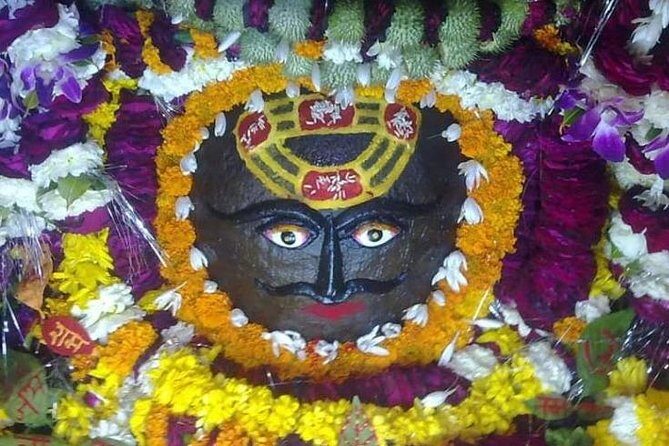
This tour works because it’s not trying to sell you one headline monument. You’re seeing how different faiths shaped the city—visually, spatially, and in daily life—within a compact half-day. The format is simple: pickup, guided stops, then you’re driven back to your starting point.
The real win is your guide. Religious places have symbols you can miss if you’re just walking and guessing. With a private live guide, you get context while you’re still standing in front of the doorway, arch, courtyard, or altar. That’s when the sights stop being just buildings and start becoming places people actually gather.
Also, timing matters. The pickup window starts early (around 6:00 AM, and pickup can be arranged from anywhere in Agra between 6:00 AM and 1:00 PM). Going early usually means you spend less of the day in traffic and more of it in the sites while you still feel fresh.
You can also read our reviews of more tours and experiences in New Delhi.


Jama Masjid: Shah Jahan’s 1648 Friday Mosque Across From Agra Fort

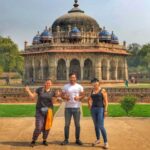
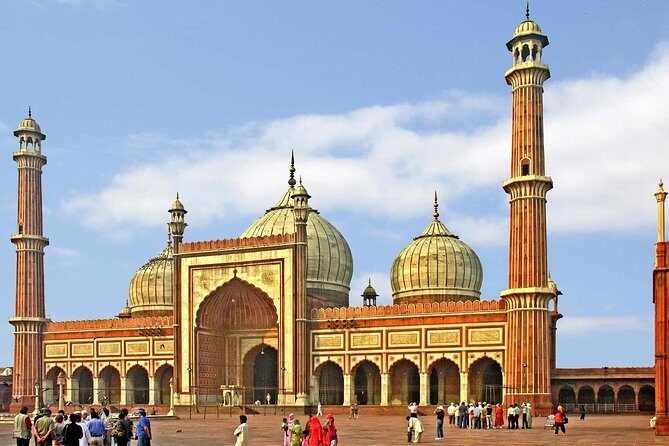
Your first major stop is Jama Masjid, sometimes called Jami Masjid or the Friday Mosque. It was built by Shah Jahan in 1648 for his daughter, and that royal connection sets the tone from the start: this isn’t just a local mosque, it’s tied to the Mughal blueprint for power, planning, and public space.
Location is a big part of the experience here. Jama Masjid sits opposite Agra Fort and overlooks the Agra Fort Railway Station, so you get a layered view of Mughal authority—religious and political—played out on the same urban stage. Even if you know Agra for Mughal monuments, standing at this point helps you connect why the city feels like one grand designed complex rather than disconnected landmarks.
Plan for about an hour. That’s enough time to enter, observe the architecture, and understand what makes a mosque function as a community center, not just a place to pray. If you’re sensitive about worship timing, a guide helps you navigate respectfully and know what’s worth focusing on when the space feels busy.
Balkeshwar Mandir on the Yamuna: Shiva Temple Calm With River Energy

Next up is Balkeshwar Mandir, devoted to Lord Shiva. What makes this stop feel different is its setting: it’s on the bank of the Yamuna River. Even if you don’t stare at the water the whole time, the location changes the mood of the visit. You’re no longer framed by fortress walls and colonial buildings; you’re in a temple landscape tied to a living river system.
This is a great stop for anyone who wants a Hindu site that’s not just about scale or famous carvings. You’re there to understand devotion as it’s practiced—how temples organize daily attention and how people orient themselves when the focus is Shiva.
You’ll also appreciate that your time here is practical. About an hour gives you enough time to look around, take in the shrine space, and still keep the day balanced. If you come in expecting a quick drive-by, don’t. The Yamuna setting and the Shiva devotion are exactly the kind of combination that makes a temple feel like a real place, not just a stop on a checklist.
St. George’s Cathedral in Agra Cantonment: English Gothic in a Colonial-Era Pocket
After Mughal and Hindu sites, you shift gears to something surprisingly specific: St. George’s Cathedral in the Agra Cantonment area, in Sadar Bazar. This former British Raj Protestant Church is an example of the Christian population that settled during the colonial era in India, and the building itself makes that story readable.
What to pay attention to:
- It was designed and constructed by Major General and Engineer J T Boileau in 1828.
- The architecture is English Gothic style, and it has remained well preserved over the years.
- During British rule, it was a main place of worship for Anglicans, and it continues to draw the nearby Christian community along with tourists.
This stop is worth it because it breaks the “Agra is only Mughal” mindset. Agra’s religious landscape expanded with communities that arrived later, and the cathedral is a clear marker of that shift. If you like your travel with a sense of timeline—who arrived, what they built, and how it still functions—this is the kind of place that makes those questions feel obvious.
You get about an hour, which is enough for a careful look without turning it into a lecture. A private guide helps you read the building’s purpose and how a church can keep serving a community long after the original empire period fades.
Dayal Bagh Temple: Garden of the Merciful and Radhasoami Faith Ground
Dayalbagh (Dayal Bagh) means Garden of the Merciful, and that meaning sets expectations right away: this stop is spiritual, but it’s also tied to an organized religious community with its own practices and leadership structure.
Dayal Bagh is the headquarters of the Dayalbagh sect of the Radhasoami faith. Your visit also connects to lived worship, since the tour notes that the 8th revered leader presides over the Satsang. Even if you don’t catch every detail of the doctrine in one visit, knowing the site is a functioning HQ gives it weight.
This is the kind of stop that rewards respectful attention. It’s not just a photo location. Dayal Bagh’s identity as a faith center means people come here with real purpose, and the space likely feels different from purely historical monuments.
Because you’re scheduled for about an hour, keep your expectations grounded: you won’t absorb everything about Radhasoami in one afternoon, but you can leave with a clear sense of how this sect created a home base—and how that home base continues to run spiritual life.



Gurudwara Guru ka Tal: Sikh Heritage From the 17th Century on NH-2
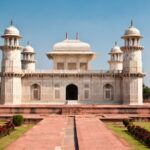
Your final stop is Gurudwara Guru ka Tal, a Sikh pilgrimage site dating back to the 17th century. It’s located on National Highway Number 2, which makes it easy to reach and helps explain its role as a marked landmark in the city’s movement routes.
This gurdwara marks the holy place of SHRI GURU TEG BAHADUR SAHIB JI. One of the most interesting parts of this stop is the story of the holy figures connected with the site. The tour context notes that Guru Teg Bahadur Sahib Ji and followers started their journey from SHRI ANANDPUR SAHIB with specific companions: Bhai Mati Das Ji, Bhai Sati Das Ji, Bhai Dyala Ji, Bhai Gurditta Ji, Bhai Udo Ji, and Bhai Jaita Ji.
That’s a lot of names, but it’s also the point. Sikh history often lives in the way a place is remembered and retold. When you hear those names while you’re at the site, the pilgrimage feels anchored rather than abstract.
Again, about an hour is built in. For a Sikh shrine, a guide’s explanations help you understand what to notice and what to treat with respect while you’re inside. Then you’ll drive back to your preferred drop-off point in Agra, closing the loop on a day that started as soon as the morning opened.
Your Private Guide Matters: Vikas, Niranjan Soni, and Pooran
The guides behind this experience have a strong pattern of skill: clear explanations plus practical help that makes photos and moments easier. In past outings, guides such as Vikas and Mr Niranjan Soni were highlighted for being attentive and responsive to small needs. Pooran was also praised for giving good advice and for strong photography skills.
Even if you don’t care about photography, that kind of guide ability matters. A person who thinks about your angles and timing is also likely to think about your comfort and your understanding of what you’re seeing. When a guide can explain the symbolism and also suggest where to stand for the best view, you end up with a day that feels both meaningful and smooth.
Since this is a private format, you can ask questions without feeling like you’re interrupting a crowd. If you want more time at one stop, ask—guides usually know how to balance the route while keeping everyone moving.
Price and Value for $70 Over 6 Hours in Agra
At $70 per person for about 6 hours, you’re paying for transportation, a private live guide, and the work of connecting five religious sites into one workable route.
Here’s what’s included that affects value:
- Pickup and drop-off to anywhere in Agra
- Private live tour guide
- All parking fees, tolls, fuel and taxes
- Bottled water
- Mobile ticket
- Group discounts can apply if you’re traveling with others
Entrances are noted as excluded, but the plan also states that the religious sites are free or very less. That’s important: it means your budget is less likely to get squeezed by admission fees across multiple stops.
If you’re the kind of traveler who likes to go “with less friction,” this price tends to make sense. Five sites in one half-day would be annoying to assemble on your own: finding route timing, managing respect rules, and getting meaningful context takes time and energy. Paying for a guide is a shortcut to a better experience.
Time Management: What an Hour at Each Stop Really Feels Like
Expect about one hour per stop plus driving time between them. On paper, that sounds short. In practice, it’s often the right mix for a religious circuit like this—enough time to enter, understand, and look around without exhausting yourself.
The main consideration is your pacing. If you want to sit quietly and absorb every detail, you might want longer stays. If you prefer seeing a broad range of sacred architecture and learning the purpose behind each one, this schedule fits your style.
Also, because pickup can be anywhere in Agra within the broader window, you should plan your morning around that. If you’re early to meet-up times, you’ll start the day smoothly and reduce stress.
Finally, bring practical comfort. You’ll be visiting worship spaces, so dress in a way that lets you feel respectful and comfortable for walking and standing.
Who Should Book This Tour (and Who Might Not)
I’d point this tour toward you if you:
- want Agra beyond the one big-ticket monument
- like learning about how different faiths shape a city
- prefer a guide who can explain while you’re standing in front of the building
- want an efficient half-day with pickup and a clear route
You might choose something else if you:
- need lots of free time in each location for quiet worship or slow exploration
- want only one theme (like Mughal monuments only, or churches only)
- hate any schedule structure at all
For most people who want value, context, and variety, this is a smart way to use a single day in Agra.
Should You Book It?
Yes—if your goal is to understand Agra as a living religious mosaic rather than a museum strip. The combination of Jama Masjid, Balkeshwar Mandir, St. George’s Cathedral, Dayal Bagh, and Gurudwara Guru ka Tal gives you a grounded view of how faith shows up in real city space. Add in a private live guide and transportation handled, and the day stays comfortable.
If you’re careful about budgeting, this plan is also easy to manage: entrance fees are likely minimal since these are free or very low-cost sites, while you’re paying mainly for guide time and logistics.
If your schedule is tight, the early start and compact 6-hour format are exactly what you want. If it’s not, still consider booking now, since the tour allows free cancellation up to 24 hours in advance of the experience start time.
FAQ
What is the duration of the Agra sacred sites tour?
It runs for about 6 hours.
What time does the tour start, and how does pickup work?
The start time is 6:00 AM. Pickup is offered from anywhere in Agra between 6:00 AM and 1:00 PM, and you’ll be returned to your meeting point at the end.
Which places are included on the itinerary?
The tour includes Jama Masjid, Balkeshwar Mandir, St. George’s Cathedral, Dayal Bagh Temple, and Gurudwara Guru ka Tal.
Are entrance tickets included?
Entrance tickets are not included. The plan notes that religious sites are free or very less.
What’s included in the price?
Pickup and drop-off, a private live tour guide, all parking fees, tolls, fuel and taxes, and bottled water are included.
Is this tour private?
Yes. It’s a private tour, and only your group participates.
Is there free cancellation?
Yes. You can cancel for a full refund up to 24 hours before the experience starts.