REVIEW · NEW DELHI
5-Day Private Luxury Golden Triangle Tour: Delhi, Agra & Jaipur
Book on Viator →Operated by Aiza tours · Bookable on Viator
Five days, three cities, one serious wow factor. This is a private luxury Golden Triangle run where you cover Delhi, Agra, and Jaipur with expert guidance, daily breakfasts, and private air-conditioned transport. You’ll also hit the headline moment: Taj Mahal at sunrise, plus Old Delhi’s spice-and-street energy.
I like the way this plan bundles the big sights without making you figure out logistics. The private AC vehicle keeps your days moving, and the guides help with ticket timing—so you don’t waste time at the wrong counters. I also like the value add of the battery bus to and from Taj parking up to the monument area.
One possible drawback: entrance fees for many monuments are not included, so you should budget for tickets. Also, with sunrise Taj and full sightseeing days, expect a schedule that runs early and runs fairly full.
In This Review
- Key highlights I’d bet on
- Why This Golden Triangle Route Works in 5 Days
- Price and Logistics: What Your $205 Gets You
- Day 1 Delhi: Old Delhi Markets, Stepwell Mysteries, and Royal Architecture
- Day 2 Agra Drive Plus Baby Taj and a Taj View Moment
- Day 3 Sunrise Taj Mahal With Battery Bus Comfort, Then Agra Fort
- Day 4 Jaipur Forts, Palaces, and the UNESCO Observatory
- Day 5 Morning Finish and Back to Delhi Around 2 PM
- Guides, Safety, and the Little Things That Make It Feel Luxury
- Who Should Book This Tour (and Who Might Want Something Else)
- Should You Book This 5-Day Private Luxury Golden Triangle Tour?
- FAQ
- How long is the tour?
- What is included in the price?
- Are monument entrance tickets included?
- Do you get pickup and drop-off?
- What time is the Taj Mahal sunrise visit?
- Is the Taj Mahal ever closed?
- Are there weekly closures for other sites?
- How are hotel rooms handled?
Key highlights I’d bet on

- Taj Mahal at 6 AM with included battery bus to the monument area
- Private air-conditioned transport sized to your group (sedan, SUV, or van)
- Old Delhi in depth: Jama Masjid, Chandni Chowk, and the Khari Baoli spice market
- Guides who prioritize safety and clear explanations, with praise tied to names like Hyder, Hyder Ali, Kanran, and Farzan
- Jaipur’s UNESCO stops: Amber Fort plus Jantar Mantar, with palaces and stepwells in the same day
Why This Golden Triangle Route Works in 5 Days

If you’re doing the Golden Triangle for the first time, five days can feel either perfect or rushed. Here’s why it feels more “perfect”: the transport is private and the sightseeing blocks are grouped logically by city, so you’re not constantly backtracking. You also get daily breakfasts and a guided structure, which cuts down on decision fatigue.
The other smart part is timing. The itinerary is built around the big payoff moments—especially the early Taj Mahal visit—while still leaving room for major second-tier sites like Itmad-ud-Daula (the Baby Taj) and Agra Fort. In Delhi, you don’t just do monuments; you also do the lived-in parts of the city, like Old Delhi markets and a classic stepwell stop.
One note to keep your expectations grounded: it’s a lot of stops. This isn’t a slow “sit on a terrace” tour. It’s a do-it-right tour.
You can also read our reviews of more private tours in New Delhi


Price and Logistics: What Your $205 Gets You
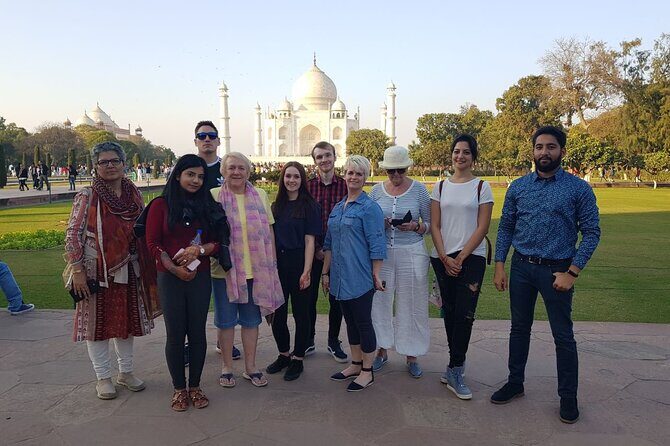
At $205 per person, the value mostly comes from what you don’t have to arrange yourself. You get a private, air-conditioned vehicle and professional guided sightseeing. You also get daily breakfast (included for four days when you choose the hotel option), plus bottled mineral water during drives, and taxes/service charges included.
What’s not included is just as important. Entrance tickets are not included for the monuments, and lunch/dinner aren’t covered. That means your final trip cost depends on how many ticketed sites you add up, especially in Delhi at Qutub Minar and across Agra and Jaipur where multiple monuments have separate entry.
Car comfort matters here. The tour matches the vehicle type to group size: a four-seater sedan for 1–2 people, a six-seater SUV for 3–4, and a ten-seater van for 5–10. That’s a practical detail. In a place like Delhi, getting from A to B can be slow enough without cramming people into a vehicle that’s too small.
Day 1 Delhi: Old Delhi Markets, Stepwell Mysteries, and Royal Architecture

Your day starts with pickup from your hotel, airport, or preferred location in Delhi/nearby areas. Then you move into Old Delhi for the kinds of sights that don’t work well when you’re alone: Jama Masjid, Chandni Chowk, and Khari Baoli.
Jama Masjid is a huge Mughal-era mosque complex with red sandstone and marble styling. It’s a major “orientation” stop because it shows you how Old Delhi’s monumental core was designed. After that, you’ll head into Chandni Chowk, where narrow lanes and market chaos are the point. A rickshaw ride is part of the experience, and it’s one of those moments where you quickly learn that being seated is a better plan than trying to walk through everything.
Next is Khari Baoli, described as Asia’s largest spice market and operating since the 17th century. This is where the sensory side hits: spices, dried fruits, herbs, and traditional condiments. The spice market stop is listed as ticket included, which matters because you won’t be scrambling later to sort out whether you need a separate entry there.
After Old Delhi, the day shifts to quieter, more reflective stops. Raj Ghat is the memorial for Mahatma Gandhi in a garden setting. From there you move to India Gate, a war memorial with lawns around it and an eternal flame. It’s not just a photo stop—India Gate helps you understand how Delhi layers modern civic memory onto older urban life.
You also get Agrasen Ki Baoli, a stepwell from the 14th century. Even if you’ve seen stepwells before, this one’s worth it because of its stone steps and arched niches that feel darker and cooler than the surrounding streets. And then there’s Gurudwara Bangla Sahib, a Sikh shrine known for its golden dome and Sarovar (holy pond). The community kitchen, called Langar, serves free meals to all. It’s a simple cultural reset after market intensity.
Later, you cover major civic landmarks, including Parliament House and Rashtrapati Bhawan. The architecture here is tied to British architects Lutyens and Baker for Parliament House, while Rashtrapati Bhawan is described as having Mughal Gardens and a mix of Indian and Western design. If you like architecture, you’ll enjoy how these buildings show the “Delhi as capital” story.
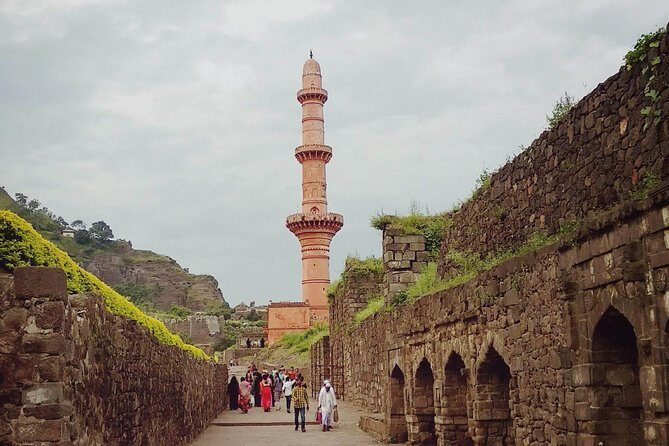
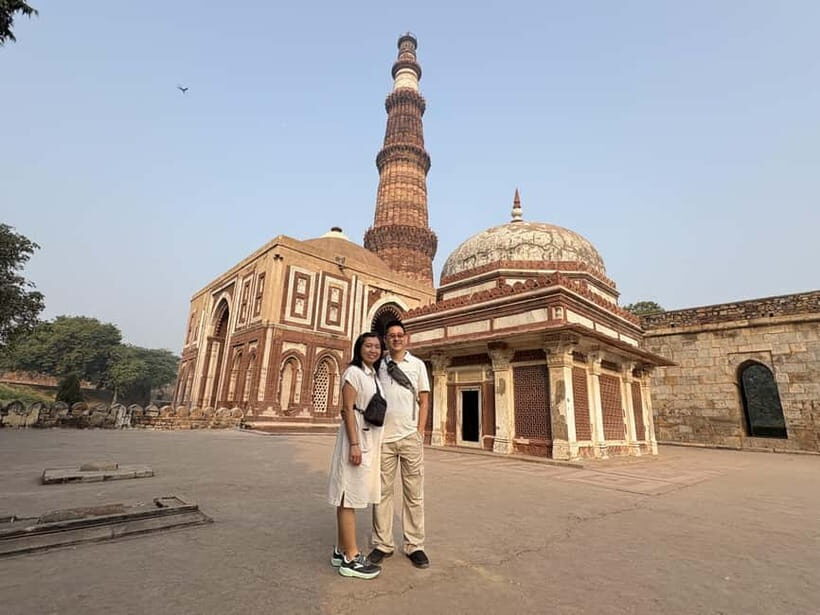
You’ll also stop at Gandhi Smriti, the museum at the site of Gandhi’s last days, plus Lotus Temple, a Bahá’í House of Worship shaped like a lotus. Finally, you reach Qutub Minar, a UNESCO site and the tallest brick minaret listed as 73 meters. Qutub Minar’s entry is not included, so plan for ticket cost. It’s also the kind of place where your guide’s explanation turns “tower” into meaning—why this style mattered and how it was built.
A small but real consideration: Delhi mornings can move fast, but Delhi traffic can be unpredictable. This tour’s private vehicle helps, but you’ll still want to stay flexible.
Day 2 Agra Drive Plus Baby Taj and a Taj View Moment
After breakfast, you check out in Delhi and drive to Agra, listed as about 3 to 4 hours. Having a dedicated driver matters here. You’re not stopping every time someone needs something, and you’re not losing half a day waiting for shared transport.
Once you arrive, you add a scenic stop: Mehtab Bagh (Moonlight Garden), across the Yamuna River from the Taj Mahal. It’s described as offering an unobstructed view, especially at sunset. Even though this isn’t the main Taj visit, it’s a great way to see the Taj’s setting and the river relationship that makes the monument feel anchored.
Then comes Itmad-ud-Daula, often called the Baby Taj. It’s a Mughal mausoleum built by Empress Nur Jahan for her father, with intricate marble inlay work and delicate carvings. This is one of those stops where the craftsmanship stands out more than the scale. If you love details—inscriptions, patterns, garden layout—it’s a smart counterweight to the grand spectacle of the Taj itself.
A practical tip: Agra can feel warm at midday and cooler later. Bring something light you can layer, because early mornings and late viewpoints can swing temperatures.
Day 3 Sunrise Taj Mahal With Battery Bus Comfort, Then Agra Fort
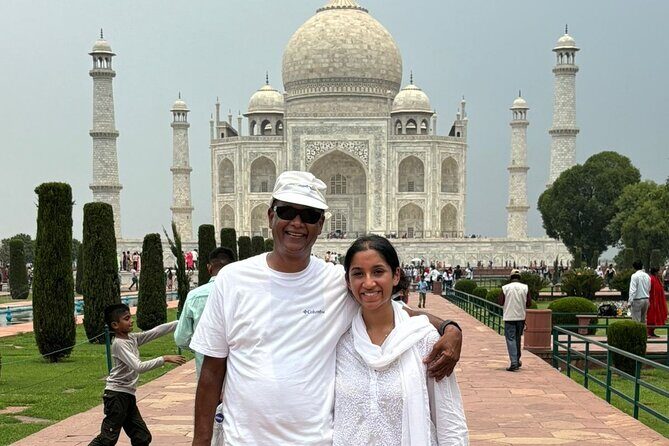
This is the day you plan around. You visit the Taj Mahal at sunrise at 6 AM, and the schedule gives you a generous block for the experience. The idea is simple: you want the first light hitting the white marble, when the mood is calmer and the monument looks its best.
One of the best “comfort for real people” inclusions is the battery bus ride. You go from the Taj parking area up to the monument area, and you also get the ride back. It reduces a lot of walking that otherwise eats time, energy, and patience—especially if you’re tired from an early wake-up.
Then after Taj, the itinerary includes Agra Fort. This fort is described as a major Mughal fort and a key piece of Agra’s power story. If you’re only doing one Agra site, Taj Mahal would win. But doing Agra Fort too helps you see that the Taj isn’t the whole picture—it’s part of a larger fortress-city system.
If you’re a detail person, also remember that sunrise Taj is not just about the views. It’s about pace. You’ll likely have fewer crowds early, and you can actually look at the architecture instead of just orbiting it for a quick photo.
A few more New Delhi tours and experiences worth a look





Day 4 Jaipur Forts, Palaces, and the UNESCO Observatory
After Agra sightseeing, you head to Jaipur. The drive is listed as 4 to 5 hours, and the route is kept simple. If you want lunch, the tour mentions the guide can take you to a selected restaurant; otherwise you proceed with sightseeing timing.
Jaipur starts with Amber Fort, a major fortress near Jaipur. The tour gives it 2 hours, and that’s about right: Amber Fort is large, and if you rush you miss the point. You’ll see the grandeur of the walls and palace-style interiors, plus the “Rajasthan as fort culture” vibe that Amber represents.
Then you visit Panna Meena ka Kund, a stepwell near Amber Fort from the 16th century. Stepwells don’t get equal attention in every Golden Triangle tour, but this one’s worth your time because it’s treated like a real architectural stop, not just a random photo break. It’s also a good contrast after the big visuals of Amber.
You’ll also see Hawa Mahal—the Palace of Breeze. It’s listed as having 953 small windows (jharokhas) and built in 1799 by Maharaja Sawai Pratap Singh. Even if you’re viewing it from outside, the facade tells the story of how the royal household wanted controlled visibility and airflow.
Next is Jal Mahal, the Water Palace in the middle of Man Sagar Lake. The key word in the description is “appears to float on water,” and that effect is why you stop here: it’s one of those visual tricks nature and architecture team up to produce. This is the kind of stop you’ll enjoy more if you’re patient and willing to look from a couple angles instead of grabbing one quick shot.
The itinerary also includes Gaitor Ki Chhatriyan (Gaitor Cenotaphs), described as royal memorials in marble and sandstone. The atmosphere here is more restful, and it fits well after the busy fort-and-palace intensity.
Then you move to City Palace, a sprawling complex tied to Maharaja Sawai Jai Singh II and Jaipur’s royal legacy. After that, you get Jantar Mantar, a UNESCO World Heritage site described as an open-air astronomical observatory built in the 18th century. Even if science isn’t your thing, this one hits because it’s functional architecture—tools meant for measuring sky and time.
If you want one “truth” about Jaipur from this kind of day: you’ll walk, you’ll climb stairs at forts, and you’ll feel every hour. Wear shoes you don’t mind breaking in.
Day 5 Morning Finish and Back to Delhi Around 2 PM

Day 5 is your return run. After breakfast, you drive back to Delhi, described as about 5 hours via the Delhi–Jaipur Expressway (NH48). The tour states you’ll arrive back around 2 PM.
This is a good time to plan your buffer. If you’re flying later, aim for a decent window so you’re not gambling with traffic. If your schedule is tight, this tour can still work, but you’ll want to match your flight time to the stated arrival window.
There’s also an option mentioned: drop-off in Jaipur if you prefer, but the main plan returns to Delhi.
Guides, Safety, and the Little Things That Make It Feel Luxury

The private guide quality is a big part of what makes this tour feel “luxury” rather than just “comfortable.” The feedback includes names like Hyder and Hyder Ali, praised for being prepared and sharing explanations, plus Kanran for guiding in a way that kept the group safe. Farzan is also mentioned as knowledgeable with strong planning. Even the organization side gets credit through Bilal in one case, which hints that you’re not left alone to solve problems mid-day.
The other small but meaningful comfort factor is how many entries are handled. Entrance tickets are not included, but the tour says guides assist with purchasing tickets and help you skip ticket queues for a hassle-free experience. That doesn’t remove every line everywhere, but it does reduce the annoying parts—the uncertainty and the guesswork.
And since the car is private, the day stays under your control. When you want to take five extra minutes at a viewpoint or adjust a photo plan, the schedule can flex within reason.
Who Should Book This Tour (and Who Might Want Something Else)
This one is a strong match if you want a single package that covers the classic Golden Triangle hits with private transport, licensed guides, and breakfast included for multiple days. It also fits families and small groups who want less friction—especially if you’d rather not coordinate intercity trains or deal with multiple ticket accounts.
You might rethink if you hate early mornings or you’re expecting a laid-back pace. Sunrise Taj is a key selling point, and the itinerary is built around getting you there on time. You should also know the entrance ticket costs add up, because many monument entries are listed as not included.
Should You Book This 5-Day Private Luxury Golden Triangle Tour?
Yes, if you want the Golden Triangle done in a way that reduces stress and keeps you focused on the monuments that matter. The mix is smart: Old Delhi markets and major civic sites in Delhi, Taj Mahal sunrise plus Baby Taj and Agra Fort in Agra, then Amber Fort, Hawa Mahal, City Palace, and Jantar Mantar in Jaipur.
Skip it only if entrance fees are a dealbreaker or if you’re looking for slow travel with long free afternoons. This plan works best when you’re ready for a busy, well-structured week—and you want luxury to mean comfortable transport and expert guidance, not just a fancy hotel sign.
FAQ
How long is the tour?
The tour is listed as 5 days (approx.).
What is included in the price?
It includes private air-conditioned transportation, private guided sightseeing with licensed guides, daily breakfast for four days if you choose the hotel option, bottled water during car journeys, battery bus rides to and from Taj Mahal parking up to the monument area, and applicable taxes and service charges. Entrance tickets and meals like lunch/dinner are not included.
Are monument entrance tickets included?
No. The itinerary specifies that entrance tickets are not included for several monuments (including Qutub Minar, Itmad-ud-Daula, Taj Mahal, Agra Fort, Amber Fort, Hawa Mahal, City Palace, and Jantar Mantar). Your guide can assist with purchasing tickets so you can avoid ticket queues.
Do you get pickup and drop-off?
Yes. Pickup is offered from your hotel, airport, or preferred location in Delhi (and nearby areas). The itinerary also includes return travel and drop-off in Jaipur is mentioned as an option, with the main plan returning to Delhi around 2 PM on Day 5.
What time is the Taj Mahal sunrise visit?
The Taj Mahal sunrise visit is listed at 6 AM.
Is the Taj Mahal ever closed?
Yes. The Taj Mahal remains closed every Friday. The tour also notes that if your tour starts on Wednesday, you’ll visit the Taj Mahal at sunset on Thursday because of the Friday closure.
Are there weekly closures for other sites?
Yes. The Lotus Temple and Red Fort in Delhi remain closed every Monday.
How are hotel rooms handled?
Rooms are generally provided on a twin-sharing basis. For a booking of 3 people, rooms are provided on triple-sharing basis by default. If 3 guests prefer 2 rooms, they have to pay an additional charge.