Six hours, and Delhi clicks. I like this tour because it strings together Old Delhi icons (mosques, markets, Mughal tombs) and New Delhi landmarks (India Gate, the President’s area) in one guided, car-based day. You also get practical perks that matter in Delhi: pickup/drop in the NCR and an included rickshaw moment for the Old Delhi feel.
My second love is the pacing: you’re not stuck doing long, random transit between sights. It’s a tight route, though, so the main consideration is time and comfort—expect several photo stops and crowded sites, plus city traffic, all within a 6-hour window.
In This Review
- Key Things That Make This Tour Worth Your Time
- Old Delhi Power Stops: Jama Masjid and Chandni Chowk
- Red Fort Exterior Photos: Getting the Look Without Losing the Day
- Gurudwara Bangla Sahib: A Calm Detour in a Busy Day
- Agrasen Ki Baoli: The Story Stop You Didn’t Know You Needed
- Humayun’s Tomb: UNESCO Calm and the Best Photo Time
- New Delhi Without the Headaches: India Gate, Parliament Area, and Rashtrapati Bhawan
- India Gate
- Parliament House and the President’s home
- Lotus Temple (and the Monday Swap to Birla Temple)
- Monday change
- Transport, Timing, and What $15.40 Covers in Real Terms
- Dress Code and Small Prep That Avoids Big Friction
- What This Tour Fits Best (and Who Might Want a Different Plan)
- Final Verdict: Should You Book It?
- FAQ
- How long is the 6-hour private guided tour?
- Where is pickup and drop-off available?
- Are monument entrance tickets included?
- Is lunch included?
- What should I wear for temples and mosques?
- What happens on Mondays with Lotus Temple?
Key Things That Make This Tour Worth Your Time
- Private guide + private vehicle: You move efficiently, without hunting buses or figuring out routes.
- Old Delhi street energy with a rickshaw ride: You get the market vibe, not just big buildings from a car window.
- Jama Masjid plus Chandni Chowk: One massive Mughal mosque, then one of Old Delhi’s busiest market streets.
- Humayun’s Tomb (UNESCO): A calmer, architectural stop that’s often the highlight for first-timers.
- New Delhi in one sweep: India Gate, Parliament-area views, and Rashtrapati Bhawan from the outside.
- Lotus Temple timing trick: It’s closed on Mondays, so the plan switches to Birla Temple.
Old Delhi Power Stops: Jama Masjid and Chandni Chowk
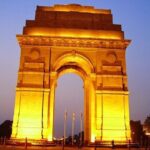
Old Delhi can feel like sensory overload—smells, noise, people, cars, scooters, and sudden turns where a street goes from quiet to packed. What I like about this tour is that it starts with a big visual anchor: Jama Masjid, built in the 17th century by Shah Jahan. The scale is the point. Even if you’ve seen mosque photos before, standing in that complex makes you understand why it was built for huge gatherings—its grounds can hold around 25,000 people for prayer.
You’ll get about 30 minutes here, and if you’re doing this for the first time, that’s a good length. Jama Masjid has multiple angles for photos, plus the main courtyard and entry points where the architecture shows off. Wear closed shoes and give yourself a minute to adjust—places of worship can be busy, and you’ll want to move respectfully and steadily.
Next comes Chandni Chowk, Old Delhi’s famously old and famously crowded market area (built in the 17th century under Shah Jahan, and designed by his daughter Jahanara). You’re scheduled for about an hour, and this is where the tour gives you something more than a drive-by. This is also where your route typically pairs well with the included rickshaw ride—the kind of short, practical transit that helps you experience the narrow-market energy without exhausting yourself.
What to watch for: the market section is not a “quiet sightseeing lane.” If you’re the type who hates crowds, you’ll want to keep your expectations realistic. If you love street-level travel, you’ll probably have a great time because you’re actually walking in the current of daily life.
You can also read our reviews of more guided tours in New Delhi

Red Fort Exterior Photos: Getting the Look Without Losing the Day
Old Delhi’s Mughal story continues with the Red Fort area. The tour keeps it efficient: you get around 15 minutes for photos from the outside, with no inside visit.
This approach makes sense if you’re short on time. Red Fort’s interior options can add lines, delays, and extra walking. From a car or curbside vantage, you still get the red sandstone look, the big gate presence, and the general “this is Mughal power” feel that defines the complex on the outside. You also save energy for the stops that are scheduled longer, like Humayun’s Tomb.
Practical tip: because this is a photo window stop, do your best to be ready. Stand where you can shoot quickly, keep your phone/ID accessible, and don’t spend those 15 minutes scanning for the perfect angle like you’re doing a fashion shoot. In Delhi, time evaporates fast.
Gurudwara Bangla Sahib: A Calm Detour in a Busy Day
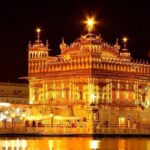
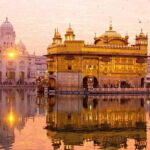
After the push of marketplaces and monuments, it helps that this tour includes Gurudwara Bangla Sahib for about 30 minutes. It’s a Sikh gurdwara built in the 17th century, known for its white marble look. The site also has a historical thread: Guru Har Krishna stayed here during a visit to Delhi in 1664.
I like this stop because it changes the mood. You go from Mughal stone and market noise to a place where people come for worship and reflection. Even without getting technical about religious history, you’ll feel the shift. It’s also one of those places where the architecture reads clearly—white marble, clean lines, and a strong sense of symmetry from certain viewpoints.
Quick reminder: dress code rules apply to places of worship, so cover shoulders and wear lower clothing at least below the knee. If you forget, you might end up dealing with restrictions at entry.
Agrasen Ki Baoli: The Story Stop You Didn’t Know You Needed
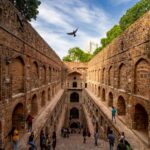
This tour includes Agrasen Ki Baoli for about 30 minutes. It’s known for urban legends—many people associate it with haunted stories and supernatural activity.
Now, you may not come for the ghost angle. You’ll still probably appreciate the setting. Baoli stepwells tend to be visually striking, and this one has a dramatic, atmospheric shape that works well for quick photos and a short pause. Think of it as a low-pressure stop: you don’t need a long attention span here.
If you’re sensitive to spooky legends: you can treat it like a history-and-architecture moment. The tour gives you just enough time to see it and move on.
Humayun’s Tomb: UNESCO Calm and the Best Photo Time
If you want one stop that justifies the whole Old Delhi/New Delhi mix, it’s Humayun’s Tomb. You get about an hour, and it’s a UNESCO World Heritage Site. The main building is the tomb of Mughal emperor Humayun, and the complex also includes tombs of other royals.
I like this stop because the site is easier to savor than the markets. The grounds offer open space, the architecture is readable at a slower pace, and the symmetry makes photos look good even when the crowd level changes. After the earlier stops, Humayun’s Tomb often feels like the “exhale.”
How to make the most of your hour:
- Start with wide shots first, so you don’t waste time later hunting angles.
- Then shift to details—arch shapes, domes, and the way the complex is laid out.
Timing note: since this is a scheduled tour, you’ll be on the group rhythm. If you want extra time here, you can ask to tweak the route since the tour can be customized.
You can also read our reviews of more private tours in New Delhi





New Delhi Without the Headaches: India Gate, Parliament Area, and Rashtrapati Bhawan
After the Mughal-heavy first half, the tour shifts to the seat of modern government. That transition is a big part of why the 6 hours feel satisfying—you’re seeing the capital in two eras.
India Gate
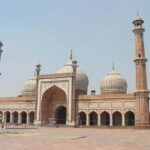
You’ll stop at India Gate for about 30 minutes. It’s a 43-meter-high monument on the National Highway, designed in 1931 and connected to the idea of independent India’s national monument. The area is a classic New Delhi scene: people taking photos, walking around, and soaking in the scale.
Parliament House and the President’s home
From there, the tour includes views/stops near Parliament House and Rashtrapati Bhawan (the President’s residence). The tour doesn’t frame these as hands-on museum stops—it’s about orientation and seeing the spaces from the outside.
I find this useful. For first-time visitors, it helps you understand how the city is organized: wide ceremonial streets, major civic buildings, and the sense of power and formality that’s different from Old Delhi’s street life.
Heads-up: these are security-sensitive areas in practice. So keep your movement calm, follow your guide’s instructions, and avoid lingering anywhere that feels restricted.
Lotus Temple (and the Monday Swap to Birla Temple)
This tour ends with Lotus Temple for about 30 minutes. It’s a Baha’i place of worship near Delhi’s capital area, and it’s well known for its flower-like design. The tour’s note on the site is important: there are no idols and no religious rituals during a visit in the way you might expect at some temples.
Lotus Temple is also a great “last stop” because the environment feels spacious and welcoming after the day’s heavier crowds.
Monday change
If your day includes a Monday, this temple is closed, so the plan switches to Birla Temple instead. I appreciate this kind of built-in fallback because it prevents your whole afternoon from derailing.
Transport, Timing, and What $15.40 Covers in Real Terms
At about $15.40 per person, this is one of those prices that makes you ask: how can it include so much? The answer is in the structure.
You’re getting:
- Pickup and drop-off anywhere in Delhi, Noida, Gurugram, Ghaziabad, and Faridabad
- AC private vehicle with tolls, fuel, parking, and taxes
- A private guide
- Complementary mineral water bottles
- Rickshaw ride
- Entrance fees only if the option is selected (the tour also marks some stops as ticket included/free)
In other words, the value isn’t just the landmarks—it’s the fact that you’re not paying separately for transportation, entry decisions, or logistics headaches. For a 6-hour day, it’s also a practical way to cover both Old and New Delhi without wasting your energy in transit.
Where you should be careful: entrances and lunch depend on which option you choose. If you care about skipping lines (and avoiding surprises), choose the entrance option and confirm lunch is included if you want it. Food is only included on the tour if you select lunch.
Dress Code and Small Prep That Avoids Big Friction
Delhi can be strict about clothing in religious sites. Your tour notes spell out the rule clearly: for temples and mosques, shoulders must be covered, and lower clothing must be at least below knee length. Upper wear should cover shoulders, chest, navel, and upper arms. That’s specific enough that you should plan your outfit ahead of time.
Also bring a valid photo identity, because monuments can require checking.
If you’d like a stress-free day, pack like this:
- Comfortable shoes for walking in markets and complexes
- A light layer (you’ll be outside for parts of the day)
- An ID you’re willing to show more than once
What This Tour Fits Best (and Who Might Want a Different Plan)
This is a smart fit if:
- You want major sights of Old and New Delhi in one go
- You prefer private guiding over hopping between buses
- You like a day plan that reduces decision-making
- You can handle crowds at market and major religious sites
It’s less ideal if:
- You dislike tight schedules and prefer a slower pace at fewer stops
- You want long, unstructured time at only one or two big monuments
- You’re hoping for lots of time inside major sites beyond the included plan
One of the tour’s strengths is that it’s flexible. It says it can be customized to your requirements, so if you want to swap emphasis—more time at Humayun’s Tomb, for example—ask before you lock your day.
Final Verdict: Should You Book It?
I’d book this tour if you’re doing Delhi for the first time or you’re short on time and want both eras of the city. The best part is the balance: you get Old Delhi landmarks that feel alive, plus New Delhi monuments that give context, all with an AC car and a private guide to keep things moving.
The only reason not to book is if you know you’ll hate a packed 6-hour rhythm. If that’s you, consider stretching your sightseeing window or choosing a tour with fewer stops.
If you want, tell me your travel dates (especially if it’s a Monday) and how many people are in your group. I can help you decide whether to select the entrance and lunch options for the smoothest day.
FAQ
How long is the 6-hour private guided tour?
The tour lasts about 6 hours.
Where is pickup and drop-off available?
Pickup and drop-off are offered anywhere in Delhi, Noida, Faridabad, Ghaziabad, and the surrounding area listed for the tour.
Are monument entrance tickets included?
Entrance fees are included only if you select the monument entrance option. Some stops are listed as included, and some areas like Chandni Chowk are free.
Is lunch included?
Lunch is included only if the lunch option is selected. Drinks with lunch are not included.
What should I wear for temples and mosques?
You’ll need to follow the dress code: upper clothing must cover shoulders, chest, navel, and upper arms, and lower clothing must be at least below the knee.
What happens on Mondays with Lotus Temple?
Lotus Temple is closed on Mondays, so the tour visits Birla Temple instead.