REVIEW · NEW DELHI
4 Day Private Golden Triangle Tour Dehli Agra Jaipur with guide
Book on Viator →Operated by Raj Tours Jaipur · Bookable on Viator
Old Delhi to pink palaces in four days.
This private Golden Triangle tour links Delhi–Agra–Jaipur with a chauffeur-driven A/C vehicle and city guides, so you’re not stuck figuring out routes or timing. What makes it interesting is how it mixes big-name icons like the Taj Mahal with lesser-loved stops such as Itimad-ud-Daulah in Agra and the astronomical instruments at Jantar Mantar in Jaipur.
I like that it’s structured as a true multi-day loop with pickup and drop, so the trip feels organized from the first day onward. I also like the human touch behind it: guides can be friendly and practical, and in feedback about this provider, a driver named Malik gets credit for knowing roads and keeping things calm and safe.
One thing to plan for: monument entrance fees and meals are not included, so the $150 price works best if you budget extra for tickets and your own hotel.
In This Review
- Key Points to Know Before You Go
- Golden Triangle Value: What You’re Paying For (and What You’re Not)
- Day 1 in Delhi: Old Delhi Classics Plus Two Key UNESCO Stops
- Red Fort (Lal Qila) — Big, Mughal, and Photo-Friendly
- Jama Masjid — Massive Scale and Great City Views
- India Gate Drive-By and a Quick Breather
- Rashtrapati Bhawan and Parliament House — See It Without the Hassle
- Humayun’s Tomb and Qutub Minar — The UNESCO Double Feature
- Day 2 to Agra: Taj Mahal + Agra Fort + Baby Taj Timing
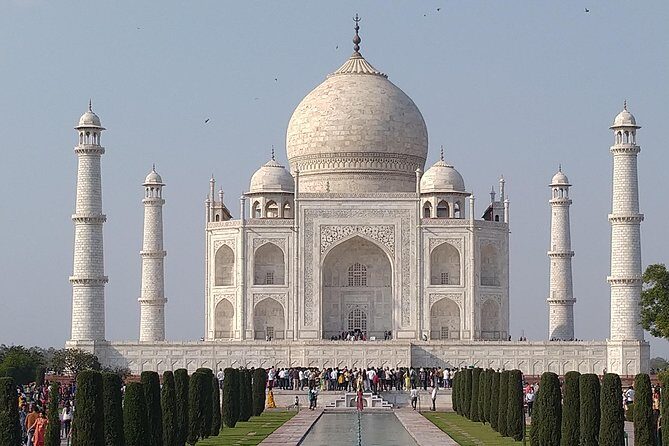
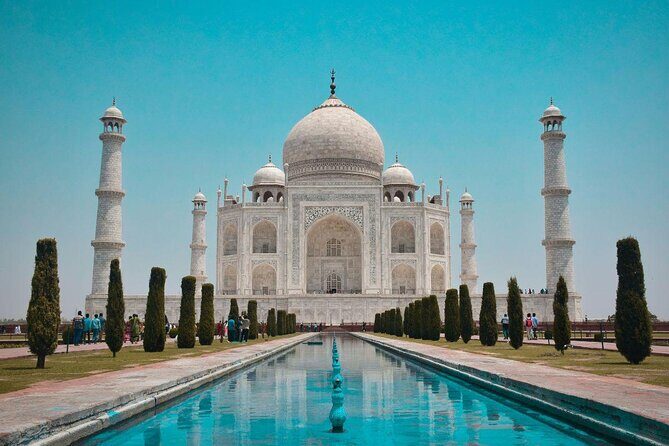
- Taj Mahal — The Main Event
- Agra Fort — Fortress Views and Mughal Power
- Itimad-ud-Daulah (Baby Taj) — Smaller, More Delicate, Often Worth More
- Day 3 to Jaipur: Fatehpur Sikri Before Jaipur’s Icon Set
- Fatehpur Sikri — UNESCO and Akbar’s Ghost-City Feeling
- Hawa Mahal — The Palace of Winds
- City Palace — The Royal Center You Can Still Feel
- Jantar Mantar — Science in Stone
- Day 4 Around Jaipur: Museums, Cenotaphs, Jal Mahal, and Amer Fort
- Albert Hall Museum — Indo-Saracenic Architecture and a Real Collection
- Royal Gaitor Tumbas — Marble Cenotaphs with Hills Behind Them
- Jal Mahal — Quick Look at the Water Palace
- Amer Fort (Amer) — The Big Fort Moment
- Transfer to New Delhi and Airport Drop
- Guides, Driver, and Why This Tour Works Better Than DIY
- Money-Saving Tips for Delhi–Agra–Jaipur Without Cutting Corners
- Who This Tour Fits Best (and Where It Might Feel Too Tight)
- Should You Book the 4-Day Private Golden Triangle?
- FAQ
- What cities are included in this Golden Triangle tour?
- Is hotel accommodation included?
- Are monument entrance fees included?
- Does the tour include pickup and drop, plus transport?
- Is this a private tour or shared with other groups?
- What is the minimum age to join?
- Is a vegetarian option available?
Key Points to Know Before You Go
- Private A/C vehicle for the whole circuit, with pickup and drop at your hotel/airport/railway station.
- Guides in each city to help you understand what you’re seeing, not just photograph it.
- UNESCO sites on the route, especially in Delhi and at Fatehpur Sikri.
- Taj Mahal and Agra Fort are paired on Day 2 for a focused Mughal day.
- Jaipur includes major landmarks like Hawa Mahal, City Palace, and Jantar Mantar.
- Amer (Amber) Fort time is built in on Day 4, plus a quick look at Jal Mahal.
Golden Triangle Value: What You’re Paying For (and What You’re Not)
At $150 per person for 4 days, this tour is mainly selling three things: transport, guiding, and a simple plan that strings Delhi, Agra, and Jaipur together. The included items list covers hotel/airport/railway pickup-and-drop, a chauffeur-driven A/C private vehicle, and professional guides in each city.
What it does not include is equally important. Hotel accommodation isn’t included, and monument entrance fees are also not included, along with meals and personal expenses. So your real budget is a mix of the tour price plus your entry tickets and where you sleep.
The good news is that this format tends to be excellent for first-timers. You get structure, you get local interpretation, and you can spend your energy on the sites instead of managing logistics.
You can also read our reviews of more guided tours in New Delhi


Day 1 in Delhi: Old Delhi Classics Plus Two Key UNESCO Stops
Delhi on Day 1 is built for orientation and wow-factor. You’ll start in Old Delhi with the places that make the city feel like a living museum—fortifications, mosques, and memorials—then you’ll move through more Mughal-era architecture before ending with Qutub Minar.
Red Fort (Lal Qila) — Big, Mughal, and Photo-Friendly
Red Fort is one of those stops that feels important even before you understand why. It’s a Mughal fort connected to Shah Jahan, and it sits right in Old Delhi where the streets stay busy.
Practical note: the tour shows Red Fort admission not included, so expect to pay your entry ticket separately.
Jama Masjid — Massive Scale and Great City Views
Jama Masjid is one of India’s largest mosques, built in the 17th century by Shah Jahan. It can accommodate up to 25,000 worshippers, and it’s not just a building—it’s a whole ceremonial space with views and a strong sense of place.
Good part: this one lists admission as free. Even if you don’t go inside every area, the architecture and the atmosphere around it are worth your time.
India Gate Drive-By and a Quick Breather
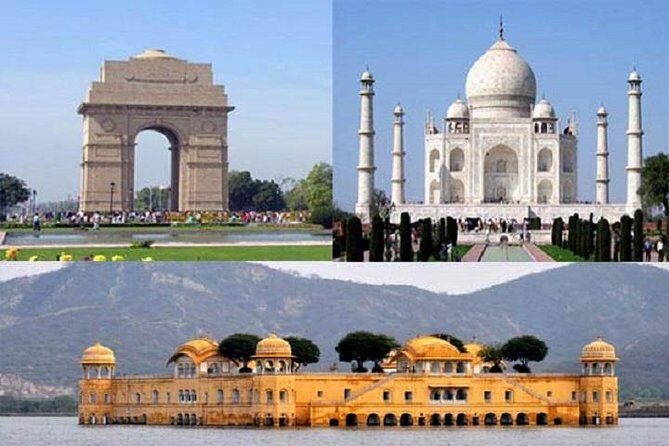
India Gate is a war memorial from 1931, with a tall central structure and carved details. It also comes with lawns around it, so it’s a handy pause between the heavier Old Delhi sights.
This stop is short, but it works. You don’t need a long layover here to get the idea.
You can also read our reviews of more private tours in New Delhi




Rashtrapati Bhawan and Parliament House — See It Without the Hassle
You’ll pass Rashtrapati Bhawan (the President’s residence) and the Parliament House while driving through the city. This is one of those parts that feels slightly anticlimactic if you want deeper access, but it’s genuinely useful: you get the look of two major power centers without losing half a day trying to coordinate visits.
Humayun’s Tomb and Qutub Minar — The UNESCO Double Feature
Humayun’s Tomb is a UNESCO World Heritage Site with Persian-inspired design and gardens. It’s built for Mughal Emperor Humayun in 1569, and it gives you a strong visual sense of how Mughal architecture behaves in a landscaped setting.
Then comes Qutub Minar, also UNESCO, reaching 73 meters and recognized as the tallest brick minaret in the world. Even if you’re not a history person, you’ll probably appreciate the scale, inscriptions, and the sense that this place has been standing for ages.
Both of these show admission as not included, so again, plan for tickets.
Day 1 takeaway: Delhi here is paced well: Old Delhi for intensity, then UNESCO gardens and monuments for structure.
Possible consideration: it’s a long day of walking around major sites and moving between areas. Comfortable shoes help more than you’d think.
Day 2 to Agra: Taj Mahal + Agra Fort + Baby Taj Timing
Day 2 focuses on Agra, and it’s a classic pairing: the Taj Mahal first, then other Mughal masterpieces nearby. This is the day you’ll remember for the white marble moment and the surrounding palace/fort energy.
Taj Mahal — The Main Event
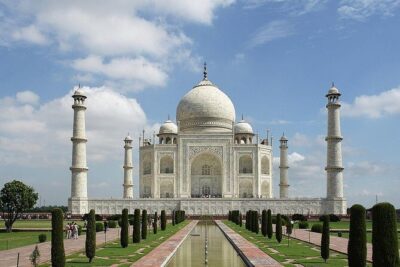
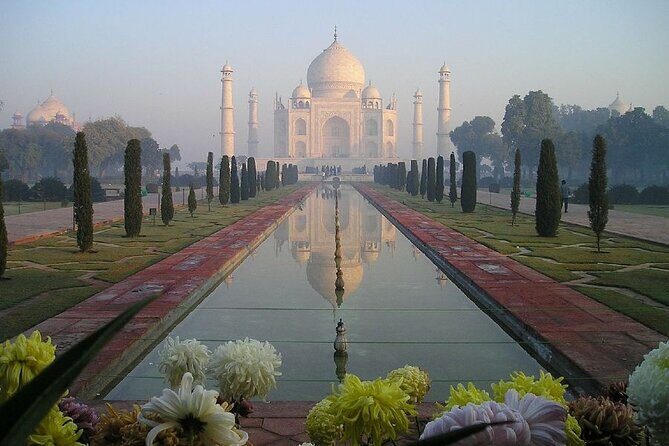
The Taj Mahal is described as gleaming under the sun with gardens and reflecting pools, and that’s exactly the kind of effect you’ll want to catch. Inside, you’ll see intricate carvings and the tomb of Mumtaz Mahal, which is the calm center of the whole experience.
The tour lists admission not included, so budget for your ticket.
Agra Fort — Fortress Views and Mughal Power
Agra Fort is a massive red sandstone fortress tied to Mughal rule. It’s not just walls—there are grand halls, gardens, and strong views toward the Taj Mahal area.
Admission is listed as not included, so this becomes part of your ticket-cost planning.
Itimad-ud-Daulah (Baby Taj) — Smaller, More Delicate, Often Worth More
Itimad-ud-Daulah is sometimes called the Baby Taj. The reason is the style: marble inlay work and a garden mausoleum feel that fits the Taj’s aesthetic language, but in a more intimate package.
This stop is also listed as admission not included, and it’s a smart inclusion because it breaks up the big-ticket energy of Day 2.
Day 2 takeaway: if you want your Agra time to feel like more than just one photo, this combination does that.
Possible consideration: with multiple paid sites in a single day, your final spending can jump quickly. I recommend you calculate ticket time and cashflow before you arrive.
Day 3 to Jaipur: Fatehpur Sikri Before Jaipur’s Icon Set
Day 3 does a very efficient switch: you start at Fatehpur Sikri near Agra, then move to Jaipur for the big architectural hits of Rajputana and Mughal-era influence.
Fatehpur Sikri — UNESCO and Akbar’s Ghost-City Feeling
Fatehpur Sikri is a UNESCO World Heritage Site and a former Mughal capital built by Emperor Akbar in the 16th century. It’s known for red sandstone architecture and major structures like Buland Darwaza.
The tour lists admission as free here, which is a nice money-saver. Even if you don’t know the empire details, you’ll feel how massive the complex is.
Hawa Mahal — The Palace of Winds
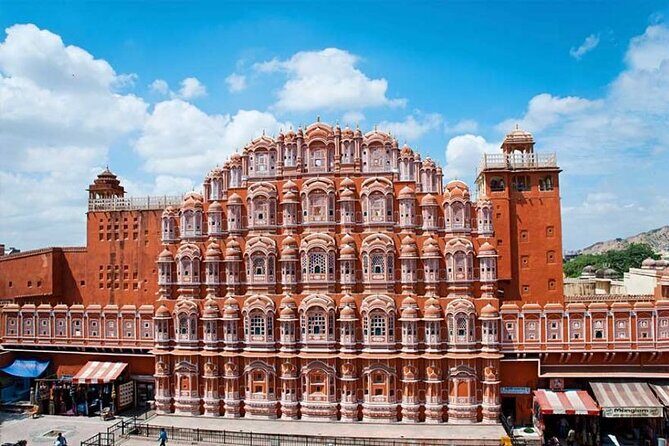
Hawa Mahal in Jaipur is instantly recognizable. Built in 1799, it’s famous for the honeycomb design and 953 small windows, allowing royal women to observe street life without being seen.
This stop is short (around 30 minutes) and admission is not included. I’d treat it as a quick icon stop rather than a full exploration.
City Palace — The Royal Center You Can Still Feel
City Palace blends Mughal and Rajput architecture, and it includes courtyards, gardens, and museums with royal artifacts. It also remains the official residence of the Jaipur royal family, so it doesn’t feel like a dead set.
Admission is not included according to the tour info.
Jantar Mantar — Science in Stone
Jantar Mantar is an astronomical observatory built in the 18th century by Maharaja Sawai Jai Singh II. The big draw is the set of architectural instruments, including the world’s largest stone sundial, which connects the skyline to math and astronomy.
Time is shorter here (around 45 minutes), and admission is not included.
Day 3 takeaway: you get three different “ways of seeing” Jaipur—folk-street intrigue at Hawa Mahal, power and art at City Palace, and knowledge built into the city at Jantar Mantar.
Possible consideration: by the time you reach Jaipur, you may feel site-fatigue. Plan to slow down during transfers and let your guide pace the visits.
Day 4 Around Jaipur: Museums, Cenotaphs, Jal Mahal, and Amer Fort
Day 4 is a mix of Jaipur proper plus the Amer area, then a transfer back to New Delhi for your onward journey.
Albert Hall Museum — Indo-Saracenic Architecture and a Real Collection
Albert Hall Museum opened in 1887 and is known for its Indo-Saracenic building style. The tour lists highlights like art and textiles, plus a famous exhibit: the mummy of a 2,500-year-old Egyptian priest.
Admission is listed as not included.
Royal Gaitor Tumbas — Marble Cenotaphs with Hills Behind Them
Royal Gaitor Tumbas are the cenotaphs of the Kachwaha rulers, built in the 18th century. The setting matters here: marble carvings with a backdrop of the Aravalli hills.
Admission is not included. The stop itself is short, so you’ll want to focus on the details and carvings rather than expecting hours of wandering.
Jal Mahal — Quick Look at the Water Palace
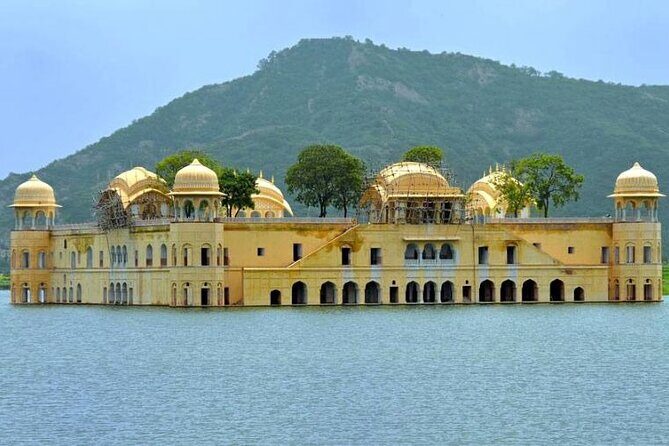
Jal Mahal, or Water Palace, sits in the middle of Man Sagar Lake. The blend of Rajput and Mughal styles makes it look like a mirage from the shore.
This stop is only about 15 minutes and lists admission as not included. Think quick photo and atmosphere rather than a deep visit.
Amer Fort (Amer) — The Big Fort Moment
Amer is 11 km from Jaipur, and the tour schedules around 2 hours there. Even though admission is listed as free in the info, you’ll still likely spend most of that time on the fort complex experience.
Since this is a named town stop, I’d treat it as your main “Rajasthan fort culture” moment on Day 4.
Transfer to New Delhi and Airport Drop
After Amer, you transfer back to New Delhi. The tour info says the drive/transfer and drop to the airport is about 5 hours, with free time listed in the stop.
This is the part where timing matters most. Try not to book tight onward flights unless you like living dangerously.
Day 4 takeaway: it’s a strong sampler of Jaipur beyond the postcard spots—plus Amer Fort for the full Rajput fort experience.
Guides, Driver, and Why This Tour Works Better Than DIY
A big reason this kind of Golden Triangle tour feels good is the human support. In the feedback you have access to, there’s repeated praise for planning help from someone named Shakeer, and for guides in Jaipur and Agra who are described as friendly and eager to share local artistry—not just dates and titles.
You’ll also see a driver named Malik highlighted for knowing roads and keeping the trip safe and organized. That matters more than it sounds in India. Distances are real, traffic changes, and getting the timing right between Delhi, Agra, and Jaipur is the difference between a smooth day and a stressful one.
One more practical point: this tour is private, so your group is the only group participating. That usually means less waiting around for other schedules and more flexibility with pace.
Possible consideration: because monument tickets and hotel aren’t included, you’ll still want to coordinate your own basics. This is a tour that handles the route and interpretation, not the entire trip budget.
Money-Saving Tips for Delhi–Agra–Jaipur Without Cutting Corners
Here’s how I’d treat this tour financially so nothing surprises you.
First, expect ticket costs on multiple major monuments. The tour info specifically marks several stops as admission not included (like Red Fort, Humayun’s Tomb, Qutub Minar, Taj Mahal, Agra Fort, and City Palace/Jantar Mantar). You can’t avoid this, but you can plan for it.
Second, plan your hotel separately. Since accommodation isn’t included, your total cost will depend on where you choose to stay in each city. If you’re trying to keep the budget tight, pick hotels close to the areas where you’ll start your days.
Third, meals are listed as not included, even though Jaipur includes a Rajasthani lunch as a highlighted experience. In practice, I’d treat lunch as a scheduled stop you’ll pay for, rather than something automatically covered.
Finally, if you need vegetarian food, the tour data says a vegetarian option is available—just advise at booking. That’s a simple step that prevents mid-day chaos.
Who This Tour Fits Best (and Where It Might Feel Too Tight)
This private Golden Triangle is a great match if you want:
- A structured route through Delhi, Agra, and Jaipur without the hassle of transfers
- Guided context for major UNESCO sites and iconic architecture
- A balanced mix of big names (Taj Mahal, Red Fort) and supporting stops (Itimad-ud-Daulah, Jantar Mantar)
It might feel tight if you prefer slow travel. The itinerary has major sites each day and a Day 4 transfer back to New Delhi. If you’re the type who likes to wander without a schedule, you may want a longer stay or fewer stops.
Also, the tour’s minimum age is 16, and children must be accompanied by an adult. If that fits your group, you’ll be fine.
Should You Book the 4-Day Private Golden Triangle?
If your goal is a first-time, high-impact Delhi–Agra–Jaipur circuit with a private driver and city guides, I think this booking makes sense. You’re paying for organization: pickup and drop, an A/C vehicle, and professionals who can explain what you’re looking at while you focus on the sights.
I’d especially consider it if you like the idea of hitting UNESCO landmarks in Delhi and Fatehpur Sikri, then switching into a guided Mughal-and-Rajput architecture focus with Taj Mahal, Amer, and the Jaipur icon set. The short, efficient structure is the value.
Just be sure you’re comfortable managing what’s not included: your hotel, monument tickets, and meal costs. If you can handle those basics, this tour is an easy way to get the Golden Triangle right without turning it into a logistics project. Free cancellation is available up to 24 hours in advance for a full refund, so you can book with some flexibility.
FAQ
What cities are included in this Golden Triangle tour?
The tour covers Delhi, Agra, and Jaipur in a 4-day private route.
Is hotel accommodation included?
No. The tour does not include hotel accommodation.
Are monument entrance fees included?
No. Monument entrance fees are not included in the tour price.
Does the tour include pickup and drop, plus transport?
Yes. It includes hotel/airport/railway station pickup and drop, and a chauffeur-driven A/C private vehicle for the Golden Triangle route.
Is this a private tour or shared with other groups?
This is a private tour/activity, and only your group participates.
What is the minimum age to join?
The minimum age is 16 years, and children must be accompanied by an adult.
Is a vegetarian option available?
Yes. A vegetarian option is available, and you should advise at the time of booking.