REVIEW · JAIPUR
3 Days: Private Guided Tour Of Jaipur & Agra With Drop At Delhi
Book on Viator →Operated by Unseen Tours and Travels · Bookable on Viator
Jaipur plus Agra in three days can work. This private tour strings together Amer Fort, the Taj Mahal, and a strong lineup of sights with local guides and door-to-door logistics. I like that it’s built for comfort with an air-conditioned vehicle and bottled water, not just sightseeing checklists.
What I really like is the blend of major icons and the in-between details that make the route feel complete. You get guided time at Jaipur, Fatehpur Sikri, and Agra, plus a traditional Jaipur dinner with an Indian family that adds a human side to all the palaces and tombs.
One thing to plan for: monument entry fees usually aren’t included (you pay directly), so your total budget may be higher than the headline price.
In This Review
- Key highlights worth knowing
- Jaipur and Agra, without the chaos: how this 3-day flow works
- What’s actually included: hotels, breakfasts, guides, and a real meal
- Day 1 in Jaipur: Amer Fort, Jal Mahal views, and the royal-city essentials
- Amber Palace (Amer Fort): plan for a slow climb and big payoff
- Jal Mahal: quick stop for the lake-and-palace illusion
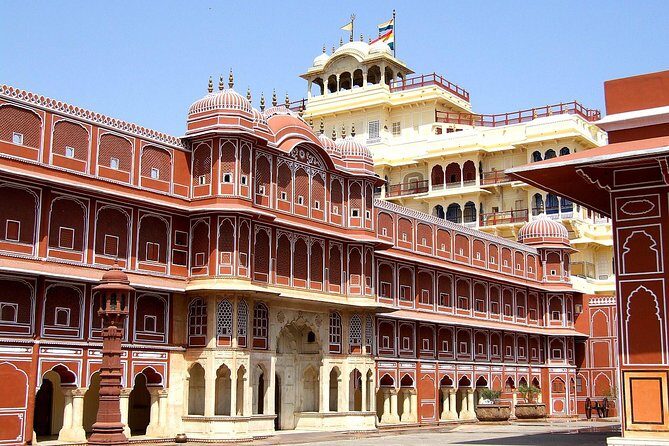
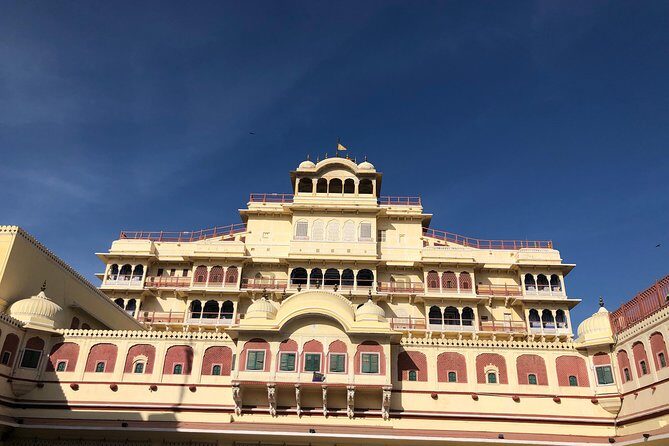
- City Palace: the living center of Jaipur’s palace story
- Jantar Mantar: UNESCO astronomy tools in stone
- Hawa Mahal: the facade that’s all about windows
- Day 2: Chand Baori’s stepwell, Fatehpur Sikri’s red-sandstone drama, then the Taj Mahal
- Chand Baori stepwell: a geometry flex in Abhaneri
- Fatehpur Sikri: 90 minutes in a planned Mughal city
- Taj Mahal: your first major taste of Agra’s star
- Day 3 in Agra: I’timād-ud-Daulah and Agra Fort before you head to Delhi
- I’timād-ud-Daulah: the so-called Bachcha Taj
- Agra Fort: where power used to sit
- Drop-off in Delhi: hotel or airport
- Price and value: does $187 per person make sense for this package?
- Tickets, timing, and practical budgeting for the sights
- Local guides in Jaipur, Fatehpur Sikri, and Agra: what you gain beyond the photos
- Comfort on the road: AC vehicle, a dedicated driver, and real-world speed changes
- Who should book this tour, and who should consider another option
- Should you book this Jaipur & Agra private tour with Delhi drop-off?
- FAQ
- FAQ
- How long is the Jaipur to Agra tour?
- Is this a private tour or shared group tour?
- Does the price include two nights of accommodation?
- Are meals included besides breakfast?
- Do I need to pay monument entry fees separately?
- Is hotel pickup and drop-off included?
- Where will I be dropped off at the end of the tour?
- Is transportation provided during the tour?
- Are local guides provided?
- What is the cancellation window for a full refund?
Key highlights worth knowing
- Two nights of accommodation included, with options for 3-, 4-, or 5-star hotels
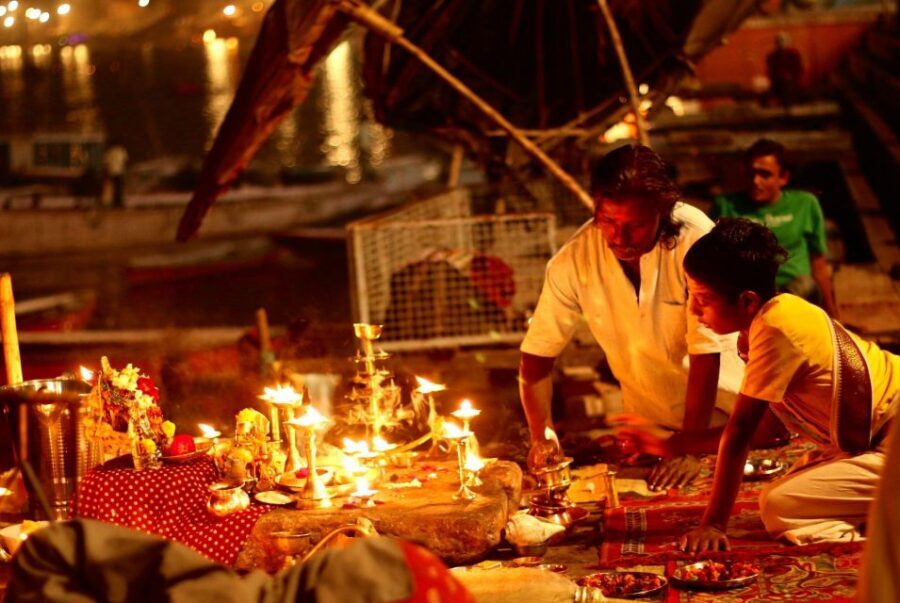
- Traditional dinner with an Indian family in Jaipur (a standout in the experience)
- Local guides in Jaipur, Fatehpur Sikri, and Agra, so you’re not stuck translating on the fly
- Air-conditioned transport with a dedicated driver and bottled water
- Fatehpur Sikri is listed as free entry on this plan, but other sites are ticketed
Jaipur and Agra, without the chaos: how this 3-day flow works
This tour is designed for travelers who want the big names without playing “where do we go next?” every day. You start in Jaipur, then head toward Agra via Fatehpur Sikri, and finish in Agra before dropping you in Delhi at your hotel or the airport.
The private format matters more than you’d think. With only your group involved, you can keep a steadier pace, stop when it makes sense for photos or questions, and avoid the awkward shuffle you get on larger group tours.
Also, the transport is not a generic suggestion. You’re in an AC vehicle with a driver, and transfer times are approximate because traffic affects everything. That honest note saves frustration, especially when you’re moving between cities.
You can also read our reviews of more guided tours in Jaipur


What’s actually included: hotels, breakfasts, guides, and a real meal
The biggest value piece here is that you get two nights accommodation included. That means you’re paying for a package that covers the sleep part of the journey, not just the guiding.
You also get breakfast for two days, plus one traditional dinner in Jaipur with an Indian family. If you’re choosing between a tour that only does monuments and one that adds a meal with locals, this is the difference-maker. A private guide can explain the buildings; a shared dinner is where you learn how the people actually live around those buildings.
You’ll also have local guides at Jaipur, Fatehpur Sikri, and Agra, and the tour includes hotel pickup and drop-off plus bottled water throughout. Those small inclusions add up when you’re doing three intense days with early starts and long sightseeing windows.
One practical thing: food and drinks aren’t listed as included unless specified, so outside the included meals, you’ll be paying as you go.
Day 1 in Jaipur: Amer Fort, Jal Mahal views, and the royal-city essentials
Day 1 is your Jaipur orientation day, with the main “wow” sites and a good spread of different styles of architecture. You’ll spend the most time at the grand fort and palace complex, then tighten up with shorter stops for the city’s signature landmarks.
Amber Palace (Amer Fort): plan for a slow climb and big payoff
Amer Fort is the big anchor of the morning. It’s listed at about 1 hour 30 minutes, and it’s worth treating it like the showpiece it is. The fort sits up high, so you get those classic fort-and-city perspectives, and you’ll spend most of your time inside the fort’s major areas rather than racing past everything.
Admission isn’t included, so budget for tickets. If you hate waiting in ticket lines, build in a little patience anyway. Forts and palace sites tend to be busy.
Jal Mahal: quick stop for the lake-and-palace illusion
Jal Mahal is the “blink and you’ll miss it” moment on the route, scheduled around 15 minutes. It’s a palace surrounded by Man Sagar Lake, and from the road it gives you that picture-perfect scene of a palace sitting in water.
This is not a long visit stop. Think of it as a photo moment plus a quick orientation to Jaipur’s geography.
You can also read our reviews of more private tours in Jaipur






City Palace: the living center of Jaipur’s palace story
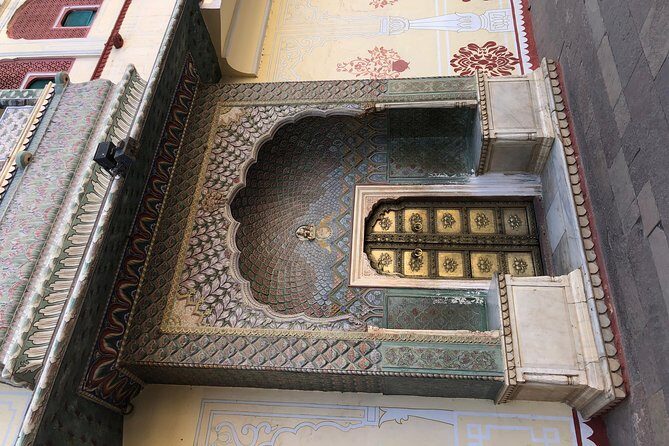
Next is City Palace, about 1 hour. This is where Jaipur stops feeling like a pile of monuments and starts feeling like an actual royal complex with a continuing narrative.
Tickets are extra. If you’re the type who likes to understand what you’re looking at, the guide time here is especially useful.
Jantar Mantar: UNESCO astronomy tools in stone
Then you’ll hit Jantar Mantar, listed around 40 minutes. This is a UNESCO site and a collection of stone astronomical instruments, including the world’s largest stone sundial.
At 40 minutes, you’re not getting a full physics lecture, but you are getting enough time to spot how the instruments work. If you like “how did they build this and measure that,” this stop lands well.
Hawa Mahal: the facade that’s all about windows
Finally, Hawa Mahal is scheduled for about 15 minutes. The Palace of Wind is famous for its distinctive facade of windows, designed for the women’s chambers. Even with a short stop, you’ll understand why the building is iconic.
Like the others, admission is extra. This one is best as a visual stop rather than a “walk around for an hour” stop.
Day 2: Chand Baori’s stepwell, Fatehpur Sikri’s red-sandstone drama, then the Taj Mahal
Day 2 is where the tour starts moving from Jaipur’s royal skyline to the Mughal-era masterpieces near Agra. It’s also the day with the most contrast: stepwell engineering, fortress-turned-city ruins, and the Taj.
Chand Baori stepwell: a geometry flex in Abhaneri
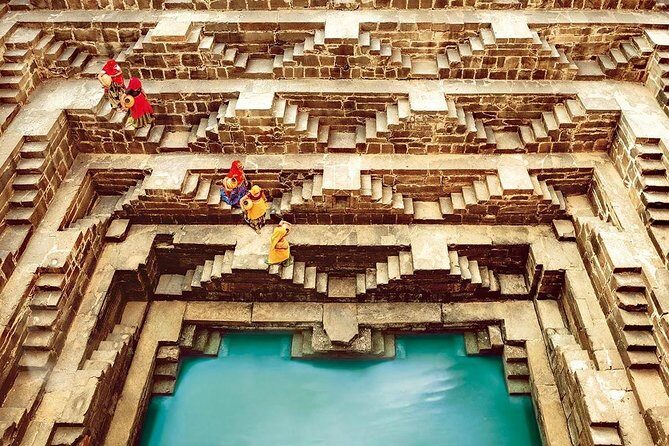
You’ll start with Chand Baori (step well), about 15 minutes. This is quick, but it’s also the kind of place where a short visit can still feel memorable because the structure is so visually intense. The stepwell’s layered design turns it into a kind of architectural diagram.
Admission isn’t included, and this stop is short enough that you’ll want to focus on a couple of key viewpoints rather than trying to cover the entire area.
Fatehpur Sikri: 90 minutes in a planned Mughal city
Next is Fatehpur Sikri, about 1 hour 30 minutes, and this is listed as free entry on this plan. That alone makes it a nice value slot, since many other major sites charge.
Fatehpur Sikri is built around red sandstone structures clustered in the center. The highlights included in the guided time include:
- Buland Darwaza gate
- Tomb of Salim Chishti
- Diwan-E-Khas, including the carved central pillar
- Jodha Bai Palace with Hindu and Mughal-style mix
- Panch Mahal, a five-story terrace structure overlooking the site
If you’re trying to understand Mughal architecture, Fatehpur Sikri gives you the “why” behind the look. It’s not just pretty. It feels planned.
Taj Mahal: your first major taste of Agra’s star
Then it’s on to the Taj Mahal for about 1 hour 30 minutes. Tickets are not included, so pay attention to that in your planning.
This stop is short enough to prevent burnout, but long enough to see the main structure from key angles. If you’ve only ever seen the Taj in postcards, this is where it becomes real: the size, the symmetry, and the white marble presence all hit at once.
Day 3 in Agra: I’timād-ud-Daulah and Agra Fort before you head to Delhi
Day 3 is a gentler split: one “jewel box” style mausoleum, then a fort with Mughal power vibes. It ends with the all-important transition back to Delhi.
I’timād-ud-Daulah: the so-called Bachcha Taj
You’ll visit Itmad-ud-Daula (I’timād-ud-Daulah), about 40 minutes. It’s often described as a “jewel box,” and this stop is frequently nicknamed the Bachcha Taj, meaning it shares DNA with the Taj Mahal but in a smaller, more detailed package.
Admission isn’t included. This is also a good stop for people who want more than one famous mausoleum, since it gives you a different scale and style experience.
Agra Fort: where power used to sit
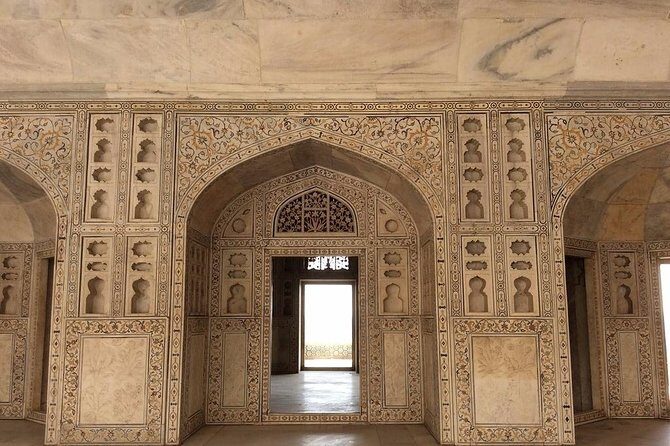
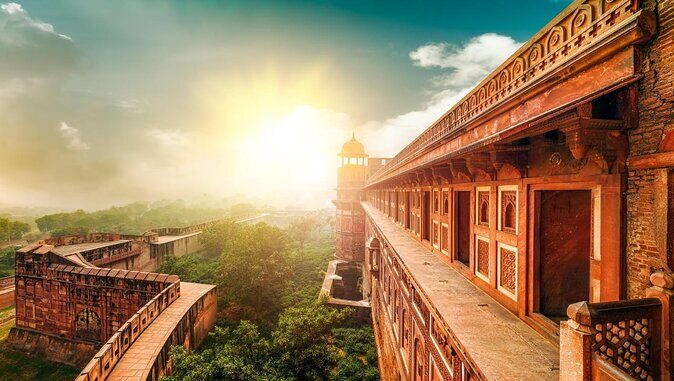
Next is Agra Fort, scheduled for about 30 minutes. It was the Mughal emperors’ main residence until the capital moved to Delhi.
This stop is shorter, so you’ll likely focus on the essentials rather than trying to see every corner. If forts are your thing, it may feel quick. But the pacing makes sense because you still need to finish the day and transfer onward.
Drop-off in Delhi: hotel or airport
At the end, you’ll be dropped in Delhi at your hotel of choice or the airport. That flexibility is useful. Just remember that traffic in Delhi can turn “nearby” into “surprise, it’s slower today.”
Price and value: does $187 per person make sense for this package?
At $187 per person, the headline looks reasonable when you consider what’s covered. You’re not just paying for a driver and a list of monuments. The plan includes two nights accommodation, breakfast for two mornings, an included dinner, local guides in multiple cities, and air-conditioned transport between Jaipur, Fatehpur Sikri, Agra, and Delhi.
The main value trade-off is the monument tickets. Since most entries are not included, your final spending will depend on how many ticketed sites you visit and how much you decide to add. Fatehpur Sikri is listed as free entry, which helps offset the total.
If you want the comfort of private transport plus guides in all key cities, this pricing often feels fair compared with piecing together lodging, transfers, and separate guide bookings.
Tickets, timing, and practical budgeting for the sights
Most monument entry fees are extra and payable directly. That includes Amer Fort, City Palace, Jantar Mantar, Hawa Mahal, Taj Mahal, Itmad-ud-Daula, and Agra Fort. Fatehpur Sikri is listed as free entry on this itinerary, which is a helpful exception.
Timing is also something to expect. The plan states transfer durations are approximate and depend on traffic. In real life, that means you should expect some variability in start times and how tightly you can stick to schedules—especially on travel days that involve city exits and arrivals.
My practical tip: treat the tour day like a “workday.” Have water in your mind, wear shoes that handle uneven ground, and plan for sun exposure during outdoor stops. Short stops can still feel long in Indian heat.
Local guides in Jaipur, Fatehpur Sikri, and Agra: what you gain beyond the photos
The itinerary isn’t just monuments. It’s guided time spread across three locations, and that changes how the sites click.
In Jaipur, the guide helps connect the story between fort life and city palace authority, then makes the UNESCO astronomy site and Hawa Mahal’s design make sense beyond visuals. At Fatehpur Sikri, the guide’s explanations help the red-sandstone complex feel like a coherent planned city rather than a collection of buildings. In Agra, the focus shifts to major imperial landmarks and mausoleums in a way that keeps the story moving.
The value here is context. When someone explains what you’re looking at, you remember it longer—and you take better photos because you’re standing in the right places for the right reasons.
Comfort on the road: AC vehicle, a dedicated driver, and real-world speed changes
You’re traveling between cities, which means road conditions and traffic matter more than people expect. This tour gives you an AC vehicle and a driver, which is not just comfort—it’s stamina management.
One travel reality: if there are delays due to protests or other disruptions, a driver’s judgment becomes part of the experience. The best drivers don’t panic. They reroute, adjust timing, and keep the day moving without turning it into a stressed sprint.
Because transfer times are approximate, I recommend you keep your expectations flexible and focus on the guided stops. The driving is the link. The sights are the payoff.
Who should book this tour, and who should consider another option
This tour is a great fit if you want:
- A private, guided Jaipur + Agra route with less logistical headache
- Hotel nights included so you’re not coordinating lodging and guides separately
- The Taj Mahal plus an extra layer of Agra sights, not just one day of icons
It might be less ideal if you:
- Hate paying monument entry fees on top of the package price
- Want free-form travel and lots of independent wandering without a guide’s structure
- Are hoping for very long visits at each site, since several stops are intentionally shorter to keep the route balanced
For couples, solo travelers, and families who prefer comfort and clarity, this plan hits the sweet spot.
Should you book this Jaipur & Agra private tour with Delhi drop-off?
I’d book it if you like the idea of doing Jaipur’s major sights, Fatehpur Sikri’s planned Mughal city, and the Taj Mahal in one tight, guided rhythm—while keeping transport easy and included.
Before you go, do two things:
- Budget for entrance fees at the major ticketed stops, since the tour lists most monument tickets as extra.
- Choose your hotel star level based on what you want most: comfort after long days, or maximum spending control.
If you want a smooth, guided route with real local interaction through the dinner, this one is a solid bet.
FAQ
FAQ
How long is the Jaipur to Agra tour?
The tour is 3 days (approx.).
Is this a private tour or shared group tour?
It’s a private tour/activity, so only your group participates.
Does the price include two nights of accommodation?
Yes. Two nights of accommodation are included (as per the option selected: 3 star, 4 star, or 5 star).
Are meals included besides breakfast?
Breakfast is included for 2 days, and there is one traditional dinner with an Indian family in Jaipur included.
Do I need to pay monument entry fees separately?
Yes. Monument entry fees are not included and must be paid directly. Fatehpur Sikri is listed as free entry.
Is hotel pickup and drop-off included?
Yes. The tour includes hotel pickup and drop-off.
Where will I be dropped off at the end of the tour?
You’ll be dropped at the hotel of your choice in Delhi, or at the airport.
Is transportation provided during the tour?
Yes. All transport is in an air-conditioned vehicle with a driver, and bottled water is included.
Are local guides provided?
Yes. Local guides are available for Jaipur, Fatehpur Sikri, and Agra.
What is the cancellation window for a full refund?
You can cancel up to 3 days in advance for a full refund (you must cancel at least 3 full days before the experience’s start time).