REVIEW · NEW DELHI
10 Days Private Golden Triangle Tour with Amritsar and Rishikesh
Book on Viator →Operated by Golden Triangle Tours India · Bookable on Viator
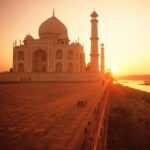
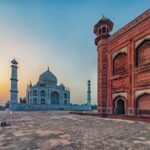
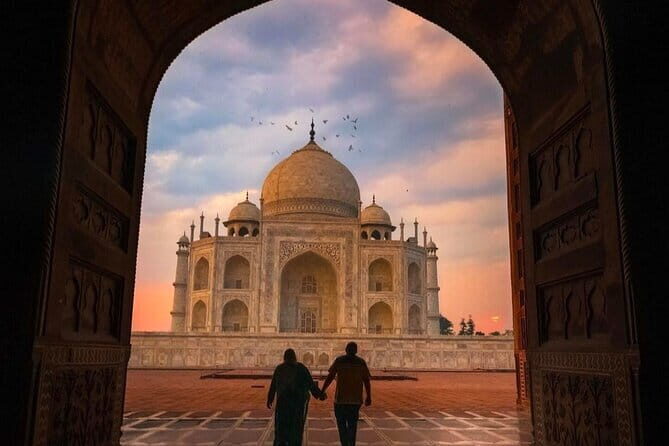
Big icons, then real calm. This private 10-day route strings together Delhi, Agra, Jaipur, Amritsar, and Rishikesh with local guides and a lot of UNESCO-listed sites, so you don’t just tick boxes. I especially like the way you can catch the Taj Mahal at both sunrise and sunset, without turning the day into a sprint.
You’ll also get the comfort of a driver plus private pacing. That matters on this kind of itinerary, because road time adds up, and having a plan helps you enjoy the sights instead of managing logistics. I did notice a common thread in past experiences with named drivers like Surendra, plus a coordinator named Gopal who helps keep things running, and that gives this tour a practical feel.
One drawback to plan for: monument entry fees are not included, and some places can add up fast once you’re actually on-site. Also, there are longer drive days, so pack patience for the road when you’re traveling between cities.
In This Review
- Key highlights to look for
- Ten days that connect the Golden Triangle to Amritsar and Rishikesh
- Price and logistics: what you really get for about $588.46 per person
- Entering Agra the right way: sunset gardens, Baby Taj, and sunrise light
- Day 1 in Agra: Forts and a softer Taj view
- Day 2 in Agra: sunrise Taj Mahal, then the road to Jaipur
- Jaipur in a full day’s rhythm: Amber, palaces, and astronomical instruments
- Amber and the photo stops
- City Palace, Jantar Mantar, and Hawa Mahal
- Day 4: temples that add variety before Delhi
- Delhi: UNESCO towers, Old Delhi markets, and a good mix of old and new
- Big UNESCO hits
- Old Delhi: Jama Masjid and Chandni Chowk
- Amritsar: Golden Temple for calm, Wagah for spectacle
- Arrival and Golden Temple time
- Wagah Border: the flag-down ceremony at 5:00 pm
- Rishikesh: bridges and ghats with the Ganges as your anchor
- Day 9: Ram Jhula, Parmarth Niketan, Triveni Ghat, Lakshman Jhula
- Day 10: the return to Delhi
- Hotels, guides, and why private really changes the feel
- Who should book this tour (and who should skip it)
- Should you book this 10-day private Golden Triangle plus Amritsar and Rishikesh tour?
- FAQ
- Is this tour actually private?
- Where does the tour start?
- How long is the tour, and which cities are covered?
- Are hotel stays included?
- Is the Taj Mahal battery bus ride included?
- Are monument entry fees included?
- What is the Wagah Border timing on the schedule?
- What meals are included?
- What’s the cancellation window?
Key highlights to look for
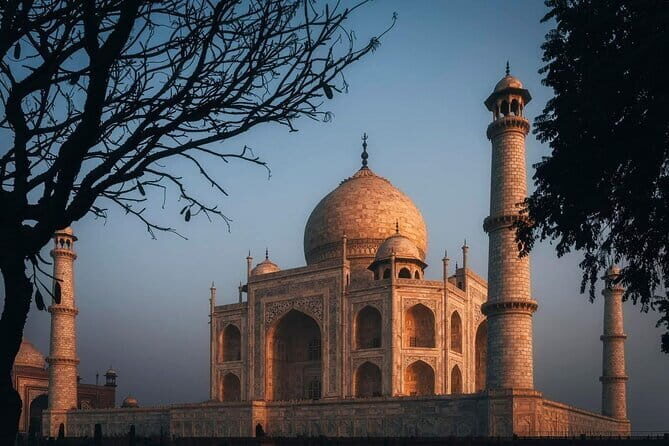
- Taj Mahal twice: sunrise in Agra Day 2, plus a sunset viewpoint experience in Agra Day 1
- Battery bus included to reach the Taj Mahal area from the parking zone
- Private local guides each day, not a mixed group scramble
- Wagah Border at a real set time: arrive to prepare at 3:00 pm, ceremony starts at 5:00 pm
- Rishikesh walking beats: Ram Jhula, Triveni Ghat, Parmarth Niketan, and Lakshman Jhula
- A smooth arc of contrasts: Mughal monuments, Rajput forts and palaces, then Sikh worship and Ganges spirituality
Ten days that connect the Golden Triangle to Amritsar and Rishikesh
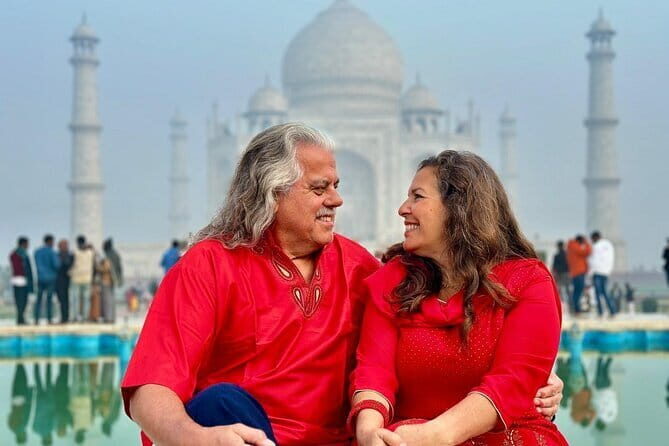
Most Golden Triangle tours do the classics and call it a day. This one adds Amritsar and Rishikesh, so your trip doesn’t just stay in royal-era monuments. You end up with a strong pattern: grand empires in Delhi and Agra, Rajput power in Jaipur, and then a very different emotional register in Punjab and on the Ganges.
The private format is a big deal here. You’re moving across multiple cities, so the value isn’t only in the headline sites. It’s in how the schedule gives you time to shift gears—sunrise light in Agra, fort walls and gardens in the afternoon, then temple time in Amritsar, and bridge-and-ghat time in Rishikesh.
If you like your travel with fewer decisions, this works well. Your guide handles the story and the flow of each stop, while your driver focuses on the vehicle and timing.
You can also read our reviews of more private tours in New Delhi


Price and logistics: what you really get for about $588.46 per person

At $588.46 per person for 10 days, the headline price looks simple. The real question is what’s bundled—and what isn’t.
From the included items, you can expect:
- Private transport in an air-conditioned vehicle with a driver
- Hotel or airport pick-up and drop-off
- All sightseeing with private local guides
- 9 nights accommodation if you choose the option that includes hotels
- Battery bus ride to and from the Taj Mahal parking area
- Bottled mineral water during journeys
- Daily hotel breakfast (9 breakfasts)
What’s not included is equally important:
- Monument entry fees (many major sites list tickets as not included)
- Camera/still/video fees where applicable
- Driver and guide tips
- Travel insurance and flights
So this can be great value if you want a guided, private route with minimal friction. It’s also a good fit if you plan to budget extra for entrance tickets up front, rather than being surprised later.
Vehicle size can also affect comfort. The tour notes a 4-seater sedan for groups of 1–2, a 6-seater wagon for groups of 3–4, and a 10-seater minivan for groups of 5–10. If you’re a pair, the sedan setup tends to feel more relaxed than larger groups crammed into shared space.
Entering Agra the right way: sunset gardens, Baby Taj, and sunrise light

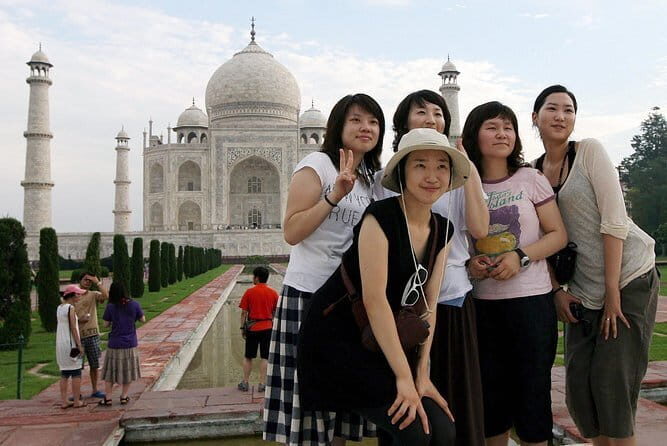
Agra is where the tour earns its name. The schedule gives you a classic Mughal sequence, but it also adds smart variety: forts, tombs, gardens, and two very different Taj experiences.
Day 1 in Agra: Forts and a softer Taj view
You arrive, check in, then get your first big sights stretch. You’ll visit Agra Fort (UNESCO-listed). It’s not just about walls—it’s tied to major Mughal emperors like Akbar and Shah Jahan. That guide-led context matters because the fort is spread out, and it helps you connect the architecture to the power behind it.
Next comes Itmad-ud-Daula, often called the Baby Taj. Even if you’ve seen photos, a guided visit helps you appreciate why it gets that nickname—this is a smaller-scale statement, with a lot of visual detail.
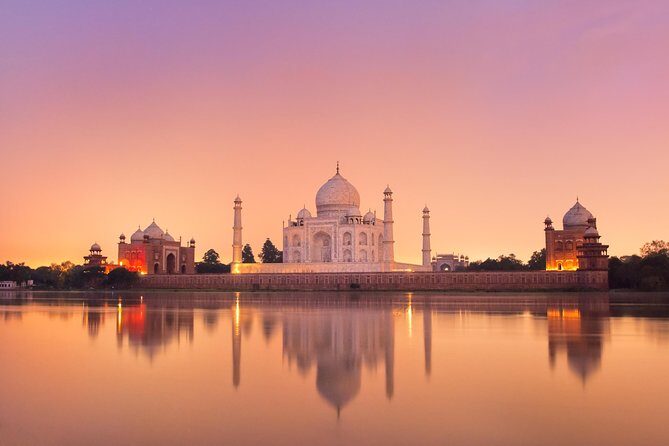
Then you move to the Taj area in an easier way: a Taj Mahal sunset viewpoint across the river, away from the densest crowd pattern. After that, you finish with Mehtab Bagh, the garden built by Babur and designed as a viewpoint space across the water.
Day 2 in Agra: sunrise Taj Mahal, then the road to Jaipur
The next morning brings the other side of the Taj: sunrise. Sunrise timing is a practical choice because the light hits the marble differently than late-day photos. It also creates a reason to start early without feeling like you’re just being forced into an unpleasant schedule.
After the Taj, you head toward the Jaipur route via Fatehpur Sikri (ticket-free per the plan). Then there’s Chand Baori—the famous stepwell near Abhaneri. Even in a short visit, it’s visually striking, and it’s a nice tempo change from palace and mausoleum days.




Jaipur in a full day’s rhythm: Amber, palaces, and astronomical instruments
Jaipur days tend to work best when you group the sights by theme, and this itinerary does that. You get fort-and-palace grandeur first, then the city’s public spaces and famous landmarks.
Amber and the photo stops
You start with Panna Meena ka Kund, a stepwell near Amber Fort. You don’t spend long there, but it sets the local architecture flavor. Then you move to Amber Palace, with a guided two-hour tour focused on palaces, squares, and monuments tied to Raja Man Singh I.
For a quick break and a camera-friendly moment, there’s Jal Mahal—the palace on the Man Sagar Lake. You don’t linger long for this one, but it’s a useful palate cleanser between heavier interiors.
City Palace, Jantar Mantar, and Hawa Mahal
In central Jaipur, you’ll visit Maharaja’s City Palace for about an hour. From there, it’s onward to Jantar Mantar, a UNESCO site and a set of astronomical instruments built by Sawai Jai Singh II. It’s one of those places where, with a guide’s help, it stops being random metal and turns into a time-and-sky system.
Next is Hawa Mahal, the Palace of Breeze, and its red-and-pink sandstone façade. You end with Albert Hall Museum for a short stop. If you’re museum-fatigued, treat it as a quick look rather than a full deep-read—this schedule doesn’t pretend it’s a long museum day.
Day 4: temples that add variety before Delhi
After the main Jaipur highlights, you finish with Birla Mandir, dedicated to Vishnu, known for its white marble latticework. Then it’s Galtaji Temple, often called the Monkey Temple, with its water pools and temple complexity.
Then you’re on the move again, checking into New Delhi for the next phase.
Delhi: UNESCO towers, Old Delhi markets, and a good mix of old and new
Delhi can feel overwhelming if you try to do it alone. This route works because it splits your sightseeing into readable chunks across a single Delhi segment.
Big UNESCO hits
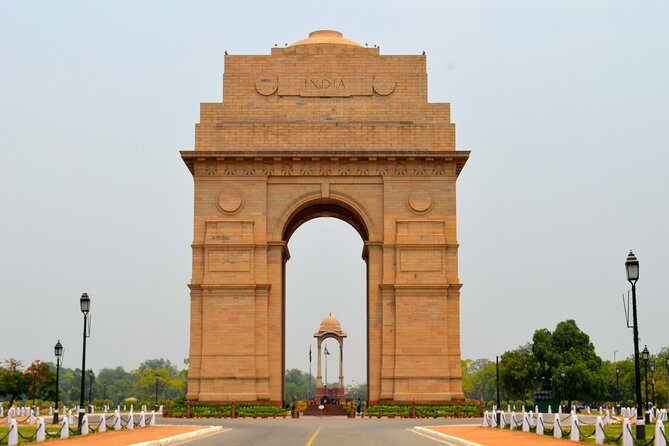
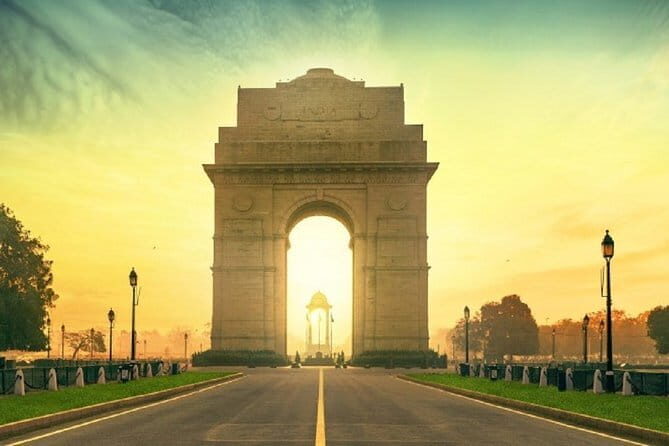
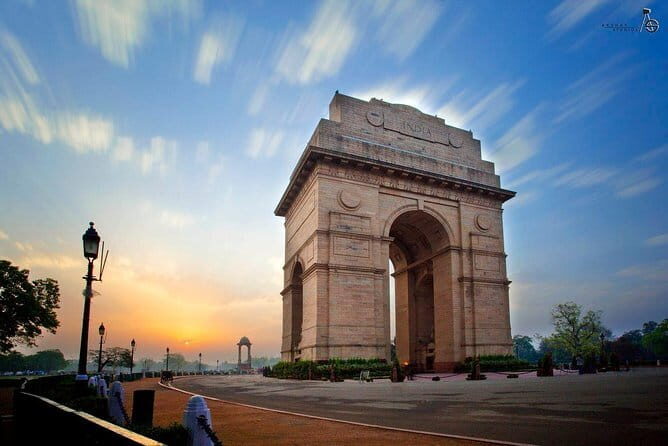
You start with Qutub Minar, a tall UNESCO-listed tower built in 1193. Then you head to the Lotus Temple, an architectural standout built in 1986 and open to people regardless of religion. After that, you see India Gate, which doubles as a picnic-friendly memorial space.
You also get a view of Parliament House (Sansad Bhavan). The plan notes its shape is based on the Ashoka Chakra concept, and it’s included as an added Delhi landmark stop.
Old Delhi: Jama Masjid and Chandni Chowk
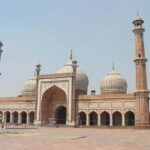
Next comes Jama Masjid, one of the largest mosques in India, built by Shah Jahan between 1650 and 1656. After that, you get Agrasen Ki Baoli, a stepwell monument. It’s brief but interesting—stepwells are a recurring architectural theme in North India, and it helps connect Jaipur’s water-landmarks to Delhi’s versions.
Then you visit Humayun’s Tomb, the Mughal emperor Humayun’s tomb, commissioned in 1558. Finally, you end with Chandni Chowk, the busy old-city market area known for spices, dried fruit, silver jewelry, and saris.
One practical note: this Delhi day includes a lot of walking energy in market areas. You’ll enjoy it more if you’re comfortable slowing down and using the guide to keep you oriented.
Amritsar: Golden Temple for calm, Wagah for spectacle
Amritsar adds a strong emotional shift to the itinerary. You trade royal architecture for a place that’s central to Sikh worship and community life.
Arrival and Golden Temple time
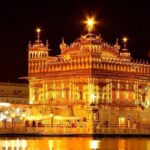
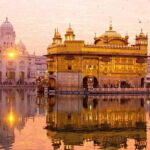
You arrive in Amritsar and check in, then the next day centers on Golden Temple (Sri Harimandir Sahib). The plan gives you about 3 hours, which is a good amount of time to settle in and watch the place unfold without feeling rushed.
The Golden Temple is described as a symbol of human brotherhood and equality, and that message lands best when you have time to observe rather than just take photos.
Wagah Border: the flag-down ceremony at 5:00 pm
Later, you go to Wagah Border for the flag-down ceremony. The schedule is specific: you prepare around 3:00 pm, and the ceremony starts at 5:00 pm.
This is a different kind of experience than monuments. It’s performance, timing, and atmosphere. If you like structured events with a set start, this fits nicely. If you hate waiting, plan to bring your own focus while you sit and watch the build-up.
Rishikesh: bridges and ghats with the Ganges as your anchor
Rishikesh is a quieter ending, and that’s a good choice after Amritsar’s intensity. It also keeps the trip from feeling like a nonstop museum tour.
Day 9: Ram Jhula, Parmarth Niketan, Triveni Ghat, Lakshman Jhula
You hit Ram Jhula first, an iron suspension bridge across the Ganges. Then you visit Parmarth Niketan Ashram, founded in 1942, located along the river by the Himalayas.
From there it’s Triveni Ghat, described as the biggest and most famous ghat in Rishikesh, and noted as crowded with devotees taking ritual baths. Then you finish with Lakshman Jhula Bridge, another suspension bridge connecting Tapovan and Jonk.
This portion is built for simple walking-and-looking. You’re not being asked to power through a long list of interiors; you’re being asked to spend time next to the river and take in the daily rhythm.
Day 10: the return to Delhi
Your final day is a drive back to Delhi, about 5 hours. It’s the right kind of finale: not another frantic sightseeing push, just time to regroup before your departure.
Hotels, guides, and why private really changes the feel
The tour lists private local guides for sightseeing, and you’ll notice how that affects your experience. Without a guide, places like Jantar Mantar, Agra Fort, and Fatehpur Sikri can feel like separate stops. With guidance, they become parts of one story about rulers, timekeeping, architecture, and water.
Past experiences connected with drivers like Surendra and Vinod come up often, and that’s not a small thing on a multi-city drive. Safe, relaxed driving reduces stress, especially when road time is built into the itinerary.
Your accommodation is listed as 9 nights if you choose the hotel-included option. Rooms are generally twin-sharing, and for a group of three it defaults to triple-sharing unless you choose otherwise. If you’re traveling as a group and you want two rooms for three people, the tour notes an additional charge.
Also, you’ll be using a mobile ticket system, which tends to reduce hassle on check-in and transfers.
Who should book this tour (and who should skip it)
This is a strong pick if you:
- Want a first-time North India sampler that includes more than just the big three cities
- Prefer private guides and a set route
- Like variety: Mughal monuments, Rajput palaces, Sikh worship, and Ganges river life
- Are okay budgeting separately for monument entry fees and occasional extra charges
You might skip this if you:
- Hate long road days, because the plan includes significant transfers (including an 8-hour arrival leg to Amritsar)
- Want a totally unstructured trip with lots of free time in each city
- Expect monument tickets to be fully included in the price
Should you book this 10-day private Golden Triangle plus Amritsar and Rishikesh tour?
If you want a guided, private route that connects Delhi, Agra, Jaipur, Amritsar, and Rishikesh without turning your vacation into a project, I think this is a good match. The standout value is the combination of Taj Mahal twice plus strong guide-led coverage across major UNESCO sites, then a meaningful pivot to Golden Temple and Ganges views.
My advice: budget for monument entry fees, plan for early starts on the sunrise Taj day, and keep your energy for the market-heavy Delhi segment. If that sounds like your travel style, this tour can deliver a lot of memorable moments in just 10 days.
FAQ
Is this tour actually private?
Yes. It’s listed as a private tour/activity, meaning only your group participates.
Where does the tour start?
The meeting point/start is Indira Gandhi Intl Airport in New Delhi.
How long is the tour, and which cities are covered?
It’s approximately 10 days and covers New Delhi, Agra, Jaipur, Amritsar, and Rishikesh.
Are hotel stays included?
Accommodation for 9 nights is included if you book the option that includes hotels.
Is the Taj Mahal battery bus ride included?
Yes. A battery bus ride to and from the Taj Mahal parking lot up to the Taj Mahal monument is included.
Are monument entry fees included?
No. Monument entries are listed as not included (including camera/still/movie/video fees or charges where applicable).
What is the Wagah Border timing on the schedule?
You’re set to prepare to witness the flag-down ceremony at 3:00 pm, and the ceremony starts at 5:00 pm.
What meals are included?
Daily hotel breakfast is included (9 breakfasts). The plan also sets aside time for lunch at a local restaurant on the first Agra day.
What’s the cancellation window?
Free cancellation is available up to 24 hours in advance of the experience start time for a full refund.