REVIEW · NEW DELHI
14 Days Rural Life in Rajasthan Tour
Book on Viator →Operated by Golden Triangle Tour - India Bound Tour · Bookable on Viator
Wandering from Mughal Delhi to village Rajasthan is a smooth shock. You get real rural days around Churu and Barli, then switch gears to big-name sites like Jaisalmer’s fort and Udaipur’s palaces. It’s the kind of trip where your photos come with context, not just scenery.
I also like how the route keeps travel “in rhythm.” You’re not bouncing between cities every few hours; you spend proper time at each stop, including a desert bivouac night with sunset camel rides.
One thing to weigh: the trip includes plenty of sights, but monument/camera fees and food and drinks aren’t included, so your final daily costs can climb if you eat out a lot or pay for extras.
In This Review
- Key highlights you’ll feel fast
- Mughal Delhi to Fort-Stop Capital: where the trip actually starts
- Churu: a village-to-desert gateway you don’t rush
- Bikaner’s Junagadh Fort: a fort visit with a calmer pace
- Jaisalmer: Golden City sights plus the desert night everyone remembers
- Overnight train to Jaipur: a travel day that still feels part of the adventure
- Jaipur: palace architecture and the forts-with-power feeling
- Bundi’s step wells and old-town rhythm
- Barli: rural life with comfort options (and real chances to connect)
- Udaipur: lakes, palace rooms, and a possible ceremony moment
- Price and logistics: what your $1,499 buys you (and what it doesn’t)
- Who this tour fits best
- Should you book this 14-day Rural Life in Rajasthan Tour?
- FAQ
- How long is the Rajasthan rural life tour?
- What cities and areas does the tour cover?
- What’s included in the tour price?
- What isn’t included?
- Is pickup offered?
- What activities are part of the rural portion?
- Does the itinerary include a desert night?
Key highlights you’ll feel fast
- A train day into Churu that sets the tone for rural Rajasthan right away
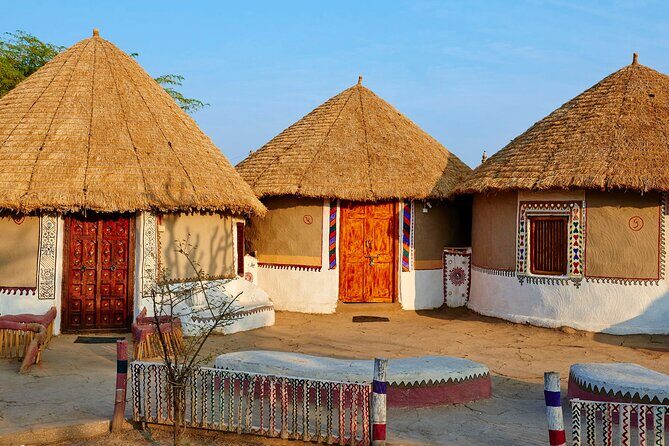
- Old haveli stays in Churu and Barli, with village walks and local routines
- Thar Desert night under stars plus camel ride at sunset
- Forts with everyday life still inside, especially Jaisalmer Fort
- Udaipur lakes and palace time, plus a chance to attend a religious ceremony
Mughal Delhi to Fort-Stop Capital: where the trip actually starts
If you arrive thinking Rajasthan begins at sand and forts, Day 1 corrects that fast. You start in New Delhi with Humayun’s Tomb, a major Mughal landmark and the setting for a royal necropolis. Then you move to the Red Fort in Old Delhi, a UNESCO World Heritage site and one of the big symbols of Shah Jahan-era power.
This opening works because it gives you a visual vocabulary for what comes next. Later, you’ll be comparing architecture across Rajasthan—palace complexes, step wells, and fort walls—so having Mughal Delhi in your head helps everything read like part of one story, not random stops.
Practical tip: early days are when you’ll have the most energy. Humayun’s Tomb and the Red Fort both reward calm walking, so try not to pack extra plans into your first evening.
You can also read our reviews of more tours and experiences in New Delhi.



Churu: a village-to-desert gateway you don’t rush
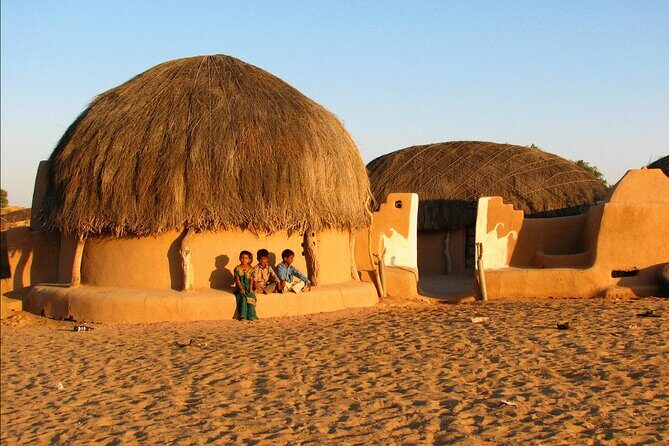
Churu District is where the trip turns from famous landmarks to daily life. You take the train to Churu—right at the gateway to the desert—and then settle into an old haveli that’s more than 100 years old. The idea here is simple: you slow down enough to notice murals on older homes and the shape of village streets.
On Day 3, you choose between a camel ride or a jeep safari. Either way, you’ll be out seeing how people live around the countryside, and you may even spot deer. The rest of the day is on foot, meeting people and spending time in the surroundings rather than just driving past them.
This part is valuable because it’s not only about seeing “rural Rajasthan,” it’s about time. Rural life needs patience to show itself—where children play, how courtyards work, and how routine doesn’t pause for tourists.
Watch-outs to plan for: village walking can be uneven. Wear shoes you trust, and keep your expectations flexible if village access depends on what’s happening that day.
Bikaner’s Junagadh Fort: a fort visit with a calmer pace
From Churu you drive to Bikaner, a modern town that grew around its fort. Instead of charging uphill all day, Fort Junagadh is a flatter major fort complex—built by King Rai Singh—with ancient palaces and a museum open to visitors.
This is a good “breather” day inside a longer itinerary. It still gives you fort walls, artifacts, and royal-era design, but it doesn’t feel like your whole day is pure exertion. It also helps that Fort Junagadh is one of the Rajasthan forts that’s not built on a hill, so your visit tends to feel more straightforward.
If you’re the type who likes learning details—plans, rooms, how collections are arranged—forts with museums tend to be where the day becomes more meaningful.
Jaisalmer: Golden City sights plus the desert night everyone remembers
Jaisalmer starts with Deshnok, the temple dedicated to Karni Mata, also known as the temple of sacred rats. The setting is unusual in a good way: the rats are treated as sacred, and their presence is part of why the place has such a specific feel. You can also visit a camel farm, which is a helpful lead-in before you go out into Thar country.
Then it’s on the road to Jaisalmer, the Golden City and gateway to the great Thar Desert. The city is known for its yellow-toned houses and havelis, plus its fort and the sacred lake Gadisagar. You’ll feel the “edge of desert life” mood almost immediately once the environment shifts.
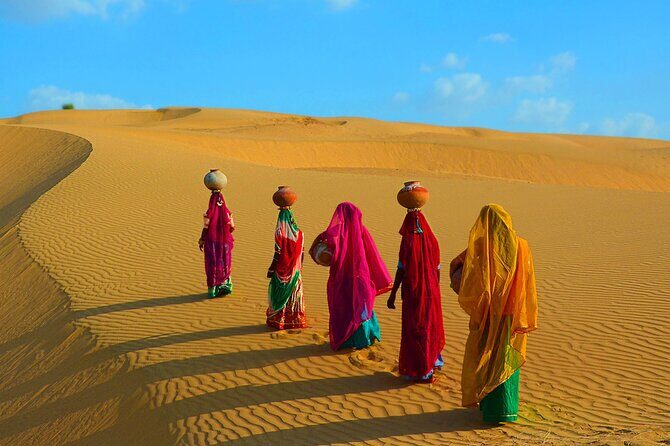
Day 6 is where Jaisalmer becomes memorable in a different way. You visit Jaisalmer Fort, and importantly, families still live there—so it isn’t a dead monument. You also see a haveli, then drive toward the Thar by jeep. Along the way you visit Bada Bagh, a Jain temple, and Kuldhara, the famous abandoned village. From there you reach the camp for sunset camel rides, then dinner under the stars with dance and local music, sleeping in a tent bivouac.
This is the high-value block of the tour because you get multiple layers: city heritage, desert sites, and then an experience designed to feel special at night. It’s also one of the easiest days to emotionally “lock in” on your trip.
Costs note: the itinerary describes dinner during the desert evening, but your tour listing says food and drinks aren’t included. Plan for that mismatch. If you want to keep your budget predictable, ask what’s included for desert dinner and what’s extra.
Overnight train to Jaipur: a travel day that still feels part of the adventure
After the desert morning, you head back to Jaisalmer and visit Gadisagar reservoir lake, once the main water supply for the city. It’s surrounded by temples and shrines, and there’s a legend tied to a courtesan named Tila and the Tilaki Pol gate route.
Then you transfer to the train station for an overnight train to Jaipur. You’ll ride in an air-conditioned wagon, which matters because it reduces fatigue in the days that follow.
This matters for value: overnight trains can be a budget-friendly way to cover distance while still giving you time for sightseeing. Here, you don’t spend that extra night sitting in transit without comfort.





Jaipur: palace architecture and the forts-with-power feeling
In Jaipur, the tour focuses on major palace and fort sites. City Palace is first, including the Chandra Mahal and Mubarak Mahal palaces. You also visit the Palace of the Winds, associated with King Sawai Pratap Singh—the five-story facade and its many jharokhâ (small enclosed balconies) is the whole point of the building’s identity.
You’ll also do Amber Fort, the original royal seat and one of Rajasthan’s most recognizable fortified complexes. The fort visit includes the big history layers, including its connection to Mughal-era moments.
After Amber Fort, the trip pivots to Bundi for a quieter, more local tone. That transition is smart. It prevents Jaipur from dominating the entire middle of your journey.
Practical tip: palace days include lots of stairs and walking in heat. If you’re sensitive to sun, plan to carry a hat and water, even if packaged drinking water is provided.
Bundi’s step wells and old-town rhythm
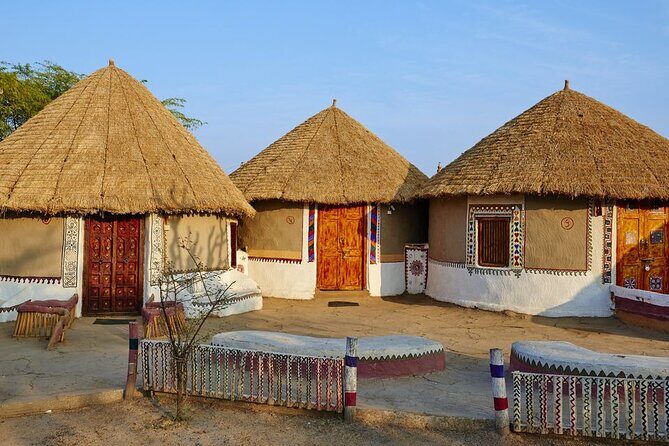
Bundi is smaller than Jaipur, and that’s the point. You visit a small market and an old baori. Baori are step wells—often richly decorated—and they’re very much part of how water storage and architecture shaped daily life.
The itinerary suggests evening rest in a small village and overnight in a hotel, keeping the pace gentle after your fort days. On a later day, you have time to explore Bundi more freely, but the key takeaway is that Bundi is a place to slow down and look closely.
If you like photography, baori structures are the kind of subject that rewards lingering. And if you like history, step wells are a reminder that Rajasthan’s engineering mattered just as much as its royal drama.
Barli: rural life with comfort options (and real chances to connect)
Barli is the rural highlight you’ll feel in your body, not just your camera roll. You can explore on foot, meet people, and eat with them—meaning you’re not only viewing culture through a gate. The program also includes leisure and wellbeing options like a swimming pool and an Ayurvedic massage, plus a tour of the palace.
One standout rural activity is a bullock safari: a cart pulled by oxen. It’s slower and more grounded than a jeep, and that difference changes how you notice the surroundings. You end up with a night in an old fort of Barli, which helps the “rural” theme feel special rather than basic.
There’s also mention of a traditional royal dinner you can request through the operator. That’s the kind of add-on that often becomes the emotional memory of a trip.
What to consider: this is not an all-inclusive resort day. You’ll likely have more interactions and shared spaces, so be ready to be flexible and socially open.
Udaipur: lakes, palace rooms, and a possible ceremony moment
Udaipur is built around water—Pichola, Fateh Sagar, and Swaroop Sagar—and the itinerary uses that naturally. You travel with a stop at Chittorgarh Fort first, a UNESCO World Heritage site and the largest fort in India consisting of multiple temples and ancient palaces with huge gates. It’s a big, serious fort day, and it sets a dramatic tone before Udaipur’s calmer feel.
In Udaipur, the day turns classic: City Palace, including Chandra Mahal and Mubarak Mahal. The King still lives in part of his palace today, which adds a living-world feeling to a complex you could otherwise treat like a museum.
There’s also time for a walk to Lake Pichola, plus a possibility to attend a religious ceremony at the Jagdish temple. You’ll want to be present with the moment here—if you get the chance, it can be one of the most authentic cultural experiences of your Rajasthan week. The trip also recommends booking dinner at Ambrai restaurant near the lake, which is useful if you want to avoid hunting for a good meal late at night.
Finally, depending on your domestic flight schedule to Delhi, you may be able to revisit parts of Udaipur with your driver on Day 14.
One practical note: Udaipur evenings can be gorgeous, but they’re also when you’ll feel the city’s planning. If you want a lake dinner, arrange it early rather than assuming you’ll find the best spot at the last minute.
Price and logistics: what your $1,499 buys you (and what it doesn’t)
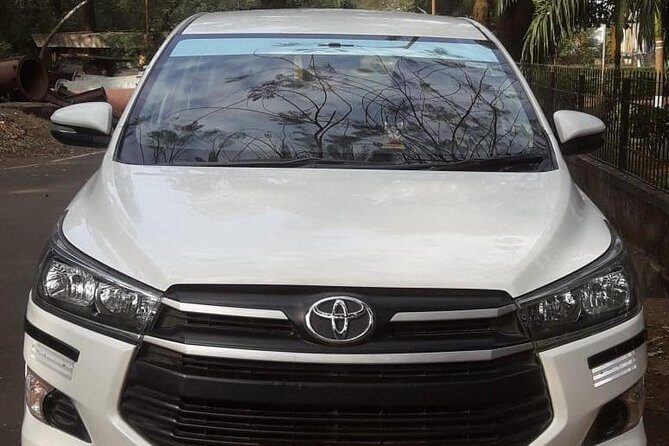
At $1,499 per person for a 14-day private tour, the price covers the bones of the trip: private air-conditioned vehicle, a private tour guide, bottled drinking water, 4-star hotel stays (twin sharing), and train fares. Breakfast is included for 13 days. Also, pickup is offered and you get group discounts, plus mobile tickets.
That’s a lot of cost absorbed up front—especially the private guide and the train segments. Where your budget can surprise you is in the items listed as not included: food and drinks, the Udaipur-to-Delhi flight, and monument/camera fees.
So here’s the value equation I’d use: you’re paying for transportation, guides, lodging, and major structured activities. You’re not paying for every meal or every ticket fee. If you keep meals simple and plan for a handful of ticket fees, the total is likely to feel reasonable for the amount of ground you cover.
My advice: before you go, estimate daily meal spending for your style. If you want sit-down dinners every night, budget more. If you’re happy with local meals and snacks, you’ll keep the final total under control.
Who this tour fits best
This route suits you if you like a balanced trip: historic cities plus rural Rajasthan where you can walk, talk, and slow down. It’s also a good choice for families and mixed-age groups since the itinerary includes rest time and uses vehicles and trains to reduce nonstop driving.
You might want a different plan if you prefer fully independent travel with maximum spontaneity. This tour runs on a schedule with guided blocks, and there are days where your time is structured around forts, palaces, and transfers.
Should you book this 14-day Rural Life in Rajasthan Tour?
I’d book it if your top goal is to experience Rajasthan beyond the postcard layer. The combination of Churu village time, Barli rural interactions, and a real desert night gives you variety without turning the trip into a rushed checklist. The private guide and the mix of city-and-rural days help it feel coherent, not random.
Before you confirm, I’d ask two practical questions: what’s included for desert dinner and which animal activities are guaranteed beyond the camel ride. Also, budget for monument/camera fees and plan for the Udaipur-to-Delhi domestic flight, since those are not included.
If you want a Rajasthan trip that feels organized but not sterile, this one has the right shape.
FAQ
How long is the Rajasthan rural life tour?
It’s about 14 days.
What cities and areas does the tour cover?
The route includes New Delhi, Churu District, Bikaner, Jaisalmer District, Jaipur, Bundi, Barli, and Udaipur. It also includes stops like Chittorgarh Fort on the way to Udaipur.
What’s included in the tour price?
Included are sightseeing by a private air-conditioned vehicle, a private tour guide, packaged drinking water, 4-star hotel accommodation (twin sharing), train fare, and breakfast (13).
What isn’t included?
Food and drinks are not included, and monuments fee/camera fee are not included. The Udaipur to Delhi flight cost is also not included.
Is pickup offered?
Pickup is offered.
What activities are part of the rural portion?
You can walk in villages, meet people, and in Churu you can choose a camel ride or a jeep safari. In Barli you’ll have time to explore on foot, meet people, eat with them, and enjoy activities like bullock safari and an Ayurvedic massage.
Does the itinerary include a desert night?
Yes. There’s a night in a tent bivouac in the desert area, with a sunset camel ride and a desert dinner as part of the program.