REVIEW · NEW DELHI
10 Days Golden Triangle Delhi, Jaipur, Agra with Golden temple of Amritsar
Book on Viator →Operated by Abyss Tours · Bookable on Viator
A classic Golden Triangle is a lot to take in. This version adds Amritsar’s Golden Temple by return train from Delhi, so you get both Mughal grandeur and Sikh heritage without a frantic schedule. I especially like the structure: private car for Delhi–Jaipur–Agra, then rail for Amritsar, which keeps daily driving stress down.
Two parts I really like: first, the sightseeing mix in Delhi and Jaipur is heavy on top monuments (Jama Masjid, Red Fort, Qutub Minar, Humayun’s Tomb, Jantar Mantar, City Palace, Amber Fort). Second, the route is built for practical value—3-star hotel stays with breakfast across multiple cities, plus the key ground transport and transfers included.
One thing to consider: many major sites have additional admission and camera fees not included, and the Amritsar day includes Golden Temple time on your own arrangements (with car sightseeing available only for extra cost).
In This Review
- Key Points You’ll Care About
- Price and Logistics: What $525 Covers (and What It Doesn’t)
- Day 1 in Delhi: Airport Meet-and-Greet and a No-Pressure Start
- Day 2 in Delhi: Old Delhi Mosques, Mughal Power, and Three Landmark Evenings
- Day 3 in Jaipur: Jantar Mantar and City Palace in One Smart City Arrival
- Day 4 in Jaipur: Albert Hall Drive-Pass, Hawa Mahal Stops, and Amber Fort Views
- Day 5 to Agra: Chand Baori Stepwell and the Long Road to the Taj
- Day 6 in Agra: Sunrise Taj Mahal and Agra Fort in the Same Day
- Day 7 to Amritsar by Train: Switching from Car to Rail
- Day 8 in Amritsar: Golden Temple on Your Time, Jallianwala Bagh, Wagah Border
- Day 9 Back to Delhi: Another Train Day, Then a Real Hotel Night
- Day 10: Depart Delhi and Close the Loop
- Hotels, Guides, and the “Private Group” Advantage
- Should You Book This 10-Day Golden Triangle Plus Amritsar Tour?
- FAQ
- What cities are included in this tour?
- How long is the tour?
- Is pickup offered from the airport?
- What transport is included?
- Are monument entrance fees included?
- Are meals included besides breakfast?
- Is an English-speaking guide included?
- Is a private car included for sightseeing in Amritsar?
- Is the tour refundable if plans change?
Key Points You’ll Care About
- Budget-friendly pacing: Private car for Delhi–Jaipur–Agra, then train for Amritsar, so you’re not constantly changing logistics.
- Early-morning Taj plan: Sunrise Taj Mahal timing is built in, which is the cleanest way to experience it (and not just in daylight crowds).
- Delhi hits across eras: Old Delhi (Jama Masjid), Mughal power (Red Fort, Humayun’s Tomb), early Indo-Islamic (Qutub Minar).
- Jaipur geometry and empire mix: Jantar Mantar (astronomy instruments) plus City Palace (Rajput–Mughal blending).
- Amritsar without extra car time: Golden Temple and Jallianwala Bagh are on your own for Day 8, while Wagah Border is included.
- Service reputation: Feedback highlights an operator like Mr Abid and a driver such as Rajesh for clear English and helpful advice.
Price and Logistics: What $525 Covers (and What It Doesn’t)
At $525 per person for about 10 days, you’re paying for a route that’s practical rather than fancy: private air-conditioned car for Delhi, Jaipur, and Agra; hotel rooms (3-star, double or twin) with breakfast; plus transfers between the train station and your Amritsar hotel. This is the kind of package that makes sense when you want to see the classics but still keep control of your time.
Where budgets often get surprised is what’s not included. Monument and camera fees aren’t part of the price, and meals beyond breakfast are also not included. Tips, laundry, and personal expenses are on you, and if you want an English-speaking guide for Delhi/Jaipur/Agra, it’s available at an additional $10 per person.
There’s also a planning quirk to note: two stops are listed with closures on specific weekdays. Red Fort is closed Mondays, and Lotus Temple is closed Mondays. Taj Mahal is closed Fridays—so if your dates land on those days, you’ll want your schedule to account for what shifts (or which sites you’ll prioritize).
You can also read our reviews of more tours and experiences in New Delhi.



Day 1 in Delhi: Airport Meet-and-Greet and a No-Pressure Start
You start in New Delhi, with a meet-and-greet at Delhi International Airport, followed by transfer to your hotel. Day 1 is free and low stress—just settle in and get your bearings.
This matters more than it sounds. After travel, the first day of a tight Golden Triangle plan can make or break your energy for the temples and forts later. Keeping Day 1 open helps you avoid forcing yourself into a long first-round of walking.
Day 2 in Delhi: Old Delhi Mosques, Mughal Power, and Three Landmark Evenings
Day 2 is a packed sampler platter of Delhi’s eras. If you like seeing how power and faith shaped the city’s architecture, this day is built for you.
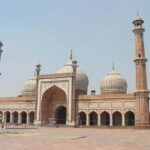
Jama Masjid (Old Delhi) kicks things off after breakfast, including the note that it’s a large mosque with a courtyard that can hold around 25,000 devotees. You’ll also have time to climb to the top of the southern tower for views over the rooftops—so plan for steps and heat.
Next is Red Fort, the Mughal symbol of authority. It’s not just a quick photo stop; it’s a major monument with a lot of history tied to Mughal rule, and it’s specifically marked as closed on Mondays. If you’re traveling on a Monday, you’ll want to be ready for your route to adjust.
After that, the itinerary pivots into landmark drives and architecture: India Gate is a drive pass, Qutub Minar is next, and Humayun’s Tomb brings you right into classic Mughal tomb design. Qutub Minar is described as the tallest brick minaret in the world, with five stories and carved Quranic verses—great if you like details you can spot even on a short visit.
Finally, you end with the Lotus Temple, also known as the Bahai Temple because of its lotus shape. It’s marked as closed on Mondays, and it’s specifically mentioned as being lit up attractively at night, which is a nice payoff if you enjoy evening architecture.
Day 3 in Jaipur: Jantar Mantar and City Palace in One Smart City Arrival
You drive from Delhi to Jaipur on Day 3 and start sightseeing immediately. This is a good strategy: you’re already there, so you don’t waste time on an extra transit day.
The first stop is Jantar Mantar, built in the 18th century by Maharaja Sawai Jai Singh II. This isn’t just a pretty outdoor museum—it’s full of enormous masonry instruments used to study constellations and stars, and the sun-dial is still described as providing accurate time with daily corrections.
Then you head to City Palace, located in the old city. I like the way it’s framed as a blend of Rajput and Mughal architecture, with multiple halls and sections you can choose to focus on—like Diwan-E-Am (public audience hall) and Diwan-E-Khas (private audience hall). The Chandra Mahal is specifically called out as seven storeys, which gives you a sense of vertical scale even if you only spend part of your time there.
Day 4 in Jaipur: Albert Hall Drive-Pass, Hawa Mahal Stops, and Amber Fort Views
Day 4 is where Jaipur starts to feel like a movie set—pink city streets, layered palaces, and forts on the edge of hills. The itinerary mixes quick drive-passes with longer time at the big hitters.
You begin with a drive pass near Albert Hall Museum, set in Ram Niwas Garden. The point here is mostly getting your bearings and seeing what’s around, since the real time is reserved for the forts and iconic facades.
Hawa Mahal is the next stop, and it’s hard to miss once you see it: a five-storied semi-octagonal palace with 152 windows and latticed balconies. It’s described as being originally designed for royal ladies to watch street life and processions—so even if you only take a short look, it helps you understand what the building was made to do.
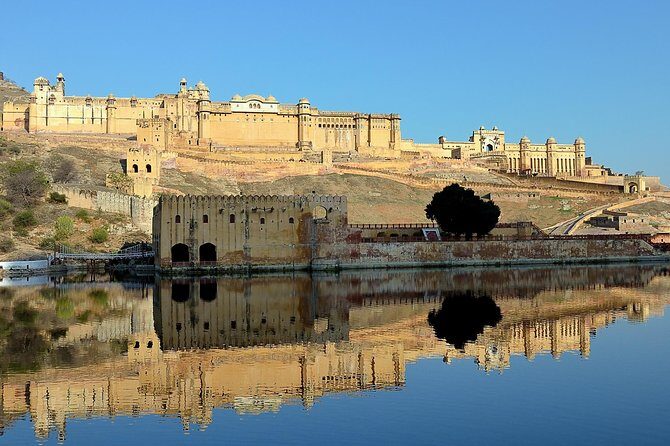
Then comes Amber Palace, which the plan places as a major highlight with about 2 hours. It’s presented as the old capital of the Kachhwahas, with red sandstone and white marble pavilions, plus a Hindu–Muslim architectural blend. If you want one stop in Jaipur that feels like sheer scale, this is it.
You also get Jal Mahal on the return route, set in the middle of Man Sagar Lake. It’s a short stop, and renovation around the lake is mentioned—so treat it as a quick sight-and-photo moment, not the main attraction.
The final block is time free for local shopping at Johari Bazar in the Pink City area. That free window is useful if you want to buy small things without building an extra detour into the schedule.



Day 5 to Agra: Chand Baori Stepwell and the Long Road to the Taj
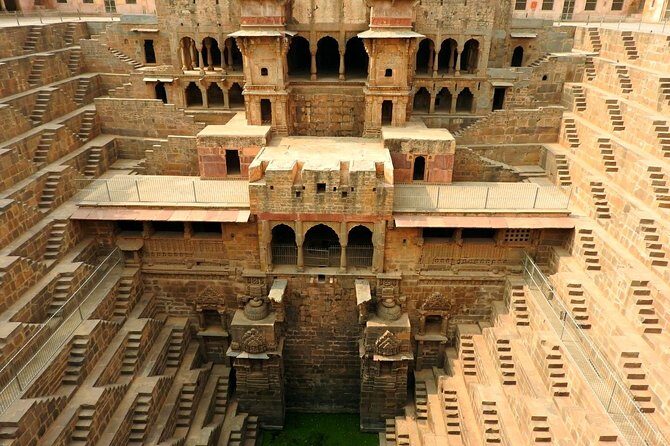
On Day 5, you leave Jaipur for Agra, but you don’t do it in a straight line. En route, you stop at Abhaneri village in the Dausa district, about 95 km from Jaipur.
The focus is Chand Baori stepwell and Harshat Mata Temple. The stepwell is the kind of structure that rewards patience: you can’t really “speed-run” it. If you like photography and symmetry, this stop is a nice change of pace from palace and fort days.
Then you drive to Agra for check-in and an overnight stay. You’re setting yourself up for the sunrise plan on Day 6, which is the smart way to handle Agra’s most famous crowds.
Day 6 in Agra: Sunrise Taj Mahal and Agra Fort in the Same Day
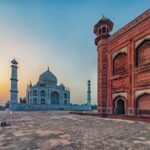
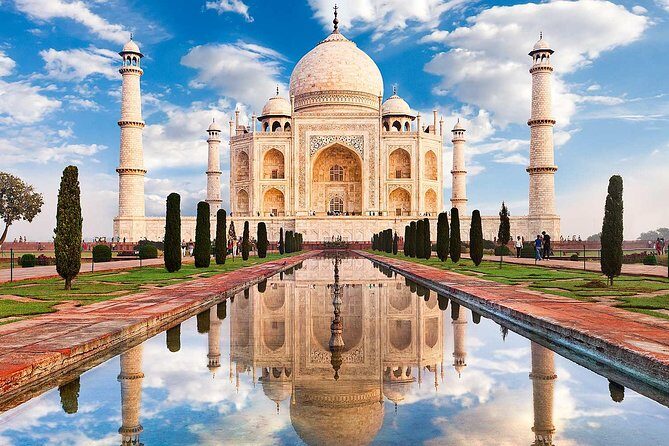
Day 6 starts early for sunrise Taj Mahal. The itinerary specifically frames it as a monument of Mughal architecture built by Shah Jahan in memory of Mumtaz Mahal, and it notes the Taj Mahal is closed on Fridays. If your travel dates land on Friday, you’d want to confirm what replacement timing the operator uses.
The practical benefit of the sunrise approach is simple: you spend less of the visit trying to outlast crowds. You also get the best chance to enjoy the monument as a visual experience rather than a constant queue problem.
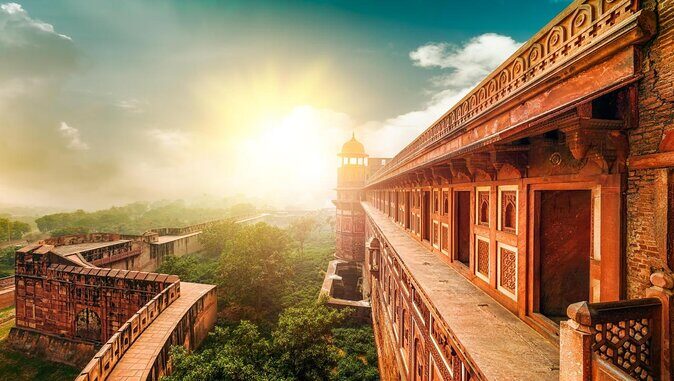
After the Taj, you visit Agra Fort, also described as the Red Fort of Agra. It’s listed with about 1 hour, and it includes palaces like Jahangir Palace and Khas Mahal, plus audience halls and two mosques. That blend—fortifications plus palace spaces—means you’re not only looking at walls; you’re stepping into a larger complex.
Then you return to Delhi for an overnight stay. This is the one day where timing can feel long, because you’re doing Agra highlights and still pushing back toward Delhi. If you’re the type who needs downtime between big sights, you’ll want to pace yourself.
Day 7 to Amritsar by Train: Switching from Car to Rail
Day 7 is travel heavy in a different way. After breakfast, you transfer to the Delhi train station and board a train to Amritsar. When you arrive, you’re picked up and transferred to your hotel, then you stay overnight in Amritsar.
This is a smart pivot day because it breaks up the road time. Golden Triangle tours can otherwise feel like endless windshield hours.
Day 8 in Amritsar: Golden Temple on Your Time, Jallianwala Bagh, Wagah Border
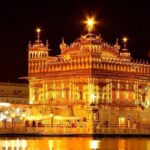
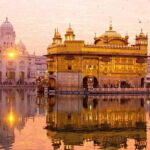
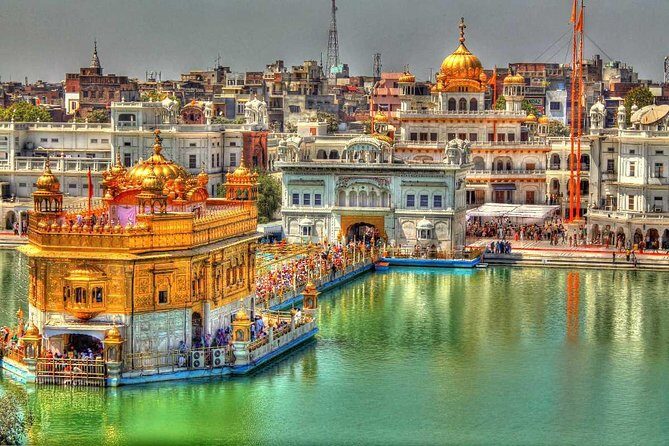
Day 8 is the heart of the Amritsar add-on. After breakfast, you have own arrangements to visit the Golden Temple, the holiest shrine of the Sikhs built during 1585–1604.
Important practical note: the plan doesn’t promise a private car for Amritsar sightseeing on this day unless you arrange it on an additional cost basis. So if you want everything driven for you, you’ll need to request that service in advance.
Next comes Jallianwala Bagh, the memorial site connected with the 1919 massacre. The itinerary frames it as the place where hundreds of Indian pilgrims were massacred, which makes this a stop with emotional weight rather than a purely architectural vibe.
In the evening, you visit the Wagah border ceremony between India and Pakistan. This is the kind of event that can feel more like a live show than a museum stop—so you’ll likely appreciate building it into a full day that’s otherwise history-centered.
Day 9 Back to Delhi: Another Train Day, Then a Real Hotel Night
On Day 9, you check out and transfer to the railway station for the train back to Delhi. On arrival in Delhi, you’re picked up and transferred to your hotel for another overnight stay.
This day matters because it affects how relaxed your Day 10 can feel. You’re not trying to squeeze in one more big sightseeing block in Delhi; you’re positioning for departure.
Day 10: Depart Delhi and Close the Loop
After breakfast, the tour ends with transfer to the airport or train station for your onward journey. The activity ends back at the meeting point area, so you’re not stuck guessing how to get out of the city.
At this stage, you’ll likely feel the route has done its job. You’ll have seen Mughal and Rajput icons in three main cities, then added Amritsar’s biggest Sikh and memorial stops—without turning every day into a sprint.
Hotels, Guides, and the “Private Group” Advantage
This is a private tour/activity, meaning only your group participates. That usually helps with timing and keeps you from losing time waiting around for strangers.
Accommodation is 3-star in double or twin rooms with breakfast in each city. You can also customize the tour, including upgrades to 4-star or 5-star on additional cost. If you like a calmer sleep setup—especially after early mornings like Taj sunrise—upgrading can be worth it.
As for guidance, the base plan doesn’t include an English-speaking guide for Delhi/Jaipur/Agra. It can be arranged for an extra $10 per person. And in the feedback you’ll see a theme: service staff like Mr Abid, and drivers such as Rajesh, are praised for clear English and practical tourist advice. You can’t assume you’ll get the same team, but it does suggest the company runs with experienced people.
Should You Book This 10-Day Golden Triangle Plus Amritsar Tour?
Book it if you want a classic Golden Triangle in 10 days, plus Amritsar with the Golden Temple as the anchor, and you prefer a plan that mixes included transport with a few flexible choices. The value is strongest if you’re comfortable paying extra for monument fees and meals, since those are the typical add-ons.
Skip or consider upgrades if you hate long travel days. Day 6 includes sunrise Taj Mahal and Agra Fort, then a return to Delhi for overnight. Also, if you want a fully guided experience in Amritsar (car included for sightseeing), you’ll likely need to pay extra for that.
If your goal is to see the major sights, keep logistics mostly handled, and manage your budget without buying a luxury package, this tour fits well.
FAQ
What cities are included in this tour?
Delhi, Jaipur, Agra, and Amritsar are included.
How long is the tour?
The duration is about 10 days.
Is pickup offered from the airport?
Yes. You’re met at Delhi International Airport and transferred to the hotel on Day 1. Transfers are also included for Amritsar station to hotel both ways.
What transport is included?
A private air-conditioned car with a driver is included for Delhi, Jaipur, and Agra sightseeing. For the Delhi–Amritsar–Delhi legs, return train tickets are included in an air-conditioned coach.
Are monument entrance fees included?
No. Monument and camera fees at entrances are not included as applicable.
Are meals included besides breakfast?
No. Breakfast is included, but lunch and dinner are not included unless specifically mentioned.
Is an English-speaking guide included?
An English-speaking guide for Delhi, Jaipur, and Agra is not included, but it can be arranged for an additional $10 per person.
Is a private car included for sightseeing in Amritsar?
Car services for sightseeing in Amritsar are not included by default, but can be arranged on an additional cost basis.
Is the tour refundable if plans change?
No. This experience is non-refundable and cannot be changed.