A hard-hitting Himalayan sampler in two weeks. This private route strings together Delhi, the Golden Temple at Amritsar, Tibetan Buddhist stops in Dharamsala and Ladakh, plus big mountain passes like Rohtang and Tanglang La, using a mix of train, car, and a domestic flight.
I love the practical setup: airport/rail transfers, pickup in the Delhi area, 3-star hotels (twin/double sharing), and an English-speaking local guide. I also like the safety-minded touch of a medical box with an oxygen cylinder for the high-altitude stretch. One possible drawback: you’ll be on the move, and altitude days (like Tanglang La at 5,328m) mean you should expect slower pace and long road time, even with a private vehicle.
In This Review
- Key Highlights to Know Before You Go
- Why This 14-Day Route Makes Sense (and Saves You Headaches)
- Price and Logistics: What You Pay for Versus What You Still Need to Budget
- Delhi First and Last: Connaught Place, Red Fort, and Jama Masjid
- Amritsar: Golden Temple’s Causeway and Wagah’s Beating Retreat
- Dharamsala and Palampur: Tibetan Buddhism Meets Everyday Street Culture
- Manali to Rohtang Pass: Cave Temples and a Serious Altitude Gateway
- Ladakh High-Altitude Days: Sarchu and Tanglang La’s Big-View Reality
- Ladakh Monasteries: Hemis, Thiksey, Shey, Lamayuru, Rizong, Phyang
- Comfort, Pace, and the Oxygen Kit That Makes This Feel More Serious
- Who This Tour Is For (and Who Might Need a Different Plan)
- Should You Book Trans Himalayan Tours?
- FAQ
- What is the duration of the Trans Himalayan Tours private tour?
- Where does the tour start, and do you offer pickup?
- What transport options are included?
- Are hotels and meals included?
- Is there an English-speaking guide and medical support?
- Is this a group tour or private tour?
- What is not included in the price?
- What is the cancellation policy?
Key Highlights to Know Before You Go
- Private, only-your-group touring across Delhi, Amritsar, Dharamsala, Kullu/Manali, and Ladakh
- Golden Temple plus Wagah Border in the same early phase, with free stops listed for both
- Train Delhi to Amritsar (AC chair class) plus a Leh to Delhi domestic flight to reduce backtracking
- Tibetan Buddhism sites with strong visual details like prayer wheels, gompas, and monastic art
- High-pass days built into the itinerary including Rohtang Pass and Tanglang La
- 3 meals a day for 13 days plus 13 nights in 3-star accommodation
Why This 14-Day Route Makes Sense (and Saves You Headaches)
This tour is designed for people who want a lot of North India and high-Himalayan culture without acting as their own logistics department. The big win is that you’re not cobbling together buses, hiring separate drivers for each leg, and guessing which mountain road will be open on any given day.
You get a structured pace across Delhi, Punjab, Himachal Pradesh, and Ladakh. The route is heavy on sights that have meaning, not just photo stops: a sacred Sikh complex at Amritsar, Tibetan Buddhist monasteries with distinct orders and artwork, and temple architecture that shows up again and again across the region’s Hindu and Buddhist threads.
And because it’s private, you’re not stuck waiting for other people’s timing or getting rushed by a schedule that ignores your energy. That matters more than it sounds when you’re climbing in stages and your body needs time to adjust.
You can also read our reviews of more tours and experiences in New Delhi.


Price and Logistics: What You Pay for Versus What You Still Need to Budget
At $1,785.92 per person, this isn’t a cheap, throwaway weekend. But for a 14-day circuit that includes cross-city transport, hotels, guide time, and daily meals for 13 days, it’s priced like a real organized expedition rather than a basic sightseeing package.
Here’s what you’re effectively buying:
- Transportation coverage: Ground transport as per itinerary, an AC chair class train between Delhi and Amritsar, and a domestic flight between Leh and Delhi.
- Comfort coverage: Twin/double sharing rooms in 3-star hotels for 13 nights.
- Support coverage: an English-speaking local guide, plus transfers from the airport/rail/bus stand.
- Daily fuel: 13 breakfasts, 13 lunches, and 13 dinners.
What you’re not buying (so plan ahead):
- Monument fees (not included in general)
- International airfare, visa/airport tax, and insurance
- Beverages and personal expenses
- Tipping
- Any medical expenses and evacuation if something goes wrong
- Extra costs from road blocks or flight cancellation
So the value works best if you want everything bundled into one plan and you’re okay handling the few external items like visa and insurance on your side.
Delhi First and Last: Connaught Place, Red Fort, and Jama Masjid
Delhi works as both a warm-up and a finale. Starting near Connaught Place (only if the permits line up) is a smart way to reset your day-one energy: it’s central, easy to orient yourself, and it helps you get bearings before the long haul north and up.
By the end, you’ll hit two monuments that remind you Delhi isn’t just a gateway—it’s the big stage where centuries of empires show up in stone:
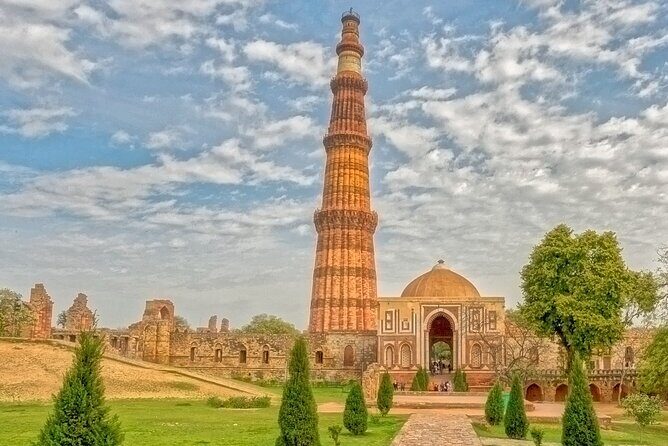
- Red Fort (UNESCO World Heritage, 2007 designation): Built in the mid-17th century, it’s a major visual anchor for Mughal power and planning.
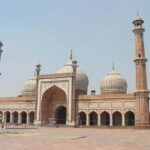
- Jama Masjid: One of the largest mosques in India, built by Shah Jahan. Even if you visit briefly, it’s the kind of place where scale changes how you stand and look.
Practical tip: Delhi days can be where fatigue sneaks in. You’ll still have the structured guide, but I’d plan your photo strategy like you would at a major museum—see what matters, then move on before you burn daylight.
Amritsar: Golden Temple’s Causeway and Wagah’s Beating Retreat
Amritsar is built into this tour in a way that gives you both spiritual gravity and spectacle.
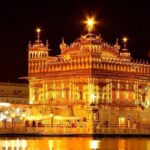
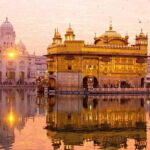
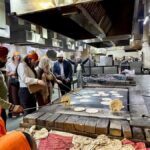
At the Golden Temple, you’re walking into a complex where the setting does half the work. The temple sits surrounded by a lake, and a causeway connects the structure in the middle. That water-and-gold effect is why people come from everywhere. The stop is short on paper, but it’s still a meaningful moment because the place is designed to slow you down, not rush you through.
Then you pivot to the Wagah Border ceremony at Attari-Wagah. This is the daily military practice known at the international level as the Beating Retreat border ceremony, ongoing since 1959. It’s theater with discipline—fast, loud, and oddly compelling.
One consideration: Amritsar days can have tight timing between sites. If you’re sensitive to crowds or loud noise, plan for ear protection and a quick snack buffer, since you’ll likely be focused on the ceremony windows.
Dharamsala and Palampur: Tibetan Buddhism Meets Everyday Street Culture
Dharamsala is where the trip gains a softer rhythm. Instead of jumping straight into monuments, you start with an evening stroll around the Indo–Tibetan mixed culture near Mcleodganj. That’s valuable because it helps you understand what the religion and monasteries feel like in real life—shops, chatter, and the sense of a community living with Tibetan culture, not just presenting it.
From there, you go to Namgyal Monastery, a quick stop focused on details: prayer wheels along the approach and large life images connected to Buddha, Padmasambhava, and Avalokteshwara. You get a sense of what Buddhism looks like when it’s part of architecture, not just a textbook.
Then the route stretches to Palampur and nearby religious and landscape moments:
- Baijnath Temple: A Shiva temple dedicated to Vadianath, in Shikhera style with proportions that are noted as remarkable.
- Rewalsar Lake: Sacred water with legends tying it to Padmasambhava’s departure for Tibet in the 8th century.
And yes, there’s tea country in the mix:
- Palampur Tea Gardens is described as the Tea Capital of North India, framed by the Dhauladhar Mountain Range.
This is one of the best “tone-shift” parts of the tour. You get religion, stories, and everyday life, plus a calmer pace before the mountain driving and higher passes take over.

Manali to Rohtang Pass: Cave Temples and a Serious Altitude Gateway
The route builds toward Manali and then climbs toward Rohtang Pass, listed at 3,950m as the gateway between Lahaul’s semi-desert and Kullu’s greener valleys. If you go in expecting the pass to be a dramatic highway moment only, you’ll miss the bigger point: altitude changes everything, from air feel to how quickly you get tired.
Before the pass, you’ll visit:
- Hadimba Devi Temple: An ancient cave temple dedicated to Hidimbi Devi, wife of Bhima from the Mahabharata. Cave temples always make the air feel different, and they’re a good reset from travel time.
- Naggar Castle: A reminder of the centuries-old Pal Dynasty, with an age estimate around 500 years. It adds a historical layer that’s not only religious.
After Rohtang, the itinerary includes Shashur Monastery, a 16th-century gompa in the red hat sect (Drukpa order). It’s also described as having spiritual connection to the Lion Cave Temple of Bhutan. Even if you don’t know the Bhutan reference, it helps you see how monasteries connect across regions rather than being isolated local stops.
Practical note: at this point in the trip, clothing matters more than you think. Layers are not a luxury here—they’re how you stay comfortable while the weather and temperature shift.
Ladakh High-Altitude Days: Sarchu and Tanglang La’s Big-View Reality
Once you hit Sarchu, the trip moves into what feels like a different planet. Sarchu is around 236 km from Leh and described as Sir Bhum Chun. It’s a “wider horizon” day—less about a specific single monument, more about the feeling of traveling through high country.
Then you reach Tanglang La at 5,328m. That elevation alone tells you what this stop is about: air is thinner, time feels different, and you’ll want to move slowly so your body keeps up. The itinerary description focuses on dramatic scenery, but the practical value is that you’re seeing why Ladakh is treated like a distinct world within India.
This is also where I’d be most strict about pacing. Don’t treat altitude like a sightseeing checklist. Walk easy, hydrate, and give yourself a few extra minutes before you try to sprint to the next photo.
Ladakh Monasteries: Hemis, Thiksey, Shey, Lamayuru, Rizong, Phyang
If Delhi gives you empire-scale and Amritsar gives you religious intensity, Ladakh gives you monastic focus. This portion of the tour is packed with gompas—each with a slightly different identity, setting, and artistic emphasis.
Hemis Monastery (Drukpa sect) is described as a mass of splendid architecture on a green hill, built in 1630 by Singe Namgyal. It’s one of those stops where you feel the building’s age and the continuity of practice.
Thiksey Monastery sits perched on a rocky outcrop and is built in the 15th century during the first wave of expansion of the Gelugpa sect in Ladakh. The entry has paintings of protective deities and great masters of the sect. That’s a detail worth watching for: art here isn’t decoration, it’s part of how belief gets taught and protected.
Shey Monastery follows with a “former capital” angle: Shey was once the capital of Upper Ladakh. It’s noted for well-restored murals and representing the 18 arhats—disciples of Buddha who attained enlightenment.
Then you swing to Lamayuru Monastery (Yuru Gompa), described as one of the ancient monasteries perched on a hill. It also notes that before Buddhism spread in the region, this site was known as a center for Bon religion. That layering is a big reason I like Ladakh monasteries: you can feel religion shifting over time, without the place losing its gravity.
Next is Rizong Monastery and Jelichun Nunnery. Rizong is a Gelugpa (Yellow Hat Buddhist) monastery, also called Yuma Changchubling, described as a paradise for meditation with extremely strict rules and standards. Even if you don’t get long inside, the fact that it’s known for discipline is useful context. You’re not just looking at a building—you’re entering a place built around routine and restraint.
Finally, Phyang Monastery is described as founded 446 years ago (reckoning from 1977) and called Tashi Chozang. You’ll see sacred shrines and wall paintings dating from the royal period, plus the protected deity Apchi Choski Dolma.
This monastery run is the tour’s cultural backbone. If you enjoy comparing how religious orders show up in architecture, painting styles, and daily practice, you’ll get a lot out of this part.
Comfort, Pace, and the Oxygen Kit That Makes This Feel More Serious
This is an altitude-heavy itinerary. Rohtang Pass is listed at 3,950m, Tanglang La at 5,328m, and you’ll be traveling between points that are far apart and often at high elevation.
The tour includes a medical box with oxygen cylinder. That doesn’t remove risk, but it tells me the operator is thinking about the reality of high-altitude travel rather than pretending everything is just a casual bus ride.
Still, you should handle the practical side:
- Go easy on exertion the first couple altitude days.
- Keep warm even when the sun feels strong, since cold can sneak in fast at higher elevations.
- If you have any medical conditions, you should speak with your doctor before committing, since the tour data does not claim medical clearance—just equipment support.
The biggest “comfort” lever is pacing, and the private setup helps you adjust without the stress of a big group schedule.
Who This Tour Is For (and Who Might Need a Different Plan)
This tour is a strong fit if you want:
- A culture-and-nature mix in North India and the Himalaya
- A private experience rather than a crowded bus circuit
- A route that uses train and a domestic flight to cut down on unnecessary backtracking
- Daily structure: hotels, meals, transfers, and an English-speaking local guide
You might reconsider if:
- You want a slow, low-altitude walking vacation. This itinerary includes high passes, and the day-to-day rhythm reflects that.
- You dislike driving time. Even with comfort-focused planning, roads through mountainous regions take longer than you’d expect.
If your idea of a great trip includes monasteries, temple architecture, and big mountain moments—this one is aimed right at you.
Should You Book Trans Himalayan Tours?
I’d book this tour if you want one organized plan that covers Delhi, Amritsar, Dharamsala, Manali/Kullu area temples and Rohtang, then a real Ladakh monastery and high-pass sequence. The price feels reasonable for what’s included: transport legs, 13 nights in 3-star hotels, and 13 daily meal coverage, plus a guide and oxygen support.
I’d think twice if you’re extremely sensitive to altitude or you want lots of downtime. This route is active, and it keeps moving.
If you do book, the best move is simple: plan to take it slow when the altitude hits, pack layers, and budget extra for monument fees, visa, insurance, and any personal costs that come up.
FAQ
What is the duration of the Trans Himalayan Tours private tour?
The tour duration is listed as approximately 14 days.
Where does the tour start, and do you offer pickup?
The tour location is New Delhi, India, and pickup is offered. Airport/railway station and bus stand transfers are included.
What transport options are included?
Ground transport is included as per the itinerary. You also get an AC chair class train between Delhi and Amritsar, plus a domestic flight ticket between Leh and Delhi.
Are hotels and meals included?
Yes. You get twin/double sharing rooms in a 3-star hotel for 13 nights, and the package includes breakfast (13), lunch (13), and dinner (13).
Is there an English-speaking guide and medical support?
Yes. An English-speaking local guide is included, along with a medical box with an oxygen cylinder.
Is this a group tour or private tour?
It’s a private tour/activity, and only your group participates.
What is not included in the price?
Not included are international air fare, monument fees, visa and airport tax, insurance, tipping, beverages and personal expenses, medical expenses and evacuation, and any extra costs due to road blocks or flight cancellation.
What is the cancellation policy?
You can cancel up to 3 days in advance of the experience for a full refund. If you cancel less than 3 full days before the start time, the amount paid is not refunded. The tour also requires good weather and a minimum number of travelers.