REVIEW · NEW DELHI
Taj Mahal & Agra Fort With Mother Teresa’s Missionaries Of Charity From Delhi
Book on Viator →Operated by New India Vacations · Bookable on Viator
Agra starts at dawn, and the payoff is huge. This private Delhi-to-Agra outing strings together the Taj Mahal and Agra Fort, then adds a meaningful stop at Mother Teresa’s Missionaries of Charity. I like that it’s built around a smooth schedule with a professional guide and comfortable AC car, not a rushed hop-and-skip. One thing to think about: it’s a long day (about 12 to 14 hours), and it’s not a great fit if you have back issues, heart conditions, or you’re pregnant.
A couple of details that really matter for your comfort: you get buffet breakfast and/or lunch (depending on the option you pick), plus bottled water and WiFi on board. You also get the admission tickets for the monuments (Taj Mahal and Agra Fort), so you’re not hunting for lines or desks mid-day. The only real drawback is timing and physical pace—there’s a very early pickup and plenty of walking once you’re on-site.
In This Review
- Key Highlights You’ll Feel Immediately
- A Full Agra Story, Packed Into One Private Day
- The 5am Delhi Pickup and the Comfort Factor
- Taj Mahal: Two Hours That Actually Helps You See More
- Agra Fort: Red Sandstone, Mughal Power, One Focused Hour
- A Lunch Break Built for a Long Day
- Mother Teresa’s Missionaries of Charity: Short Visit, Big Meaning
- Optional Agra Shopping Stop: Art and Crafts for Real Souvenirs
- Price and Value: What $100.24 Buys You
- Timing Rules and Health Considerations (Read This Part)
- Should You Book This Delhi-to-Agra Tour?
- FAQ
- How long is the Taj Mahal and Agra Fort tour from Delhi?
- Where does pickup happen?
- Is the tour private?
- What meals are included?
- Are entrance fees included?
- Is there a ticket method?
- Is the Taj Mahal ever closed?
- Is there an ID requirement?
Key Highlights You’ll Feel Immediately

- Private AC transport with a professional local guide, so the day moves cleanly
- Taj Mahal admission included and a planned visit lasting about two hours
- Agra Fort included for a solid one-hour look at Mughal-era power
- Mother Teresa’s Missionaries of Charity visit gives context beyond the monuments
- Buffet meals (breakfast and/or lunch) that help you avoid spending extra time and money
- Mobile ticket plus bottled water and WiFi on board for an easier day
A Full Agra Story, Packed Into One Private Day
This tour is popular because it does more than check boxes. You’re not just seeing famous buildings. You’re also seeing the emotional contrast between beauty and everyday care.
The Taj Mahal is the big headline. Then Agra Fort adds the political muscle—red sandstone walls that once signaled rule and control. And the Missionaries of Charity stop adds a human layer. Even though that visit is shorter, it changes how you think about the whole day.
And since it’s private, you’re not stuck waiting for a big group to gather, argue, or decide what to do next. Your guide can keep the pace sensible and help you focus on what’s actually worth your attention.
You can also read our reviews of more tours and experiences in New Delhi.



The 5am Delhi Pickup and the Comfort Factor
The day usually starts with a pickup from your hotel or the airport in Delhi around 5:00 am. The plan is to drive to Agra, and the transfer time depends on traffic and weather. That early start can sound brutal, but it’s exactly how you build in time for both the Taj Mahal and Agra Fort without turning the day into a sprint.
Transport details you’ll appreciate:
- Private AC car (so you’re not baking in the heat)
- WiFi on board and bottled water
- A schedule that’s flexible within reason if you need timing adjustments
One practical note from how the day runs: Taj Mahal is the anchor stop, and your timing matters. If you want the best chance of a smoother experience, this kind of early plan is a smart choice.
Taj Mahal: Two Hours That Actually Helps You See More
The Taj Mahal visit is built around a time window of about two hours, with admission included. This is the famous white marble mausoleum commissioned by Mughal emperor Shah Jahan, built between 1631 and 1648 as a memorial. The love story behind it is part of what draws people in, but the real value is learning how to look.
Here’s what I think you should do with those two hours:
- Start by taking in the scale from a distance, so the details don’t steal the show too early.
- Then shift focus. Marble surfaces and symmetry are the point, but you’ll get more from it if your guide tells you what to notice.
- Use the time for photos, but don’t let your camera turn your brain off. A good guide keeps you grounded in what you’re seeing.
A major reason people love this tour is the guide quality. In particular, Manoj gets praise for making the Taj Mahal feel understandable, not just impressive. You’ll likely walk away knowing what aspects matter and what story you’re actually looking at.
One essential scheduling fact: the Taj Mahal is closed every Friday. If your trip lands on a Friday, you’ll need an alternative plan, because the tour won’t be able to run that key stop.
Agra Fort: Red Sandstone, Mughal Power, One Focused Hour
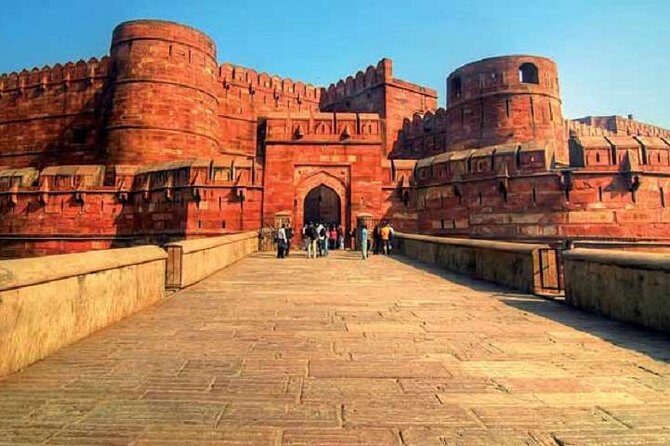
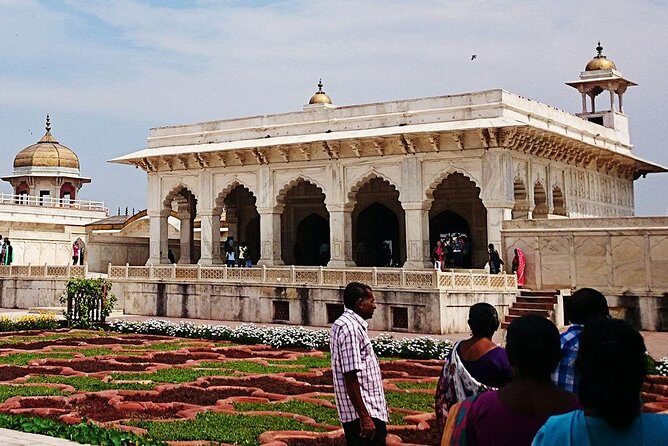
Agra Fort is next, about one hour with admission included. You’ll also hear it called Lal Qila, Fort Rouge, or Qilaa-i-Akbari. That naming matters because it points to how important the fort was to Mughal history—this was once home to emperors, not just a random structure.
What makes Agra Fort a worthwhile pairing with the Taj Mahal is the contrast:
- Taj Mahal is built for memory and beauty.
- Agra Fort is about power and defense.
You can see a lot in one hour if you keep your priorities straight. Aim for the big viewpoints and the defensive layout first, then let your guide point out key features. The fort is visually dramatic, but it becomes more meaningful when you understand what it was meant to do.
A Lunch Break Built for a Long Day
You’ll get a buffet lunch in a local luxury air-conditioned multi-cuisine restaurant. This matters more than you might think. When you’re doing a full-day run with early pickup, skipping a proper lunch turns the afternoon into a cranky blur.
The tour also includes buffer breakfast or lunch in a five-star hotel depending on the option selected. Either way, you’re not left scrambling for food near monuments, which is a big quality-of-life win.
A few practical ways to make lunch work for you:
- Eat like you plan to move afterward: don’t go too heavy, or you’ll slow down.
- If you’re sensitive to heat, use the air-conditioning time to cool off rather than rushing back out immediately.
- Keep water in mind. Bottled water is included for the day.
Food can be a budget trap on long excursions, and here, the included meal is part of the value.





Mother Teresa’s Missionaries of Charity: Short Visit, Big Meaning
This is the stop that gives the day its heart. You’ll spend about 30 minutes at Mother Teresa’s Missionaries of Charity, and admission is free.
The setting is dedicated to care for orphaned boys and girls, as well as elderly residents. It’s also a place where nuns nurture day-to-day wellbeing, and children have opportunities to interact with visitors by chatting.
A few thoughts to keep your mindset right:
- Treat it as a respectful visit, not a sightseeing checklist.
- You’re going to see real routines, real people, and real need. That tends to stick with you longer than a photo ever will.
- Because the visit is about 30 minutes, don’t expect it to be deep and unhurried. Instead, show up ready to observe and be present.
Also, plan your clothing. The tour notes to avoid clothing that is too revealing, which is a simple way to be respectful of the setting.
If you’re looking for a day that feels more human than touristy, this is the piece that turns the trip from famous monuments into something more personal.
Optional Agra Shopping Stop: Art and Crafts for Real Souvenirs

Near the drive back, you may have an option to visit local art and craft shops in Agra for souvenirs. The specialties listed include stone-craft, zari embroidery, glassware, textile, jewelry, and carpet weaving.
This isn’t a must-do, but it can be a nice way to bring something home that feels connected to the city you just visited.
How to approach it without getting overwhelmed:
- Decide what you’re actually looking to buy before you walk in.
- If something catches your eye, ask questions and compare quality. (Craft items vary a lot.)
- Keep your spending in check. If you’re not sure what you want, skipping the stop saves both time and money.
Price and Value: What $100.24 Buys You
At about $100.24 per person, this day trip is priced for people who want the key sights with less hassle. The value comes from bundling a lot of the expensive time sinks: private AC transport, a private local professional guide, and monument entrance fees for the Taj Mahal and Agra Fort.
Let’s break down what you’re paying for, practically:
- Private guide + private AC car: This is what turns a chaotic day into a controlled one.
- Taj Mahal and Agra Fort admission included: These aren’t free everywhere, and included fees reduce the admin burden.
- Meals included: A buffet breakfast or lunch (depending on your option) matters on a 12 to 14 hour schedule.
- WiFi and bottled water: Small things add up, especially in hot weather and early mornings.
Could you do it cheaper on your own? Sure, you might. But cheaper often means more coordination stress, more waiting, and less guidance on what to notice. If you want a day that runs on rails, this price can make sense.
Also note: the tour mentions pickup, group discounts, and a mobile ticket. Even if you book solo, the structure tends to keep things smooth.
Timing Rules and Health Considerations (Read This Part)
This is where you decide if the day fits your body and schedule.
Taj Mahal closed on Fridays. If your travel dates include a Friday, you’ll need to know that the key stop won’t run as planned.
Physical and medical considerations listed:
- Not recommended for participants with back problems
- Not recommended for participants with heart complaint or other serious medical conditions
- Not recommended for pregnant woman
Even without added details, those notes tell you the pace likely involves walking and movement that could be uncomfortable. If any of those apply to you, it’s worth discussing alternatives before booking.
Other practical reminders:
- Carry a current valid passport or any ID with a photograph on the day of travel.
- Children must be accompanied by an adult.
And yes, the day is long. A 12 to 14 hour schedule can be totally fine if you plan your energy, but it’s not the kind of outing to treat like a casual afternoon stroll.
Should You Book This Delhi-to-Agra Tour?
I’d book it if you want:
- A private, guide-led day to the Taj Mahal and Agra Fort without the mental overhead of planning each step.
- Included monument access and buffet meals, which helps you stay on schedule.
- A meaningful addition with Mother Teresa’s Missionaries of Charity, even if it’s only about 30 minutes.
I’d think twice if:
- You’re traveling on a Friday (Taj Mahal closure).
- You’re dealing with back or heart issues, serious medical limitations, or pregnancy.
- You hate long days and early starts. This is an early-morning, full-day plan.
If your schedule is flexible and you want a day that’s both impressive and grounded, this tour is a strong way to experience Agra in one hit. And if plans change, the experience allows free cancellation up to 24 hours in advance for a full refund.
FAQ
How long is the Taj Mahal and Agra Fort tour from Delhi?
It runs about 12 to 14 hours.
Where does pickup happen?
Pickup is offered from your hotel or the airport in Delhi.
Is the tour private?
Yes. It’s private, meaning only your group participates.
What meals are included?
You’ll have buffet breakfast or buffet lunch in a 5-star hotel, depending on the tour option you select. Lunch at a local air-conditioned multi-cuisine restaurant is also part of the plan.
Are entrance fees included?
Yes. Admission to the Taj Mahal and Agra Fort is included.
Is there a ticket method?
You get a mobile ticket.
Is the Taj Mahal ever closed?
Yes. The Taj Mahal remains closed every Friday.
Is there an ID requirement?
Yes. You must carry a current valid passport or any ID that includes a photograph.