REVIEW · AGRA
Taj Mahal & Agra Fort Fatehpur Sikri Tour By Car and guide
Book on Viator →Operated by Trip taj mahal india · Bookable on Viator
Agra in one day makes sense. You get a private guide and a comfortable AC pickup car to cover Taj Mahal, Agra Fort, and Fatehpur Sikri in about 8–10 hours, without the stress of sorting transport yourself. The main catch is timing and cost planning: admission for Taj Mahal and Agra Fort is optional in add-ons, so the base price may not be the whole story.
What I like most is how the day is managed around clear explanations and smooth handoffs. Guides such as Musharraf, Sunil, and Hilal (also written as Halel in one note) show up ready to talk and answer questions, and you’ll cover three UNESCO World Heritage Sites while keeping the pace realistic for a full-day itinerary.
In This Review
- Key highlights you’ll actually care about
- A private Agra circuit: the value of doing Taj, Fort, and Fatehpur Sikri together
- Taj Mahal in practice: what 2 hours feels like with a guide
- Agra Fort with Akbar’s layout: courtyards, mosques, and private spaces
- Fatehpur Sikri’s City of Victory: why 4 hours works
- The marble handicrafts stop: inlay work, rugs, and the shopping reality check
- Guides who talk, not just drive: Musharraf, Sunil, and Hilal in the spotlight
- Price and logistics: what $8 covers and what you may add for tickets
- What’s included: the small comforts that help a long day
- Timing for an 8–10 hour day: how to pace yourself
- Who should book this Agra tour, and who should not
- Should you book this Taj Mahal, Agra Fort, and Fatehpur Sikri tour?
- FAQ
- What is the duration of the Taj Mahal & Agra Fort & Fatehpur Sikri tour?
- Is this tour private or shared?
- Where does pickup and drop-off happen?
- Is admission to Taj Mahal included?
- Is admission to Agra Fort included?
- Is Fatehpur Sikri admission included?
- Do you include a guide and transportation?
- Can I cancel and get a full refund?
Key highlights you’ll actually care about
- Private, car-first Agra touring: hotel/airport/rail pickup and drop-off in an AC vehicle.
- Real guide support: people specifically praised guides like Musharraf, Sunil, and Hilal for explanations and questions.
- A strong lineup: Taj Mahal + Agra Fort + Fatehpur Sikri, all UNESCO sites.
- Fatehpur Sikri and the crafts stop are free on this plan, so you’re not paying at every turn.
- Optional monument tickets: Taj Mahal and Agra Fort admissions aren’t included unless you add them.
- Inlay marble handicrafts stop: a one-hour look at how handmade pieces are made, plus the usual souvenir-factor.
A private Agra circuit: the value of doing Taj, Fort, and Fatehpur Sikri together
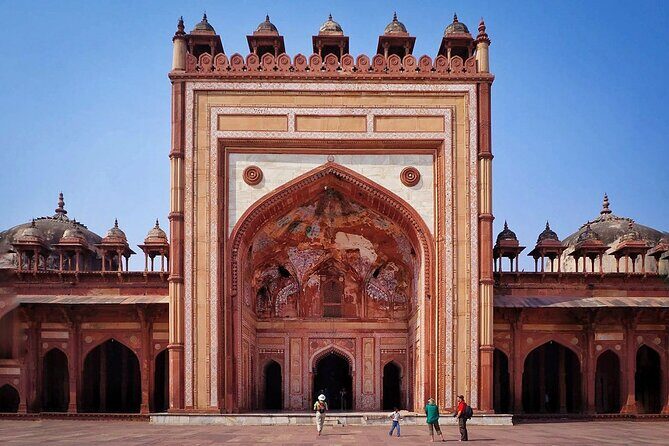
Agra can be confusing if you’re moving on your own. This tour fixes the main problem: you get picked up and dropped off, and you’re not spending your day negotiating transport between major sights.
The plan is built for a full day, roughly 8 to 10 hours. That length matters because it keeps the route compact. You get enough time to enter each place and get your guide’s context, but you’re not stuck for days. If you’re on a tight schedule, this format is practical.
Also, it’s private. Even though there are group discounts mentioned, the tour is described as only your group participating. That tends to make a difference when you have questions, want a slower pace at one site, or want to adjust slightly to your comfort level.
You can also read our reviews of more guided tours in Agra


Taj Mahal in practice: what 2 hours feels like with a guide
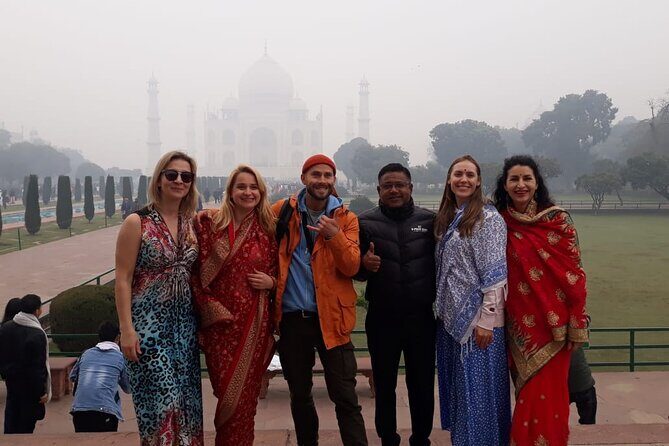
Taj Mahal is the headline here, and the tour frames it as an iconic monument and symbol of love. That matters because a good guide will help you see it as more than a photo spot.
You’ll get about 2 hours at Taj Mahal, with the note that the admission ticket is not included in the plan unless you choose the optional add-on. Practically, that means you should decide early whether you want to include entrance fees in your budget so you’re not scrambling once you arrive.
With a private guide, you’re not just “walking around.” Several comments point to guides explaining things clearly and answering questions. One guide named Musharraf was singled out for good explanations and for taking time with questions. Another person emphasized how their guide explained everything to perfection, which is exactly what you want at a monument like this, where details can be easy to miss when you don’t know where to look.
One more practical point: bring your expectations to match the time. Two hours is solid, but it’s not a slow, multi-hour study session. Plan to focus on key viewpoints and on what your guide points out, not on trying to see everything at a crawl.
Agra Fort with Akbar’s layout: courtyards, mosques, and private spaces
After Taj Mahal, you head to Agra Fort for another about 2 hours. This site is described as an impressive complex built by Emperor Akbar, with courtyards, mosques, and private chambers within its walls.
Again, entrance is optional here. The admission ticket for Agra Fort is not included unless you add the monument entrance fees. If you’re trying to keep your spending predictable, you can treat the add-on as the “real” gate cost for the two major-ticket stops.
What makes this stop work on a day like this is contrast. Taj Mahal gets most of the attention, but Agra Fort gives you a different kind of Mughal experience. With a guide (and people specifically mentioned guides who care about Mughal architecture), you’ll understand the layout conceptually, not just as random buildings.
A time check also helps. Two hours can feel short if you’re a slow photographer, but it’s workable if you’re following your guide’s flow. Your best strategy is to listen first, then take your time on the areas your guide highlights, rather than wandering until you run out of daylight.
Fatehpur Sikri’s City of Victory: why 4 hours works
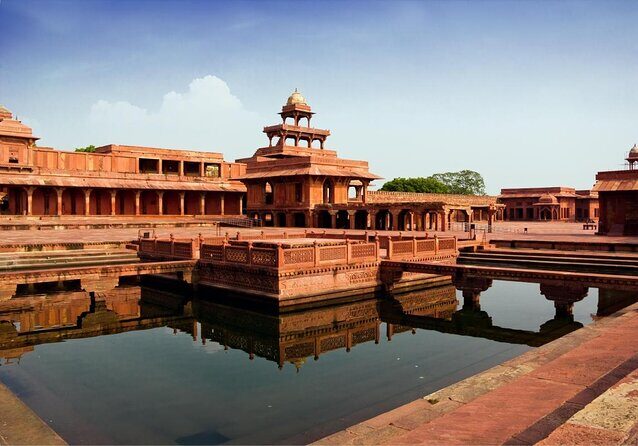
Fatehpur Sikri is the “big swing” stop on this itinerary. You’re there for about 4 hours, and the data says admission at this point is free on the plan.
The site is described as the City of Victory, constructed in the late 16th century by Emperor Akbar, and it served as the Mughal capital for a brief period. That “brief period” is a useful mental hook: you’re not just looking at ruins. You’re looking at what happens when a capital shifts and a grand plan leaves behind a physical record.
This is also where guide style can change your experience a lot. Notes on the tour emphasize breathtaking views and a guide with passion for Fatehpur Sikri. When a guide clearly explains what you’re looking at, the time starts to feel like it’s doing something, not just passing by.
And because you get four hours here, you can breathe. You can pause for photos, take breaks, and still make it through the main areas without feeling rushed.
The marble handicrafts stop: inlay work, rugs, and the shopping reality check
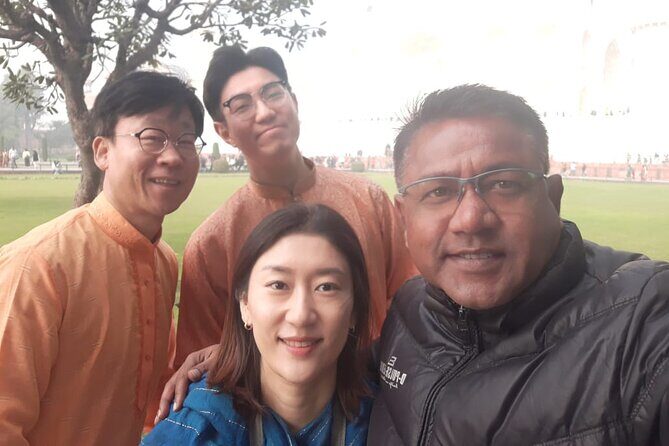
The day includes an extra stop at Marble Handicrafts Agra, lasting about 1 hour. Admission here is listed as free on the plan.
What’s described is the inlay handmade art of marble or rug—plus the chance to see how it’s made. This kind of stop can be worthwhile if you’re curious about craft processes rather than just buying souvenirs. It also gives you a break from monument walking.
But there’s a balance to strike. One note called out that local people can pressure tourists to buy expensive souvenirs. That doesn’t mean you have to buy anything. It’s just a reminder to go in with boundaries. If you want to watch how the work is done and then leave, do that. If you dislike sales pressure, keep your wallet closed and enjoy the craft demonstration only.
If you do plan to buy something, compare pieces carefully. In a short one-hour window, it’s easy to get pushed into a decision. Treat it like a demo, not like a final auction.



Guides who talk, not just drive: Musharraf, Sunil, and Hilal in the spotlight
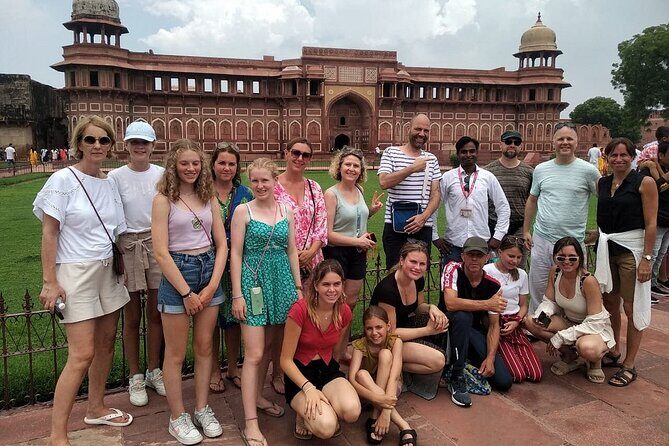
A private guide can make or break an Agra day. The strongest notes focus on explanation quality and responsiveness to questions.
Musharraf is mentioned as a great guide for Taj Mahal, with strong explanations and answers to questions. Sunil is described in a particularly helpful way: meeting someone at the train station, staying close, and managing handoffs to other parts of the experience without disappearing. Hilal (spelled as Halel in one note) is praised for passion for Mughal architecture and for giving good directions and photo help.
What I take from this: you’re not just getting someone who points. You’re getting context. And that matters most at sites like Agra Fort and Fatehpur Sikri, where it’s easy to feel like you’re seeing walls with no map in your head.
One more detail that shows flexibility: in one case, Sunil helped arrange henna in a short time window. That’s not guaranteed for every traveler, but it signals a style: if you have a small window for something personal, a good guide may help you fit it in rather than treating the schedule as unchangeable.
Price and logistics: what $8 covers and what you may add for tickets
The price listed is $8.00 per person, and it’s described as often booked about 21 days in advance. At that price point, you should think of the base fee as the core service: private AC car with driver, private tour guide, pickup/drop-off, bottled water, and all fees and taxes.
Then there are optional entrances. The plan notes an additional entrance fee for monuments, listed as optional add-on $30.00 per person. It also clearly states that Taj Mahal and Agra Fort admissions are not included, while Fatehpur Sikri admission is free on this itinerary.
So here’s the practical math mindset:
- If you want full entry for the two major-ticket sites, you should expect to add that entrance add-on.
- You’ll likely still pay nothing at Fatehpur Sikri on this plan, because it’s listed as free there.
- You can also skip entrance add-ons if you prefer to view from outside areas, but at Taj Mahal and Agra Fort you’d be giving up the main experience inside.
This is where value comes down to your priorities. If this is your “once in Agra” day, the optional tickets are often the part that turns a nice visit into the real visit. If you’re trying to keep costs tight and you already know the sites are must-sees, budget for the add-on early so you don’t change plans on the day.
What’s included: the small comforts that help a long day
This tour includes a lot of the stuff that quietly saves your day:
- Private AC car with driver
- Private tour guide
- Hotel/airport/railway station pickup and drop-off
- Bottled water
- All fees and taxes
- Mobile ticket
That last point matters more than it sounds. Having a mobile ticket can reduce friction at entrances and keeps you from juggling paperwork.
Meals are not included, so you’ll want to plan your food outside the tour. Also, the plan mentions personal expenses are on you. That’s normal, but it helps to know that you’re in control of spending beyond the optional tickets and any shopping.
Timing for an 8–10 hour day: how to pace yourself
When you pack Taj Mahal, Agra Fort, Fatehpur Sikri, plus a handicrafts stop into one day, pacing is everything.
Here’s what you can plan around based on the schedule:
- Taj Mahal takes about 2 hours.
- Agra Fort takes about 2 hours.
- Fatehpur Sikri takes about 4 hours.
- Marble handicrafts takes about 1 hour.
That adds up to the 8–10 hour window with travel time and transitions. The biggest practical tip is to use your guide’s guidance when moving between stops. One reason people praised hosting styles was that they didn’t feel lost or left behind during handoffs.
Also, consider your energy level. Four hours at Fatehpur Sikri is the longest stretch, so if you’re prone to fatigue, you may want to set expectations for slower breaks there.
And remember: bottled water is included. Bring a simple plan for refilling or staying hydrated without getting stuck searching for refreshments during tight transitions.
Who should book this Agra tour, and who should not
This is a strong fit if you:
- Want a private full-day route that hits Taj Mahal, Agra Fort, and Fatehpur Sikri
- Like having explanations so you don’t just “see stuff”
- Need pickup and drop-off so you’re not coordinating transport
It may not fit you as well if:
- You’re expecting meals included. This is a monument-and-crafts day, not a full dining package.
- You dislike any shopping or sales pressure. The handicrafts stop includes a chance to buy; you can skip purchases, but the environment may still feel pushy to some people.
- You want a super slow, deeply structured museum-style visit. Two hours each at Taj Mahal and Agra Fort is enough for a guided overview, not for an all-day study.
Should you book this Taj Mahal, Agra Fort, and Fatehpur Sikri tour?
If you want the best use of one day in Agra, I’d say yes—with one smart condition: decide how you feel about the optional entrance tickets before you go. The base price is low, but the real experience at Taj Mahal and Agra Fort depends on admission.
I’d also book this if you value good guiding. The standout praise in the notes is about explanations, question time, and friendly, attentive support from guides like Musharraf, Sunil, and Hilal/Halel.
Skip the booking only if your day plan is so tight you can’t afford a full 8–10 hours, or if you want food included and zero shopping pressure. Otherwise, this is a practical way to hit the big Mughal landmarks without wasting time on logistics.
FAQ
What is the duration of the Taj Mahal & Agra Fort & Fatehpur Sikri tour?
The tour runs about 8 to 10 hours.
Is this tour private or shared?
It’s a private tour/activity, so only your group participates.
Where does pickup and drop-off happen?
Pickup and drop-off are included from Agra hotel, airport, or railway station.
Is admission to Taj Mahal included?
No. Taj Mahal admission ticket is not included in the base plan.
Is admission to Agra Fort included?
No. Agra Fort admission ticket is not included in the base plan.
Is Fatehpur Sikri admission included?
Fatehpur Sikri is listed as free for admission on this itinerary.
Do you include a guide and transportation?
Yes. The tour includes a private tour guide and a private AC car with driver.
Can I cancel and get a full refund?
Yes. Free cancellation is offered, and you can cancel up to 24 hours in advance for a full refund.