REVIEW · GUJARAT
Surat to Ahmedabad, Glimpse of Gujarat Tour
Book on Viator →Operated by Agora Voyages Pvt. Ltd. · Bookable on Viator
Big monuments, serious stories, and an easy pace. This 8-day Gujarat route strings together the big-name sights starting at the Sardar Sarovar Dam area near Kevadia, with hotel stays and a private car so you spend less time figuring logistics. I also like how the schedule mixes national-scale landmarks with smaller, hands-on cultural stops.
I love the Statue of Unity experience, from the huge pedestal exhibition hall to the fast elevator ride for views. I also love that the trip builds in UNESCO-level archaeology at Pavagadh-Champaner and an ancient Harappa port at Lothal, so you get more than photo stops.
One consideration: some days lean physical—Palitana includes a climb of 3,950 steps—so pack comfortable shoes and plan to go at your own tempo. If heat or weather turns sour, that stair day can feel longer than it sounds.
In This Review
- Key points before you go
- What $1,393 covers on this Surat-to-Ahmedabad route
- Surat arrival to Kevadia’s Sardar Sarovar Dam and Valley of Flowers
- The Statue of Unity: pedestal exhibition, high-speed lift, and 182-metre views
- Pavagadh-Champaner UNESCO and Dabhoi’s 12th-century gateway
- Vadodara royal life at Lakshmi Vilas Palace and Lothal’s ancient port-town
- Palitana’s 3,950 steps and Junagadh Fort: Jain temples and Ashoka-era clues
- Rajkot’s Jubilee Garden: colonial architecture breaks the tempo
- Inside Ahmedabad: Hatheesing Jain Temple, Bhadra Fort, and Jama Mosque
- Kite Museum, Sabarmati Ashram, and the Shaking Minarets
- Should you book this Surat to Ahmedabad tour?
- FAQ
- Where does the tour start and end?
- How long is the tour, and how many nights are included?
- What meals are included in the price?
- Do you provide transportation and a guide?
- Are entrance fees covered for the main sights?
- Is the tour physically demanding?
- Is this tour private, and do you handle airport pickup?
- What happens if weather is bad, or if I need to cancel?
Key points before you go
- Laser show at Kevadia (except Monday) with narration focused on Sardar Patel
- 182-metre Statue of Unity with a large pedestal exhibition and a high-speed lift for panoramic views
- Pavagadh-Champaner UNESCO plus the 12th-century citadel gateway at Dabhoi
- Lakshmi Vilas Palace in Vadodara: grand royal scale, with European-style interior echoes
- Palitana Jain temples: 863 temples across a 3.5 km ascent and 900 years of temple-building
- Ahmedabad old city highlights: Hatheesing Jain Temple, Bhadra Fort, Jama Mosque, plus Kite Museum
What $1,393 covers on this Surat-to-Ahmedabad route
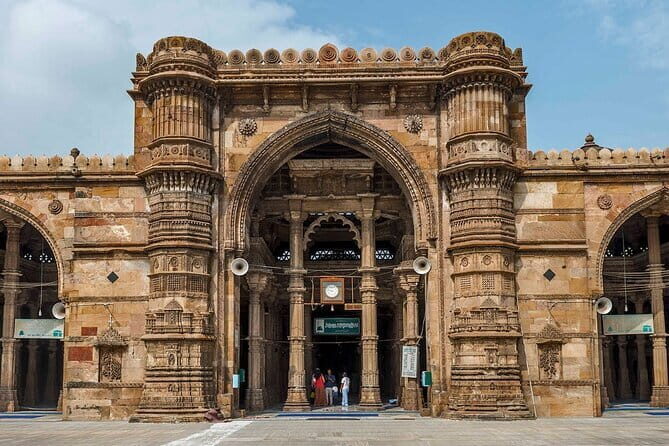
At $1,393 per person for about 8 days, the value comes from what’s wrapped into the trip: 7 nights of hotel (in a selected price category), breakfast for 7 days, and a dinner on Day 1. You’re also getting a private AC car/van for airport transfers and sightseeing, plus English-speaking guidance on sightseeing days (with local guides in each city).
Most of the sightseeing you care about has monument entrance fees and listed activity charges included, and you’ll have bottled water in the car. You’ll still need to budget for what’s not included: flights, meals beyond what’s specified, and personal costs like tips and laundry.
Two practical extras matter on a trip like this: pickup/arrival assistance is included, and you’ll receive a mobile ticket. That reduces the last-minute scramble, especially when you’re moving every day or two.
You can also read our reviews of more tours and experiences in Gujarat.

Surat arrival to Kevadia’s Sardar Sarovar Dam and Valley of Flowers
Your trip starts with arrival support at Surat airport and a drive to Kevadia. On arrival you check in at Tent City or a hotel near the Statue of Unity, and you’ll have time to settle before evening plans.
The dam-side visit centers on the Sardar Sarovar Dam area, with stops like the Selfie Point and Valley of Flowers. It’s the kind of place where you get scale quickly—big engineering, wide views, and a setting built for relaxed walking after a travel day.
Then comes one of the best “story moments” of the whole trip: the Laser Show projected on the Statue of Unity. It runs every evening except Monday, and the show is paired with narration on Sardar Patel’s role in the Independence Movement and the unification of India. If you’re the type who likes your sightseeing with context, this is one of your better evenings.
If you want a smoother day, plan your footwear for evening walking. These areas are designed for viewing, not sprinting.
The Statue of Unity: pedestal exhibition, high-speed lift, and 182-metre views
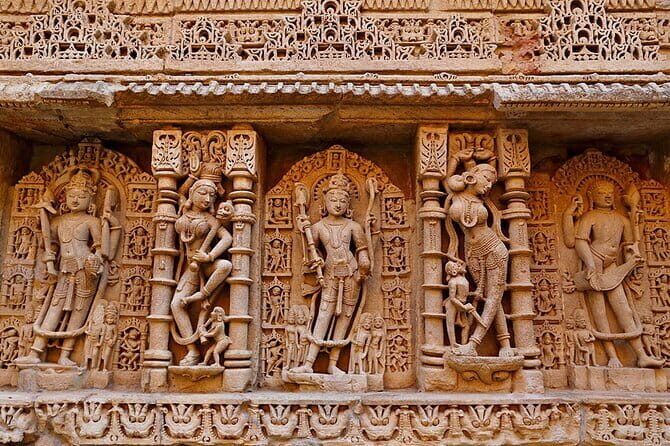
The next day is the main event: a visit to the Statue of Unity, the world’s tallest statue at 182 metres. What makes this feel more than a single photo is the exhibition hall inside the pedestal, covering 4,647 square metres. It’s built around Sardar Patel’s life—his freedom movement contributions and the merger of princely states.
After that, you ride the high-speed elevators through the statue core to about 400 feet for panoramic views. If you care about architecture and engineering, this is where the experience feels intentional: it’s built to explain the monument while also giving you the reward view afterward.
Timing tip: go into the pedestal hall with a little patience. The elevator is quick, but the storytelling space takes time—especially if you pause to read. If you’re traveling with someone who hates museums, this part may still win them over because it ties directly to what you’ll see overhead.
Also, keep in mind you’ll be moving between inside exhibits and viewing points, so water and comfortable clothing are your friends.
Pavagadh-Champaner UNESCO and Dabhoi’s 12th-century gateway
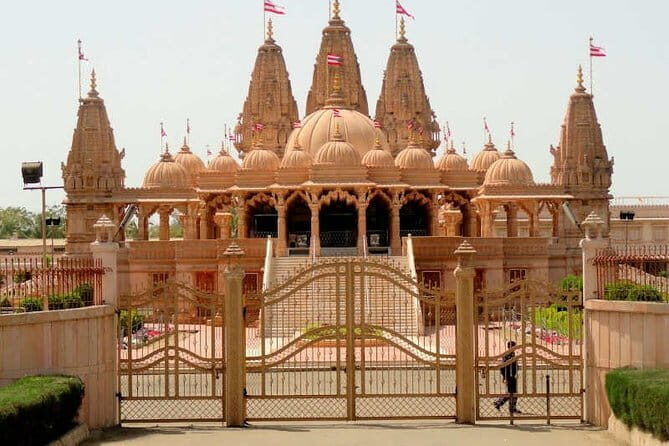
After Kevadia, you head toward Vadodara with a stop at Pavagadh-Champaner, which is described as Gujarat’s first UNESCO-approved World Heritage Site. This site isn’t one building; it’s a collection of forts, temples, mosques, mausoleums, pavilions, wells, and tanks. You’ll also see Champaner’s Jami Masjid, built around 1523, noted for 16th-century Indo-Saracenic architecture.
What I like about this stop is that it’s not just “look at ruins.” The variety of structures helps you understand how the whole city worked. You get a sense of planning, faith spaces, and daily infrastructure in one place.
On the route, you’ll also visit Dabhoi, including a majestic gateway built in the 12th century. Even if you only get a short time here, a gateway can tell you a lot—power, movement, and how travelers would have entered the walled areas.
One drawback to consider: UNESCO sites often cover uneven ground. If you’re someone who dislikes walking on stone paths or uneven steps, wear shoes with grip.
Vadodara royal life at Lakshmi Vilas Palace and Lothal’s ancient port-town
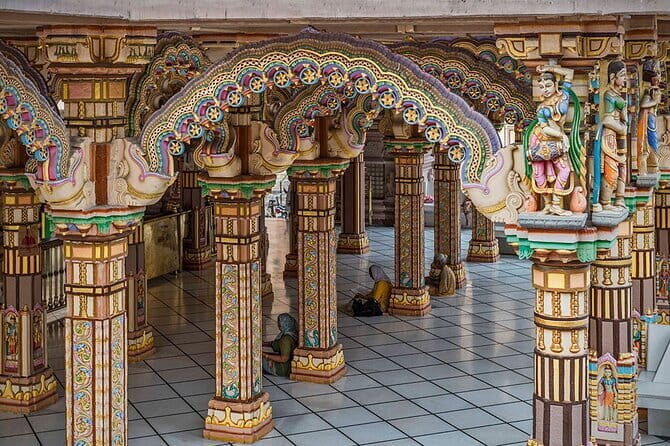
Vadodara brings a very different flavor: Lakshmi Vilas Palace. The palace is reputed to be the largest private dwelling built till date, described as four times the size of Buckingham Palace. It’s also remembered for “modern” touches at the time of construction, including elevators, plus interiors that feel like a European country house.
The practical win here is that you’re not just touring a showy exterior. The palace compound includes multiple sites and buildings, such as LVP Banquets & Conventions, Moti Bagh Palace, and the Maharaja Fateh Singh Museum building. It’s also still tied to the royal family, which keeps the mood from turning into pure staged spectacle.
Then the tour shifts again, heading to Bhavnagar via Lothal—the archaeological remains of a Harappa port-town. Here, you roam ruins and use the local museum to picture life from about 4,500 years ago. The emphasis is on maritime trade: a dockyard that once connected to the wider world.
If you love ancient India but find typical museum stops too static, Lothal works because you’re standing where the port-life took place. It helps you visualize ships, craftwork, and movement, not just artifacts behind glass.
Palitana’s 3,950 steps and Junagadh Fort: Jain temples and Ashoka-era clues
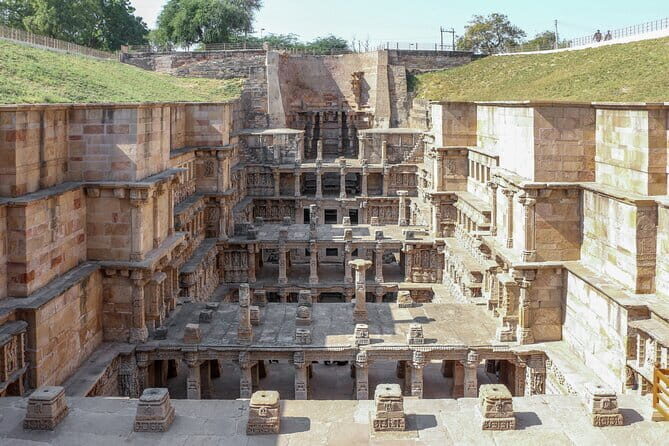
From Bhavnagar you go to Palitana Temples, located about 51 km south west of Bhavnagar. Palitana is known as the largest cluster of Jain temples, with 863 temples from base to the peak of Shatrunjaya Hill. The route involves climbing 3,950 steps over roughly 3.5 km, and the building process stretched over 900 years, in two phases.
This is the day with the most physical demand in the whole trip. If you go, go early in the day (when possible), take breaks often, and treat the climb as part of the experience rather than a chore. Even with breaks, your legs will know.
After Palitana, you continue to Junagadh and check in. Junagadh’s big focus is faith and fortification, so the next day (Junagarh) leans dramatic: a fortified city at the foot of Girnar Hill, with layers of myth and legend.
When you tour Junagarh Fort (Uperkot Fort), you’re looking at an old defensive city where the Girnar Hills are a holy sanctuary for Jains. There’s also a clear historical thread tied to Ashoka, including mention that he inscribed 14 edicts on a boulder on the way to Mt. Girnar peak.
It’s a rare combo: temple geography plus imperial-era inscription context. If you like your travel with timelines attached, this part delivers.
Rajkot’s Jubilee Garden: colonial architecture breaks the tempo

After Junagadh, the tour moves to Rajkot. The stop that anchors the afternoon is Jubilee Garden, a large open city park with colonial-era monuments. The center is Connaught Hall, and nearby you’ll see the Mohandas Gandhi High School, Kaba Gandhi No Delo, and other notable institutions.
The most time-worthy indoor stop here is Watson Museum. It holds a colonial-period collection and is tied to Colonel James Watson (1888), designed to commemorate his work as an administrator. You’ll also find a range of older artifacts connected to the ancient city of Mohenjodaro.
I like Jubilee Garden for one reason: it’s a change of pace. After days of monuments and temple stairs, parks are a mental reset. You can sit, stretch, and let your legs cool down before the Ahmedabad leg.
Inside Ahmedabad: Hatheesing Jain Temple, Bhadra Fort, and Jama Mosque
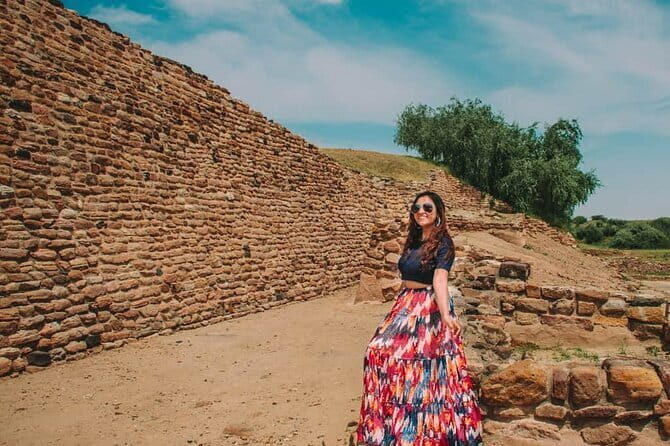
Ahmedabad starts with a travel day and a hotel check-in, then a city tour in the old core. The highlight is Hatheesing Jain Temple, built in 1850 by Seth Hatheesing, a rich Jain merchant. The temple is dedicated to the 15th Jain Tirthankar, Dharamnath.
From there, you visit Bhadra Fort, known for intricate carvings, pattern work, and frescos. You’ll also see decorative arches at the entry gate with inscriptions tied to the fort’s past.
The tour also includes the Jama Mosque, described as having different entrances. Near the eastern entrance stands the tomb of Sultan Ahmed Shah, with the graves of Ahmed Shah, Mohammed Shah, and Qutub-Ud-Din Ahmed Shah.
This cluster matters because it shows Ahmedabad’s layers: Jain sacred art next to Islamic architectural history, all within a walkable framework. If you enjoy cities where religion and politics shaped streets, Ahmedabad is a strong finish.
Kite Museum, Sabarmati Ashram, and the Shaking Minarets
Ahmedabad doesn’t end with temples. You’ll also visit the Kite Museum, dedicated to the city’s famous kite culture. The museum houses rare kites and is described as the first of its kind in India and second in the world.
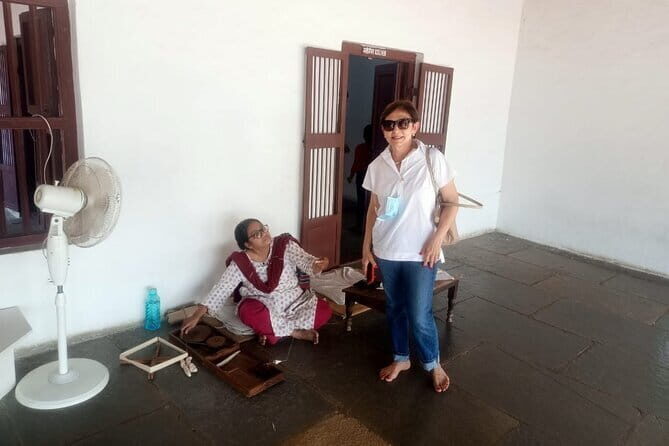
Then comes Sabarmati Ashram, Gandhi’s first Ashram in India, originally established in the Kochrab area on 25 May 1915 and later shifted to land by the Sabarmati River on 17 June 1917. The reasons given for the move include experiments in everyday life like farming, animal husbandry, cow breeding, plus work connected to khadi and other constructive activities.
The last stop adds a fun, tactile detail: Shaking Minarets, a unique monument at Siddi Bashir’s Mosque near the Sarangpur gate. It’s the kind of stop that makes people grin because it adds a small mystery to a historic area.
If you’re trying to build a “Gujarat in your head” checklist, these stops help. They’re not just about ancient walls; they’re about ideas, craft, and the city’s signature creativity.
Should you book this Surat to Ahmedabad tour?
I’d book this if you want a well-paced route that covers Gujarat’s headline moments—Sardar Sarovar Dam and Statue of Unity, plus major sites like Pavagadh-Champaner, Lothal, Palitana, and key corners of Ahmedabad—without forcing you to coordinate every transfer.
It’s also a good fit if you like having admission fees and guide support handled, and you’re happy with a schedule that moves daily. The value is strongest when you’re the kind of traveler who actually uses included tickets, not just the car rides.
I’d hesitate if stairs and long walks are a problem for you. Palitana’s 3,950 steps is a real commitment, even if the payoff is spiritual and visual.
One more practical note: hotel comfort seems to be a real focus on this route. In the Surat stay context, housekeeping is described as attentive and rooms kept spotless, with staff names Arti, Sharmin, and Abhishek called out, and room services associated with Kunal mentioned with appreciation. That kind of on-the-ground care matters when your days are packed.
FAQ
Where does the tour start and end?
The tour begins in Surat (with arrival assistance at Surat airport) and ends in Ahmedabad, with a transfer to the airport based on your flight schedule.
How long is the tour, and how many nights are included?
It runs for about 8 days and includes 7 nights of accommodation (if you choose the accommodation option).
What meals are included in the price?
Dinner is included (on Day 1), and breakfast is included for 7 days. Meals other than the listed inclusions are not included.
Do you provide transportation and a guide?
Yes. You get a private AC car/van for airport transfers, sightseeing, and excursions as per the program. You also get an English speaking tour guide on sightseeing days (with local guides in each city).
Are entrance fees covered for the main sights?
Entrance and activity charges listed in the itinerary are included. Some stops are marked as free in the program, while others specify admission tickets as included.
Is the tour physically demanding?
Parts of it can be. Palitana Temples involve climbing 3,950 steps over about 3.5 km up Shatrunjaya Hill, so comfortable shoes and a manageable pace are important.
Is this tour private, and do you handle airport pickup?
Yes, it’s a private tour/activity with only your group participating. The package includes assistance on arrival at the airport and private AC car/van transfers for the airport connections.
What happens if weather is bad, or if I need to cancel?
The experience requires good weather. If it’s canceled due to poor weather, you’ll be offered a different date or a full refund. For cancellations, you can cancel up to 6 days in advance for a full refund, with smaller refunds if you cancel closer to the start date.