REVIEW · NEW DELHI
Royal Rajasthan: Whispers From The Past Curated Journey
Book on Viator →Operated by Incredible Real India Tours · Bookable on Viator
Mughal marble and Rajput walls, all in one trip. This 10-day Royal Rajasthan route strings together Delhi’s major monuments, the Taj Mahal region, Jaipur’s palaces and science landmarks, and Udaipur’s lakeside powerhouses. I especially like the focus on iconic sites with admissions handled, and I also like that the pacing moves you city to city so you get the big story of North India without overthinking logistics. The one drawback to keep in mind is that the days are packed, so you’ll want good energy management (early mornings, long touring blocks, and some walking at forts and palaces).
I also like that the organization clearly prioritizes smooth arrivals and comfort. Pickup is offered from Indira Gandhi Intl Airport in New Delhi, and the trip is set up as a private experience for just your group. My consideration: because it’s private and time is built around fixed sightseeing stops, you’ll have less freedom than on a fully DIY trip if you want to linger in one place for hours.
In This Review
- Key things that make this tour work
- What you get with this 10-day Royal Rajasthan plan (and why it feels easier)
- Delhi’s monument day: Qutub Minar, Humayun’s Tomb, the Red Fort, and the faith mix
- Akshardham, India Gate, and Jama Masjid: a day that spreads across Delhi’s modern and historic identities
- Gandhi Memorial Hall and the value of including quieter stops
- Taj Mahal timing: when you can catch sunrise or sunset
- Agra Fort and Itimad-ud-Daulah: two ways to understand Mughal power
- Jaipur’s core trio: City Palace, Amer Palace, and Hawa Mahal
- Jantar Mantar and Jaigarh Fort: science, strategy, and stone instruments
- Albert Hall Museum and white marble spirituality in Jaipur
- Nahargarh Fort and Royal Gaitor Tumbas: viewpoints and marble calm
- Udaipur by water: Lake Pichola boat ride and the calm of palace islands
- City Palace and Jagdish Temple: the heart of Udaipur
- Your last stop before flying: Pasar Chandni Chowk
- Price and value: what $1,068 buys for this mostly ticketed, private route
- Who should book this Royal Rajasthan trip (and who might want something else)
- Quick planning tips so you’re not tired halfway through
- Should you book Royal Rajasthan: Whispers From The Past?
- FAQ
- How long is the Royal Rajasthan tour?
- What cities does this tour include?
- Is pickup included?
- Is this tour private?
- Are entry tickets included?
- Do you visit the Taj Mahal at a specific time?
- Where does the tour start and end?
- What is the price per person?
- Can changes be made after booking?
- What if the minimum number of travelers isn’t met?
Key things that make this tour work
- Admissions handled for most major stops so you spend less time in ticket lines
- A clear Mughal-to-Rajput storyline from Humayun’s Tomb and the Taj Mahal to Jaipur forts and palaces
- Lake Pichola boat ride in Udaipur for a different view of the City Palace area
- Private, pickup-based flow that’s easier for first-time India visitors
- Strong driver support is a recurring theme in feedback, with names like Bhanwar Singh, Modaram, KK/Kishor Kumar, Kanu, and Ranjeet showing up often
What you get with this 10-day Royal Rajasthan plan (and why it feels easier)
This trip is built for travelers who want the highlights—without trying to assemble them like a puzzle. You start in New Delhi with pickup from the airport area using a sign board under your name, then you move through Agra and the core of Rajasthan (Jaipur and Udaipur). The overall feel is structured, but not frantic, because the stops are grouped by day and region.
The best value lever here is how many major sights include admission tickets. Qutub Minar, Humayun’s Tomb, Red Fort, Akshardham, Gurudwara Bangla Sahib, Jama Masjid, Taj Mahal, Agra Fort, Itimad-ud-Daulah, Jaipur’s City Palace and Amer Palace, Jantar Mantar, Jaigarh Fort, Albert Hall Museum, Nahargarh Fort, Royal Gaitor, Udaipur’s City Palace and Jagdish Temple—these are not “maybe you’ll buy tickets later” stops. You’ll still want to keep an eye on what’s listed as free, but the overall ticket-handling approach saves you time and hassle.
Also, this is described as a private tour/activity, meaning it’s only your group. That matters in India, where travel stress can rise quickly when you’re negotiating for shared experiences. With pickup and mobile ticket use noted, you should find it easier to stay on schedule.
You can also read our reviews of more tours and experiences in New Delhi.



Delhi’s monument day: Qutub Minar, Humayun’s Tomb, the Red Fort, and the faith mix
Your first meaningful hit in Delhi is Qutub Minar. It’s a landmark for a reason: the complex is all about height, red stone, and the sense that an entire era was trying to outdo the last one. The good part of starting here is momentum. You get orientated fast, and the early timing can help you dodge some of the worst crowds.
Then you step into Mughal Delhi with Humayun’s Tomb. It’s connected to the story of Empress Bega Begum commissioning the tomb (1569–70), and it also gives you a strong sense of Persian influence through the architects credited for the design. I like this stop because it teaches you what to look for later: symmetry, garden layout thinking, and the way mausoleums became statements.
After that, the Red Fort gives you the Mughal “main residence” angle. Even when you know the name, seeing the fort in person makes the scale of imperial power feel more real. One caution: you’ll have a lot going on in Delhi in a single day, so if you’re the type who likes museums and explanations, plan to take a few short breaks instead of rushing from stop to stop.
Akshardham, India Gate, and Jama Masjid: a day that spreads across Delhi’s modern and historic identities
One of the more interesting aspects of this route is that it doesn’t treat Delhi as only Mughal architecture. Swaminarayan Akshardham is presented as a spiritual and cultural campus dedicated to devotion, learning, and harmony. It’s a different mood from the older tombs and forts, and that variety can help prevent “monument fatigue.”
India Gate is next, and it’s not only a photo stop. It’s tied to the memorial to 70,000 soldiers of the British Indian Army who died between 1914–1921 in the First World War. This is a strong reminder that India’s public spaces hold many layers of the past, not just one dynasty.
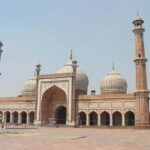
Gurudwara Bangla Sahib adds another faith thread. You’ll be visiting a prominent Sikh gurdwara connected with the eighth Sikh Guru, Guru Har Krishan, and the complex includes a holy water feature called Sarovar. Then Jama Masjid rounds out the day with one of Delhi’s largest mosques, and it’s a good pairing with Humayun’s Tomb earlier because it shows how different architectural styles can still share the same confidence in scale.
My practical tip: you’ll likely want to bring a lightweight layer and keep water handy. Delhi can feel warm even when mornings start cool, and with multiple religious sites in one day, you’ll appreciate being comfortable.
Gandhi Memorial Hall and the value of including quieter stops
Gandhi Memorial Hall is shorter than some of the heavy hitters on this list, but it’s a smart inclusion. It gives you a transition from empire-era stone to a more modern political story that shaped how India thinks about itself.
This is also where the private-group setup helps. On days like this, a flexible guide can nudge the flow so you’re not just marching through “must-sees.” If you’re the type who likes context, this kind of stop makes the trip feel connected rather than just visual.
Taj Mahal timing: when you can catch sunrise or sunset

Day 3 is all about the Taj Mahal, and the planning note here is useful: you could visit at sunrise, at sunset, or both. That matters because the Taj’s surface and mood shift with light. Even if you can’t control the exact time perfectly, choosing the best window available is worth it.
I also like how the route frames this as a “see it different times if possible” situation. The Taj Mahal isn’t only about the building. It’s about atmosphere—how the colors read, how the crowds feel, and how your own brain absorbs the scale. Set expectations accordingly: give it time, not just a quick lap for photos.




Agra Fort and Itimad-ud-Daulah: two ways to understand Mughal power
On Day 4, you move into Agra Fort first. The key idea to keep in your head: it served as the main residence of Mughal emperors until 1638, when the capital shifted back to Delhi. That timeline is the “why” behind the site. You’re not just looking at walls—you’re standing in a power center that changed with politics.
Then Itimad-ud-Daulah (often called a draft of the Taj) brings you to a tighter, more intimate Mughal mausoleum feel. It’s described as a jewel box and sometimes nicknamed the Bachcha Taj. The payoff of this stop is that it helps you understand how the Taj didn’t appear out of nowhere. It’s a step in an evolution of design confidence.
Quick mental shift that helps: don’t treat Taj Mahal and these Agra sites as duplicates. Taj gives you the monument statement; Agra Fort and Itimad-ud-Daulah help you read the “engineering and taste” behind the statement.
Jaipur’s core trio: City Palace, Amer Palace, and Hawa Mahal
Jaipur starts with City Palace, which is still connected to royal family life and now houses the Maharaja Sawai Man Singh II Museum. This is a nice setup because it explains that a palace can be both living space and museum space—politics and culture in the same footprint.
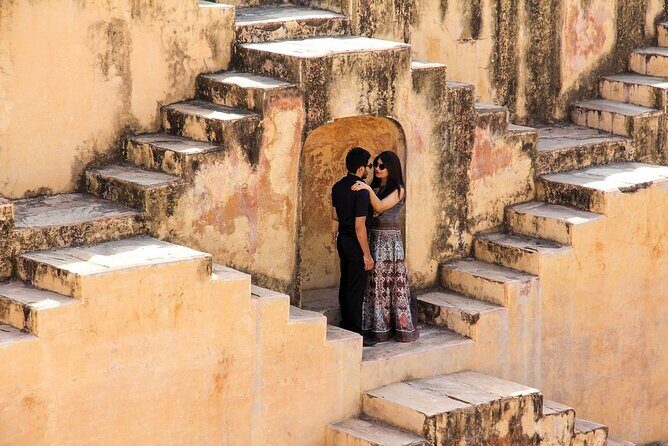
Next is Amber Palace (Amer Fort). This stop is presented as having artistic style elements, big ramparts, a sequence of gates and cobbled paths, and the backdrop of Maota Lake. The fact that the fort overlooks the lake matters. It reminds you that Rajput architecture wasn’t only decorative—it was planned for defense, water, and daily life logistics.
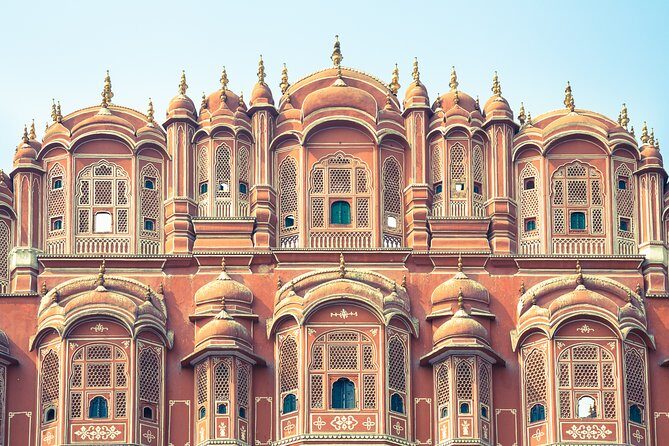
Then comes Hawa Mahal, also known as Palace of Wind. The red and pink sandstone design is famous for a reason: it’s visually theatrical, and it shows how design and identity worked together in Jaipur’s royal aesthetic.
My advice for Jaipur: don’t expect every stop to feel equally “wow” in the same way. What makes this day special is the range—ceremony, defense, and decorative design all in sequence.
Jantar Mantar and Jaigarh Fort: science, strategy, and stone instruments
Jaipur’s Jantar Mantar is built around astronomy instruments and is UNESCO-recognized. You’ll see a collection of nineteen architectural tools, and the highlight called out is the world’s largest stone sundial. I like this because it flips the usual palace narrative. Jaipur isn’t only about beauty; it’s also about measurement and thinking big.
Jaigarh Fort follows, positioned on a promontory and overlooking Amer Fort and Maota Lake. This is strategy in stone. It helps you see how forts were connected as a defense ring around the city.
Albert Hall Museum and white marble spirituality in Jaipur
Albert Hall Museum is the kind of stop that often becomes a relief when your eyes and brain are tired from outdoor fort walking. It’s described as the oldest museum of Rajasthan and functions as the state museum. If you’ve been thinking about how art and power worked, museum time can reset your pace.
Then Birla Mandir Temple enters with a very different look: it’s made of white marble and was built by the B.M. Birla Foundation in 1988. The dedication includes Lakshmi and Vishnu (Narayan), with images and also selections from the Gita and Upanishads mentioned. It’s a reminder that devotion has architecture too.
After that you’ll visit Govind Devji Temple for morning worship. Even if you don’t catch every spoken word, the purpose is clear: worship is the main event here, not sightseeing.
Nahargarh Fort and Royal Gaitor Tumbas: viewpoints and marble calm
Nahargarh Fort is on the edge of the Aravalli Hills overlooking Jaipur. It once formed part of the strong defense ring along with Amer Fort and Jaigarh Fort. This is where you start to feel the geography of Jaipur as a whole—forts weren’t random; they were placed to control movement.
Royal Gaitor Tumbas finish the Jaipur arc. The white marble exterior and the valley setting help this stop feel quieter than the forts above the city. It’s a good ending point if you want a break after major sightseeing days.
Udaipur by water: Lake Pichola boat ride and the calm of palace islands
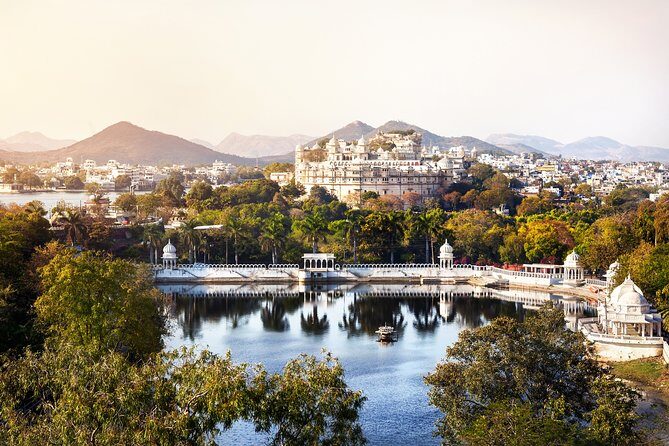
Day 7 is where the trip’s mood shifts. Lake Pichola comes with a boat ride and time to admire the architecture of Pichola Village from the water. This is one of the most “take a breath” parts of the whole route. When you’ve spent days on stones and ramparts, water views do something different to your pacing.
Sahelion Ki Bari (Princess Garden) follows. It’s described as having fountains and kiosks, a lotus pool, and marble elephants. It’s a palace garden designed for leisure, which balances Jaipur’s defensive energy.
Udaipur’s Jag Mandir is included as well (listed as free). It’s described as a palace on an island in Lake Pichola, also called Lake Garden Palace. Seeing it from the lake is the key; it helps you understand why Udaipur is so associated with romance and reflection—without needing to treat it as a theme park.
City Palace and Jagdish Temple: the heart of Udaipur
City Palace in Udaipur is built over nearly 400 years and involved contributions from several rulers of the Mewar dynasty. That long timeline matters: it explains why the complex feels like layers instead of one single “moment.” If you like architecture that tells time, this stop delivers.
Jagdish Temple is close by and has been in continuous worship since 1651. It’s noted as a major monument just outside the royal palace area. I like including a continuously used temple because it keeps the focus on living culture rather than only past grandeur.
Your last stop before flying: Pasar Chandni Chowk
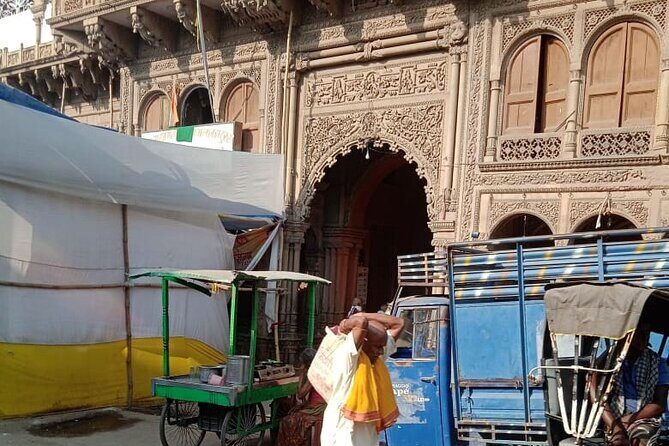
Before returning to New Delhi, you get Pasar Chandni Chowk, described as a busy historic bazaar with clothing, housewares, hardware shops, restaurants, and snack stalls. It’s a good final taste of street life after you’ve spent days in monuments.
This is also where you can do practical shopping—things you might actually want for your trip home. If you’re thinking about gifts, fabric, or small items, keep a bit of spending flexibility because you’ll likely see plenty of options in one place.
Price and value: what $1,068 buys for this mostly ticketed, private route
At $1,068 per person for a 10-day, multi-city route, the value comes down to what’s handled for you. This price is less about “cheap sightseeing” and more about removing friction. Pickup is included at the start, the trip is private for your group, and many major monuments list admission tickets as included.
It also matters that you’re covering Delhi, Agra, Jaipur, and Udaipur—so you’re paying for transportation time and guided structure across long distances. If you were trying to DIY this with separate tickets, separate bookings, and separate local guides, you’d likely spend comparable time coordinating, even if you found lower base rates.
My honest caution is that the price won’t feel like a bargain if you plan to skip many stops or if you strongly prefer slow travel. This tour rewards travelers who want a “see the classics” framework and are happy to keep moving.
Who should book this Royal Rajasthan trip (and who might want something else)
This is a strong fit if:
- It’s your first time in India and you want pickup plus a clear sightseeing plan
- You want the major Mughal and Rajput touchpoints without researching each day
- You like religious and cultural sites alongside forts and palaces
- You prefer a private-group feel for comfort and pace control
You might rethink it if:
- You want lots of unscheduled time to roam on your own
- You’re sensitive to packed days and long sessions between stops
- You only care about one city or one type of monument (for example, only temples, only forts, or only museums)
A useful signal from feedback about the operator: driver support seems to be a consistent strength. Names like Bhanwar Singh, Modaram, KK/Kishor Kumar, Ranjeet, Ashok, and Kanu appear across different experiences, with descriptions of calm driving, helpful explanations, and even practical problem-solving like helping with a ticket when cash ran short. I treat that as a good sign—especially for travelers who value feeling looked after.
Quick planning tips so you’re not tired halfway through
- Decide in advance what you want from the Taj Mahal day: sunrise mood, sunset mood, or both if time allows.
- For Delhi and Jaipur, plan for early starts and keep your daypack simple (water, light layer, and comfortable shoes).
- Expect religious sites too, not only forts. Being respectful goes a long way, and the day will feel better when you slow your pace a bit.
- If you like history, bring a short checklist of what you want to learn at each stop. You’ll get more out of it than just photos.
Should you book Royal Rajasthan: Whispers From The Past?
If you want a focused 10-day circuit that connects Delhi, Agra, Jaipur, and Udaipur with mostly included admissions and a private-group structure, I think this is a sensible booking. The value is in how much is handled for you, and the variety across Mughal monuments, Rajput palaces, and a Udaipur lakeside day keeps the trip from feeling one-note.
Book it if you’re comfortable with an active pace and you’re excited by iconic sites (not just “one or two special places”). Skip it if you want lots of free afternoons or you’re planning a slow, independent schedule. For most first-timers who want the Rajasthan storyline without the coordination stress, this is the kind of trip that makes the memories stick.
FAQ
How long is the Royal Rajasthan tour?
The tour is about 10 days.
What cities does this tour include?
It includes New Delhi, Agra, Jaipur, and Udaipur.
Is pickup included?
Yes. Pickup is offered from Indira Gandhi Intl Airport in New Delhi, and you’re taken to your hotel early in the trip.
Is this tour private?
Yes. It’s listed as private, so only your group will participate.
Are entry tickets included?
Many stops list admission tickets as included, while a few are free (for example India Gate, Pasar Chandni Chowk, Jag Mandir, and the final transfer day in New Delhi).
Do you visit the Taj Mahal at a specific time?
The Taj Mahal visit can be at sunrise, sunset, or both, if possible.
Where does the tour start and end?
It starts at Indira Gandhi Intl Airport in New Delhi. It ends back at the meeting point.
What is the price per person?
The price is $1,068.00 per person.
Can changes be made after booking?
No. The experience is non-refundable and cannot be changed for any reason.
What if the minimum number of travelers isn’t met?
If it’s canceled because the minimum isn’t met, you’ll be offered a different date/experience or a full refund.