REVIEW · JAIPUR
Private Jaipur Tour for Solo Female Traveler with Female Guide
Book on Viator →Operated by Pashmina Tours · Bookable on Viator
Pink walls, sharp details. This private Jaipur tour is built for solo women, with a female guide who connects the dots from astronomy to royal life as you move through the city’s big hitters like Amber Palace.
I especially like the practical comfort: pickup and drop-off in an air-conditioned private vehicle, plus lunch and monument entrance fees handled for you.
One thing to consider is that the route packs several major sights into about 5–8 hours, so you’ll need to keep your energy up during the shorter stops.
In This Review
- Key highlights to know before you go
- Why this Jaipur tour fits solo female travelers
- How the day runs: pickup, timing, lunch, and mobile tickets
- Amber Palace (Amer Fort): the 16th-century main event
- Panna Meena ka Kund: the stepwell that’s about art and gathering
- Jal Mahal: the Water Palace viewpoint pause
- Royal Gaitor Tumbas: a quieter stop with real cultural weight
- Hawa Mahal: counting the windows in the Pink City
- City Palace and Jantar Mantar: from royal residence to royal science
- City Palace: the royal home base
- Jantar Mantar: the observatory behind the scenes
- Price and value: what you get for $115 per person
- Who should book this Jaipur solo female tour?
- Should you book this private Jaipur route?
- FAQ
- Do I get pickup and drop-off in this tour?
- Is the guide always female?
- What is included in the tour price?
- How long is the Jaipur tour?
- What monuments are visited during the day?
- Are entrance tickets included?
- Can I cancel for a full refund?
Key highlights to know before you go
- Female guide, private comfort: designed for solo travelers who want company and peace of mind.
- UNESCO sites in one loop: Amber Palace, Jantar Mantar, and the wider heritage focus of Jaipur.
- A real contrast in sacred spaces: from Amber’s palace grandeur to Royal Gaitor Tumbas, a royal crematorium still used.
- Photo-ready Jaipur landmarks: the Palace of Wind and the Water Palace views are built for cameras.
- Time saved on logistics: air-conditioned pickup/drop-off, mobile ticket, lunch, and entrance fees included.
Why this Jaipur tour fits solo female travelers
Jaipur earns its Pink City nickname in a very literal way, and this tour is tuned to help you see the highlights without turning the day into a puzzle. You’re not just dropped at monuments—you’re guided through the logic of the city: royal planning, Hindu and Mughal influences, and the science-meets-architecture mindset of Maharaja Sawai Jai Singh.
Two things matter most on a solo trip: feeling comfortable and understanding what you’re looking at. The female guide format is the big win, and it’s also a practical one. When you’re moving through busy streets and ticket lines, having someone who can explain what’s ahead keeps the day from feeling stressful. Guides like Ms. Neeru and Veena ji are known for being friendly and for explaining the history clearly, so you’re not left guessing.
The other big plus is that this is a private setup. You travel with only your group, in a private vehicle, so your pace stays in your control. That sounds small until you’re trying to take photos around Hawa Mahal or you want a minute longer at City Palace before moving on.
You can also read our reviews of more guided tours in Jaipur


How the day runs: pickup, timing, lunch, and mobile tickets
This tour typically lasts 5 to 8 hours, depending on traffic and the rhythm of the stops. You’ll get pickup and drop-off in a private air-conditioned vehicle, which is a lifesaver in Jaipur’s heat and crowds (and even when the streets seem calm, you still spend less time waiting).
Lunch is included, and that’s genuinely valuable. In a monument-heavy day, lunch can either be a stressor or a reset. Here, it’s built into the tour, so you’re not stuck hunting for food between gates.
Also, there’s a mobile ticket, which usually means fewer hassles at the entrance points. Bring your phone, keep it charged, and you’ll be fine.
If you’re doing this during a busy day, the only real “watch out” is the density of stops. Some are quick (like Hawa Mahal’s shorter viewing window), and others are longer (like Amber Palace and the royal cremation site). This is great if you want maximum variety, but it’s less ideal if you want a slow, deep study of just one place.
Amber Palace (Amer Fort): the 16th-century main event
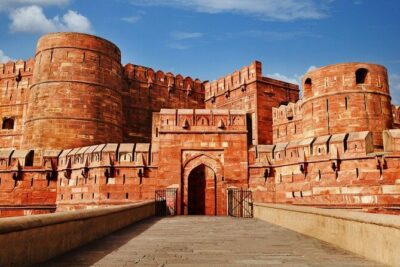
Stop one is Amber Palace (Amer Fort), with about 2 hours on the site and admission included. This is one of Jaipur’s signature landmarks, and it’s also the most time-worthy stop on the list.
What makes Amber special is the architectural blend. The fort was built by Hindu Rajput kings in the 16th century, and you’ll see a mix of Hindu and Mughal design influences. It’s not just a big building—it’s a full environment. Even if you’re more into photos than facts, Amber gives you shapes, textures, and dramatic angles that look good from almost every direction.
A practical detail: Amber Palace is about 6 kilometers from Jaipur city, so expect some driving at the start. That’s part of the day’s flow, but the longer visit means you’re not spending a huge amount of your limited time only traveling.
What to watch for: Because this is your first major stop, arrive mentally ready to focus. Your guide’s job is to set context fast—why Amber looks the way it does, and how it fits into Jaipur’s broader royal story. If you like learning while you walk, this is where you’ll feel it most.
Panna Meena ka Kund: the stepwell that’s about art and gathering
Next up is Panna Meena ka Kund, a 15-minute stop with admission included. This place is often overlooked by people who rush from fort to palace to observatory, but it’s the kind of stop that makes your day feel more human.
This stepwell dates to the 16th century and is known for its artistic steps. It wasn’t just a utilitarian water structure—it was also a place for religious gathering. So while you’re looking down at the geometry of the steps, you’re also seeing a social function carved into stone.
Because the stop is short, you’ll get a snapshot rather than an extended stroll. I like it that way for solo travelers: you get the value without losing momentum. You’ll walk away with a sharper sense of how Jaipur mixed practical needs with formal design.
Jal Mahal: the Water Palace viewpoint pause
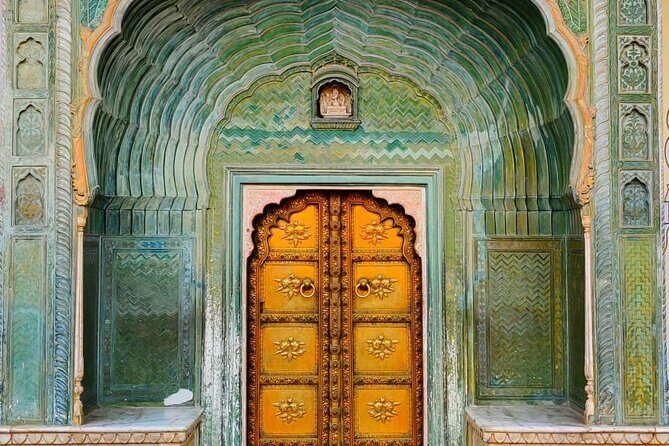
After Amber and the stepwell, the drive brings you to Jal Mahal, the Water Palace. You’ll spend about 15 minutes here, again with admission included.
Jal Mahal sits in water and was built in 1799 AD. It’s one of those sights that feels almost unreal—like you’ve stumbled onto a postcard set, but it’s anchored in real history and real architecture. The timing here is also smart. After a heavier fort and a stone stepwell, this pause lets you reset your eyes.
A quick note for expectations: since the visit is brief, you’re mostly there for the key viewpoint and the idea of the palace-in-water setting. If you want a long, lingering photo session, you may find this stop doesn’t fill that need—but it does a good job of varying the day.
You can also read our reviews of more private tours in Jaipur






Royal Gaitor Tumbas: a quieter stop with real cultural weight
Then comes Royal Gaitor Tumbas, about 1 hour on the monument, with admission included.
This is not a typical tourist photo spot. It’s the royal crematorium for Jaipur, and it’s still used by the royal family, with kings cremated here. That detail changes how you should view the place. You’ll want to move with respect and give the site the quiet attention it deserves.
At an hour, you’re not rushed. That makes a difference because this stop works best when you’re not just scanning for shapes—you’re actually letting the meaning land. Your guide can help connect it to the larger royal story of Jaipur, rather than treating it as only a scenic detour.
This is the stop where you’ll feel the tour shift from eye-candy to cultural context. If you want a Jaipur day that includes more than monuments in the decorative sense, this is a key reason to choose this route.
Hawa Mahal: counting the windows in the Pink City
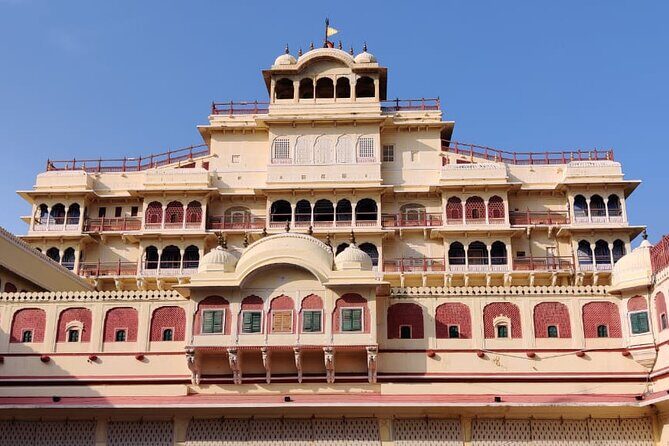
Next is Hawa Mahal (Palace of Wind), with about 10 minutes and admission included.
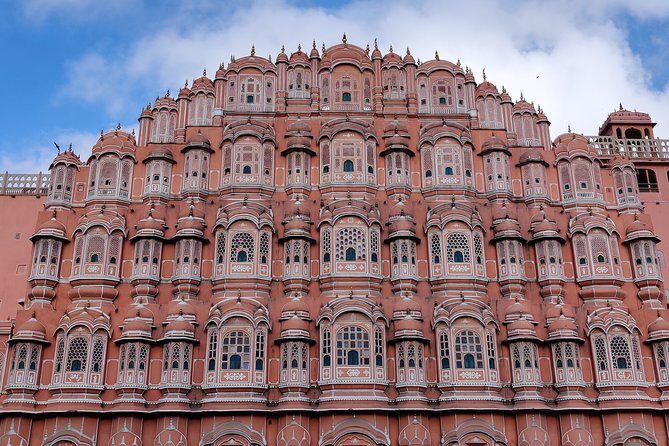
Hawa Mahal was built in 1799 AD and is famous for its appearance from the front as a wall-like facade. One of the most memorable facts is the 957 windows, which are part of what gives the palace its character.
Since it’s a short stop, the best way to enjoy Hawa Mahal is to use it as a stop for clarity: see the whole facade, get a few angles you like, and then let your guide explain what those design details were meant to do. The name matters too—wind and light were part of the intent, not only the look.
If you’re the type who loves street-level details, you’ll enjoy how Hawa Mahal sits in the heart of the Pink City. If you want a long time inside, the 10-minute window may feel tight. But as a fast, high-impact landmark moment, it works.
City Palace and Jantar Mantar: from royal residence to royal science
Your tour finishes with two connected stops that make a strong pair: City Palace followed by Jantar Mantar.
City Palace: the royal home base
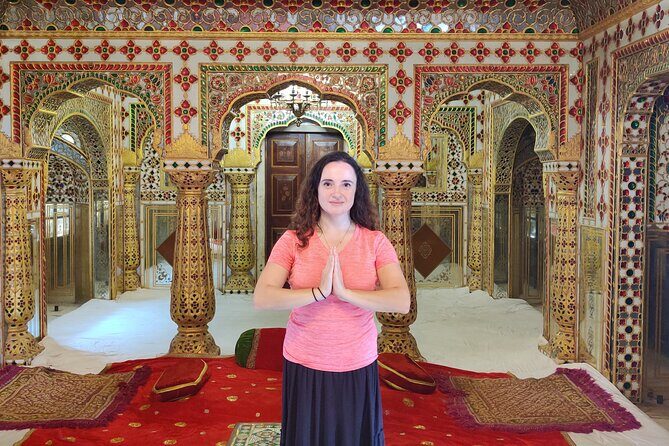
You’ll have about 1 hour at the City Palace, with admission included. This palace was the new home for the kings of the Amer town, and the broader foundation of Jaipur ties back to Maharaja Sawai Jai Singh, who founded the city in 1727.
City Palace is the kind of place where you see how power was displayed through architecture. Even if you’re not trying to memorize dates, it helps you understand why Jaipur feels planned. This is where the tour’s themes of royal planning and design start to connect clearly in your mind.
Jantar Mantar: the observatory behind the scenes
From City Palace, you’ll walk to Jantar Mantar, with about 1 hour and admission included.
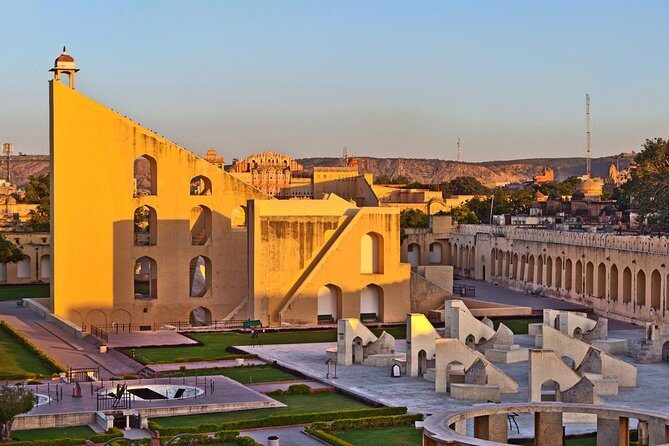
Jantar-Mantar is an observatory, and it’s been recognized as a World Heritage Site since 2010. It was built in the early 18th century by Sawai Jai Singh, who was also an astrologer and astronomer. That’s the secret sauce of Jaipur: the city isn’t just decorative. It’s also a place where science, prediction, and observation shaped the way space was built.
This stop is a big win for photographers who enjoy patterns. You’ll see instruments and geometry, and once you understand what you’re looking at, the photos start making sense rather than just looking pretty.
Price and value: what you get for $115 per person
At $115 per person, this tour isn’t trying to be the cheapest way to see Jaipur. It’s aiming to be a low-stress, high-structure day.
Here’s the value logic that matters most:
- Private air-conditioned vehicle with pickup and drop-off means you’re not coordinating transport or wasting time negotiating.
- Female professional guide keeps the experience aligned with solo female comfort.
- Lunch + monument entrance fees included reduces surprise add-ons at each stop.
- Mobile ticket can simplify entry points.
If you were to DIY this, you’d likely spend time figuring out routes, entrance timing, and how to move between Amer, the stepwell area, and the Pink City landmarks efficiently. This tour pays someone to solve those headaches for you. That’s why the price can feel fair rather than inflated.
Who should book this Jaipur solo female tour?
This is a strong fit if you:
- are traveling solo and want a female guide throughout
- want a guided route that covers the major Jaipur anchors without a lot of decision-making
- like history explanations while you walk, not after you leave
- want a plan that includes lunch and entrance fees so your day stays simple
It may not be the best match if you:
- want a slow, “one monument at a time” pace (some stops here are short)
- hate driving between multiple parts of Jaipur in one day (this route is designed as a loop)
One useful planning tip: the tour notes that a male guide will be assigned if a female guide is not available. If female guiding is a top priority for you, I’d book with enough time to confirm availability and communicate any preferences right away.
Should you book this private Jaipur route?
If your goal is to see Jaipur’s key monuments in a well-run, solo-friendly way, I think this one is an easy yes. You get structure, you get entry fees handled, and you get a guide who can explain what you’re seeing so the stops feel connected rather than random.
I’d especially recommend it if you’re nervous about doing Jaipur on your own. The tour is designed around comfort and clarity, and the guides associated with the experience—like Ms. Neeru and Veena ji—are highlighted for being friendly and for making visitors feel at ease while sharing the city’s story.
If you’re trying to squeeze Jaipur into a short window, this itinerary is a smart choice. You’ll hit Amber Palace, a stepwell, the Water Palace viewpoint, the royal cremation site, Hawa Mahal, City Palace, and Jantar Mantar—without having to manage all the moving parts.
And yes, plan ahead: it’s commonly booked about 19 days in advance. If your dates are firm, don’t wait until the last minute.
FAQ
Do I get pickup and drop-off in this tour?
Yes. The tour includes pickup and drop-off in a private air-conditioned vehicle.
Is the guide always female?
The tour is guided by a professional female tour guide. If a female guide is not available, a male tour guide will be assigned.
What is included in the tour price?
The included items are pickup and drop-off, a professional female tour guide, lunch, and monuments entrance fee.
How long is the Jaipur tour?
The duration is approximately 5 to 8 hours.
What monuments are visited during the day?
The itinerary includes Amber Palace, Panna Meena ka Kund, Jal Mahal, Royal Gaitor Tumbas, Hawa Mahal, City Palace, and Jantar Mantar.
Are entrance tickets included?
Yes. Admission ticket is included for the listed stops.
Can I cancel for a full refund?
Yes. You can cancel up to 24 hours in advance for a full refund.