REVIEW · NEW DELHI
Private Golden Triangle Tour with Udaipur From Delhi
Book on Viator →Operated by Raj Tour and Travel-Agra · Bookable on Viator
Few places hit like the Golden Triangle plus Udaipur. This private 7-day itinerary strings together headline sights in Delhi, Agra, and Jaipur, then slows down in Udaipur with its lake views and palaces. I like that it’s set up as a true private tour for just your party, with a professional chauffeur doing the driving. I also like the mix of big monuments and real neighborhood time, including Old Delhi stops such as Jama Masjid and Chandni Chowk (plus a tuk-tuk ride). One drawback: entrance fees are not included, so you’ll want to budget extra for tickets at most stops.
The best part is how the plan balances long travel days with built-in sightseeing blocks and early starts where they matter. The Taj Mahal day, for example, is scheduled to start early, and that’s huge for comfort and timing. This tour also comes with breakfast each morning, which helps you keep momentum instead of hunting for food. Just keep in mind that the Taj Mahal is closed every Friday, and the Lotus Temple is closed every Monday, so your exact calendar can shift what you see.
In This Review
- Key Highlights Worth Noticing
- Private Golden Triangle Plus Udaipur: What This Trip Actually Delivers
- Delhi Day: Jama Masjid to Qutub Minar Without Losing Your Sanity
- Jama Masjid: The Mughal-Moment Start
- Chandni Chowk: Real Streets, Real Noise (In a Good Way)
- Humayun’s Tomb and Qutub Minar: UNESCO With Built Form
- Lotus Temple and India Gate: Calm Breaks in the Middle
- Rashtrapati Bhavan: A Stop for the Big Picture
- Agra Days: Taj Mahal Early, Then Forts and Mughal Craft
- Day 2: Mehtab Bagh for Sunset Views of Taj Mahal
- Itmad-ud-Daula (Baby Taj): Smaller, More Detailed, Often Less Crowded
- Day 3: Taj Mahal, Agra Fort, and Fatehpur Sikri En Route to Jaipur
- Jaipur Day 4: City Palace, Hawa Mahal, and the Math of Jantar Mantar
- City Palace of Jaipur: Where Royal Life Became Museum Space
- Hawa Mahal: The Pink Facade With 953 Windows
- Jaigarh Fort: Fort Views Plus the Jaivana Cannon
- Jantar Mantar: UNESCO and Giant Stone Astronomy Tools
- Jal Mahal: The Water Palace Photo Stop
- Udaipur Days 5 and 6: Lake Pichola Views and Royal-But-Relaxed Pace
- Day 5: Arrival and a Low-Stress Day
- Day 6: City Palace, Lake Pichola, Saheliyon Ki Bari, Jagdish Temple
- Day 7: Fly out or drive back to Delhi
- Timing Tips That Actually Matter: Friday and Monday Closures
- Who This Tour Suits Best (and When to Choose Something Else)
- Should You Book This Private Golden Triangle Tour With Udaipur?
- FAQ
- What’s included in this tour?
- Is this a private tour?
- Are entrance fees included?
- Does the tour include the Taj Mahal?
- Are there any other closure days I should know?
- Does the tour include flights?
- How long is the tour and how many nights are included?
Key Highlights Worth Noticing
- Private-by-design touring: it’s just your group, not a shared bus shuffle.
- Airport or hotel pickup in Delhi: you start the right way, with a driver already lined up.
- Old Delhi by tuk-tuk + foot stops: Jama Masjid and Chandni Chowk are easier when someone local handles routing.
- Taj Mahal early scheduling: built for a smoother visit rather than an all-day slog.
- Mehtab Bagh after lunch: a calmer riverside garden option that frames Taj views.
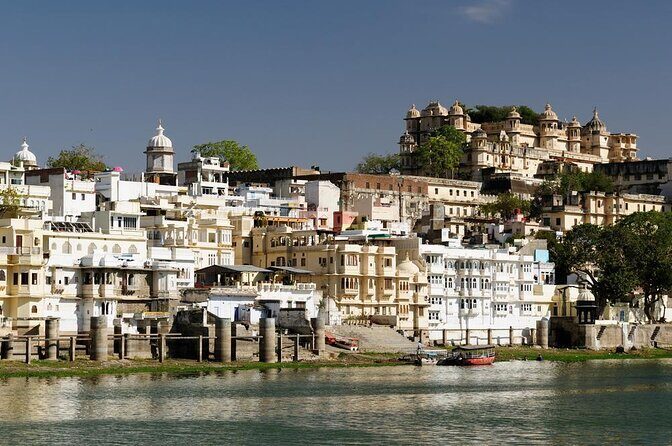
- Udaipur time with lake-focused stops: City Palace, Lake Pichola, and Saheliyon Ki Bari in the same rhythm.
Private Golden Triangle Plus Udaipur: What This Trip Actually Delivers
This is a classic Golden Triangle itinerary with one smart upgrade: you don’t just sweep through Jaipur and sprint back to Delhi. You end in Udaipur, which gives you a different mood. Delhi and Agra can feel intense. Udaipur, with Lake Pichola and the palace-city vibe, feels like you exhale.
Now, about value. At $232 per person, you’re not paying just for sightseeing; you’re paying for the logistics that usually eat your time. You get a private, air-conditioned car with a chauffeur, plus a live guide in each city. That matters because the Golden Triangle isn’t hard because it’s remote. It’s hard because it’s busy, big, and full of monuments with ticket queues. With a driver and a guide running the day, you spend your energy looking, not figuring.
One more practical note: the itinerary covers a lot of famous stops, but entrance fees are not included (the tour notes say entrance tickets are approximate and not included). So when you’re budgeting, think of the $232 as covering transport, guiding, and the core structure—not museum and monument tickets.
You can also read our reviews of more private tours in New Delhi


Delhi Day: Jama Masjid to Qutub Minar Without Losing Your Sanity
Day 1 is a big overview day. You’ll start in Delhi with airport or hotel pickup, then meet your guide and begin moving through top sights. The order here is important: you hit Old Delhi early with Jama Masjid and Chandni Chowk, then move toward major UNESCO-era landmarks and modern landmarks.
Here’s what each stop tends to feel like:
Jama Masjid: The Mughal-Moment Start
Jama Masjid (built in 1656 by Shah Jahan) is huge, and you’ll feel it immediately: red sandstone, broad courtyard space, and Mughal architecture that makes Delhi’s spiritual footprint obvious. The guide-led time helps because it’s not just photo time. It’s understanding scale and context.
- Time on site: about 30 minutes
- Ticket: not included
Chandni Chowk: Real Streets, Real Noise (In a Good Way)
Chandni Chowk is one of Delhi’s oldest markets, with narrow lanes and constant motion. This is where you get the Delhi texture you can’t replicate from a map.
- Time on site: about 1 hour
- Ticket: free
You also get a tuk-tuk ride in Old Delhi as part of the tour inclusions. That’s genuinely useful here because lanes can be tight. It helps you keep your pace without walking every single block.
Humayun’s Tomb and Qutub Minar: UNESCO With Built Form
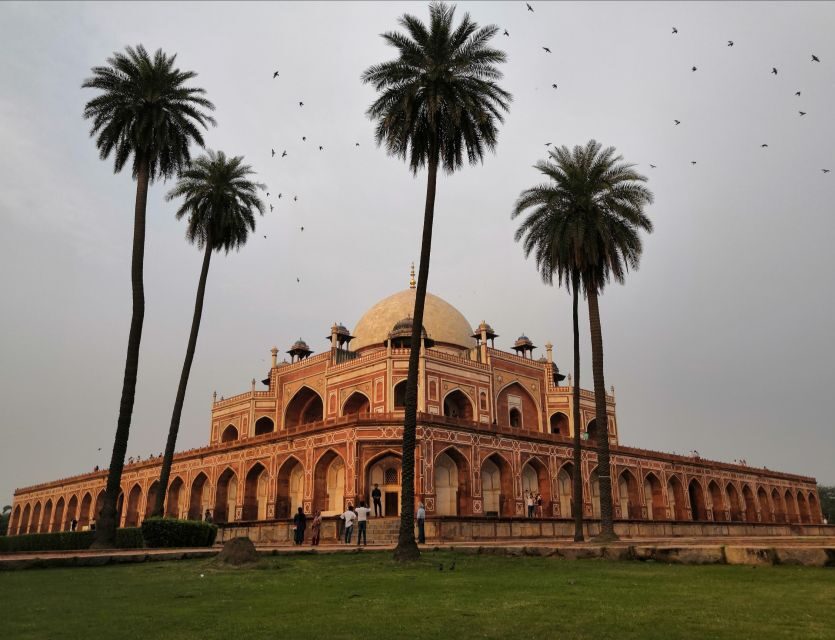
Humayun’s Tomb is India’s first garden tomb and a UNESCO site. It’s also an architectural stepping stone to the later Taj Mahal style. Seeing it after Old Delhi helps you connect how Mughal design evolved.
Qutub Minar is another UNESCO stop: a 73-meter brick minaret from the 13th century with intricate carvings and Indo-Islamic design details. It’s tall enough that you keep looking up, which is exactly what you want for a first-day orientation.
- Humayun’s Tomb: about 45 minutes (ticket not included)
- Qutub Minar: about 30 minutes (ticket not included)






Lotus Temple and India Gate: Calm Breaks in the Middle
Then you get a calmer contrast. The Lotus Temple is shaped like a blooming lotus and is open to all faiths. It’s a peaceful pause in a city that can run fast.
India Gate follows, with a war memorial feel: lawns, the eternal flame, and open space. This stop is shorter, but it helps you reset.
- Lotus Temple: about 30 minutes (free)
- India Gate: about 15 minutes (free)
Rashtrapati Bhavan: A Stop for the Big Picture
Rashtrapati Bhavan is listed as a stop in the day’s flow. Even if you’re not going inside, the building is a strong architectural landmark blending Indian and Western styles, originally the Viceroy’s House during British rule.
Day 1 ends back at your hotel for the overnight stay.
Agra Days: Taj Mahal Early, Then Forts and Mughal Craft
Agra is where the itinerary really earns its reputation. You’re not spending all day commuting with random stops. You’re moving from one key sight to the next, with the Taj Mahal scheduled for early time.
Day 2: Mehtab Bagh for Sunset Views of Taj Mahal
After breakfast and check-out in Delhi, you travel to Agra in a comfortable private luxury AC car. Once you arrive and check in, the day includes:
- Mehtab Bagh: about 1.5 hours
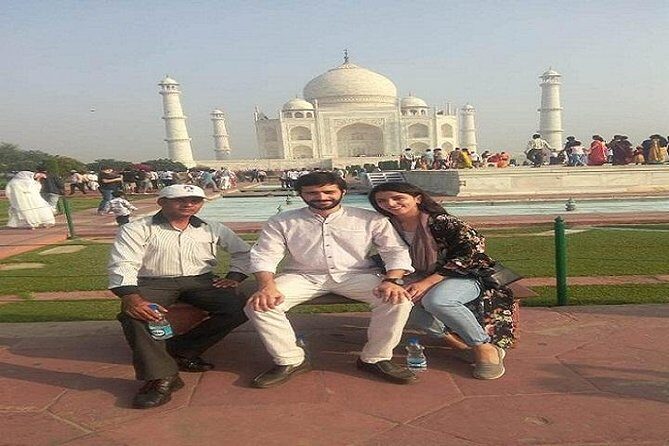
This is a riverside garden with sunset-leaning views of the Taj Mahal. The point of adding Mehtab Bagh is balance. Not every view has to be from the main complex. It’s a calmer setting that helps you see the Taj in a wider landscape and understand why this location became iconic.
- Ticket: not included
Itmad-ud-Daula (Baby Taj): Smaller, More Detailed, Often Less Crowded
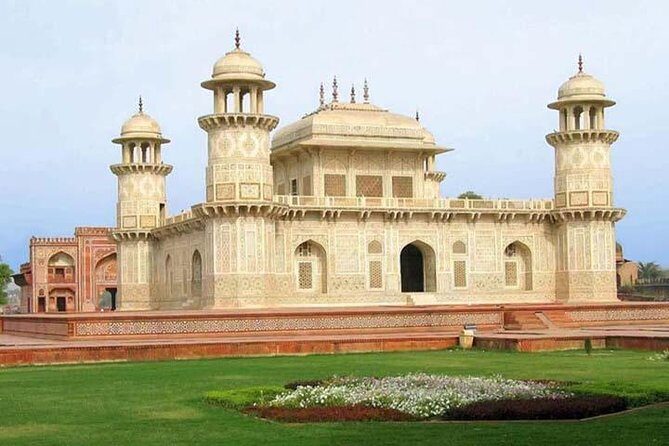
Then you visit Itmad-ud-Daula, sometimes called the Baby Taj. It’s a marble tomb built by Empress Nur Jahan for her father. The inlay work is the star here, and it gives you a breather from the giant spectacle of the Taj itself.
- Time on site: about 1 hour
- Ticket: not included
Day 3: Taj Mahal, Agra Fort, and Fatehpur Sikri En Route to Jaipur
Day 3 starts early for the Taj Mahal. The itinerary is explicit: your guide escorts you to see it. That’s important because the Taj is popular, and early scheduling helps avoid the worst crowds and heat.
- Taj Mahal: about 2 hours
- Ticket: not included
- Closed every Friday (see timing tips below)
After Taj Mahal, you return to the hotel for breakfast, then move to Agra Fort. Agra Fort is UNESCO and known for Mughal architecture plus a heavy dose of history tied to the region’s power structure.
- Agra Fort: about 2 hours
- Ticket: not included
Then it’s off to Jaipur, with a stop at Fatehpur Sikri. This is a historic site that can feel like stepping into another era of Indian architecture and imperial ambition. The itinerary gives it about 2 hours, and it works well as a transit stop rather than a standalone full day.
- Fatehpur Sikri: about 2 hours
- Ticket: free
Agra to Jaipur is a long travel segment, so this mix keeps the day from feeling like just driving.
Jaipur Day 4: City Palace, Hawa Mahal, and the Math of Jantar Mantar
Jaipur is the big personality city. This day is packed, but it’s structured around the best-known anchors: the palace complexes, the signature skyline landmark, and UNESCO instruments that make you look at the sky differently.
City Palace of Jaipur: Where Royal Life Became Museum Space
City Palace sits in the heart of the old city and blends Rajasthani and Mughal architecture. Some areas are restricted, and not all parts are public, so your guide’s planning helps you focus on what’s accessible.
- Time: about 1.5 hours
- Ticket: not included
Hawa Mahal: The Pink Facade With 953 Windows
Hawa Mahal, built in 1799, is the Palace of Wind and one of the easiest Jaipur icons to recognize. Those 953 ornate windows weren’t decoration for decoration’s sake. They allowed royal women to watch street life while staying behind privacy.
It’s also a photography magnet, and the short time block (about 30 minutes) fits because you’ll get what you came for without dragging the schedule.
- Time: about 30 minutes
- Ticket: not included
Jaigarh Fort: Fort Views Plus the Jaivana Cannon
Jaigarh Fort offers military architecture and views over Jaipur. A standout detail is that it houses the world’s largest cannon called Jaivana. The fort also includes watchtowers and temples plus advanced water systems.
- Time: about 2 hours
- Ticket: not included
Jantar Mantar: UNESCO and Giant Stone Astronomy Tools
Then you hit Jantar Mantar, a UNESCO World Heritage Site built by Maharaja Jai Singh II. It’s the world’s largest stone sundial and includes a collection of giant astronomical instruments that were used for accurate sky observations.
This stop is a good change of pace because it’s less about buildings and more about how people measured the heavens.
- Time: about 1.5 hours
- Ticket: not included
Jal Mahal: The Water Palace Photo Stop
Jal Mahal looks like it’s floating on Man Sagar Lake. The itinerary keeps this quick: about 15 minutes. It’s a good photo break and a short reset between heavier sights.
- Time: about 15 minutes
- Ticket: free
After Jaipur sightseeing, you’re taken back to your hotel for overnight.
Udaipur Days 5 and 6: Lake Pichola Views and Royal-But-Relaxed Pace
Udaipur is the payoff city. The itinerary gives you a full day on the ground with a check-in day that’s more relaxed than the Golden Triangle days.
Day 5: Arrival and a Low-Stress Day
After breakfast and checkout, you travel to Udaipur. The itinerary doesn’t cram in a specific set of monuments on Day 5 beyond arrival and check-in. That’s intentional value. It lets you settle, go for an early walk if you want, and save energy for the full sightseeing day ahead.
- Accommodation: check in at your hotel
- Overnight: Udaipur
Day 6: City Palace, Lake Pichola, Saheliyon Ki Bari, Jagdish Temple
Day 6 is your Udaipur highlight day, with a mix of palace museum time, lake views, gardens, and a temple visit.
City Palace of Udaipur is a lakeside complex with a museum showing royal artifacts and explaining Mewar’s regal story through architecture. It’s a museum stop, but it’s also a setting stop because the palace-city layout looks out toward the lake.
- Time: about 2 hours
- Ticket: not included
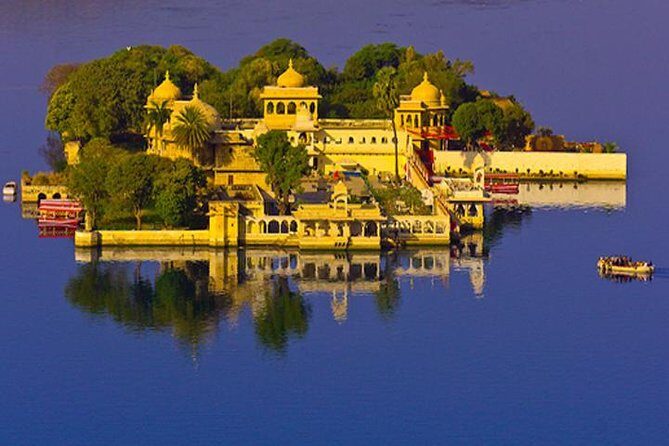
Lake Pichola follows as a calmer segment. It’s man-made and famous for views of palaces like Lake Palace and City Palace, especially near sunset. The itinerary gives it a short window (about 30 minutes), which is perfect if you want the iconic views without stealing time from the rest of the day.
- Time: about 30 minutes
- Ticket: free
Sahelion Ki Bari (Garden of the Maidens) is next. It’s a historic garden with fountains, marble pavilions, lotus pools, and lush greenery. The angle here is the gardens built for royal women to relax in peace. Even if you don’t go deep into the storyline, the sensory shift is real: shade, water, and open space.
- Time: about 1 hour
- Ticket: not included
Jagdish Temple closes out the list. It’s a 17th-century Hindu temple in central Udaipur dedicated to Lord Vishnu, with Indo-Aryan architecture and intricate carvings. The time is about 30 minutes and the mood is peaceful, which makes it a good ending to a packed day.
- Time: about 30 minutes
- Ticket: free
Day 7: Fly out or drive back to Delhi
On the final morning, after breakfast, you head to Udaipur Airport for your flight to Delhi, or you can be driven back to Delhi in an air-conditioned car. The tour ends with four cities worth of highlights behind you.
Timing Tips That Actually Matter: Friday and Monday Closures
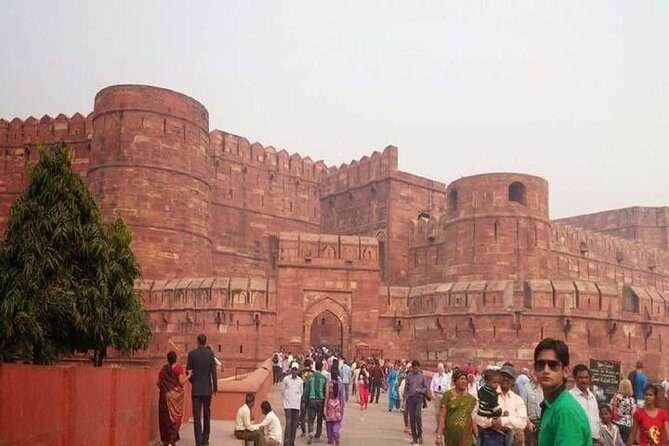
A tour like this lives and dies by timing. The good news is the itinerary tells you the key closure days in advance.
- Taj Mahal is closed every Friday. If your planned Taj visit lands on Friday, your operator will need to adjust the day’s plan. This is one of those times you don’t want to assume. Check your exact date before you lock anything in.
- Lotus Temple is closed every Monday. If you’re visiting Delhi on a Monday, this may need to be swapped or shortened.
Also remember check-in and check-out rhythm: standard hotel check-in is 3:00 PM and check-out is 12:00 PM. That matters for how quickly you’ll drop bags and get going after you arrive, especially on the transit day into Jaipur and the arrival day into Udaipur.
And because you’re moving through multiple UNESCO sites, plan for heat and sun. The itinerary includes early Taj scheduling, but you’ll still want water and sun protection for the other outdoor stops like Qutub Minar, Humayun’s Tomb grounds, and Jaipur’s open-air areas.
Who This Tour Suits Best (and When to Choose Something Else)
This tour fits best if you want structure without losing the ability to enjoy the details. It’s especially good for:
- First-time visitors to India who want the Golden Triangle highlights with less stress
- Couples and small groups who want private touring and a dedicated driver
- Travelers who prefer a mix of big monuments and smaller museum-and-garden stops (Itmad-ud-Daula, Jaigarh Fort, Saheliyon Ki Bari)
It might be less ideal if you hate long days. The days in Delhi, Agra, and Jaipur are full of stops. You’ll be on the move most of the day, and you’ll need comfortable shoes and patience for ticket lines where they exist.
If you want a slower pace with more free time in each city, you’d likely want to customize days. This itinerary is designed for maximum sight coverage within a 7-day window.
Should You Book This Private Golden Triangle Tour With Udaipur?
If your goal is to see the big names—Jama Masjid, Humayun’s Tomb, Qutub Minar, the Taj Mahal, Agra Fort, Jaipur’s City Palace and Hawa Mahal, and then Udaipur’s lake views—this is a sensible, efficient way to do it. The private AC chauffeur-driven format is the part that turns “a lot of driving” into “a workable plan.”
I’d book it if:
- You value guided context at major monuments
- You want Old Delhi time without figuring out how to get around it
- You’re okay budgeting extra for entrance fees at most sights
- You’re traveling on dates that won’t land the Taj Mahal on a Friday closure
I’d hesitate if:
- Your dates fall on Friday (Taj closure) or Monday (Lotus closure) and those are must-sees with zero flexibility
- You want a lot of free hours in each city rather than packed guided blocks
Bottom line: this tour is built for travelers who want the Golden Triangle’s best hits plus Udaipur’s calmer payoff, with private logistics and real guiding to make it all click.
FAQ
What’s included in this tour?
You get transportation by a private air-conditioned car, a professional chauffeur, a private live tour guide in all the cities, hotel pickup and drop-off, breakfast each morning, and a tuk-tuk ride in Old Delhi. The itinerary also includes multiple nights’ accommodation depending on the hotel category you select.
Is this a private tour?
Yes. It’s private, meaning only your group participates.
Are entrance fees included?
No. Entrance fees are not included and the tour notes say they are approximate.
Does the tour include the Taj Mahal?
Yes. The itinerary includes a Taj Mahal visit, with an early start. Just note the Taj Mahal is closed every Friday.
Are there any other closure days I should know?
The Lotus Temple is closed every Monday.
Does the tour include flights?
Domestic flights are not included. The final day says you either go to Udaipur Airport for your flight to Delhi or you can be driven back to Delhi by car.
How long is the tour and how many nights are included?
The duration is about 7 days, and the included section notes 6 nights’ hotel stay (depending on the selected hotel category), with breakfast included.