REVIEW · NEW DELHI
Private Golden Triangle 5 Days Delhi, Agra Jaipur By Car & guide
Book on Viator →Operated by Trip taj mahal india · Bookable on Viator
Sunrise at the Taj sets the tone fast. This private 5-day Golden Triangle trip pairs a car and guide with a tight, sights-first route across Delhi, Agra, and Jaipur. I like the early Taj Mahal start and the way major stops are stacked efficiently, from Qutub Minar to Humayun’s Tomb. One drawback to plan around: the package covers some meals but not all, so you’ll need to budget for dinners.
You also get practical pickup options from the airport, train station, or your hotel, plus monument fees and a mobile ticket. Still, the included hotel nights list 3-star stays for Delhi and Agra only, so confirm what covers your Jaipur accommodation for the nights your itinerary mentions.
In This Review
- Key things I’d mark on your map
- Golden Triangle in Five Days, Without the Planning Spiral
- Day 1 in Delhi: Qutub Minar, Lotus Temple, Humayun’s Tomb, India Gate
- Qutub Minar: Delhi’s iconic brick tower
- Lotus Temple: calm architecture with a modern feel
- Humayun’s Tomb: Mughal grandeur with a pause to breathe
- India Gate: the big public monument stop
- Day 2: Sunrise Taj Mahal and Agra Fort Views
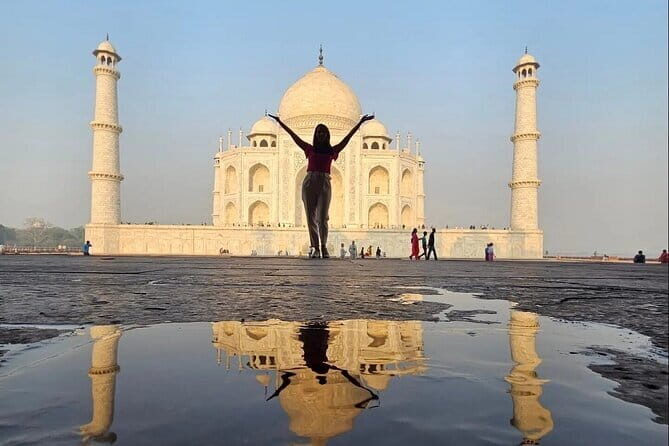
- The Taj Mahal: early start means softer light
- Agra Fort: history plus perspective
- Day 3: Fatehpur Sikri by Pass on the Way to Jaipur + Chand Baori
- Fatehpur Sikri: a guided tour stop while you move
- Chand Baori: the stepwell people don’t expect
- Arrive Jaipur: check in and then dinner planning
- Day 4 in Jaipur: Jantar Mantar, Amer Fort, City Area Sights, and Crafts
- Jantar Mantar: science made visible
- Albert Hall Museum: if you like art and artifacts
- Amer Fort: the dramatic payoff
- City area and old city time
- Handmade craft and an art factory stop
- Day 5: The 5-Hour Drive Back to Delhi (Airport or Hotel Drop)
- What You’re Really Paying For: Value Check and Real-World Inclusions
- Entrance fee gotchas to watch
- Private Car, Real Guide Work, and How It Shows Up on the Ground
- Who This Golden Triangle Tour Suits Best (and Who Should Skip It)
- Should You Book This Private Golden Triangle by Car?
- FAQ
- Is this a private tour?
- What kind of transportation is included?
- Do I get pickup from the airport or my hotel?
- How long is the tour?
- Which cities does the itinerary cover?
- Are monument entrance fees included?
- What meals are included?
- Are hotel nights included?
- How early is the Taj Mahal visit?
- Can I cancel for a full refund?
Key things I’d mark on your map
- Sunrise Taj Mahal timing: an early visit is built in, because that’s when the monument looks its best.
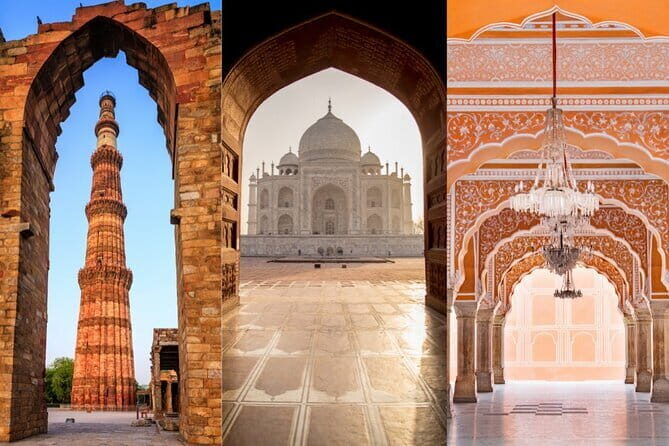
- Delhi’s big hitters in one go: Qutub Minar, Lotus Temple, Humayun’s Tomb, and India Gate are all on Day 1.
- Agra Fort after the Taj: you get a history-and-views follow-up instead of rushing straight onward.
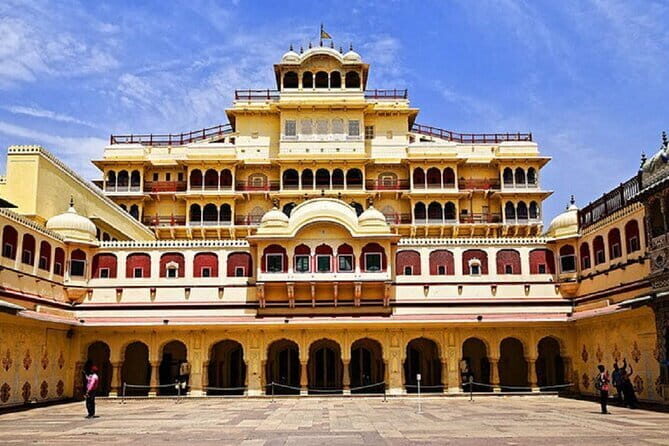
- Jaipur old city focus: you’ll hit Amer Fort, Jantar Mantar, City Palace area sights, plus an art/craft stop.
- A safety-first, practical driving setup: guides and drivers are described as careful, punctual, and responsive.
Golden Triangle in Five Days, Without the Planning Spiral
If your time in India is limited, the Golden Triangle is the quickest way to get oriented. You’ll cover Delhi’s imperial and modern faces, Agra’s Mughal power, and Jaipur’s royal geometry in just five days—by car, with a guide doing the “what am I looking at?” work.
This package is built for structure: pickup, booked admission where noted, hotel nights in Delhi and Agra, and a driver who keeps the route moving. I especially like the balance of the stops: not only the headline monument (the Taj Mahal) but also supporting landmarks like Humayun’s Tomb and Agra Fort that make the story click.
One thing to keep in mind is pacing. This is a lot of monuments in a short window. If you prefer slow travel and long unstructured breaks, you may find the schedule tight. But if you want efficiency and clear guidance, this plan fits.
You can also read our reviews of more guided tours in New Delhi
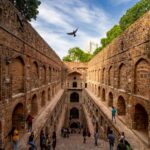


Day 1 in Delhi: Qutub Minar, Lotus Temple, Humayun’s Tomb, India Gate

Day 1 is your “welcome to Delhi” sampler platter—excellent if you’re trying to understand the city fast.
Qutub Minar: Delhi’s iconic brick tower
Qutub Minar is the kind of place you notice from far away. It’s described as the world’s tallest brick tower and spans centuries of construction under different rulers. That mix of timelines matters: it’s not just a single-era monument. It’s a landmark that shows how Delhi’s power changed over time.
What I like for first-timers is that it’s an easy anchor. Once you’ve seen Qutub Minar, many other Mughal-era stories in the trip start to feel more connected.
Lotus Temple: calm architecture with a modern feel
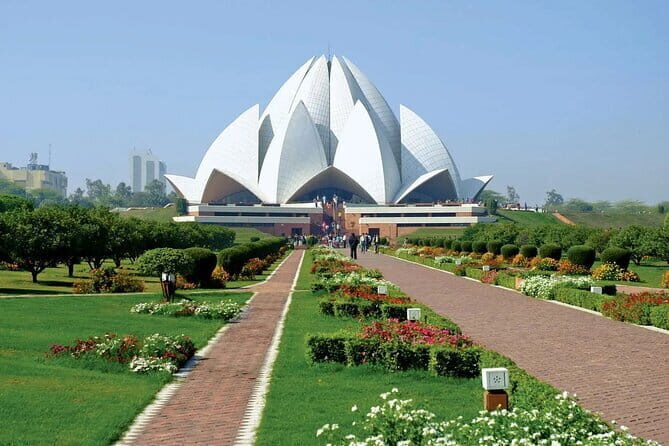
Then you shift to the Lotus Temple, a Bahá’í House of Worship consecrated in 1986. Its flowerlike design is the point—something striking that’s not trying to be a replica of old imperial styles. You’ll also have a simple, self-contained visit here: walk, look up, and let the geometry do the talking.
Humayun’s Tomb: Mughal grandeur with a pause to breathe
Humayun’s Tomb is a strong follow-up because it’s Mughal, but more “sit and take it in” than a fast exterior-only stop. It was commissioned in 1558 and finished in 1572, and it’s the resting place of Emperor Humayun. If you like architecture details, this is the kind of monument where a guide explanation makes a real difference.
You can also read our reviews of more private tours in New Delhi






India Gate: the big public monument stop
India Gate rounds out the day. It’s noted as an important and beautiful point in New Delhi. Even without going deep on the symbolism, it’s a useful way to connect the day’s monuments to the modern city streets around them.
Practical note: Day 1 has multiple “major landmark” stops, and each includes an admission ticket based on the itinerary notes. You’ll want to carry water, wear comfortable shoes, and accept that you’ll be walking and looking for hours.
Day 2: Sunrise Taj Mahal and Agra Fort Views
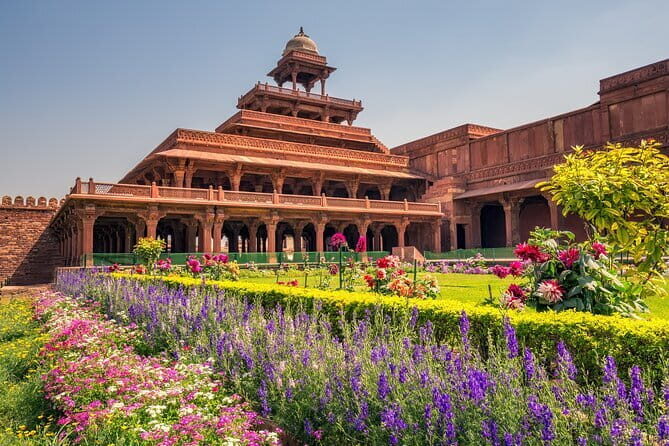
Day 2 is built around the moment most people come for: the Taj Mahal at sunrise.
The Taj Mahal: early start means softer light
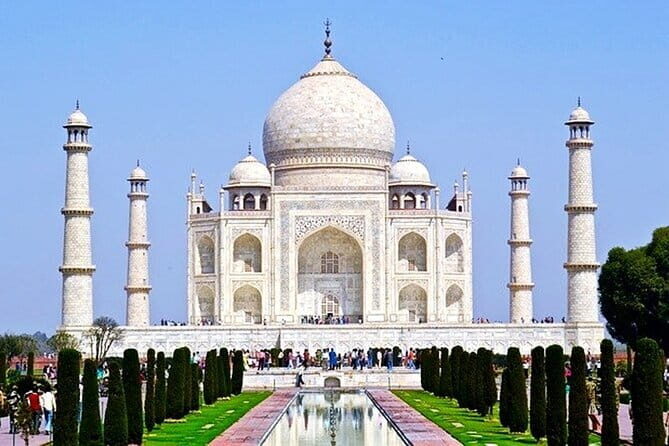
The schedule targets an early morning sunrise visit—highlighted as best around 5:30 AM in summer. That timing isn’t just romantic; it’s practical. Morning light is gentler for photos and easier on you after a night of hotel sleep.
The Taj Mahal itself is “guided tour” style, with an admission ticket included. Expect a focused explanation so you don’t just see marble and call it a day. With a good guide, you’ll pick up what you’re looking at: symmetry, materials, and how the whole complex fits together as a statement.
Agra Fort: history plus perspective
After the Taj, you go to Agra Fort, constructed between 1565 and 1573 for Mughal Emperor Akbar. The big value here is variety. The Taj Mahal is about beauty and monument-making. Agra Fort gives you a different flavor—fortifications, power, and the way rulers lived and commanded the region.
You’ll also get about two hours here, with admission ticket included. It’s a strong second act because it slows the story down and adds “how power worked” context right after the emotional high of the Taj.
Timing reality check: Agra days can start early and end long. If you’re sensitive to mornings, plan an easy night and don’t overbook your evening plans.
Day 3: Fatehpur Sikri by Pass on the Way to Jaipur + Chand Baori
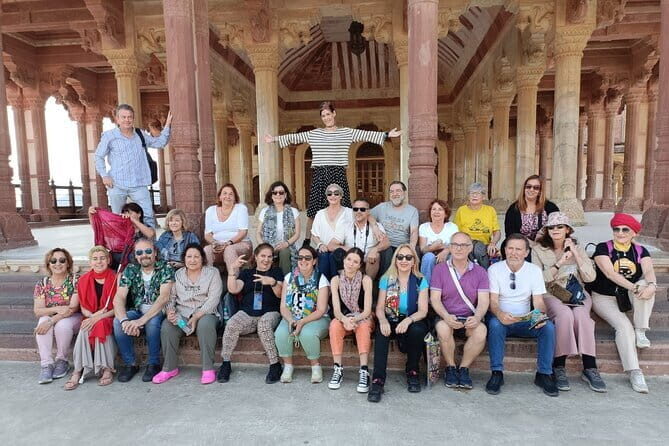
Day 3 is a “travel day with stops,” which is exactly how you want to use the route. Instead of treating the drive as wasted time, you get heritage sights placed right into the journey.
Fatehpur Sikri: a guided tour stop while you move
Fatehpur Sikri is included as a guided tour by pass while traveling toward Jaipur. That phrasing matters: it’s a real stop, but not an all-day deep dive. You’ll see enough to recognize why it matters—then you’re back on the road.
This approach is smart when your trip is only five days. You still get the monument’s punch, but you don’t sacrifice your time budget for the later Jaipur highlights.
Chand Baori: the stepwell people don’t expect
Chand Baori, described as a heritage stepwell, is one of those places that surprises people. Stepwells are practical—water management—but they also become dramatic architecture over time. If you like unusual structures, this is where your trip gets its curveball.
It’s also a nice change of pace from palaces and tombs. You can watch the light and shadows inside the well area, and it’s the kind of stop where photos actually look good without feeling like you’re forcing it.
Arrive Jaipur: check in and then dinner planning
You reach Jaipur, check in at the hotel, and then you’ll have dinner options at local restaurants nearby (the itinerary notes include this sort of guidance). Since dinner isn’t listed as included in the package notes, this is the moment to loosen up and follow your guide’s suggestions.
Hotel detail to confirm: the included nights list doesn’t explicitly call out a Jaipur hotel stay. Since the day includes check-in in Jaipur, confirm what’s included for your specific booking so you don’t get surprised by an extra arrangement.
Day 4 in Jaipur: Jantar Mantar, Amer Fort, City Area Sights, and Crafts
Jaipur is where the route starts feeling like a full-on city trip rather than just a series of monuments.
Jantar Mantar: science made visible
Jantar Mantar is listed as a good main attraction in Jaipur, with an admission ticket that is not included. That means you should expect to pay on site or budget it into your spending plan.
Even if you’re not a science person, it works because it’s visual. A guide can help you read the instruments so it doesn’t feel like a courtyard full of random stone shapes.
Albert Hall Museum: if you like art and artifacts
Albert Museum (often referred to as the Albert Hall Museum area) is noted as worth it if you have interest to see. This is a good “choose your own pace” moment: if museums fit you, this is where to go deeper; if not, you can spend your time elsewhere in the city.
Amer Fort: the dramatic payoff
Amer Fort is called out as beautiful, and it’s one of the anchors of Jaipur sightseeing. Expect a full feel for royal-era architecture and a change in scenery from the city core.
If you’re short on time, Amer Fort is one of those places where you don’t want to rush. Take it slow enough to notice the design and the views.
City area and old city time
The itinerary also references Jaipur old city and City Palace sightseeing. This is where you’ll get the feel of Jaipur as a lived-in place. You can also use this time for small stops and quick street observations—just keep an eye on your meeting times.
Handmade craft and an art factory stop
There’s also a stop described as local art, handmade craft, and an art factory for hand-made art. This can be good if you want a structured look at how local craft work is made. It can also be sales-driven, so treat it like a museum stop: look closely, ask questions, and don’t feel pressured to buy on the spot.
Day 5: The 5-Hour Drive Back to Delhi (Airport or Hotel Drop)
Day 5 is straightforward: Jaipur to Delhi drive, with a 5-hour road journey and drop at either the airport or your hotel.
This makes the tour end cleanly, which matters if you have an evening flight or a next-stage hotel reservation. If you can, plan a buffer for traffic and check-in time.
Also, because you’re finishing in Delhi, this is an easy day to keep your shopping and sightseeing light. Your goal is a smooth transfer, not one last sprint across the city.
What You’re Really Paying For: Value Check and Real-World Inclusions
The price is shown as $5.00 per person, which is unusually low for a private five-day, car-and-guide package. When a price looks too good, the best move is to confirm what’s actually included in your exact booking and how many people the car is set for.
That said, the package notes do list several meaningful inclusions:
- Breakfast is included.
- Monuments fees are included for the stops where tickets are marked as part of the package.
- Lunch (4) is listed as included.
- 1 night 3-star hotel in Delhi and 1 night 3-star hotel in Agra are included.
- A mobile ticket is provided.
- Pickup is offered from airport, train station, or hotel.
Not included: dinner, and the notes also say lunch isn’t included. Since the included list specifies lunch four times, I’d handle this by reading your final confirmation carefully and asking a clear question: are lunches guaranteed, or only certain days?
Entrance fee gotchas to watch
At least one stop is clearly marked as admission ticket not included: Jantar Mantar. For everything else, the itinerary notes show tickets included for specific attractions on Day 1 and Day 2.
My advice: bring a small cash or card buffer anyway. Even when a package includes fees, on-the-ground costs can vary with opening changes or add-on viewpoints.
Private Car, Real Guide Work, and How It Shows Up on the Ground
For me, the private format is where the value lives. With a dedicated driver and guide, you’re not negotiating public transport schedules or waiting around while everyone figures out their tickets.
The trip notes also suggest a serious emphasis on day-to-day coordination. In past experiences connected to this route, guides and drivers have been described as punctual and careful about safety, with a friendly, organized approach. One guide named Sunil was specifically praised for being kind, attentive, and even proactive with a small medical need during a family trip (getting ear drops at night). That’s the kind of detail that makes a difference when you’re far from home.
There’s also mention that a driver can speak English and some Spanish, which is helpful if you want more than a basic explanation and you don’t speak Hindi.
Who This Golden Triangle Tour Suits Best (and Who Should Skip It)
This setup fits best if:
- You want the Golden Triangle highlights in five days with a clear plan.
- You value a guide to explain what you’re seeing, not just walk alongside a monument.
- You like the idea of early mornings, especially for the Taj Mahal sunrise.
It might be less ideal if:
- You hate early starts and constant transitions.
- You want to spend extra time in one place rather than covering multiple landmarks daily.
- You need fully clarified hotel inclusion for Jaipur without doing any checking.
Should You Book This Private Golden Triangle by Car?
If you want a structured, first-time-friendly Golden Triangle with pickup, hotels in Delhi and Agra, and most monument fees handled, this is a solid candidate. The big selling points for me are the sunrise Taj Mahal plan and the fact that Delhi and Agra aren’t treated as “drive-by photos only.”
Before you hit book, do three quick checks:
1) Confirm what’s included for Jaipur lodging, since the included hotel nights list Delhi and Agra only.
2) Confirm exactly how meal inclusions work in your final itinerary (breakfast plus four lunches are listed, but dinner isn’t).
3) Plan money for any ticket gaps, especially Jantar Mantar, marked as not included.
If those points are clear, you’ll likely come away with that rare combo: big-name sights plus enough context to understand them. And you won’t spend your vacation wrestling a map and a metro schedule.
FAQ
Is this a private tour?
Yes. It’s described as private, meaning only your group participates.
What kind of transportation is included?
The experience is a private Golden Triangle tour by car, with pickup and a guide.
Do I get pickup from the airport or my hotel?
Yes. Pickup is offered from the airport, train station, or hotel.
How long is the tour?
It’s approximately 5 days.
Which cities does the itinerary cover?
The route covers New Delhi, Agra, and Jaipur.
Are monument entrance fees included?
Monuments fees are listed as included. Some admissions are marked as included on the itinerary, while Jantar Mantar is marked as not included.
What meals are included?
Breakfast is included, and lunch is listed as included four times. Dinner is listed as not included.
Are hotel nights included?
Yes for 1 night in Delhi (3 star) and 1 night in Agra (3 star). The itinerary also mentions checking in to a Jaipur hotel, so confirm your Jaipur lodging details in your booking.
How early is the Taj Mahal visit?
The tour includes an early morning sunrise visit to the Taj Mahal, with the recommended time noted as around 5:30 AM in summer.
Can I cancel for a full refund?
Yes. Free cancellation is available up to 24 hours in advance for a full refund.