REVIEW · JAIPUR
Private Full-Day Jaipur Guided Tour with Monkey Temple
Book on GetYourGuide →Operated by Jaipur City Tour Travels · Bookable on GetYourGuide
Jaipur can feel like a blur of monuments and crowds. This private full-day tour keeps it controlled with an air-conditioned car and a guide who lines everything up, from Hawa Mahal to the Monkey Temple. I especially like the pacing: you get guided context where it matters, then you still have time to walk and take photos.
Two standout wins for me: first, the stops are practical and well-grouped, so you spend less time figuring out where to go next. Second, the experience is guided enough to make the architecture click, not just look pretty, including explanations around Hawa Mahal’s latticework and Jantar Mantar’s instruments. One thing to watch: monument entrance fees and lunch aren’t included, so your final spend will be higher than the base price.
In This Review
- Key highlights to look forward to
- A private Jaipur day, paced like a local plan
- Hawa Mahal: lattice views and a calm photo rhythm
- Panna Meena ka Kund: stepwell geometry you can feel
- Amber Fort and Jal Mahal: red sandstone plus a palace-in-water view
- Gaitor Ki Chhatriyan and City Palace: royals, monuments, and museum space
- Jantar Mantar to Monkey Temple: science tools, then Galtaji’s stepped temple tank system
- Night markets and food streets: how to end your day well
- Price, what’s included, and what to budget
- A smooth day plan: timing, dress code, and small practical tips
- Who this tour suits best
- Should you book the Jaipur private full-day tour with Monkey Temple?
- FAQ
- FAQ
- How long is the Jaipur Private Full-Day Guided Tour with Monkey Temple?
- Where are the pickup and drop-off locations?
- What’s included in the price?
- What’s not included?
- Do I need to pay for tickets at each attraction?
- Is lunch provided?
- What languages are available for the host or greeter?
- What should I wear and bring for temples?
- Is there a cancellation option?
- Are pets and alcohol allowed?
Key highlights to look forward to
- Private AC car with a driver: smooth, stress-free transfers between Jaipur’s big sights
- Hawa Mahal + photo stop + tea: classic views with a short breather built in
- Panna Meena ka Kund: a stepwell where the geometry is the main event
- Amber Fort and Jal Mahal: red sandstone drama plus a palace-in-water viewpoint
- Jantar Mantar and Galtaji: science tools, then a multi-storied temple tank system
- Night markets and food streets: a chance to end the day where locals actually move
A private Jaipur day, paced like a local plan
For one fixed day, you’re covering a lot of ground: Jaipur’s signature palace architecture, its best-known fort and stepwell, and two “only in Jaipur” stops—Jantar Mantar and Galtaji, commonly called the Monkey Temple. The value here is the structure. You’re not hunting buses or fighting for taxis while you try to hit ten places.
Your ride is private and air-conditioned, with bottled water included. That matters more than it sounds, especially in the hotter parts of the year when even short waits can wear you out. The tour also runs as a private group, so the guide can slow down when you want photos or speed up if you’re already familiar with the basics.
The other piece I like: it’s not just vehicle + checkmarks. You get a local guide for history, culture, and what you’re seeing. And then, for each site, there’s space to walk on your own rather than being marched end-to-end.
You can also read our reviews of more guided tours in Jaipur


Hawa Mahal: lattice views and a calm photo rhythm
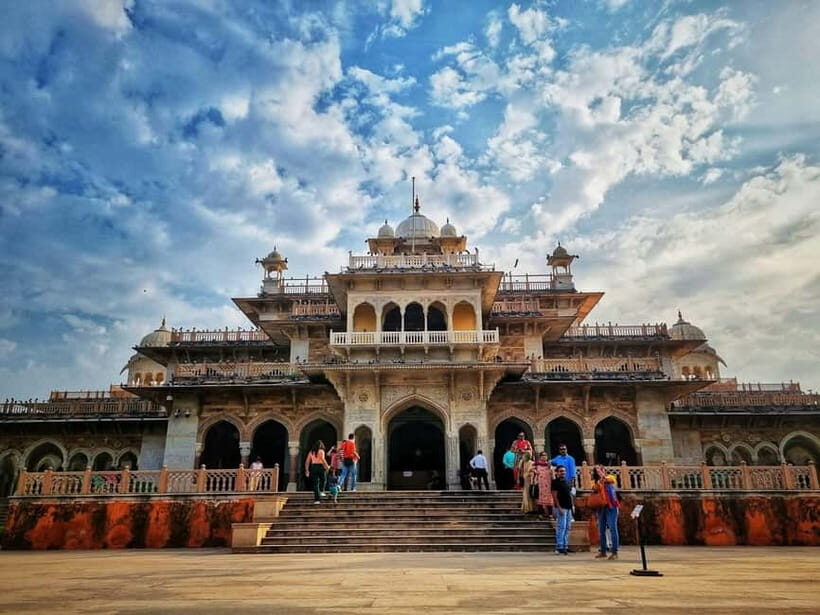
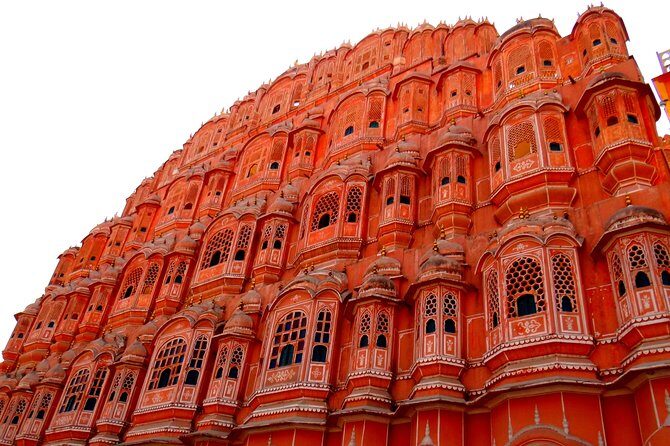
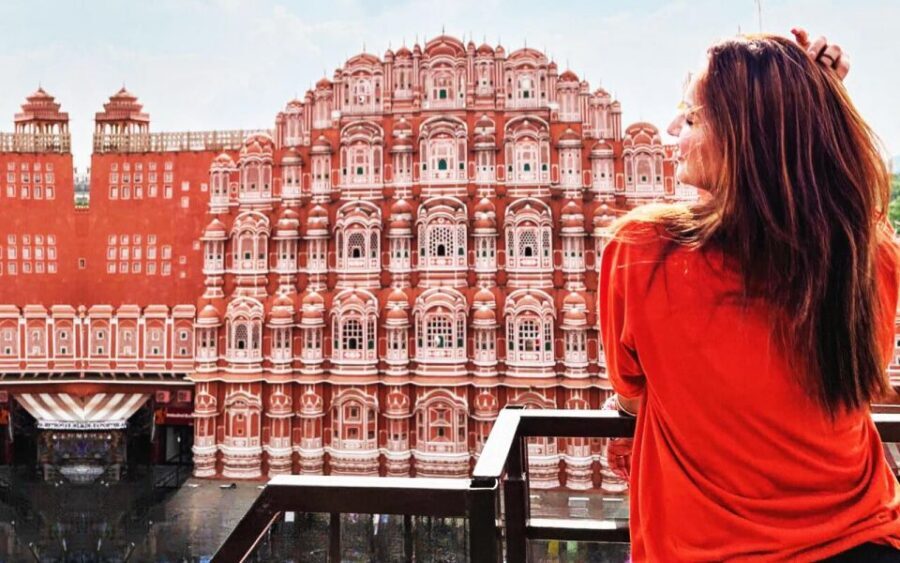
Hawa Mahal is one of those places you’ve seen a thousand times in photos, but it’s still satisfying to witness in person. The building’s famous jharokha lattice design is exactly the kind of detail that makes a guide worth it, because you get the why behind what you’re looking at.
Expect a mix of photo stop, guided tour, and sightseeing, plus a short break with tea. That tea stop is a small thing, but it’s smart for a long day; it helps you keep your head clear before the next sites start stacking up.
Practical note: Hawa Mahal is a great place to photograph, but it can be busy around peak hours. If you want easier angles, plan to go earlier in the day when possible. Many people find mornings are a better match for comfortable walking and less crowd pressure.
Panna Meena ka Kund: stepwell geometry you can feel
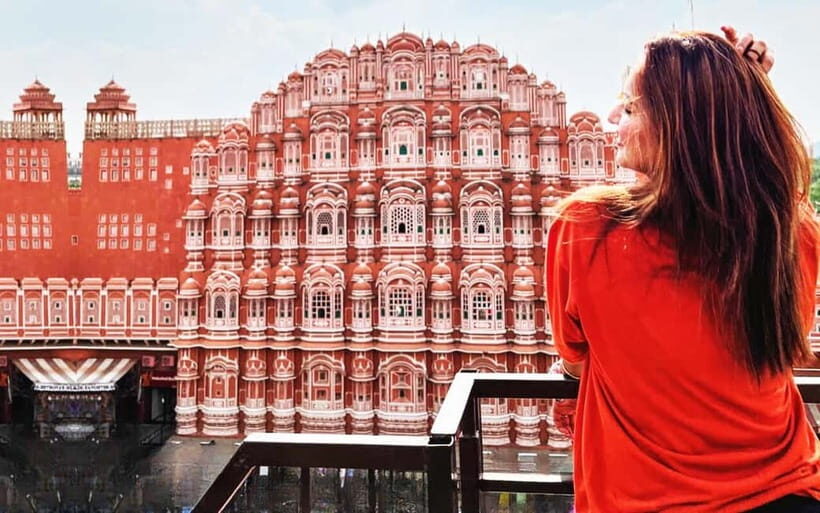
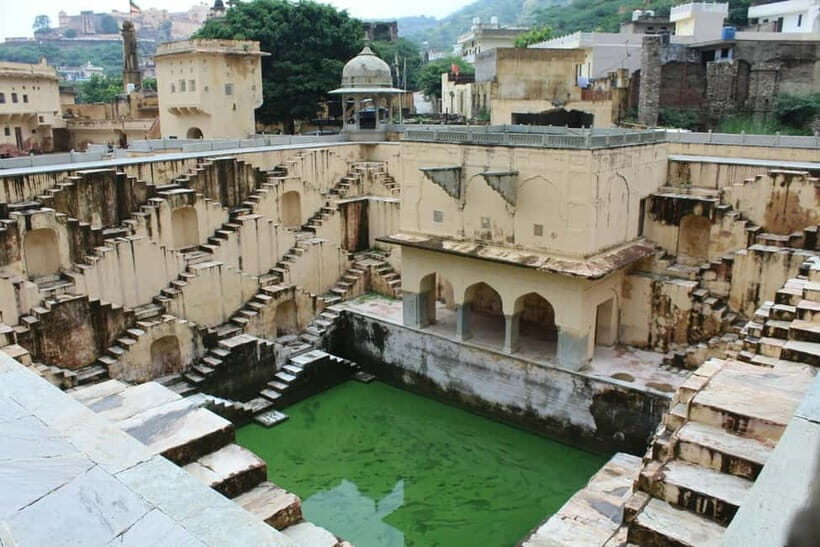
Next up is Panna Meena ka Kund, an ancient stepwell with steps that lead down to a well. What you’re really seeing is layout and symmetry—those repeating patterns that make the whole structure feel designed for both function and spectacle.
This stop is timed well: it’s short enough that you don’t lose momentum, but long enough to slow down. You’ll get guided context, then time to wander at your own pace. I like this kind of site because it rewards being present. You’ll notice how the steps frame views and how the space changes as you move.
If you like architecture, this is a strong “in-between” stop. After the palace drama of Hawa Mahal, the stepwell’s design feels like a different kind of art—more measured, more practical, and easy to spend time with even if you’re not chasing every monument photo.
Amber Fort and Jal Mahal: red sandstone plus a palace-in-water view
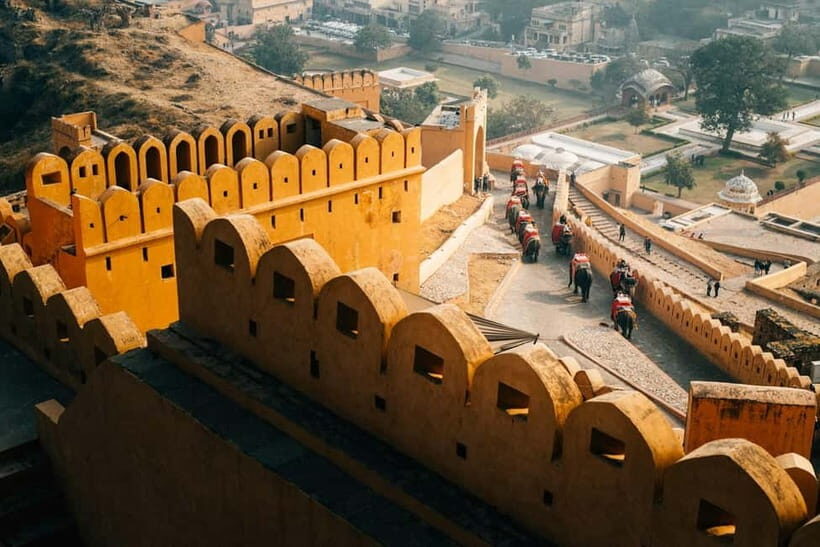
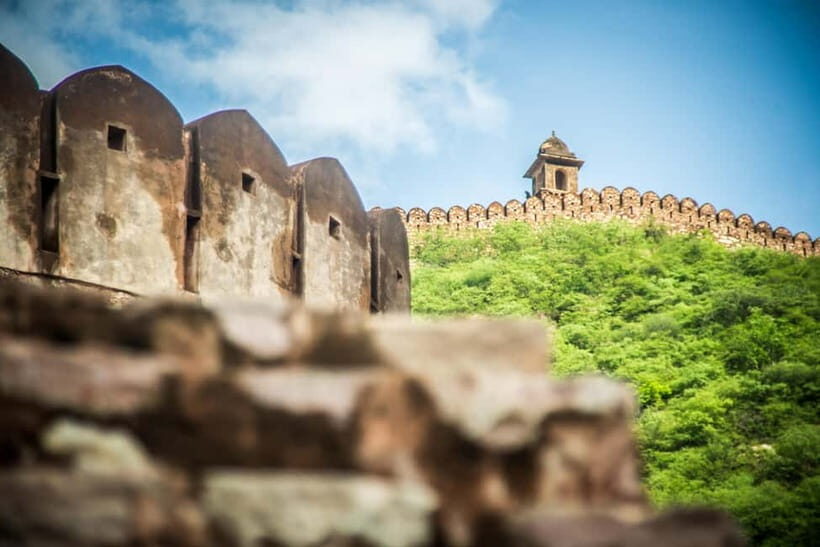
Amber Fort is the heavy hitter of the day. It’s known for its red sandstone and marble look, and the vibe inside and around the complex is classic Jaipur: impressive scale, strong design, and plenty of corners for photos.
Your time here includes walking and sightseeing with guide support. You’ll also get a scenic drive view factor, since the approach itself sets expectations for what you’ll see.
Then comes Jal Mahal, the palace that sits partly submerged in water. Even with limited time, this viewpoint helps you understand why this area is so iconic. It’s a visual contrast: fort power nearby, but a waterline effect that makes the scene feel softer.
One caution: this is a day of walking. Wear comfortable shoes and keep an eye on energy levels once you get into the fort area, especially if you’re not used to uneven surfaces.
Gaitor Ki Chhatriyan and City Palace: royals, monuments, and museum space
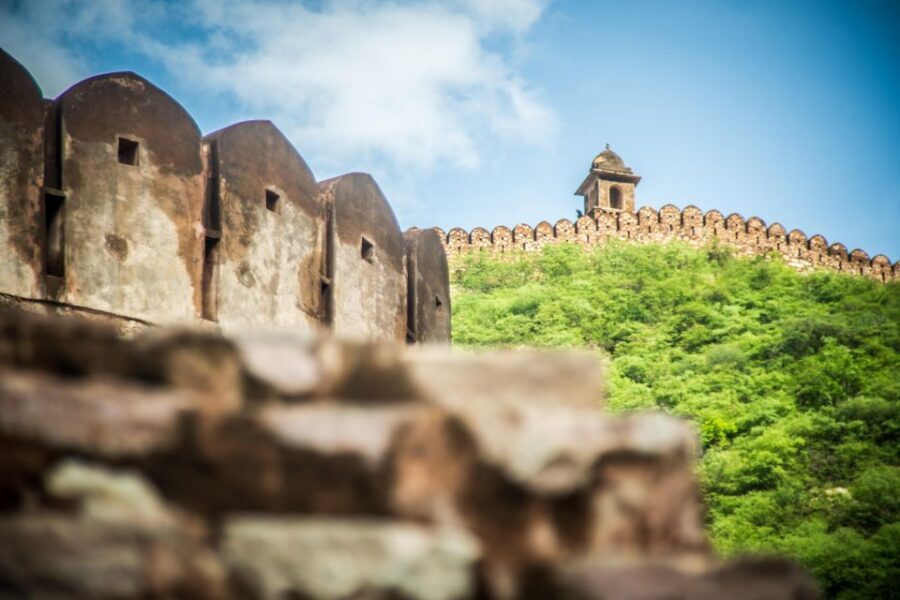
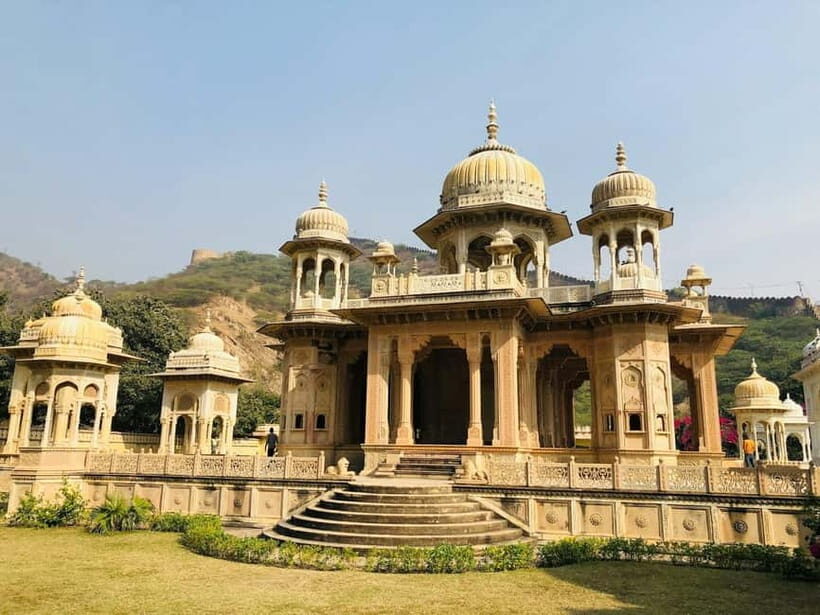
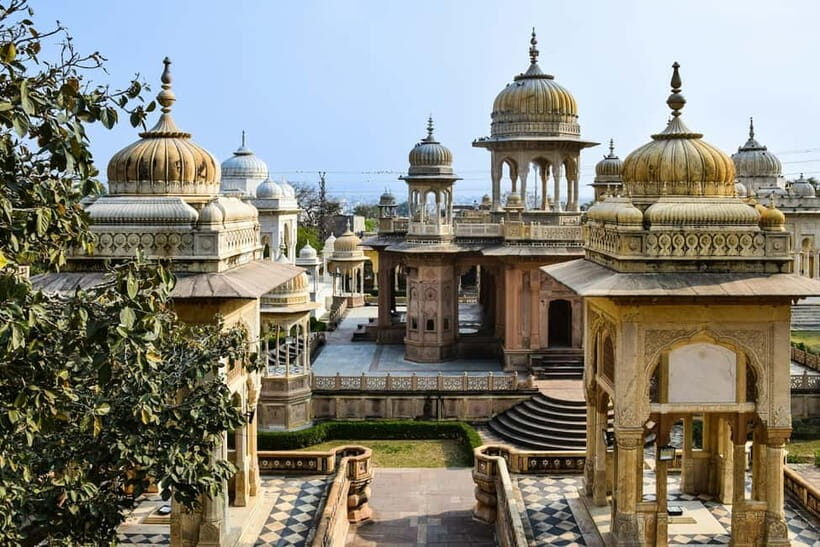
After Amber Fort, the tour shifts to Royal Gaitor Tumbas, also known as Gaitor Ki Chhatriyan. This is an architectural site with strong historical meaning because it houses cenotaphs of Maharajas and their families. The structures aren’t just decorative; they communicate status and legacy through form.
From there, City Palace brings you back to the living side of Jaipur’s royal story. You’ll visit the City Palace, which has served as the residence of the Maharaja of Jaipur and head of the Kachwaha Rajput clan. Part of it functions as a museum, but much of it remains a royal residence, so you experience it as both heritage and ongoing place.
This pairing works well because you get two different “reads” of royalty. Gaitor feels memorial and architectural, while City Palace feels like a home-in-history. I like how this helps you avoid the common problem of seeing too many sites that all blur together as just another fort or another palace.
You can also read our reviews of more private tours in Jaipur





Jantar Mantar to Monkey Temple: science tools, then Galtaji’s stepped temple tank system
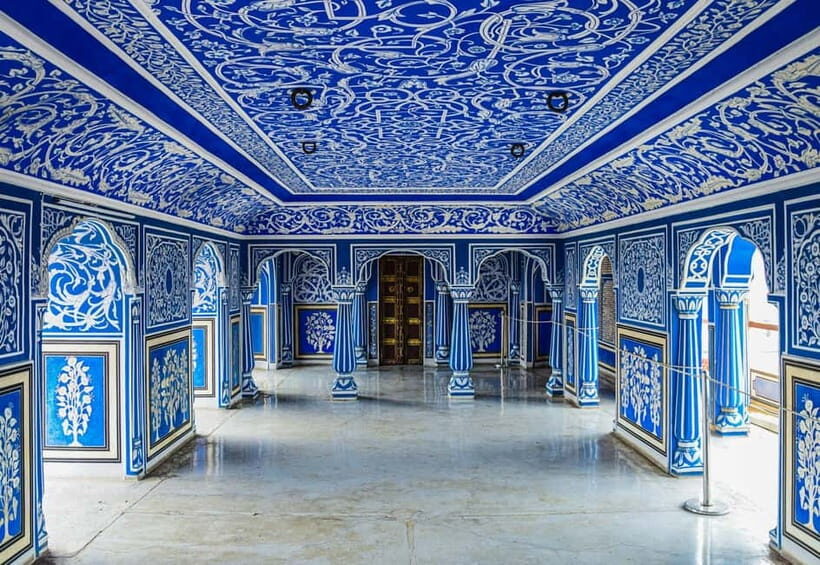
Jantar Mantar is the observatory where you can look at instruments built for astronomy and measurement. If you’ve ever wondered how people studied the sky before modern tech, this is where the story becomes physical. You’ll be able to see the design of the instruments and understand how they were used, with guided explanation and time to explore on foot.
Then the day turns toward the mystical side with the Monkey Temple, originally known as Galtaji. Common names include Temple of the Sun God, and it’s an 18th-century complex. What makes it special is the multi-storied water tank system called kunds, which leads up toward the central temple. The rounded roofs and pavilions fit the Rajasthan style you’ve been seeing all day, but the stepped tank approach gives the site a distinctive feel.
This stop is also where you might notice the atmosphere shifting. It’s described as partly abandoned in places, which adds character. If you enjoy wandering, this is the part where you’ll naturally slow down and look around alleyways and courtyards.
Night markets and food streets: how to end your day well
The tour includes time for a walk through Jaipur’s narrow streets at the end, with chances to experience local markets and food streets. This is where you trade monuments for everyday rhythm, and it’s a smart way to balance a day full of stone and symmetry.
What I’d do: when you’re heading into the market area, keep your plan light. Don’t try to eat everything. Instead, aim for one or two things you’ll actually want to remember—plus time to watch how the streets work at night.
Also, this is a good moment to use your guide’s practical judgment. If they suggest what to try, you’ll waste less time guessing, and you’ll feel more confident ordering and paying.
Price, what’s included, and what to budget
The base price is listed at $13 per person for a 9-hour private day, and that’s unusually low for a private AC car plus guiding support. The catch is typical for Jaipur: monument entrance fees and lunch or dinner are not included.
So how do you think about value? You’re paying for:
- private air-conditioned transport
- bottled mineral water
- taxes, fees, and fuel/parking
- a structured route with guided interpretation
- skipping the ticket line (so you lose less time at busy entrances)
Then you add:
- monument entrance fees
- your lunch stop (the guide will take you to a restaurant, but you pay for your meal)
In other words, you’re not buying a cheap ticket and then paying surprises at every step—you’re buying a full organized day with the big moving parts handled. Your budget just needs a realistic buffer for entrances and food.
A smooth day plan: timing, dress code, and small practical tips
This is a smart casual day. For temples, you’ll want clothes that cover enough—short shorts and sleeveless tops aren’t recommended. Even if you’re mostly sightseeing outdoors, you’ll still get pulled into temple areas, and it’s better to be prepared than to scramble.
Bring:
- passport or ID card (a valid passport is required on the day of travel)
- comfortable shoes
- a camera
- comfortable clothes
- some cash
If you’re sensitive to heat and walking time, plan accordingly. This full-day route is packed, and it isn’t considered suitable for people with pre-existing medical conditions. That’s worth taking seriously because a “private tour” still means long movement and time on your feet.
Car size matters too. The tour uses an AC sedan for 1–3 people, an AC 6-seater for 4–5 people, and an AC 10-seater for 6–10 people. If you’re booking with a group, it’s helpful to confirm the vehicle matches your number so everyone fits comfortably.
Who this tour suits best
This is a great fit if you want:
- a structured full-day route across major Jaipur sights
- a guide who explains the architecture and meaning, not just the postcard photo
- private comfort so you don’t waste your day in logistics
It also works well if you’re solo and want a plan that reduces decision fatigue. The tour is offered in multiple languages (English, German, French, Spanish, Italian), so you can choose the language that helps you feel relaxed and in control.
If you’re a history-only traveler who wants zero walking and minimal stops, this might feel too active. But if you like seeing a lot and you’re okay with a full 9-hour day, it’s a strong match.
Should you book the Jaipur private full-day tour with Monkey Temple?
Yes—if you want a private, organized Jaipur day with smart pacing, AC comfort, and guided context at the big sights. The route hits the essential icons (Hawa Mahal, Amber Fort, City Palace, Jantar Mantar) while adding the stepwell and ending with the Monkey Temple’s distinctive kunds and architecture.
Book it if you’re willing to budget for monument entrance fees and pay for lunch on your own. If you want a relaxed day with minimal extra costs, you’ll be happier choosing a shorter route. But for a full sweep of Jaipur’s most memorable stops in one organized day, this one makes a lot of practical sense.
FAQ
FAQ
How long is the Jaipur Private Full-Day Guided Tour with Monkey Temple?
It lasts 9 hours.
Where are the pickup and drop-off locations?
Pickup is available from Jaipur or Kukas. Drop-off is also available at Kukas or Jaipur.
What’s included in the price?
Transport by private air-conditioned car, bottled mineral water in the car, all taxes/fees/handling charges, fuel surcharge and parking fee, and a private local guide option (if selected).
What’s not included?
Monuments entrance fees and lunch or dinner are not included.
Do I need to pay for tickets at each attraction?
Monument entrance fees are not included, but the tour also says it skips the ticket line.
Is lunch provided?
Lunch is not included. The guide leads you to a restaurant for lunch during the day.
What languages are available for the host or greeter?
English, German, French, Spanish, and Italian.
What should I wear and bring for temples?
Dress smart casual. Short shorts and sleeveless tops are not recommended for temple visits. Bring comfortable shoes and comfortable clothes, plus passport or ID.
Is there a cancellation option?
Yes. You can cancel up to 24 hours in advance for a full refund.
Are pets and alcohol allowed?
Pets are not allowed. Alcohol and drugs are not allowed, and alcoholic drinks in the vehicle are not allowed.