REVIEW · NEW DELHI
Private Best of New Delhi Full-Day City Tour (All Inclusive)
Book on Viator →Operated by Pacific Classic Tours India · Bookable on Viator
Delhi’s best hits all fit in one day. I like that this private tour lines up major UNESCO stops like Qutub Minar and Humayun’s Tomb with included entry, so you waste less time sorting tickets. I also enjoy the way the itinerary balances big landmarks with quieter places of worship, finishing with the Birla Mandir evening Aarti.
The main thing to watch is rhythm and access. The Lotus Temple is closed on Mondays, and with a full schedule you’ll want to be flexible about timing if traffic shifts or if the day’s order doesn’t match your expectations.
In This Review
- Key Highlights That Matter for Your Day
- A 9-10 Hour Private Day Around Delhi’s Most Famous UNESCO Stops
- Morning Pickup and Transport: Fewer Hassles, More Sightseeing
- Qutub Minar and Humayun’s Tomb: Where the UNESCO Stories Feel Physical
- Qutub Minar: Carved Bands and a Tower You Can Really Sense
- Humayun’s Tomb: Gardens With a Taj Mahal Connection
- Practical tip for both
- Lotus Temple and Gurudwara Bangla Sahib: Faithful Calm in the Middle of Traffic
- Lotus Temple: A 27-Petal Reset Button
- Gurudwara Bangla Sahib: Color, Quiet, and Free Community Meals
- Lodhi Garden Break and Lunch Planning for Real Energy
- Lunch: Included Buffet in AC
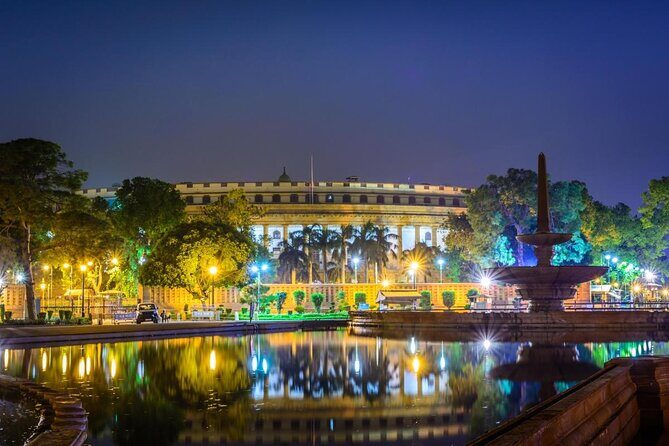
- India Gate, Parliament House, and Rashtrapati Bhavan: Lutyens’s New Delhi Viewpoints
- India Gate: A Memorial Arch With a WWI Link
- Parliament House: Where Power Shifted in 1947
- Rashtrapati Bhavan: Former Viceroy Residence, Now the President’s Home
- Birla Mandir Evening Aarti: The Day’s Most Lived-In Moment
- Birla Mandir (Lakshmi Narayan): Gandhi’s Condition and All-Caste Entry
- Aarti Ceremony: Fire, Offerings, and Shared Rhythm
- Price and Inclusions: When $113.52 Feels Like a Deal
- Dress Code and Timing: Two Small Rules That Affect Your Entry
- Who This Tour Suits Best (and Who Might Want a Different Option)
- Should You Book This Private Best of New Delhi Tour?
- FAQ
- What time does the tour start, and how long is it?
- Is hotel pickup and drop-off included?
- Is lunch included, and what kind of lunch is it?
- Do I need to pay admission fees at the main monuments?
- Is Lotus Temple open every day?
- What should I wear for temple visits?
- What isn’t included in the price?
- Can I cancel for a full refund?
Key Highlights That Matter for Your Day
- UNESCO entry included at Qutub Minar and Humayun’s Tomb, plus a ticketed, guided flow
- Faith stops with real atmosphere: Lotus Temple’s calm and Gurudwara Bangla Sahib’s community meals
- Aarti at Birla Mandir gives you a meaningful end to the day, not just photos
- Lunch in AC with a buffet setup that keeps energy steady for the afternoon drive
- Dress code required at places of worship and selected museums, so pack accordingly
- Private format means you’re not stuck with a slow or chaotic group pace
A 9-10 Hour Private Day Around Delhi’s Most Famous UNESCO Stops
This is a full-day, private city tour designed for travelers who want the essentials without building a route from scratch. You’re looking at roughly 9 to 10 hours, with an early 9:00 am start, a dedicated local guide, and transport in a private air-conditioned vehicle.
The big value here is the pacing. Delhi is a city where distances can surprise you, and day planning can turn into guesswork. This tour tries to solve that by bundling high-interest sites into one logical loop, with guidance so you understand what you’re seeing instead of just collecting landmarks.
You can also read our reviews of more city tours in New Delhi



Morning Pickup and Transport: Fewer Hassles, More Sightseeing
Pickup is offered from your chosen place in Delhi, Gurugram, or Noida, which is a nice time-saver if you’re not staying centrally. The tour also runs on a mobile ticket, which helps for quick check-ins.
One small detail that’s worth paying attention to: punctual pickup and a smooth start are part of what makes a tour like this feel easy. In at least one reported experience, the guide Ranjan picked people up promptly, which set a confident tone for the day. You can’t assume that timing will be identical for every booking, but it’s a good sign that the operator knows punctual departures matter.
A private vehicle matters too. Even if you’re only doing “one day of Delhi,” you’ll still want to reduce fatigue. Air-conditioned transport plus bottled water included helps you stay functional for the afternoon—especially when you’re moving between monuments and temples.
Qutub Minar and Humayun’s Tomb: Where the UNESCO Stories Feel Physical
This tour starts with two UNESCO powerhouses, and it does it in a way that’s easy to enjoy.
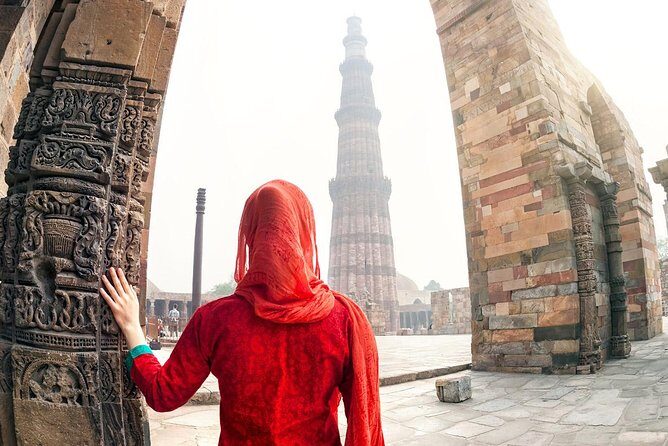
Qutub Minar: Carved Bands and a Tower You Can Really Sense
At Qutab Minar (also spelled Qutub Minar), you’ll spend about 1 hour. The highlight isn’t just the height, though it’s impressive at nearly 73 meters. What you’ll notice up close are the intricately carved sandstone bands around the tower with verses from the Quran. The tapering shape is another standout: it goes from about a 15-meter base down to roughly 2.5 meters at the top.
This is one of those sites where a guide helps a lot. Without context, it can feel like a single dramatic structure. With context, you start seeing it as a whole statement of craft, faith, and time.
Humayun’s Tomb: Gardens With a Taj Mahal Connection
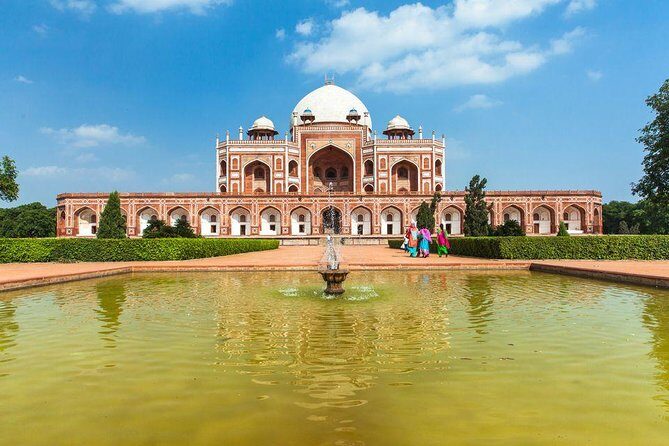
Then it’s to Humayun’s Tomb, also about 1 hour, with admission included. This Mughal-era tomb is known for its symmetrical gardens and the sense that the structure seems to float above the greenery.
You’ll also get the story connection: Humayun’s Tomb is often described as an influence on the Taj Mahal, and it predates it by about 60 years. That context turns a “pretty tomb” into a “this is how architectural ideas traveled” moment.
You can also read our reviews of more private tours in New Delhi





Practical tip for both
Wear shoes you’re comfortable in. Even when the time per stop is set, you’ll still do steady walking on pathways and around major viewing areas.
Lotus Temple and Gurudwara Bangla Sahib: Faithful Calm in the Middle of Traffic
After the UNESCO block, the tour makes a smart emotional shift: from towering monuments to places designed for quiet.
Lotus Temple: A 27-Petal Reset Button
The Lotus Temple is shaped like a lotus flower with 27 white-marble petals. It’s a rare pocket of calm in a hectic city, and the tour frames it as a place where visitors are invited to pray or meditate silently according to their own beliefs.
One key consideration: the Lotus Temple remains closed every Monday. If you’re traveling on a Monday, you’ll want to confirm how your operator handles the swap, because this stop is listed as part of the day.
Dress code also matters here and at other worship sites. Plan for covered knees and shoulders. No shorts or sleeveless tops, since entry can be refused.
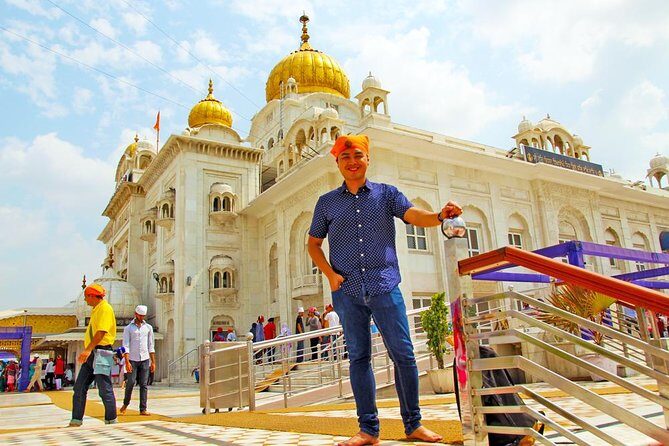
Gurudwara Bangla Sahib: Color, Quiet, and Free Community Meals
Next is Gurudwara Bangla Sahib, a white-marble Sikh gurdwara with golden onion domes. It’s built on the site connected to Harkrishan Dev, the eighth Sikh guru, who stayed there before his death in 1664.
What makes this stop special isn’t only the architecture. The space has live devotional songs that carry across the compound, while the overall feeling stays tranquil. You’ll also experience something very practical: as with Sikh gurdwaras, free meals are served daily for pilgrims.
If you’re curious about what “religion in everyday life” looks like, this is one of the best places in Delhi to see it in action.
Lodhi Garden Break and Lunch Planning for Real Energy
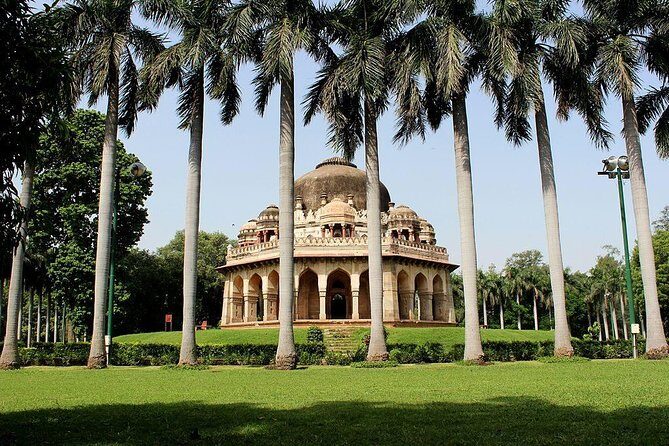
After the worship stops, you get a change of pace with Lodhi Garden. This is a park stop, but it’s not random. It’s one of Delhi’s more relaxed breaks, especially after temple visits.
The tour notes that the gardens were landscaped in 1936, originally tied to Lady Willingdon. Today it’s a tree-shaded area favored by locals, and it protects 100+ species of trees and 50 species of birds and butterflies, along with multiple 15th-century Mughal monuments.
Lunch: Included Buffet in AC
Lunch is listed as a buffet meal at a local air-conditioned restaurant. That’s a big deal in Delhi because an outdoor, walking-heavy day can drain you quickly. AC time isn’t just comfort; it helps you enjoy the rest of the route without feeling like you’re rushing.
Even with lunch included, think about how you’ll handle drinks. The tour data specifies that drinks with lunch aren’t included, so you’ll want a small cash or card budget for beverages if you care about them.
India Gate, Parliament House, and Rashtrapati Bhavan: Lutyens’s New Delhi Viewpoints
The afternoon moves into New Delhi’s classic government-and-memory zone. This section is less about ticketed entry and more about reading the city’s layout and symbolism.
India Gate: A Memorial Arch With a WWI Link
India Gate is a 42-meter-high stone memorial arch designed by Lutyens in 1921. It commemorates around 90,000 Indian army soldiers who died in World War I and also references the Northwest Frontier operations and the 1919 Anglo-Afghan War.
You’ll have about 30 minutes here. That’s enough to get the scale, take photos, and understand the purpose without turning this into a long detour.
Parliament House: Where Power Shifted in 1947
Next is Parliament House, described as the location where the 1947 handover of power from Britain to newly independent India took place. Parliament still meets here, so think of this as a civic landmark moment rather than a deep museum stop.
Rashtrapati Bhavan: Former Viceroy Residence, Now the President’s Home
Then you’ll reach Rashtrapati Bhavan (President House). This is the official residence of India’s president. Formerly the British viceroy’s home, it’s described as having 340 rooms and about 2.5 kilometers of corridors.
Even if you’re only seeing it from outside or from designated areas, the facts about its size and role make it easier to appreciate why New Delhi was built with big, formal gestures.
Birla Mandir Evening Aarti: The Day’s Most Lived-In Moment
The final stop brings you into a distinctly different mood. This is where the tour stops feeling like a checklist and starts feeling like a shared cultural experience.
Birla Mandir (Lakshmi Narayan): Gandhi’s Condition and All-Caste Entry
Birla Mandir Temple (Lakshmi Narayan) is dedicated to Laxmi (prosperity) and Narayana (the preserver). The tour data highlights that it was inaugurated by Mahatma Gandhi, and it was done on the condition that people of all castes would be allowed to enter the temple.
That context matters because it adds meaning beyond the building itself. You’re not just visiting a pretty religious site; you’re seeing a place tied to a social principle.
Aarti Ceremony: Fire, Offerings, and Shared Rhythm
You’ll witness an evening Aarti ceremony, described as a fundamental part of Hindu culture. The priest uses a tray with a diya (lamp), along with offerings of food, water, flowers, incense, and a small bell. An Aarti lamp is passed around the deity, and it’s typically accompanied by singing in praise of the god being honored.
The tour data also frames the ritual with elements like fire, earth, water, and air, plus the senses. Practically, this is the part where your attention slows down. You’re not sprinting between stops anymore.
It’s also a good time for respectful behavior: keep your phone use in check, dress appropriately, and let the moment play out without turning it into a production.
Price and Inclusions: When $113.52 Feels Like a Deal
At $113.52 per person, you’re paying for a lot of logistics to disappear. This matters most if you’re short on time, new to Delhi, or trying to avoid taxi-hopping all day.
Here’s what the tour includes:
- Hotel/airport pickup and drop-off
- Professional private local guide
- Private air-conditioned vehicle
- Buffet lunch at a local air-conditioned restaurant
- Entrance fees of sights mentioned (with specific ticketing noted for Qutub Minar and Humayun’s Tomb)
- Bottled water
What’s not included:
- Camera fees at monuments (still or video)
- Drinks with lunch
- Anything not mentioned in inclusions
For value, the two ticketed UNESCO stops plus lunch and a private vehicle are the core of the deal. Since several other major sights (like Lotus Temple, Gurudwara Bangla Sahib, and India Gate) have free admission in the tour data, your money is mainly covering guide time, transport, and the entry points that otherwise cost you time and money.
Dress Code and Timing: Two Small Rules That Affect Your Entry
If you want this day to go smoothly, pack with the dress code in mind. The tour data is clear: no shorts or sleeveless tops, and knees and shoulders must be covered for both men and women at places of worship and selected museums. Fail to comply and you risk refused entry.
Timing is the other real factor. Transfers are approximate and depend on traffic, so even with a planned sequence, you’ll want to treat the day as a flexible timeline. If your schedule is tight, mentally budget a little buffer around the afternoon.
And if your trip lands on a Monday, remember: Lotus Temple is closed. That single detail can shape your whole day, so plan around it.
Who This Tour Suits Best (and Who Might Want a Different Option)
This tour is a strong fit if you want:
- A private day with your own guide and driver
- A route that hits UNESCO sites plus major Delhi landmarks
- Built-in lunch and transport so you don’t spend your day problem-solving
It’s also good for travelers who like structure. The stops are clearly defined, and you’re given roughly an hour at many locations, which helps you manage energy.
You might think twice if:
- You want a slow, deep museum-style day with lots of downtime
- Your travel window is only a few days and you’d rather choose fewer stops
- Monday travel matters a lot because the Lotus Temple stop is closed
Should You Book This Private Best of New Delhi Tour?
If you’re trying to see the “big Delhi” highlights without the stress of planning, I’d say this is a practical booking. The combination of UNESCO entry included, air-conditioned transport, and an evening Aarti at Birla Mandir gives you both iconic sights and a cultural payoff that feels more human than just standing in front of buildings.
Before you click confirm, double-check three things: your travel day for Lotus Temple’s Monday closure, your clothing choices for the worship-site dress code, and your comfort with a long, full schedule. If those match your style, you’ll likely enjoy how the day flows from monument to meaning.
FAQ
What time does the tour start, and how long is it?
The start time is 9:00 am, and the tour lasts about 9 to 10 hours (approx.).
Is hotel pickup and drop-off included?
Yes. Hotel/airport pickup and drop-off are included, and pickup is offered from your desired place in Delhi, Gurugram, or Noida.
Is lunch included, and what kind of lunch is it?
Yes. A buffet lunch at a local air-conditioned restaurant is included. Bottled water is also included.
Do I need to pay admission fees at the main monuments?
Admission is included for the sights mentioned in the itinerary, with Qutub Minar and Humayun’s Tomb listed as having included tickets. Other stops like the Lotus Temple, Gurudwara Bangla Sahib, and India Gate are listed as free admission in the tour details.
Is Lotus Temple open every day?
No. The Lotus Temple remains closed on every Monday.
What should I wear for temple visits?
A dress code is required. No shorts or sleeveless tops. Knees and shoulders MUST be covered for both men and women, and entry may be refused if you do not comply.
What isn’t included in the price?
Not included are camera fees at monuments, drinks with lunch, and anything not mentioned in the inclusions.
Can I cancel for a full refund?
Yes, you can cancel for a full refund if you cancel at least 24 hours before the experience starts. If you cancel less than 24 hours before the start time, the amount paid will not be refunded.