REVIEW · AUROVILLE
Pondicherry : Saree Draping Workshop
Book on GetYourGuide →Operated by SITA CULTURAL CENTRE · Bookable on GetYourGuide
A saree lesson that actually sticks. The Pondicherry Saree Draping Workshop at SITA Cultural Centre is a practical, hands-on way to learn how Indian women wear a saree with confidence, not guesswork. I like that it combines technique with the cultural why, so you understand what you’re doing instead of just copying folds.
Two things stand out for me: you learn from Lakshmi, an instructor who guides your draping step-by-step, and you also get the background on what the saree means in Indian life. One possible drawback: it lasts just 1.5 hours, so the class can teach the moves, but you’ll still need a little practice time afterward if you want to feel effortless in public.
In This Review
- Key things you’ll notice right away
- SITA Cultural Centre: a small workshop with real focus
- The cultural context you actually use
- Choosing your saree and getting the fit right
- What the workshop teaches in 90 minutes
- Daily drape: comfort first, then polish
- Party style: dressing up without losing control
- The traditional pallu technique: showing the embellished border
- Materials, accessories, and the little things that prevent frustration
- Photoshoot moment: your finished look, not just a lesson
- The e-booklet afterward: keep practicing at home
- Price and value: why $9 makes sense here
- Who should book this workshop in Pondicherry
- Should you book the Pondicherry saree draping workshop?
- FAQ
- How long is the saree draping workshop?
- What languages is the workshop taught in?
- Is the workshop suitable for men?
- What will I practice during the workshop?
- Do I get anything to take home?
- Is it suitable for children?
Key things you’ll notice right away
- Lakshmi’s coaching keeps the draping practical, with time to ask questions
- History in plain language explains why the saree matters, not just how it’s folded
- Three draping techniques cover daily wear, a party style, and a more traditional pallu show
- Pick-from-a-selection sarees and accessories so your look matches your own taste
- A small photoshoot gives you a finished result you can actually remember
- An e-booklet afterward helps you repeat the steps on your own
SITA Cultural Centre: a small workshop with real focus
This workshop is run by SITA Cultural Centre in Tamil Nadu, and the setup is designed for attention, not a big theater show. The group is limited to 10 participants, which matters because saree draping is physical. You learn faster when you’re not waiting for the instructor to see your pleats.
What I appreciate here is the “do it with guidance” feel. They provide materials, including different sizes of blouses and petticoats, plus accessories to match your chosen saree. That means you’re practicing on the right base, instead of trying to make a single outfit work for your body.
The instruction is in English and Tamil. If you’re visiting Pondicherry and want something cultural that doesn’t require previous knowledge, this language support helps a lot.
A few more Auroville tours and experiences worth a look
The cultural context you actually use
Before you start pulling fabric around your body, you get a short theory session from Lakshmi that connects the saree to geography, culture, and identity. It’s not presented like a lecture you’ll forget at the door. Instead, it sets the stage for why the drape is the way it is.
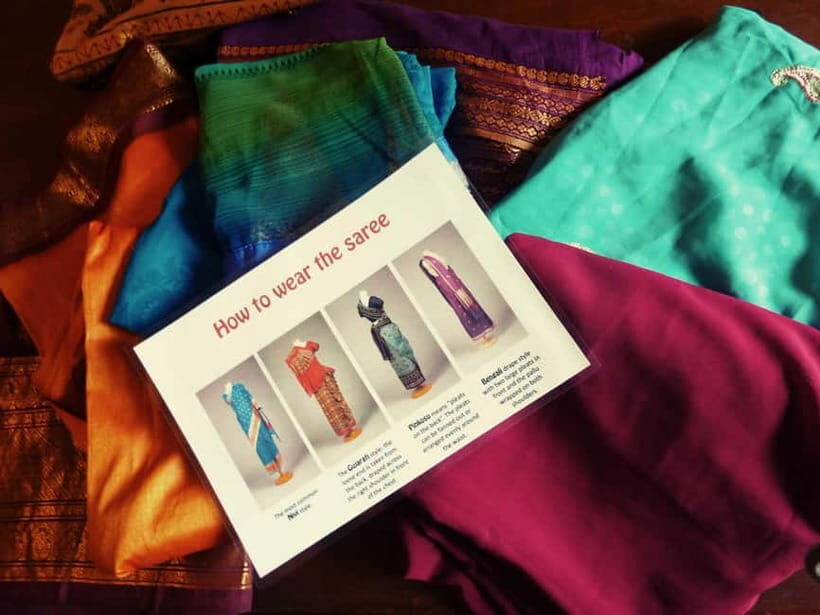
You learn that the saree is traditionally about 5 to 9 yards (4.5 to 8 meters) of cloth, and that draping styles vary across regions. You also get the broader timeline: saree-like drapery traces back to the Indus Valley Civilization (around 2800–1800 BC), and the region also developed cotton weaving very early. That woven detail matters because it explains why the fabric, dyes, and traditions are so intertwined.
They also highlight how many ways there are to wear a saree—more than 30 types reported in India and over 80 ways to drape. Hearing that early helps you relax. You’re not trying to get one “perfect” way; you’re learning reliable techniques you can build on.
Choosing your saree and getting the fit right
One of the most practical parts is that you don’t just get one generic outfit. You choose from a wide variety of sarees and accessories, and you can select sizes of blouses and petticoats that fit you.
This is where the workshop delivers value. A saree can look right or wrong based on the basics: the blouse fit, how the petticoat sits, and whether you have enough fabric to form pleats comfortably. When the workshop supplies these components, you spend your time learning draping—not wrestling with a misfit.
You’ll also learn about the accessories you need to wear a saree correctly. That includes the small things that often get skipped in videos: what completes the look and what supports comfort while you’re moving.
If you want the experience to feel personal, this choice moment is your best chance to steer your outcome. Pick a saree you actually like, because you’ll practice with it.
What the workshop teaches in 90 minutes
The whole session runs for 1.5 hours, and the structure is built around the same idea: theory that helps, then practice you can repeat. You start with the explanation of the garment and the essentials, then you move into technique.
You’ll practice three different draping techniques:
- a daily option many women use for everyday wear
- a party-style version that changes how the look sits
- a more traditional approach that shows the pallu, the embellished border of the saree
Lakshmi answers questions throughout, which is huge if you’re a first-timer. Saree draping isn’t hard, but it’s easy to misunderstand one small step. Having the instructor correct you as you go saves time.
At the end, there’s also a small photoshoot in saree. It’s brief, but it turns all that folding and tying into a finished look you can remember.
Daily drape: comfort first, then polish
The daily technique is designed for wearing for longer stretches without constant adjusting. You learn how to create pleats in a way that stays neat and how to position the cloth so it’s comfortable through normal movement.
What I like about this portion is the emphasis on comfort. The workshop isn’t selling the idea that you should suffer for style. Instead, you learn how to make pleats more easily and how to keep the drape feeling secure.
If you’ve ever tried a saree at home and spent the day pulling at it, this is the fix. You learn the structure: where the fabric anchors, how the folds relate to each other, and what to check before you leave the mirror.
This “daily” method also helps if you want to build confidence. Once you understand the base, the party and traditional variations make more sense.


Party style: dressing up without losing control
The party-style technique is where the workshop becomes fun, because you get to adjust the look more dramatically while still using the same core draping logic. You’re not learning a random style; you’re learning how a small change in draping placement can create a different silhouette.
This is usually the moment where beginners realize they can influence how the saree feels and looks, not just how it lies. It’s also a good choice if you’re traveling and want a memorable outfit for an event, dinner, or a special photo moment in Pondicherry.
The instructor guidance matters here. Party styles can look intimidating in photos, but in class you practice the steps physically. Lakshmi’s role is to prevent guesswork—so you’re learning the method, not copying the outcome.
The traditional pallu technique: showing the embellished border
The more traditional approach focuses on the pallu, the embellished border that often carries the most visual detail in a saree. This technique teaches you how to present that border in a way that looks intentional instead of accidental.
The value here is simple: the pallu is usually the “wow” part of the saree, but it’s also the most confusing if you’re learning alone. In this workshop, you practice how it sits, how it’s positioned, and how it relates to the rest of the drape.
This is also where you learn the skills that make your saree look styled rather than worn. Even if you stick with daily drapes later, understanding the pallu teaches you better control over the fabric as a whole.
Materials, accessories, and the little things that prevent frustration
The workshop includes all the material needed: sarees, different sizes of blouses and petticoats, and accessories to match. That matters because a saree workshop is only as good as its setup.
A big source of frustration for first-timers is missing pieces. Without the right base clothing, you can learn the draping steps but still not feel confident because the garment doesn’t sit correctly. Here, you practice with the right tools.
You’ll also get tips for wearing the saree comfortably—especially how to make pleats and how to feel settled through the day. Comfort isn’t a small detail; if you’re tugging fabric all the time, you’re not enjoying your day.
Photoshoot moment: your finished look, not just a lesson
After practicing, the session ends with a small photoshoot in saree. For many people, that’s the emotional finish: you go from learning folds to seeing yourself in a complete outfit.
It’s also practical. You’ll remember what you did because you have a final visual result. Even if you’re not obsessed with photos, this ending helps you connect the technique to the outcome.
And yes, it’s a nice way to take home proof that you learned something. One of the standout themes from feedback is that people loved the instructor’s warm guidance and the way the workshop ends with a charming, done-right experience.
The e-booklet afterward: keep practicing at home
You take home an e-booklet sent afterward. That’s a smart addition because 90 minutes of hands-on learning can still leave gaps when you’re back in your room.
If you want to wear a saree beyond the first day, the e-booklet is what helps you repeat the draping without relying on memory. It gives you the information you need to wear a saree on your own, plus the steps and hints to make it easier the second time.
This is the real secret to value: the workshop doesn’t just end when you leave. It gives you a way to keep moving forward.
Price and value: why $9 makes sense here
The workshop costs $9 per person, lasts 1.5 hours, and is taught by a professional instructor in small groups. That price is unusually approachable for a class that includes materials, access to multiple sarees and accessories, and a post-workshop e-booklet.
Could you learn from free online videos? Sure. But you’d miss two important things: tailored guidance and physical practice. Saree draping is one of those skills where a tiny correction changes everything. When you’re guided through pleats and cloth placement, you save time and frustration.
Also, your $9 covers the “try it for real” component. You’re not only learning in theory; you’re wearing and adjusting the fabric during instruction. For a skill that can take time to master, that’s strong value.
Who should book this workshop in Pondicherry
This is especially designed for women, but the workshop notes that if some gents are interested, they can also explain the male twin of the saree—meaning lunghi or veshti. Children can participate as well along with their mother, but the details also say it’s not suitable for children under 18—so double-check with the provider if you’re bringing anyone young.
Best fit for you if:
- you want an authentic way to understand Indian clothing quickly
- you’re attending an event and want to wear a saree confidently
- you like cultural context, not just how-to folding
- you prefer hands-on coaching in a small group
You might want to consider another option if:
- you need an ultra-long practice session with repeated wearing drills
- you’re looking for only a short photo experience with no hands-on instruction
Should you book the Pondicherry saree draping workshop?
If you want a practical cultural skill in Pondicherry, this workshop is a good bet. The combination of Lakshmi’s instruction, hands-on practice with your own chosen saree, and the inclusion of an e-booklet afterward makes it more than a one-off activity.
It’s especially worth it if you’ve ever tried to wear a saree from a tutorial and thought: I get the idea, but my pleats don’t work. This class is built to fix those exact problems, step by step.
If you’re curious about learning Indian draping as a real skill, not just a costume, then book it.
FAQ
How long is the saree draping workshop?
The workshop lasts 1.5 hours.
What languages is the workshop taught in?
It’s taught in English and Tamil.
Is the workshop suitable for men?
The workshop is especially designed for women, but it states that if some gents are interested, the instructor can explain the male twin of the saree, meaning lunghi or veshti.
What will I practice during the workshop?
You practice 3 saree techniques: a daily option, a party-style version, and a more traditional technique that shows the pallu.
Do I get anything to take home?
Yes. You’ll receive an e-booklet afterward with the information you need to wear a saree.
Is it suitable for children?
The info says children can participate along with their mother, but it also notes it is not suitable for children under 18 years. Check with the provider before booking if you’re considering a child’s participation.