REVIEW · NEW DELHI
Old Delhi, New Delhi Sightseeing
Book on Viator →Operated by Resfeber Travel (T-Bikes) · Bookable on Viator
Delhi’s biggest sights, packed into one smart day. I really like the mix of Mughal monuments and free-entry stops that keeps your day memorable without lighting your wallet on fire. My guide Raj was also the kind of person who makes logistics feel easy, and the route is planned so you don’t lose the whole morning just figuring things out. One thing to consider: the stops are time-boxed, so this is not the tour for deep, slow lingering.
You’ll ride in an air-conditioned vehicle with pickup offered, then spend your time on the sights that most first-timers in Delhi can’t miss. The day connects historic Old Delhi landmarks with iconic New Delhi architecture, including a major Bahá’í temple and a classic war memorial.
Plan around good weather, because the experience notes weather dependence. Also, some key sites have admission fees that aren’t included, so you’ll want a bit of cash or card for tickets.
In This Review
- Key highlights you’ll feel right away
- Entering Old Delhi through the Red Fort
- Jama Masjid: Mughal ambition in a single building plan
- Qutb Minar: the tower you can measure from almost anywhere
- Lotus Temple: flower-shaped calm that welcomes everyone
- Birla Mandir (Lakshmi Narayan): a short temple visit with meaning
- India Gate: a war memorial break on Rajpath
- Price and what you’re really getting for $34.14
- Timing, comfort, and how to make the day feel smoother
- Who should book this Old Delhi and New Delhi mix?
- Should you book this Old Delhi sightseeing day?
- FAQ
- What is the duration of the Old Delhi sightseeing tour?
- How much does the tour cost?
- Is pickup included?
- What’s included in the tour price?
- Are admission fees included for all stops?
- How long are the stops at each location?
- Which stops have free admission?
- Is this a private tour?
- Is the tour easy to reach by public transportation?
- What happens if the weather is bad?
Key highlights you’ll feel right away
- Red Fort focus on key halls like Diwan-i-Khas, Diwan-i-Amn, and the Rang Mahal (tickets not included)
- Jama Masjid scale story, from Shah Jahan’s plan to the thousands of workers involved in building it
- Qutb Minar UNESCO monument math, including the tower’s tall height and dramatic taper
- Lotus Temple open-to-all philosophy, plus the flowerlike architecture that’s instantly photo-friendly
- Budget-friendly free stops, with multiple temples and India Gate listed as free-entry
Entering Old Delhi through the Red Fort

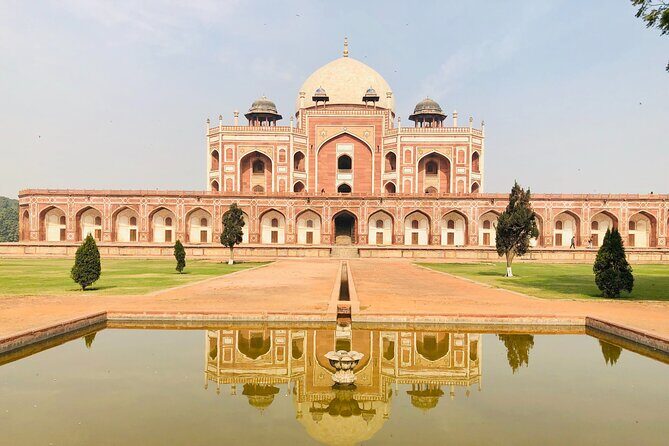
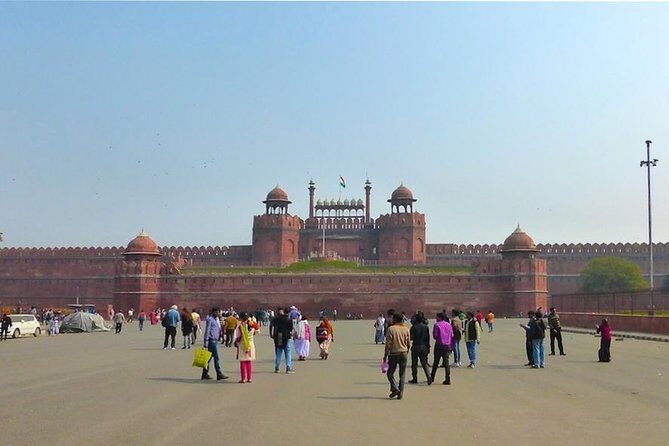
The Red Fort is one of those places where you immediately understand why it’s a headline. It’s a UNESCO World Heritage Site, also known as Laal Quila, and it was built by Mughal emperor Shah Jahan roughly from 1638 to 1648. Even if you’ve seen photos before, standing near the complex feels like stepping into the city’s public heartbeat.
What makes this stop especially worthwhile is that the visit isn’t just about walking the perimeter. You’ll go into the Red Fort’s major areas for about an hour, including Diwan-i-Khas, Diwan-i-Amn, and the Rang Mahal. Those names matter because they point you to spaces associated with imperial authority and court life. The Diwan halls are where the Mughal state projected power, and the Rang Mahal connects to the idea of courtly spectacle—so you get more than scenery.
A practical consideration: the stop is listed as 1 hour and the admission ticket is not included. So budget time and money for entry when you’re planning your day. Also, the Red Fort area functions as a busy market-place today, which can make the vibe lively and a bit chaotic. That’s part of the charm, but it’s another reason the day is structured and guided.
You can also read our reviews of more tours and experiences in New Delhi.



Jama Masjid: Mughal ambition in a single building plan
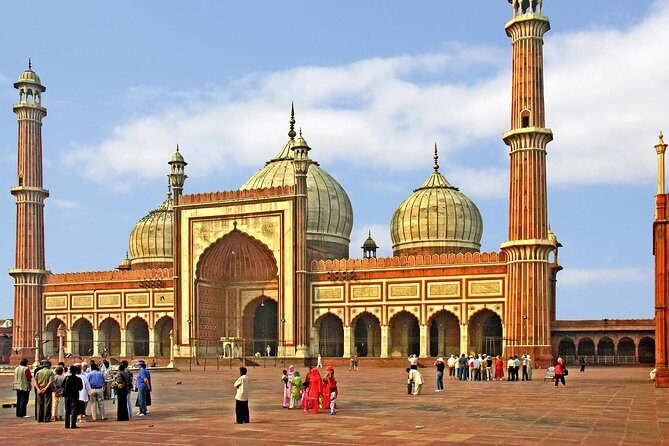
From the Red Fort zone, Jama Masjid is a short hop and a big change in feel. Jama Masjid is a mosque built by Shahjahan inside his fort city of Shahjahanabad—what you know today as the Red Fort area. You’ll learn that the design is credited to Mughal architect Ostad Khalil, and the project cost was listed as around 10 crores, which is staggering when you zoom out to the medieval era.
Here’s the kind of detail that makes this stop click: construction began in 1650 with over 5,000 workers. The mosque was completed six years after the foundation stone was laid. That timeline isn’t just trivia. It helps you picture the scale of the operation and the confidence behind the design.
You’ll spend about 30 minutes here, and admission is free. Free-entry stops can be a relief in Delhi, and this one is also a strong cultural anchor. If you want a quick win, this is it: you get a major landmark, clear historic context, and a well-defined time box.
One caution: as a religious site, it’s smart to keep your clothing and behavior respectful. The tour info doesn’t spell out dress rules, but you should expect some norms like that anywhere you step inside places of worship.
Qutb Minar: the tower you can measure from almost anywhere
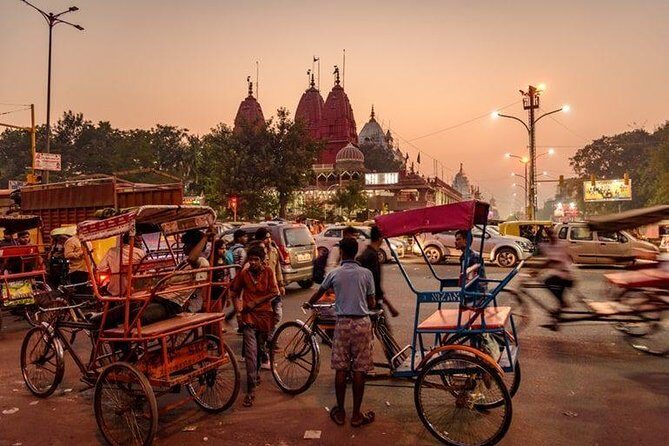
Next up is Qutub Minar, part of the Qutb complex and another UNESCO World Heritage Site. Even the basics are impressive: it’s a tapering minaret about 73 meters tall and structured in five storeys. What really grabs you is the math of the form. The tower’s base diameter is about 14.3 meters, narrowing to about 2.7 meters at the upper section.
That taper matters when you’re seeing it in person. Instead of feeling like one flat monument, the minaret reads like a vertical sculpture that tightens as it rises. It’s the kind of architectural detail that makes your camera earn its keep.
You’ll have about 30 minutes at Qutub Minar, but admission is not included. So plan for extra ticket cost on top of the tour price. If you’re trying to keep your spending predictable, treat this stop like the one likely to add a fee.
Since this is a listed UNESCO site, expect it to be a “see it clearly, then move on” moment. You’ll get enough time to absorb the overall structure without turning the entire day into just one monument.
Lotus Temple: flower-shaped calm that welcomes everyone
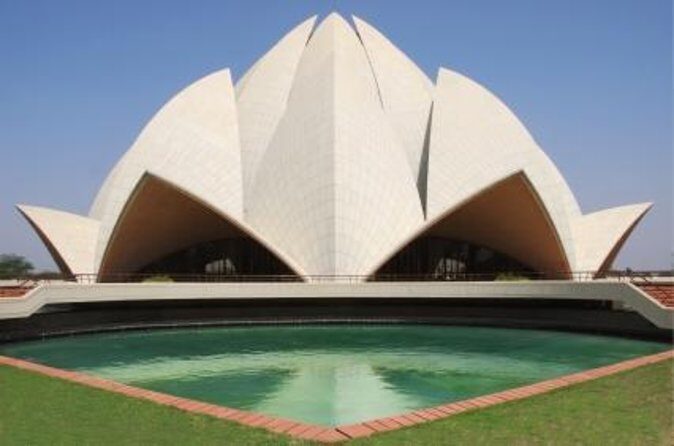
Then you shift from towers and stone power to something that looks like it floated down from a design book. The Lotus Temple is a Bahá’í House of Worship dedicated in December 1986, known for its flowerlike shape. It has become a prominent attraction in Delhi, and it’s also one of those places where the rules are part of the message: it’s open to all, regardless of religion or any other qualification.
You’ll spend about 30 minutes here, and admission is free. That’s valuable because you’re getting a major modern icon without paying an entry fee. More than that, the Lotus Temple is a useful break in a day heavy with Mughal-era landmarks. It’s a change in tempo, light, and architecture style, so your brain gets room to reset.
Also, this stop is great if you’re traveling with different interests. History fans will still like the context of a major faith space in the city. People who like photo ops and design will enjoy how clean and recognizable the temple looks from multiple angles.
Birla Mandir (Lakshmi Narayan): a short temple visit with meaning
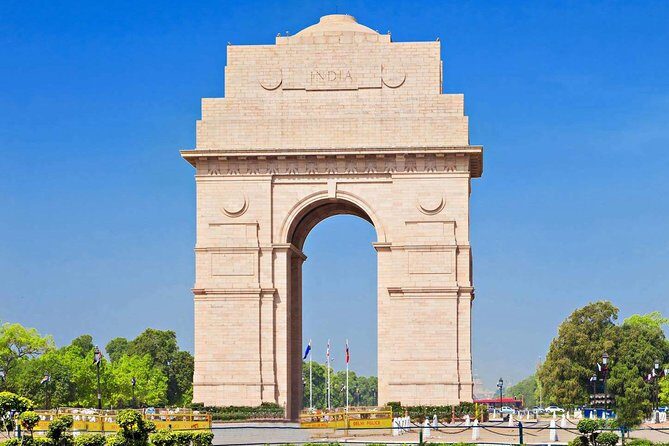
Birla Mandir, also called the Laxminarayan Temple, is a Hindu temple dedicated to Laxminarayan. In plain terms, Laxminarayan points to Vishnu (Narayan) together with Lakshmi, his consort. It’s the kind of stop where a little context makes a quick visit feel more purposeful.
This is a shorter stop, about 15 minutes, and admission is free. That means the visit is more about getting in, soaking up the atmosphere, and seeing the space rather than a long sit-down. It’s also a good place to take a breather if you’ve been moving steadily through forts and mosques.
If you’re the type who likes to rotate between landmark sights and calmer spiritual spaces, this is a nice balance. If you want a long, detailed temple walkthrough, you may wish you had more time—but within a 6 to 8 hour day, this length keeps the overall itinerary workable.




India Gate: a war memorial break on Rajpath
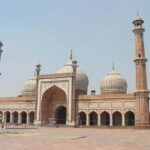
India Gate is one of those Delhi landmarks that looks like it belongs to postcards for a reason. It’s a war memorial located along the Rajpath on the eastern edge of New Delhi’s ceremonial axis. Even if you don’t know every name connected to it, the sheer scale and the setting along the broad ceremonial road give you a strong sense of place.
You’ll have about 30 minutes here, and admission is free. That makes it a practical stop at the end or near the end of the route. It’s a good time to catch quick photos and regroup before you head back.
If you’re trying to structure your day for energy, India Gate functions like the landing strip. Earlier stops are more about moving through complex sites; India Gate is more about absorbing the view and letting the pace ease a bit.
Price and what you’re really getting for $34.14
This tour is priced at $34.14 per group for up to 4 people, and it includes an air-conditioned vehicle. On paper, that sounds affordable. In practice, it can be a smart value if you’re traveling with another pair or want a private experience without paying big-city premium prices.
Where the value shines: you’re covering multiple major Delhi icons in one outing—Red Fort, Jama Masjid, Qutub Minar, Lotus Temple, Birla Mandir, and India Gate—plus you’re not stuck wrestling with the logistics on your own. The vehicle and pickup offered can save real time and stress.
Where you should be ready for extra costs: the tour notes that all fees and taxes are not included. In the itinerary, admission is explicitly not included for Red Fort and Qutub Minar. Other stops are listed as free entry, including Jama Masjid, Lotus Temple, Birla Mandir, and India Gate. So you’ll likely spend money on fewer sites than you would on a tour where every attraction requires paid entry.
If you’re budgeting tight, this is the tour math you want: several stops free, a couple paid. That mix lets you pick where you want to put your money—on the big ticket monuments where the admission usually matters most.
Timing, comfort, and how to make the day feel smoother
This sightseeing day runs about 6 to 8 hours. Most stops are 15 to 30 minutes, with the longest stop at Red Fort around 1 hour. That time structure is the heart of the experience. It’s designed to hit the top monuments efficiently, not to turn Delhi into a one-site marathon.
That also means you’ll want to arrive prepared so you can enjoy the sights without friction. Wear comfortable shoes because stone and uneven surfaces are common at these landmarks. Bring water, and keep your plans flexible if the day feels warmer or busier than you expected.
One more comfort note: the included vehicle is air-conditioned, which is a big deal on days when Delhi heat or sun makes outdoor walking less fun. Pickup offered also means you’re not spending the first hour hunting for where to start.
If you get a driver and guide working well as a team, the day can feel surprisingly organized. One highlighted guide, Raj, was specifically praised for being kind and knowledgeable and for coordinating the day nicely—exactly the kind of competence that helps short stops feel purposeful instead of rushed.
Who should book this Old Delhi and New Delhi mix?
I think this tour fits best if you want a single day that covers both the historic Old Delhi feel and the iconic New Delhi sites. It’s also a good choice when you’re traveling in a small group and want privacy, because it’s private and only your group participates (up to 4).
You’ll enjoy it most if:
- You want an efficient highlights route without planning each hop.
- You like architecture and cultural landmarks from different faiths and eras.
- You’re okay with shorter visits at each site in exchange for seeing more overall.
You might not love it if:
- You prefer long, slow museum-style wandering at fewer places.
- You’re hoping for tickets to be bundled into the price, since some admissions aren’t included.
- You’re arriving on a day with poor weather, since the experience requires good weather and can be rescheduled or refunded if canceled for that reason.
Should you book this Old Delhi sightseeing day?
Yes, I’d book it if you want a tight, high-impact Delhi sampler that covers Mughal power, religious landmarks, and a classic memorial in one outing. The private group format and air-conditioned vehicle make it practical, and the free-entry stops (Lotus Temple, Jama Masjid, Birla Mandir, India Gate) help keep costs reasonable even with two paid-admission monuments.
Skip it if you’re looking for deep, slow exploration or if you hate admission add-ons. And if the weather looks questionable, keep an eye on conditions because the experience is weather-dependent.
If you want one day in Delhi that actually covers the must-sees without turning your schedule into a guessing game, this is a strong choice.
FAQ
What is the duration of the Old Delhi sightseeing tour?
It runs about 6 to 8 hours.
How much does the tour cost?
The price is $34.14 per group, up to 4 people.
Is pickup included?
Yes, pickup is offered.
What’s included in the tour price?
An air-conditioned vehicle is included.
Are admission fees included for all stops?
No. All fees and taxes are not included. Admission is not included for the Red Fort and Qutub Minar, while several other stops are listed as free.
How long are the stops at each location?
Red Fort is about 1 hour. Jama Masjid, Qutub Minar, Lotus Temple, and India Gate are about 30 minutes each. Birla Mandir is about 15 minutes.
Which stops have free admission?
Jama Masjid, Lotus Temple, Birla Mandir (Lakshmi Narayan), and India Gate are listed as free.
Is this a private tour?
Yes. It’s private, and only your group participates.
Is the tour easy to reach by public transportation?
It is near public transportation.
What happens if the weather is bad?
The experience requires good weather. If it’s canceled due to poor weather, you’ll be offered a different date or a full refund.