REVIEW · NORTH GOA
North Goa: Mulgao Village and Coconut Farming Experience
Book on GetYourGuide →Operated by Make It Happen · Bookable on GetYourGuide
Mulgao Village runs on stories, shrines, and coconut palms. This 3-hour North Goa experience links ancient folk culture with hands-on farming at an organic coconut farm, ending with a simple Goan vegetarian meal.
I like the way the day is story-led: you start at Kelbai Temple and move through holy sites with a local storyteller who explains the community’s guardian deities and the feel of pre-Portuguese heritage. I also like the farm piece, especially the visit to Mulgão Verde and the explanation of how virgin coconut oil is made, plus how the farm thinks about sustainability and zero waste.
One thing to plan for: this is not a walking-only trail. You’ll need transportation within the village, and it’s not suitable for wheelchair users—so wear grippy shoes and be ready for some sun and uneven ground.
In This Review
- Key things I’d watch for before you book
- Where Mulgao Village fits in North Goa
- Starting point: Kelbai Temple, Mulgao
- The guided shrine time: stories, guardian deities, and village rhythm
- The coconut farm visit at Mulgão Verde (the hands-on part)
- Coconut palm life: why one tree supports so much
- The vegetarian Goan meal: farm-to-table, right after the learning
- Transportation reality inside the village
- What you’ll like most (and who it’s best for)
- Price and value: why $30 makes sense here
- Small rules that help the day run smoothly
- What to bring so you’re comfortable
- Should you book Mulgao Village and Coconut Farming?
- FAQ
- How long is the North Goa Mulgao Village and Coconut Farming experience?
- Where does the tour start and end?
- What’s the price per person?
- Is the tour guide available in English?
- What activities are included?
- Do I need transportation during the experience?
- What should I bring and what is not allowed?
Key things I’d watch for before you book
- Start at Kelbai Temple, Mulgao for a grounded introduction to local worship and daily life
- Multiple shrine stops with a guide who ties places to guardian deities and local memory
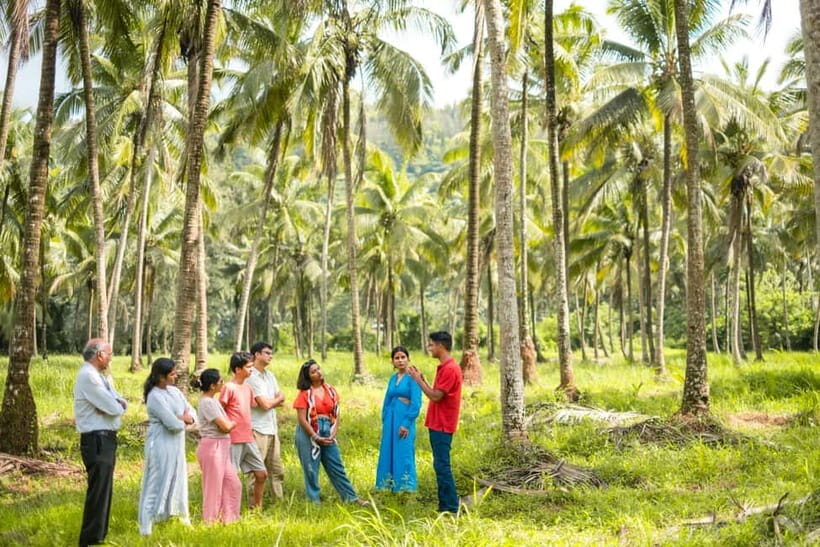
- Mulgão Verde coconut farm focused on organic methods and practical farming knowledge
- Virgin coconut oil production explained as a process you can actually picture
- Zero waste + sustainable initiatives shown through how the farm uses more of the coconut
- Goan farm-to-table vegetarian meal prepared by local villagers right after the farm visit
Where Mulgao Village fits in North Goa
If you’re in North Goa and you want more than beaches and nightlife, Mulgao Village is the kind of trip that makes the region feel human. You’re in a place where many small shrines and temples shape the rhythm of life, and where farming isn’t a side show. It’s the backbone.
This tour’s strength is that it connects the spiritual side of the village with what people grow and how they live with the land. Over fifty temples and shrines are part of the setting, so you don’t just see one temple and call it a day. You get the sense that sacred spaces are woven into everyday routines.
You can also read our reviews of more tours and experiences in North Goa.

Starting point: Kelbai Temple, Mulgao
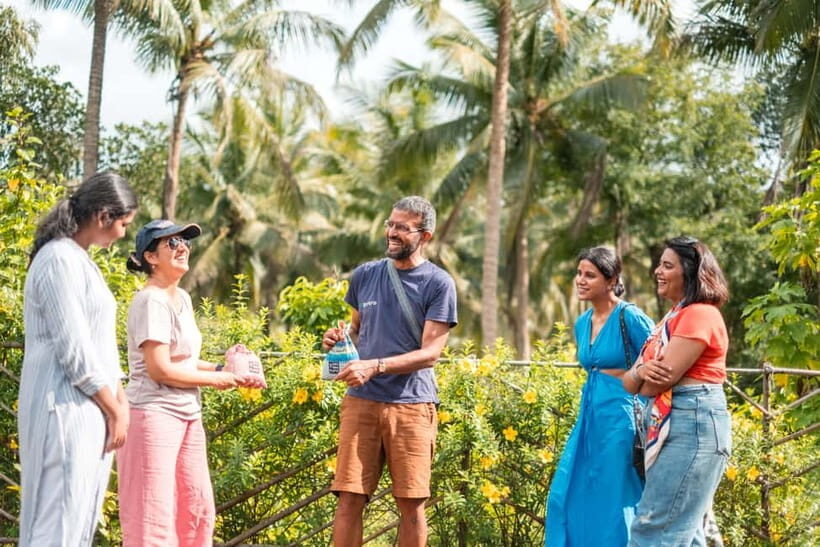
You begin at Kelbai Temple, Mulgao, and that matters. Starting with an active religious site helps you understand the tone of what comes next: this isn’t a sightseeing route designed just for photos. It’s a guided walk-through of how local worship works and why certain shrines matter to the community.
Expect your guide to set the frame quickly—place names, local belief, and what devotees value about these holy stops. In one experience, the storyteller named Rachana stood out for being friendly and very story-driven. If you get a guide with that same style, you’ll probably enjoy the pace even if you’re not usually into temple tours.
Practical tip: arrive ready for a bit of standing around before you move. Even if the total time is short, religious sites often mean you slow down, look, and listen.
The guided shrine time: stories, guardian deities, and village rhythm
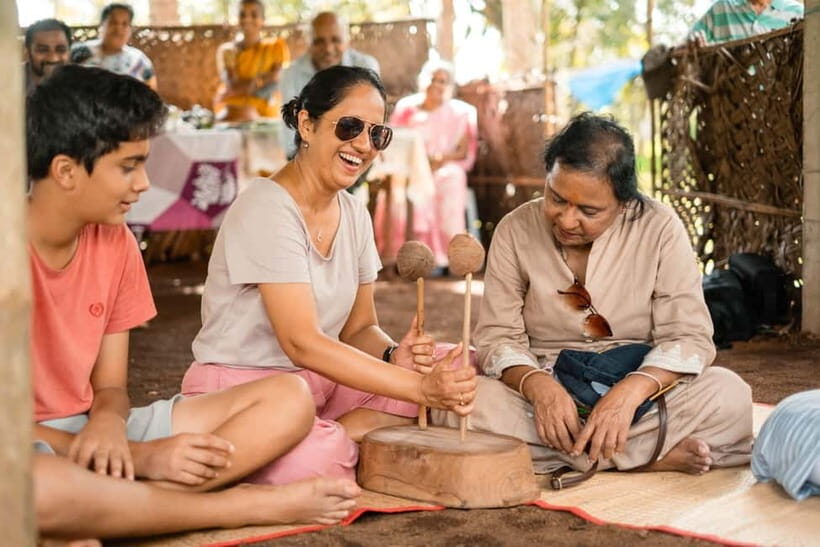
After Kelbai Temple, you spend guided time exploring the village’s holy sites. The tour description emphasizes mystical shrines and sacred places, but what you’ll feel in practice is the meaning behind the locations.
One guide approach you’ll likely experience is the linking of each stop to revered guardian deities worshipped by locals. That turns the tour from a list of stops into a guided map of belief—why the community gathers, what they’re asking for, and how the shrines fit into village life.
This is also where the tour earns its “easy pace” reputation. You’re not doing miles of walking. You’re moving between points, learning as you go, and pausing where the guide wants you to notice details.
The coconut farm visit at Mulgão Verde (the hands-on part)
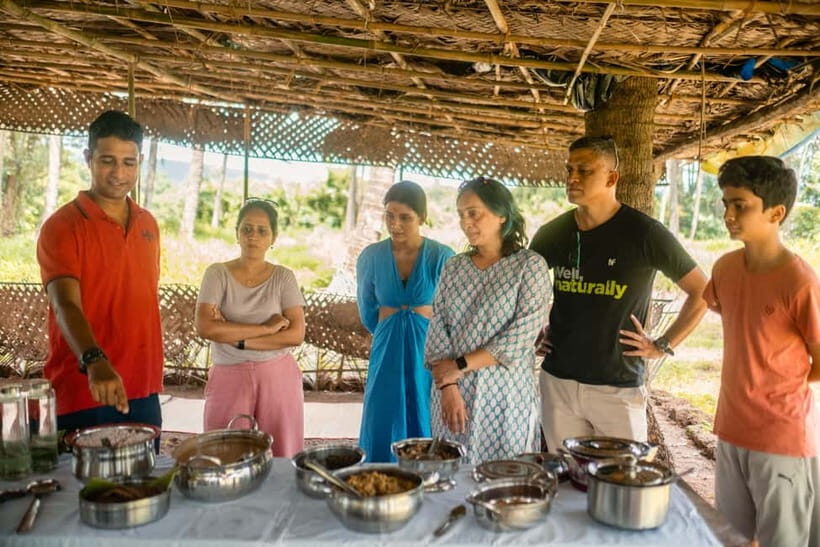
Then you shift gears from shrines to agriculture. The farm stop—Mulgão Verde—runs as the core of the experience, and you’ll spend about 1.5 hours here.
This visit is built around an organic coconut farm and the production of virgin coconut oil. That’s the big takeaway, because virgin coconut oil isn’t just a product name; it’s a set of steps. The guide will explain the process in a way you can follow, and you’ll also learn how the farm thinks about other products made from the coconut palm.
If sustainability matters to you, pay attention to the farm’s zero waste and sustainable initiatives. Even if you don’t leave with a notebook full of techniques, you’ll come away with a clear idea: in this kind of farming system, you try to use more of what you grow and waste less of it.
And yes, this is the part where you’ll likely smell, look, and ask questions more than you did in the temple area. Farm tours feel more grounded because the information is tied to what’s happening in front of you.
Coconut palm life: why one tree supports so much
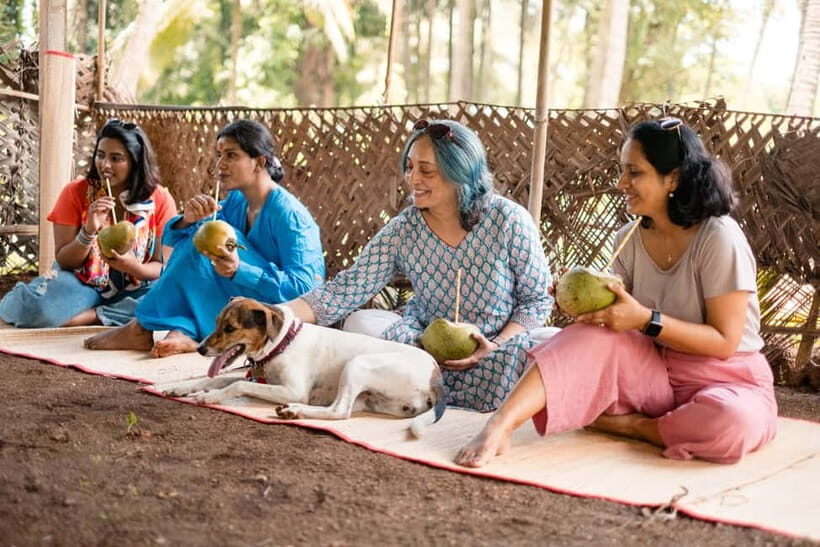
Goa’s coconut palm isn’t only for coconuts in a hotel juice bar. This tour is designed to show you the many uses of the coconut palm in daily life in Goa, and that’s a valuable angle if you want a real sense of place.
The tour’s focus on coconut oil production also makes the palm feel practical. You start connecting:
- farm practices to the end product
- what happens after harvest to what ends up on a kitchen shelf
- sustainability to how the farm uses byproducts
If you’ve ever wondered why coconut keeps showing up in Goa food, homes, and small local businesses, this farm stop is where the dots connect.
The vegetarian Goan meal: farm-to-table, right after the learning
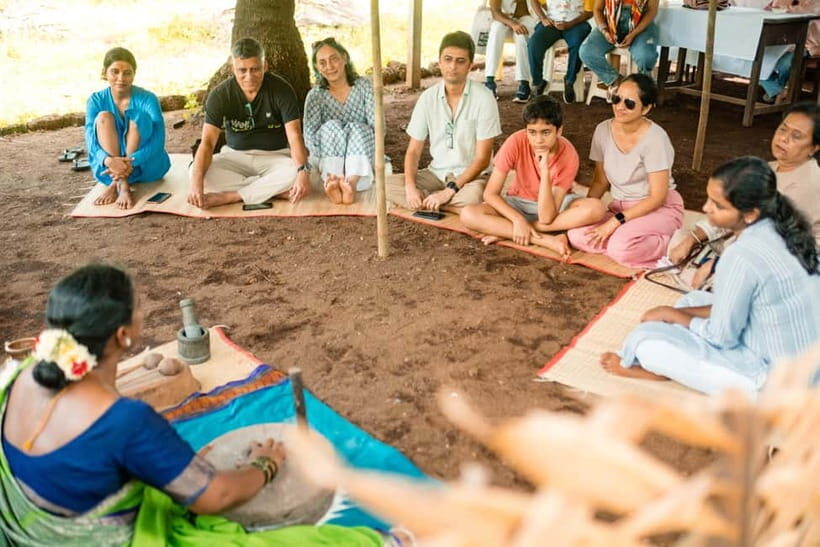
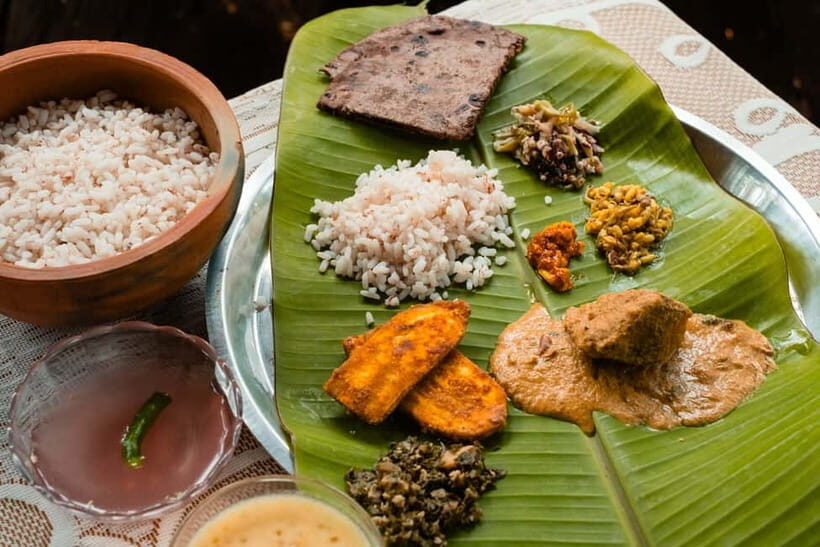
Your day finishes with a traditional Goan vegetarian meal hosted at the coconut farm. This is one of those details that can make a short tour feel like a complete experience.
Why it’s worth caring about: when food comes right from the place you’re learning about, you understand the logic behind the meal. You’re not eating as a side activity. You’re eating as part of how the day’s story ends—with local villagers preparing the food in a setting tied to the farm.
In one recent experience, the meal was described as fantastic and especially authentic, which lines up with the idea that this isn’t a generic buffet stopping point. It’s a meal connected to the people who run the land.
Practical tip: since you’re in the sun and you’ll likely walk on uneven farm paths, the meal timing is well-placed. It gives you a chance to cool down and sit.
Transportation reality inside the village
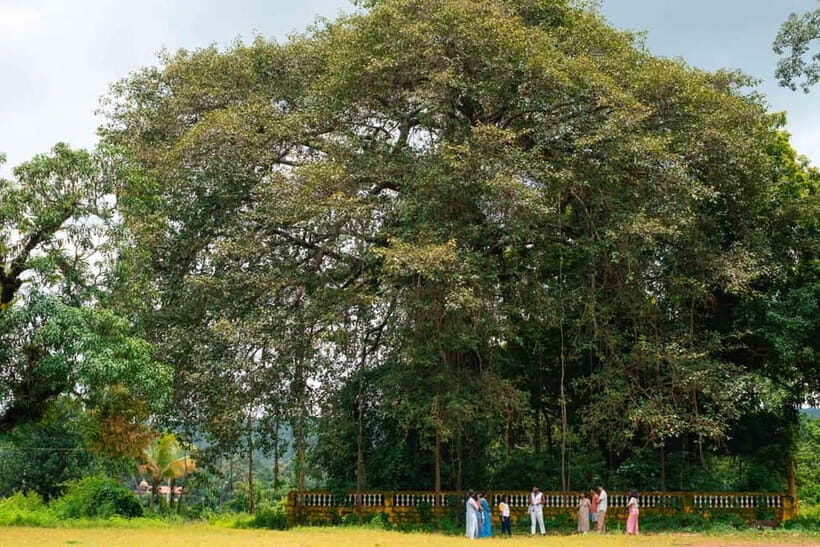
A key note before you go: this experience requires transportation within the village. The tour is not a long hike, but you also aren’t doing it by foot everywhere.
So you’ll want to plan your arrival and movement around Mulgao like this:
- Bring a vehicle solution you can use during the tour (either your own or transport you arrange)
- Don’t assume you can just walk between each sacred spot and the farm
- Expect some time outdoors in sun, depending on the day
This is also why comfortable clothing matters. You’re in a village and on a farm, not a museum. Choose clothes that handle heat and dust, and bring water.
What you’ll like most (and who it’s best for)
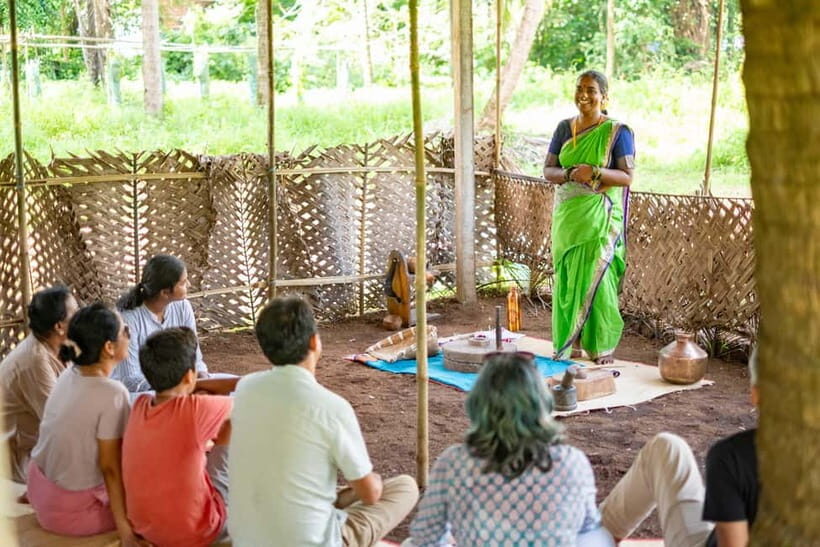
This tour is ideal if you want a short, focused taste of North Goa that goes beyond coastlines. It works especially well for:
- couples or solo travelers who enjoy local stories and sustainable food systems
- travelers who like agriculture as much as sightseeing
- anyone interested in how everyday life connects to sacred spaces
- readers who care about organic and zero-waste concepts, but don’t want a technical lecture-only experience
It’s less ideal if you want a pure walking tour where you control every step, or if you have mobility limitations. The tour is not suitable for wheelchair users.
Price and value: why $30 makes sense here
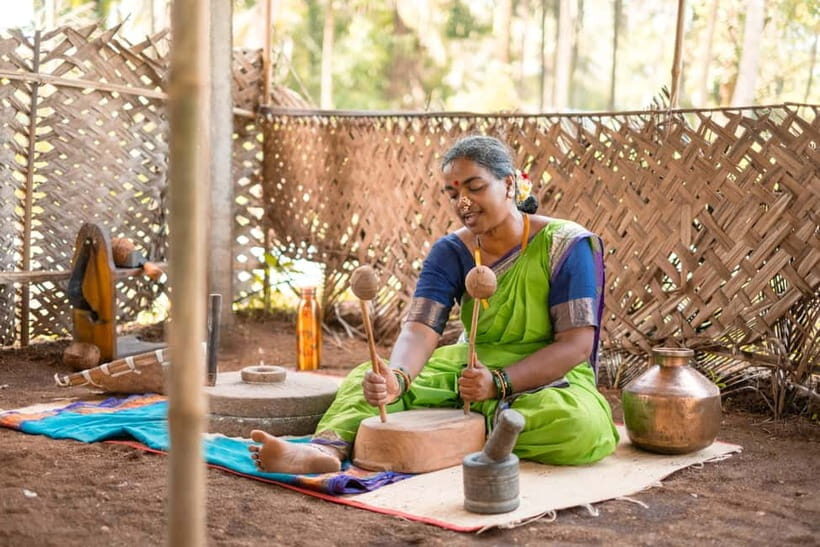
At $30 per person for about 3 hours, the value is in what’s included—not just the number of stops. You’re paying for:
- a local English-speaking storyteller
- entry-style visits to multiple shrines and holy sites
- an organic coconut farm tour
- explanation of virgin coconut oil production and coconut-based products
- a traditional Goan vegetarian meal prepared by local villagers
That’s a lot of “people time” and on-the-ground access for a relatively short window. If you only wanted one temple photo and a quick snack, you could probably find cheaper. But if you want a guided cultural day tied to farming and food, this price feels fair for the mix you get.
Small rules that help the day run smoothly
The tour has a few no-go items:
- no smoking
- no alcohol and drugs
And the provider doesn’t supply umbrellas, raincoats, hats/caps, face masks, or sanitizers. So pack your own essentials and keep it simple.
What to bring so you’re comfortable
Even though it’s only about 3 hours, the experience includes farm time and sun exposure. Bring:
- comfortable shoes (farm ground can be uneven)
- a hat
- sunscreen
- water
- a camera if you want to capture the temple details and farm scenes
Should you book Mulgao Village and Coconut Farming?
I’d book it if you want an on-the-ground Goan day that mixes spirituality, farming, and food in a way that doesn’t require a full day plan. It’s a smart choice for travelers who like experiences with meaning, not just checklists.
Skip it if you strongly prefer fully walkable routes, need wheelchair access, or don’t have a way to handle transportation within the village. If you can solve that transport piece, this tour gives you a lot of insight per hour—especially through the coconut farm and the virgin coconut oil focus.
FAQ
How long is the North Goa Mulgao Village and Coconut Farming experience?
It runs for 3 hours.
Where does the tour start and end?
It starts and returns to Kelbai Temple, Mulgao.
What’s the price per person?
The price is $30 per person.
Is the tour guide available in English?
Yes, the tour has a live guide in English.
What activities are included?
You’ll visit Mulgao village shrines and holy sites, tour an organic coconut farm (Mulgão Verde), learn about virgin coconut oil production, and have a vegetarian Goan meal prepared by local villagers.
Do I need transportation during the experience?
Yes. The tour is not a walking trail and requires transportation within the village. You’ll need to arrange your own vehicle or transport mode.
What should I bring and what is not allowed?
Bring comfortable shoes, a hat, sunscreen, and water. Smoking and alcohol/drugs are not allowed.