REVIEW · NEW DELHI
New Delhi Sanjay Colony slum Tour (Private Tour)
Book on Viator →Operated by Delhi by Locals · Bookable on Viator
One short tour can change how you see Delhi. This private Sanjay Colony slum tour is built around everyday realities: how people work (including clothing work), how faith shapes daily life (you’ll visit a temple), and the day-to-day challenges around water, electricity, and hygiene. I especially liked the balance of practical information with real human stories, and the fact that your visit supports a local nonprofit called Learning by Locals.
The main drawback to plan for: this is a camera-free experience, so if you want photos as your main souvenir, you’ll need to lean on memory instead.
In This Review
- Key Highlights You’ll Notice Right Away
- Price and Value for This 1.5-Hour Private Tour
- Where to Meet: Harkesh Nagar Okhla Metro Gate (and Why It Matters)
- The Tour Style: Respect First, Questions Welcome, Cameras Stay Off
- Stop 1: s.d.m.c Primary School and the Education Story
- Temple and Faith: How Belief Shows Up in Daily Life
- Homes and Day-to-Day Challenges: Water, Electricity, Hygiene
- Learning By Locals: Tea, Public School Context, and Local Interaction
- How Clothing Work Fits Into the Bigger Picture
- What You’ll Learn About Living Systems (Not Just Living Conditions)
- Group Size, Privacy, and Feeling Safe
- Who This Tour Is Best For (and Who Might Skip It)
- Should You Book the Sanjay Colony Private Tour?
- FAQ
- Is this tour private?
- How long is the New Delhi Sanjay Colony slum tour?
- How much does it cost?
- What’s included in the price?
- Where does the tour start and end?
- Do I get any tickets included?
- Can I take photos during the tour?
- Who benefits from this tour?
- What will we see during the tour?
- Is public transportation nearby?
- Can I cancel for a full refund?
Key Highlights You’ll Notice Right Away
- No photography allowed, which keeps the tone respectful and focused on people, not your camera roll
- A real school stop, including time at s.d.m.c Primary School to understand education in the area
- Temple + faith context, so you get more than “poverty facts” and learn what belief means day to day
- Local guide focus, and the guides (including Sukh, Badal, and Pradeep) are known for being friendly and careful with your comfort
- Tea and water included, a small touch that also makes the tour feel human and grounded
- 50% of profits support Learning by Locals, so your money goes back into the community
Price and Value for This 1.5-Hour Private Tour
At $35 per person for an experience that lasts about 1 hour 30 minutes, the cost is less about a “tourist product” and more about paying for a local, on-the-ground guide plus community benefit. You’re not just watching from the outside. You’re guided through a neighborhood’s systems and daily life with a clear educational purpose.
Here’s what you get that helps justify the price:
- A local guide who leads the route and conversation
- Local tea and a bottled water
- A private format (your group only), with a maximum of 6 people
On top of that, 50% of profits go back to the nonprofit Learning by Locals in the slum. That makes this feel like support with structure, not charity with a photo op.
You can also read our reviews of more private tours in New Delhi

Where to Meet: Harkesh Nagar Okhla Metro Gate (and Why It Matters)
You’ll meet at Harkesh Nagar Okhla Metro, Gate no. 2 (the listing also shows the location code “2G7VG+62H”), and the tour ends back at the same meeting point. I like meeting by a metro stop because it keeps the whole day calmer. You can connect by public transportation instead of building your schedule around a taxi pickup.
Two practical notes:
- Plan to arrive a few minutes early, since the tour starts from that exact gate area.
- Bring your phone just in case you need your mobile ticket and confirmation details.
The Tour Style: Respect First, Questions Welcome, Cameras Stay Off
This tour is designed to be respectful, and the rules reflect that. Photography is not allowed during the tour. That means you’ll be standing in people’s world without turning it into content.
I like this approach for two reasons:
- You’re more likely to actually listen and ask questions.
- The community doesn’t feel like a backdrop for someone else’s vacation.
The tours are also set up as a private experience. With up to 6 people, it tends to be easier for a guide to slow down, answer questions, and adjust if a question needs more explanation.
And from the way the guides are described in feedback you can find, safety and comfort are taken seriously. People highlight that the guides and drivers feel professional and friendly, which is exactly what you want for a first-time visit to a neighborhood like this.
Stop 1: s.d.m.c Primary School and the Education Story
The first stop is s.d.m.c Primary School. This is short time-wise (about 5 minutes), but it’s an important anchor for the whole tour. Schools are where you can see how a community thinks about the future, even when resources are strained.
What you’re meant to understand here:
- The education system in Delhi and how it plays out locally
- The role of schooling inside a tight living environment
- How local support and public institutions can shape options for kids
The school visit is not set up as a “look and leave” photo moment. Instead, it works as part of a bigger explanation about everyday systems. If you care about practical understanding over spectacle, this stop does its job fast.
One consideration: because the visit time is brief, you shouldn’t expect long conversations at the school itself. The value is in the context the guide connects to other stops.
Temple and Faith: How Belief Shows Up in Daily Life
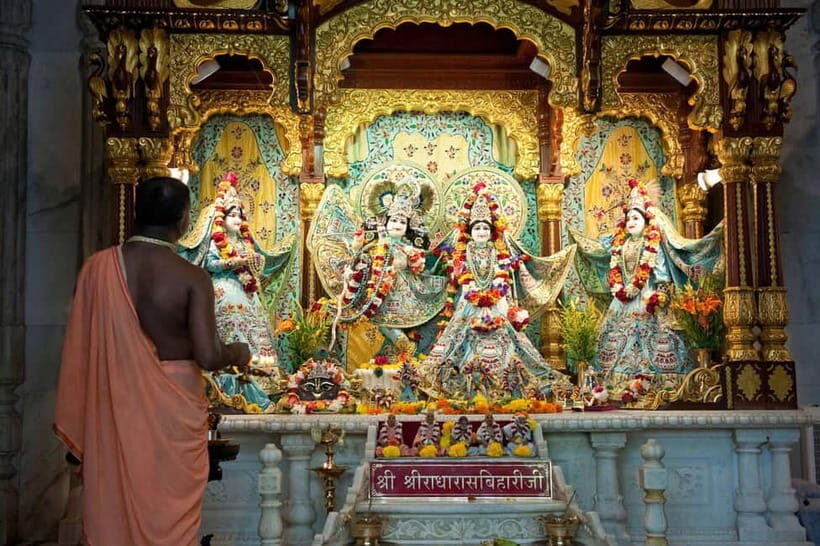
Faith is not treated as an abstract topic here. You’ll visit a temple and learn about the significant role belief plays in people’s lives.
I found this part especially useful because it stops the tour from becoming one-note. Instead of reducing life to only survival needs, the experience shows something sturdier: routine, meaning, and community structure.
During this segment, you’ll also hear how daily life ties into bigger systems:
- how people keep going through challenges
- how faith shapes decisions and habits
- why community spaces matter beyond their primary purpose
If you’re the kind of traveler who likes context, this temple visit is a turning point. It helps you understand why people’s lives can be difficult and still feel coherent.


Homes and Day-to-Day Challenges: Water, Electricity, Hygiene
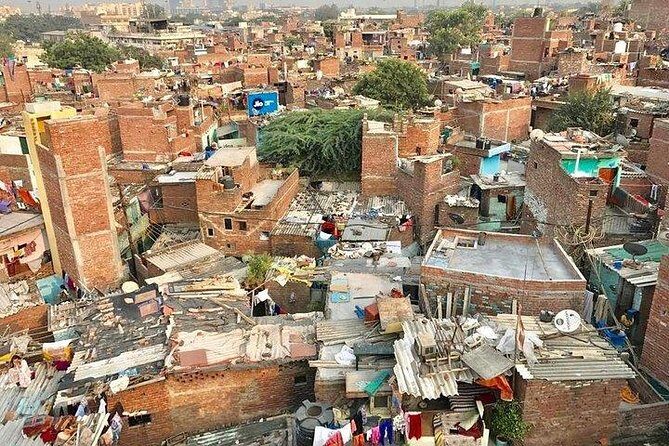
This tour doesn’t sugarcoat living conditions, but it also avoids turning them into shock value. You’re shown the real day-to-day challenges locals navigate—especially around:
- Water
- Electricity
- Hygiene
This is where you’ll get the practical side of the story. You’ll learn how people manage basic needs in an area with heavy density, where services may be limited or complicated.
Why this matters for you as a traveler: it changes how you interpret what you see on the street. Without this kind of explanation, you might read things only as “messy urban life.” With the guide’s context, you start seeing systems, tradeoffs, and coping strategies.
Potential drawback: if you’re sensitive to tough realities, this section may feel heavy. The tour is respectful, but it still deals with real constraints. If you tend to get overwhelmed easily, it may help to go with a steady pace mentally, not expecting everything to be light.
Learning By Locals: Tea, Public School Context, and Local Interaction
The second stop is at Learning By Locals, and this is where the experience becomes more conversational and community-centered. This is described as an area where you:
- experience daily life through the guide’s explanations
- learn about the education system and visit a public school from the outside
- see the role of faith again through a temple visit within the tour flow
- understand challenges of living in the slum and interact with locals
- enjoy a cup of local tea and get a water bottle
That tea part is more than a perk. It gives you a moment to slow down, talk like a human, and ask questions that don’t fit into a quick “walking tour” format.
Also, interacting with locals is key. It’s not just a slideshow of facts. The tour is built for dialogue, so you can ask how things work, what’s improving, and what day-to-day life actually feels like.
One more helpful detail: the tour includes a “public school from the outside” element here. That helps you place education in the environment you’ve already started to understand.
How Clothing Work Fits Into the Bigger Picture
The overall concept includes seeing how people work in the clothing industry. Even if you’re not focused on fashion, this matters because jobs explain everything else: schedules, income patterns, family responsibilities, and how people survive economically inside dense conditions.
This kind of work-based context is exactly what I look for in community tours. It moves you beyond stereotypes and into real-world structure. You start to understand how daily life is organized around livelihoods, not just around hardship.
The tour also frames this within homes and neighborhoods, so you get a fuller picture:
- work happens in close quarters
- family life overlaps with job life
- community systems influence both
What You’ll Learn About Living Systems (Not Just Living Conditions)
A lot of tours in major cities cover “what it looks like.” This one leans toward “how it functions.”
As the route builds, you get a layered understanding of:
- how education is approached locally
- how faith and temple life fit in
- how water, electricity, and hygiene challenges get handled
- how local work (including clothing) supports daily survival
I like this because it helps you make sense of what you see after the tour too. Instead of leaving with only images, you leave with a mental map of systems.
Group Size, Privacy, and Feeling Safe
With a maximum of 6 people per booking, you’re not lost in a crowd. That’s a real quality-of-life upgrade on tours like this. It also makes the no-photography rule easier to follow without friction.
Private tour also means your group can set the pace within reason. If someone has a question, you’re more likely to get an answer instead of being rushed to the next photo stop.
Based on feedback tied to the experience’s guides, visitors often note they feel safe and cared for. That’s not something you should ignore, especially for tours that go beyond standard sightseeing routes.
Who This Tour Is Best For (and Who Might Skip It)
This tour is a great fit if you want:
- a respectful, community-driven experience
- real context about life in Delhi beyond the postcard
- a tour that supports Learning by Locals directly
- a format with time for questions, not just walking and snapping photos
You might consider skipping if:
- you strongly prefer photo-heavy sightseeing
- you’re uncomfortable discussing water/electricity/hygiene realities
- you only have time for standard top sights and want “lighter” content
If you’re traveling with teens or curious adults who like social context, this can be one of the most meaningful hours in Delhi. It’s not a theme park version of culture. It’s a guided look at daily systems.
Should You Book the Sanjay Colony Private Tour?
I’d book it if you want a serious, respectful look at community life in Delhi, with a guide who explains how education, faith, work, and basic services connect. The value calculation is strong: $35 includes local guidance, tea, water, and a direct link of 50% of profits back to Learning by Locals.
The big “yes” comes with one clear tradeoff: you’re going to experience this with your eyes and questions, not a camera. If that fits your style, you’ll likely leave with a better understanding of how people live, work, and keep faith at the center of daily life.
FAQ
Is this tour private?
Yes. It’s a private tour/activity where only your group participates, with a maximum of 6 people per booking.
How long is the New Delhi Sanjay Colony slum tour?
The duration is about 1 hour 30 minutes.
How much does it cost?
The price is $35.00 per person.
What’s included in the price?
You’ll get a local guide, local tea, and a water bottle.
Where does the tour start and end?
It starts at Harkesh Nagar Okhla Metro Gate no. 2 and ends back at the same meeting point.
Do I get any tickets included?
The stop at s.d.m.c Primary School notes admission ticket free.
Can I take photos during the tour?
No. Photography is not allowed on this tour.
Who benefits from this tour?
The tour states that 50% of profits go back to the nonprofit Learning by Locals in the slum.
What will we see during the tour?
You’ll visit s.d.m.c Primary School, spend time at Learning By Locals, visit a temple, learn about education, and learn about day-to-day challenges like water, electricity, and hygiene, plus you’ll experience daily life through interaction with locals.
Is public transportation nearby?
Yes. The tour is noted as being near public transportation.
Can I cancel for a full refund?
Yes. Free cancellation is available up to 24 hours in advance for a full refund.