REVIEW · DHARAVI
Mumbai Night Lights Tour
Book on Viator →Operated by Young Tours And Travel · Bookable on Viator
Mumbai at night feels like a different country. This 4-hour Mumbai Night Lights Tour strings together classic landmarks and real neighborhoods, so you get the city’s after-dark rhythm instead of just postcard views. It’s run with an experienced guide, with pickup options and an air-conditioned ride between stops.
What I like most is the mix: Marine Drive and the Gateway of India give you that signature South Mumbai shine, while the later stretch brings you to places most visitors rush past. Second, the guiding stands out in real-world ways: guides you’ll meet on this route have been praised for being informed, friendly, and willing to adjust pace when someone needs extra care.
One possible drawback: the schedule is tight, with several stops kept to about 10–15 minutes, and the experience requires good weather. If rain or crowds make walking tough, you’ll feel it more because the tour keeps moving.
In This Review
- Key points to know before you go
- Why Mumbai’s night vibe fits a 4-hour plan
- Chhatrapati Shivaji Terminus area: the city’s railway soul after dark
- Marine Drive: promenade lights that actually help you understand Mumbai
- Hanging Gardens (Kamala Nehru Park): a viewpoint pause above the noise
- Gateway of India: classic monument photos and the laser-show possibility
- Colaba Market at night: where the city shops, not just sightseeing
- Banganga Tank and Walkeshwar Temple Complex: a quieter pocket of meaning
- Dharavi at night: the long stop that changes the tone of your trip
- Price and logistics: does $49 feel fair for what you get?
- Guides make the difference: Roy, Rahul, Kamlesh, Sahil, Hassan
- Who should book this Mumbai night tour (and who should skip it)
- Should you book the Mumbai Night Lights Tour?
- FAQ
- How long is the Mumbai Night Lights Tour?
- Is pickup included?
- What’s included in the price of $49 per person?
- Is dinner included?
- What if the weather is poor?
- Are service animals allowed?
Key points to know before you go
Victoria Terminus Area at night: A quick, atmospheric look at the railway headquarters landmark.
Marine Drive promenade: A long, photogenic stretch of lights along the water.
Malabar Hill Gardens stop: A viewpoint-style pause at Kamala Nehru Park within the Hanging Gardens complex.
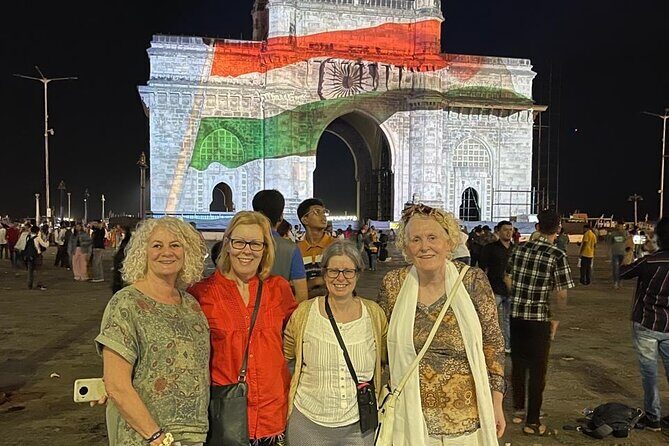
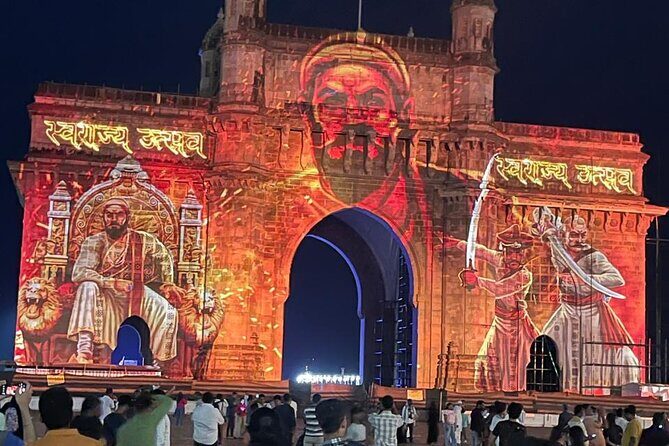
Gateway of India after dark: Time to take in the arch-monument lighting, with a chance to catch a laser show when it’s running.
Banganga Tank moment: A calmer break near the Walkeshwar Temple Complex.
Dharavi is the long stop: Around 2 hours, letting you see the neighborhood’s energy instead of a quick photo stop.
Why Mumbai’s night vibe fits a 4-hour plan
Mumbai is one of the few places where night doesn’t quiet down. The city keeps working, eating, chatting, traveling, and shopping long after other places have gone still. That’s exactly why a night tour works here: you’re not just viewing lights, you’re viewing people.
This tour is built to cover a lot of ground without dragging. You’ll hop between major South Mumbai landmarks and then head toward Dharavi, with enough time in that last segment to feel the shift from monument time to neighborhood time. You’ll also move by air-conditioned vehicle, which matters when you’re out in the evening heat or caught in a sudden rain.
The pace is part of the deal. Several stops are designed for a quick look and photos, while one major area (Dharavi) is longer. If you like slow walks and deep museum-style time, you may find the earlier stops a bit brief.
You can also read our reviews of more tours and experiences in Dharavi.
Chhatrapati Shivaji Terminus area: the city’s railway soul after dark
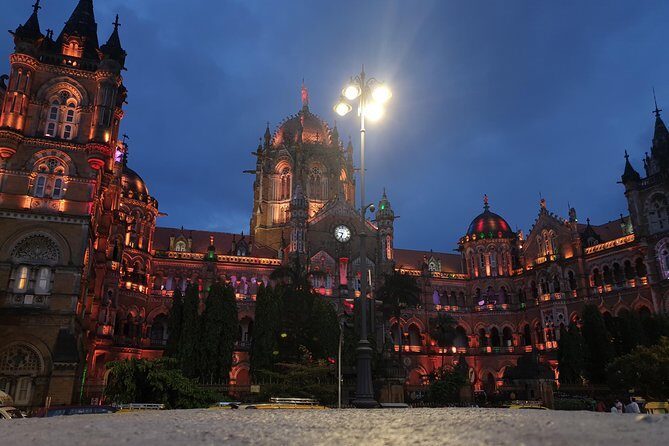
Your tour starts around Chhatrapati Shivaji Terminus (Victoria Terminus). This isn’t only a pretty building. It’s a symbol of Mumbai’s railway legacy, originally built as the Great Indian Peninsular Railway headquarters.
At night, that kind of landmark hits differently. Daytime tends to flatten it into a transit stop. After dark, the scale reads more clearly, and the area feels like the city is doing its real daily work—arriving, departing, going home, heading out again.
A practical note: this is a short stop (about 15 minutes). Treat it like orientation and photos first, then listening second. The guide will help you connect the architecture to Mumbai’s role as a city always in motion.
Marine Drive: promenade lights that actually help you understand Mumbai
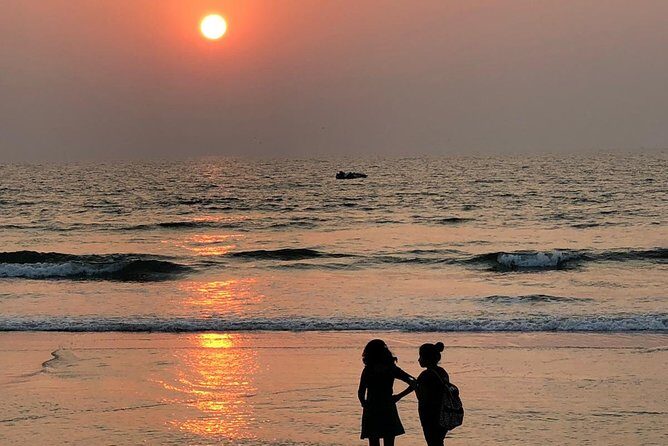
Next up is Marine Drive, the famous 3.6-kilometre promenade along Netaji Subhash Chandra Bose Road. People come here for the view, but the best part is how the lights behave like a line guiding you through the city.
In real terms, Marine Drive is a gift for travelers who want both atmosphere and easy navigation. You can look toward the sea, watch the flow of people, and still stay oriented. It also makes a good photo stop because the setting is naturally framed.
This stop is shorter (around 10 minutes), so I’d focus on two things: one wide shot and a couple of tighter ones where the light reflections show up. If you get stuck chatting, you can lose the prime moment without realizing it.
Hanging Gardens (Kamala Nehru Park): a viewpoint pause above the noise
Then you’ll head to Kamala Nehru Park, part of the Hanging Gardens complex on Malabar Hill. The park setup helps you feel Mumbai’s vertical story—how buildings, sea air, and traffic mix up there.
This is one of those “stand here, look around, breathe for a minute” stops. Even if your feet are tired from walking earlier, the viewpoint angle makes the short time feel worthwhile. The stop is about 15 minutes, so it’s not meant for a long park hang.
If it’s rainy, you’ll probably get less time for wandering. But even under dull skies, this is a solid place for a calm reset before the bigger sights.
Gateway of India: classic monument photos and the laser-show possibility
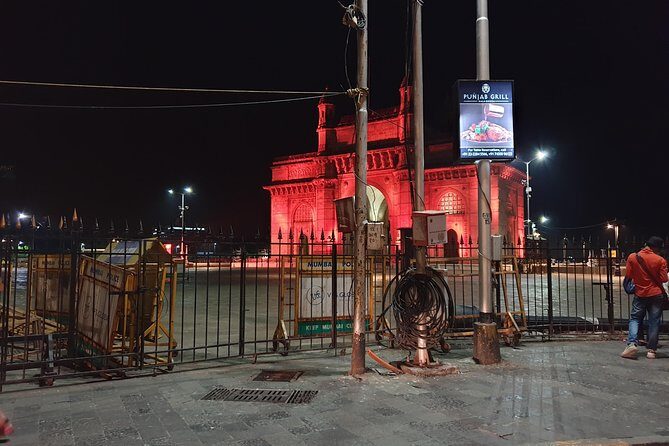
The Gateway of India is the arch-monument built in the early 1900s to commemorate King-Emperor George V’s 1911 landing. At night, it becomes the anchor point of the area—like the city’s photo stage lights up with purpose.
You’ll have around 15 minutes here. That’s enough time for photos and for taking in the scale. It’s also one of the places where you might catch extra spectacle, because a laser show has been mentioned as a highlight during evening visits. It won’t be something you should count on every night, but it’s worth keeping an eye out.
If you’re the type who likes to read the scene like a movie (people arriving, couples strolling, street energy near the water), Gateway time is your moment. If you’re more practical, it’s also a strong landmark for meeting back up if your group splits for photos.
Colaba Market at night: where the city shops, not just sightseeing
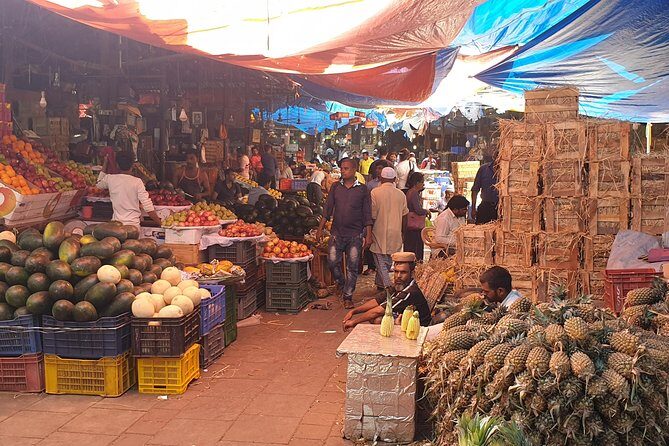
After the monuments, you’ll move into Colaba Market territory. Colaba gets its name from Kolabhat, linked to the Kolis, the indigenous inhabitants of the islands before the Portuguese arrived.
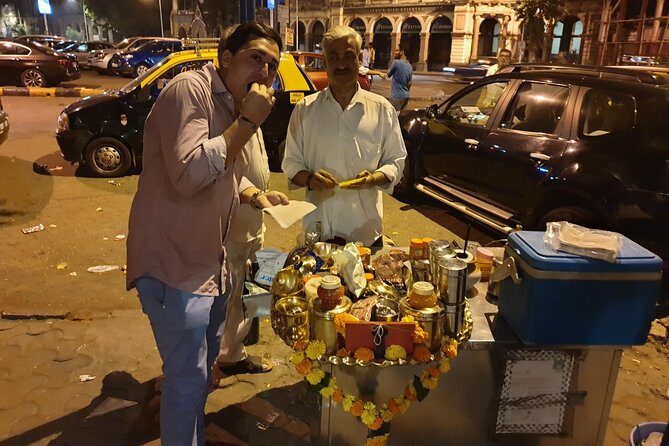
The main value of this stop isn’t that it’s a tidy shopping mall. It’s that it shows how Mumbai evenings look when people are out doing normal life things—browsing, bargaining, snacking, moving in clusters. This is a 15-minute stop, so think quick browsing rather than serious shopping.
Because it’s a short window, I’d do this: decide ahead of time what you’re shopping for (small gifts, simple souvenirs, snacks), then stick to that plan. If you try to compare everything, the clock will win.
Banganga Tank and Walkeshwar Temple Complex: a quieter pocket of meaning
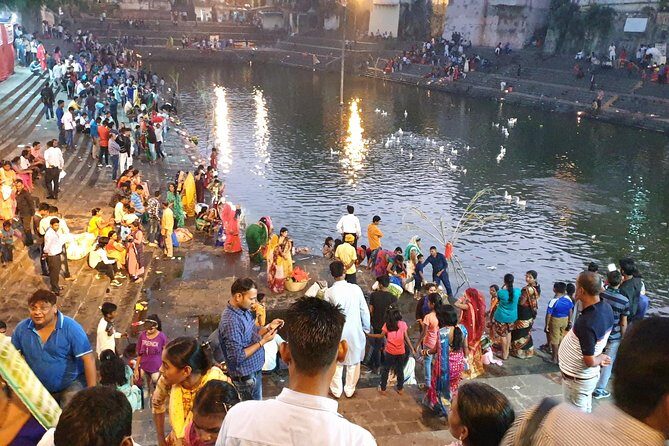
Next is Banganga, the ancient water tank that’s part of the Walkeshwar Temple Complex on Malabar Hill. This stop is about 15 minutes, but it often feels longer because the energy is different from the streets below.
Why it matters: Mumbai isn’t only lights and crowds. This area gives you a chance to see how spiritual spaces sit inside the city’s daily evening flow. Even if you’re not religious, you’ll likely feel the shift—less rush, more stillness in the immediate area.
Practical tip: wear something comfortable for a short walk and be ready for uneven ground. The stop is brief, so move carefully. Your guide can point out what’s worth noticing without turning it into a lecture.
Dharavi at night: the long stop that changes the tone of your trip
The tour’s biggest segment is Dharavi, with about 2 hours set aside. Dharavi is known as one of Asia’s largest slum areas, with a population over a million and diverse communities. It’s also known for its bustling economy.
This is where your night tour becomes more than sightseeing. The vibe is busy and human in a way that a landmark stop can’t replicate. The goal isn’t to treat Dharavi like a spectacle. It’s to understand how neighborhoods function after dark—work, trade, community life, and constant movement.
Because you have more time here, you’ll have a better chance to get your bearings. I’d also remind yourself that this is a living community, not a theme park. Keep your voice normal, take photos only if it’s clearly appropriate, and follow your guide’s cues.
If you’re someone who prefers comfort over intensity, this may be the most challenging segment emotionally. It’s also often the most memorable—because it shows Mumbai’s real texture.
Price and logistics: does $49 feel fair for what you get?
At $49 per person for about 4 hours, the value depends on what you want from a night tour. You’re paying for a guided route that covers multiple named locations and keeps you moving by vehicle. That means less time figuring out transport at night and more time using the city.
You also get bottled water and an air-conditioned vehicle, which are simple but genuinely useful extras in Mumbai evenings. Pickup is offered, and the tour can include group discounts depending on your booking arrangement.
One important detail: dinner is included only for private booking. If you’re booking as a group and want a full evening meal covered, private setup is the one to choose. In a dinner-including experience, the food was described as yummy, which tells me the meal isn’t an afterthought.
Not included: tips. That’s typical, but it does mean you should factor in a bit of extra cash so you’re not scrambling later.
Guides make the difference: Roy, Rahul, Kamlesh, Sahil, Hassan
Even with the same route, a night tour lives or dies by the guide. Here, the guiding has been praised for being informative and for creating an easy, confident feel.
Names that show up in standout accounts include Roy, who was described as knowledgeable and friendly. Rahul is linked to an evening experience with stunning lights and a chance to catch a laser show at the Gateway of India area. Kamlesh was noted for adjusting the pace for an older guest and making sure they didn’t fall—exactly the kind of careful guidance that turns a sightseeing walk into a safe experience. Sahil earned strong praise for keeping the tour enjoyable even when it was raining, and Hassan was recognized as a confident driver.
What you should take from this: if you have mobility concerns, bring them up early. Night tours move fast, and good guides plan for that. If you’re traveling with kids or want a slower rhythm, ask your guide to set the pace before you start.
Who should book this Mumbai night tour (and who should skip it)
This tour is a good fit if you want a single evening that hits famous South Mumbai sights and then contrasts them with a neighborhood like Dharavi. It also works well if you like guided context, because you’ll be walking away with more than just pictures.
It’s especially suitable if you:
- Want an organized route at night with transportation handled
- Like seeing Mumbai’s contrast, from iconic monuments to everyday city life
- Prefer a tour where one major area gets enough time (Dharavi gets about 2 hours)
I’d think twice if you:
- Want long, slow stays at each spot
- Hate street-level settings and the emotional weight Dharavi can bring
- Are sensitive to changes in weather and walking conditions, since the tour expects good weather
Should you book the Mumbai Night Lights Tour?
If your goal is to see Mumbai after dark without wasting hours on navigation, this tour is a strong option. The combination of Marine Drive, Gateway of India, and the longer Dharavi segment gives the evening a real arc—lights, landmarks, then city life.
I’d book it if you’re the type who likes contrast and is comfortable with a busy city neighborhood. I’d also book it if you want a guided approach that helps you keep moving safely at night, especially given the positive comments about pacing and confident driving.
I’d pass or look for an alternative if you want a slow-paced, sit-down-everywhere kind of evening. This isn’t that. It’s an energetic night route designed to fit into one memorable block.
FAQ
How long is the Mumbai Night Lights Tour?
The tour runs for about 4 hours.
Is pickup included?
Pickup is offered, and you’ll also have air-conditioned vehicle transportation during the tour.
What’s included in the price of $49 per person?
The tour includes an air-conditioned vehicle and bottled water. Mobile ticket delivery is also provided. Dinner is only included for private booking.
Is dinner included?
Dinner is included only for private bookings, not for every booking type.
What if the weather is poor?
The experience requires good weather. If it’s canceled due to poor weather, you’ll be offered a different date or a full refund.
Are service animals allowed?
Yes, service animals are allowed on this tour.