REVIEW · PONDICHERRY
Mehendi Art Class in Pondicherry
Book on Viator →Operated by Sita Cultural Center · Bookable on Viator
Mehendi feels like instant culture you can hold. In Pondicherry, this family-friendly class at Sita Cultural Centre teaches the basics of Mehendi step by step, including how to make your own paste and practice designs before you paint your hand. I especially like that you start on paper first and then move to skin, so you build confidence fast. One thing to plan for: you’ll need to leave the paste on for at least an hour before you scrape off the dry henna.
You get a real explanation of what Mehendi means in Indian ceremonies, plus a look at patterns and drawing styles that show up around the world. It’s also set up for beginners, so you won’t feel behind even if this is your first time holding a henna cone.
Small groups make a difference here. The class is designed for up to 6 people and allows a maximum of 2 per booking, so the teacher can slow down when questions come up (and you’ll likely have plenty). There’s no hotel pickup or food included, so you’ll want to build the timing around your afternoon plans in White Town.
In This Review
- Key things you’ll notice before you go
- White Town at 3:00 pm: a calm, creative stop
- Mehendi as ceremony: what the teacher explains
- Making your own mehendi paste from crushed powder
- Paper draft practice first: how the design actually comes together
- Choosing placement and getting your henna design
- Instructor energy: patience, questions, and small-group attention
- Price and value: why $11.54 can be a smart buy
- Timing, what’s not included, and how to plan your afternoon
- Who this class is best for (and who might skip it)
- Should you book this Mehendi Art Class in Pondicherry?
- FAQ
- Where is the meeting point for the Mehendi class?
- What time does the class start?
- How long does the Mehendi art class last?
- What is the minimum age to join?
- How many people are in the group?
- Do you make your own mehendi paste in the class?
- Do you practice designs on paper before using your hand?
- How long should you leave the henna on before removing it?
- Is food included, and do they provide hotel pickup?
Key things you’ll notice before you go
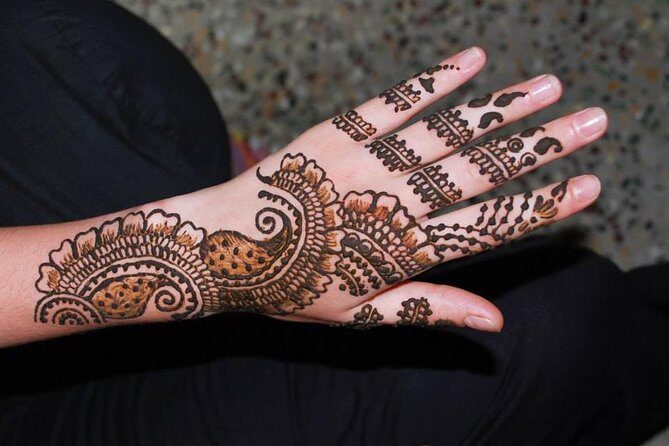
- You learn purpose, not just patterns, with an explanation of Mehendi’s role in Indian ceremonies.
- You make paste from crushed powder, so it feels hands-on from minute one.
- Paper practice comes first, then you trace and copy lines before painting your own hand.
- You leave with a design, plus a clear setting time before the paste gets scraped off.
- The class is built for beginners and families, with a minimum age of 8.
White Town at 3:00 pm: a calm, creative stop
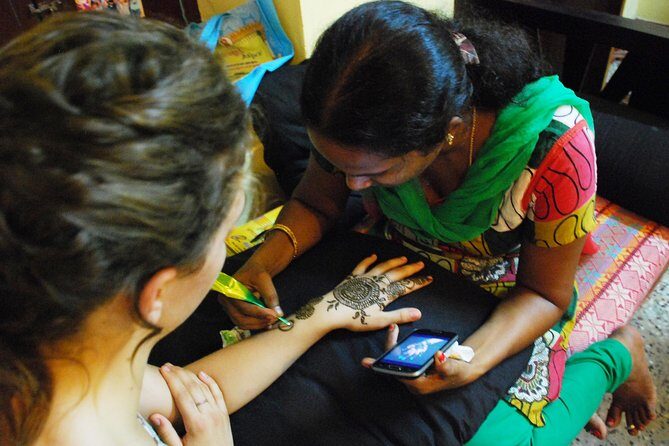
Pondicherry’s White Town is full of sights, shops, and busy streets—but a Mehendi class is a nice change of pace. This one starts at 3:00 pm at Sita Cultural Centre, a practical meeting point in the tourist-focused area. It’s close enough that you can usually walk there easily, and the listing notes it’s near public transportation, which matters in a place where traffic and rickshaws can move slowly.
The session runs about 1 hour 30 minutes, which is long enough to learn something real without eating your whole afternoon. I like that the format doesn’t rush you into perfect results. You’re taught how to hold the design tools, how lines should look, and how patterns are built—so even if your first attempt is a little wobbly, you still end the class with a finished henna look.
A small but important detail: you’re moving from paper to skin, so you’re not just watching. You’ll work with your hands, follow the instructor’s demonstrations, and then try your own traced patterns. That’s the kind of “doing” experience that turns Pondicherry from a place you visit into a place you remember.
A few more Pondicherry tours and experiences worth a look

Mehendi as ceremony: what the teacher explains
Before anyone hands you paste or cones, the teacher talks about what Mehendi is for and why it shows up in Indian ceremonies. You’ll see that it’s not only decoration. The lesson connects Mehendi to celebrations and meaningful moments, and you get a sense of how designs carry tradition.
Then you shift from “what it is” to “how it’s made.” The instructor shows different styles and designs used across the world, and they explain the way of drawing—basically, what makes one pattern feel balanced while another looks messy. This matters because Mehendi designs aren’t random. They’re built out of repeatable elements: lines, dots, arcs, and filled shapes that you combine into sections.
I also like that the class is framed for both kids and adults. That doesn’t mean it’s dumbed down. It means the pacing and instruction are clear enough that a younger learner can copy, while an adult can ask questions and get deeper explanations.
Making your own mehendi paste from crushed powder
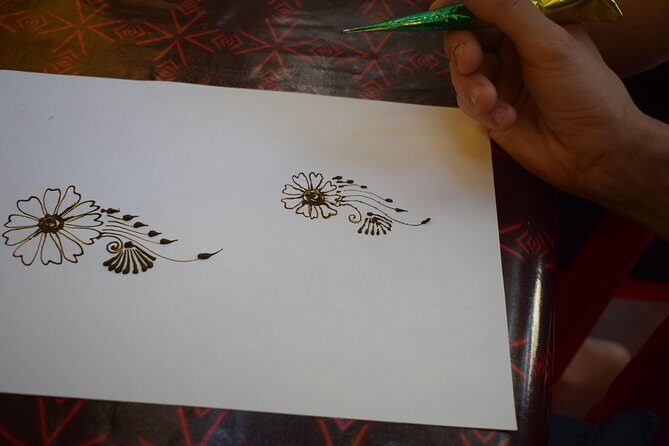
This is one of the best parts of the experience because you don’t just decorate—you actually learn the base. The class includes hands-on instruction in making your own Mehendi paste from crushed powder. That turns the session into more than a craft demo. You get to understand what the paste should feel like and why technique matters even before the first line touches skin.
For me, this is where the value really shows. If you’ve only ever seen henna cones bought pre-made, you might not realize there’s a process behind it. When you participate in mixing or preparing the paste, you start noticing how it behaves as you draw.
There’s also a psychological win: once you’ve made the paste, you feel ownership. It’s your paste, your line work, your pattern choices. And that makes the later steps—tracing, repeating motifs, and building up to a more elaborate look—feel easier because you already understand the material.
One practical consideration: working with paste can be a bit messy. Plan to keep your sleeves loose and your jewelry minimal during the session, because you’ll be focusing on clean lines rather than worrying about your outfit.
Paper draft practice first: how the design actually comes together
The class follows a smart path: you start with a paper draft, then you copy onto your hand (or onto a friend’s hand if that’s how you’re set up). This is not just a warm-up activity. It’s how you avoid frustration.
You’ll try tracing and building lines on paper, and you’ll practice the basics of the pattern elements. Then you move to skin with a design you can actually manage. By the time you begin drawing on your hand, you’re not guessing. You’re applying a technique you already tested.
This structure is also beginner-friendly in a way that counts. If you’ve never done Mehendi, the most intimidating part is usually getting the line consistency right. Paper lets you learn the movement without the pressure of working directly on your body. It also gives you a chance to ask questions mid-way, and the small group size means those questions don’t get lost.
The end result is that you walk out with a real design, not just a practice attempt. I like the way the lesson builds from simple tracing into more detailed patterns, so even if you feel nervous at the start, you can still finish feeling proud.
Choosing placement and getting your henna design
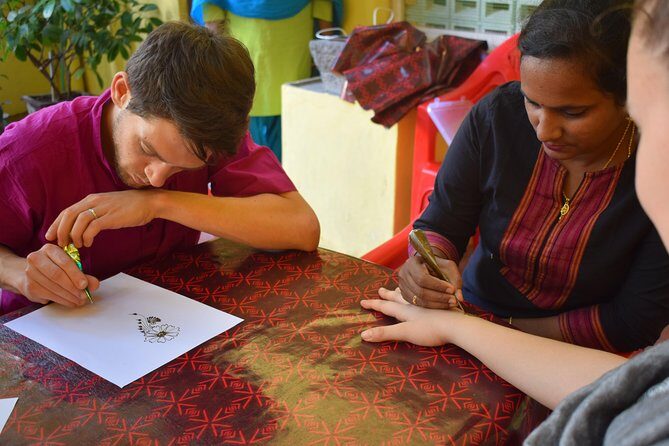
During the class, you’ll draw on your own hand or on your friend’s hand. That flexibility helps if you’re traveling as a pair, or if one person wants a design while the other wants to practice the drawing process first.
The instructor shows designs and then guides your tracing, and you end the session with a henna pattern that’s meant to last and show properly. The class timing is built around the drying window: you’ll leave with the design in place, and you’re told to keep it on for at least an hour before scraping off the dry henna paste.
If you care about how dark your design will look later, your best move is to treat the first set time seriously. Keep the area relatively dry and avoid rubbing it against clothes right after the session. Small choices during that first window can make your final result look cleaner.
And yes, the design is for you to keep. It’s one of those souvenirs that doesn’t sit in a drawer. You can also plan around your day so it shows at dinner or later that evening.


Instructor energy: patience, questions, and small-group attention
One reason this class has a strong reputation is the way the teachers handle questions and pacing. In past sessions at this center, instructors like Hema have been described as patient and kind, answering questions clearly and showing multiple design ideas. The small group format also seems to matter: if you’re only a couple of people, the instruction can feel more tailored and less like you’re waiting for a large class to catch up.
I also like that the instruction doesn’t come off scripted. The teacher demonstrates patterns, explains the purpose, and then helps you correct and refine while you draw. When you’re learning a hand-skill craft, that feedback is everything.
So if you’re worried about speaking up or not knowing how to ask questions, don’t. The setup here seems designed to invite questions. With a group size up to 6 and maximum 2 per booking, you’re not stuck watching for your turn in a crowded room.
Price and value: why $11.54 can be a smart buy
At $11.54 per person, this Mehendi class is priced like a value-driven cultural activity, not a pricey curated tour stop. For that money, you get:
- a professional guide
- included instruction with paste preparation
- the chance to practice designs
- a design you take home on your hand
Most “creative” experiences in tourist areas end up being either too short to learn or too expensive for what you get. This one hits the sweet spot: 1 hour 30 minutes, beginner-friendly steps, and an actual output you’ll wear.
Is it the best choice if you want a bus-and-ticket style overview of Pondicherry? Probably not. If you want quick entertainment, you can find plenty of that. But if you want one afternoon where you learn a traditional art form with your hands, this price feels fair.
Also, it’s booked about 14 days in advance on average, so if you have a specific day in mind, don’t wait until the last minute.
Timing, what’s not included, and how to plan your afternoon
This workshop doesn’t include food and drinks, and there’s no hotel pickup or drop-off. That means you should plan for your own snack situation before you arrive and make sure you know how you’ll get there from where you’re staying.
The good news: the meeting point is in White Town, and the listing says it’s near public transportation. In practice, that usually means you can get there without hiring a long-distance ride.
The other planning need is the henna setting time. Because you leave with paste on, you should think about what you’ll do for the next hour after the class. If your evening includes places where you’ll want clean hands and minimal mess, schedule something easy during that drying window.
A simple strategy: do the class when you can eat, wander, and take photos without rushing to scrub your hands the minute you get back to your room.
Who this class is best for (and who might skip it)
This is a great fit if you want a low-pressure cultural activity you can actually learn. It works well for:
- Families: it’s explicitly family-friendly and minimum age is 8
- Beginners: you practice tracing before drawing on skin
- Pairs: the class caps at 2 per booking and can be easier to customize
- People who like crafts: you’ll mix paste and create a finished design
You might consider skipping if you’re extremely short on time, because you’ll need at least an hour after class before scraping dry paste. You also might not love it if you hate messy hands or you have a strict schedule where you can’t plan around drying.
That said, even if you’re not artistic, the step-by-step method makes it doable. You’re not expected to be a natural artist—you’re learning a technique.
Should you book this Mehendi Art Class in Pondicherry?
Yes, if you want a hands-on, beginner-friendly cultural activity with a real payoff. For $11.54, you’re getting professional guidance, paste-making practice, and a design you’ll still remember when you’re done sightseeing.
I’d book it especially if you’re in White Town and looking for something that feels more personal than another shop stop. Also, if you’re traveling with kids (age 8+), this is one of those rare activities that can hold attention without turning into chaos.
The only real caution is timing. Plan for the drying window and remember food isn’t included, so eat before or bring a light snack nearby.
If that fits your schedule, this is a smart little afternoon in Pondicherry—equal parts tradition, creativity, and simple fun.
FAQ
Where is the meeting point for the Mehendi class?
It meets at Sita Cultural Centre, 22 Kandappa Mudaliar St, White Town, Puducherry, 605001, India.
What time does the class start?
The class starts at 3:00 pm.
How long does the Mehendi art class last?
The duration is about 1 hour 30 minutes.
What is the minimum age to join?
The minimum age is 8 years.
How many people are in the group?
The activity has a maximum of 6 travelers, and there is a maximum of 2 people per booking.
Do you make your own mehendi paste in the class?
Yes. The class includes hands-on instruction in making your own Mehendi paste from crushed powder.
Do you practice designs on paper before using your hand?
Yes. You first try on a paper draft and then draw on your own hand or a friend’s hand.
How long should you leave the henna on before removing it?
You should leave the henna design for at least an hour before scraping off the dry henna paste.
Is food included, and do they provide hotel pickup?
Food and drinks are not included, and hotel pickup and drop-off are not included.