REVIEW · HAVELOCK ISLAND
Marine Trail
Book on Viator →Operated by Seashell Habitat Institute Activity Centre · Bookable on Viator
Low tide turns the shoreline into a classroom.
The Marine Trail on Havelock Island is a guided walk along exposed mangrove, seagrass, and reef habitats, where you hunt for tiny sea life in shallow water. I love how the tour is built around what the ocean reveals at that moment, not a fixed script, and it keeps the focus on real nature details right in front of you. You’ll finish back where you started at Swaraj Dweep, with the whole experience designed to be simple enough for families, yet wild enough for nature fans.
Two things I really like: the tour stays small (up to 20 people), so the guide can actually point out what matters, and you get to look for a long list of creatures—from corals to pipefish—without any swimming skills. The other big win is the option for a night version (during full moon or new moon), when UV torches help you spot neon biofluorescence from corals and sea anemones. One consideration: you need a good walking balance, since this is a foot trail in water up to ankle-deep, and it is not recommended if you have difficulty walking.
In This Review
- Key things to know before you go
- Low Tide Turns Into a Shallow-Water Nature Walk
- How the Start Time Works at Swaraj Dweep
- Mangroves, Seagrass, and Reef Habitats You Can Actually See Up Close
- Creature Spotting: From Sea Urchins to Pipefish
- The Night Version: Full/New Moon Trails With UV Torches
- Why the Guide Matters (and Why It Works for Kids)
- What to Wear and How to Keep It Comfortable
- Price and Value: $33.55 for Two Hours of Marine Learning
- Who Should Book This and Who Should Skip It
- Should You Book the Marine Trail on Havelock Island?
- FAQ
- How long is the Marine Trail?
- Where does the Marine Trail start and end?
- Does the Marine Trail happen in water or on land?
- What’s the best time of day to go?
- Is there a night version?
- What animals can I expect to see?
- How big is the group?
- Is a mobile ticket used?
- What if weather is poor?
- What is the cancellation policy?
Key things to know before you go
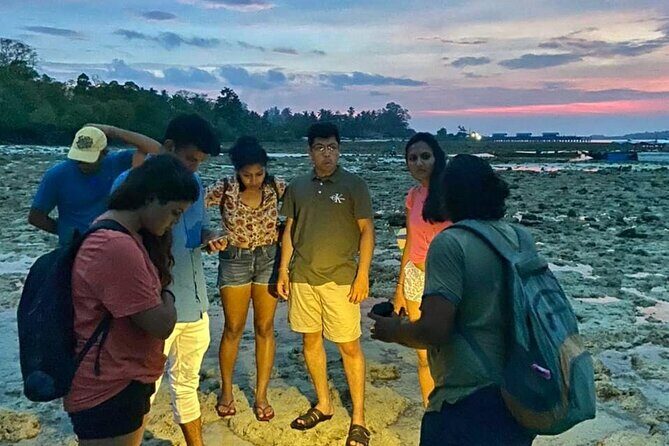
- Low tide drives everything: the walk starts when the mangrove and reef areas are exposed.
- Small group size: capped at 20 travelers, which makes sightings easier to spot.
- Family-friendly nature time: dry walk, guided explanations, and lots to see for kids and adults.
- Night trails on full/new moon: a rare option with UV torches and biofluorescence glow.
- Max ankle-deep water: practical for most people, but it still requires steady footing.
Low Tide Turns Into a Shallow-Water Nature Walk
This is not a boat tour. It’s a walking trail timed for low tide, when the ocean pulls back and reveals the marine world along the coast. You’ll explore lagoons formed along the beach, and the activity stays “dry” in the sense that you’re not swimming—just moving through water that can be up to ankle-deep.
For me, that’s the main charm. You’re close enough to notice small shapes and textures, but you’re not dealing with open-water conditions. The tour focuses on marine life that lives in and around mangroves, plus the corals and reef areas in the tropical seas around South Andaman. If you like nature that feels real and hands-on (without being physically intense), this format works.
You’ll also get a guided search approach. Instead of just admiring the scenery, you’re learning how different animals show up in these specific habitats—things like sea urchins, sea cucumbers, crabs, shrimps, and sea sponges. The tour’s value is that you come away with a mental map of what belongs where, not just a list of pretty things.
You can also read our reviews of more tours and experiences in Havelock Island.

How the Start Time Works at Swaraj Dweep
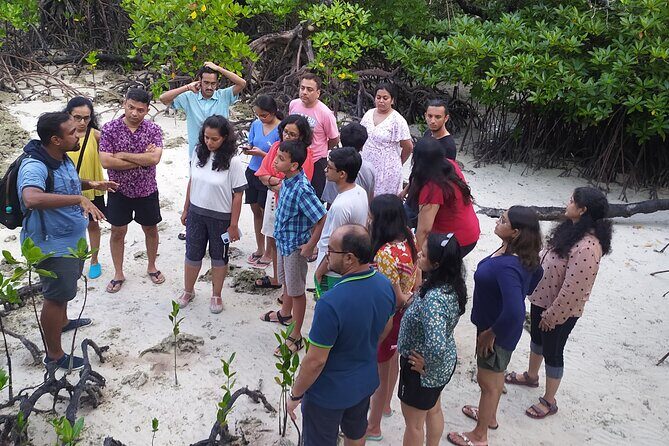
Your start point is Swaraj Dweep, Andaman and Nicobar Islands 744211, and you end back at the same place. The stated opening hours are 7:00 AM to 7:00 PM, Monday through Sunday, so the operator runs multiple departures in that window depending on the day’s ocean conditions.
Here’s the practical part: because the trail starts when the tide goes low, the exact feel of the outing depends on the day. That also means you should treat this like a nature activity, not a “clock-watch” event. If your schedule is tight, you’ll want to book early and keep some flexibility around your preferred slot.
The tour also uses a mobile ticket, which is convenient on island time. You won’t need to track down paper confirmations, and it makes last-minute day planning easier when you’re bouncing between Havelock activities.
Mangroves, Seagrass, and Reef Habitats You Can Actually See Up Close
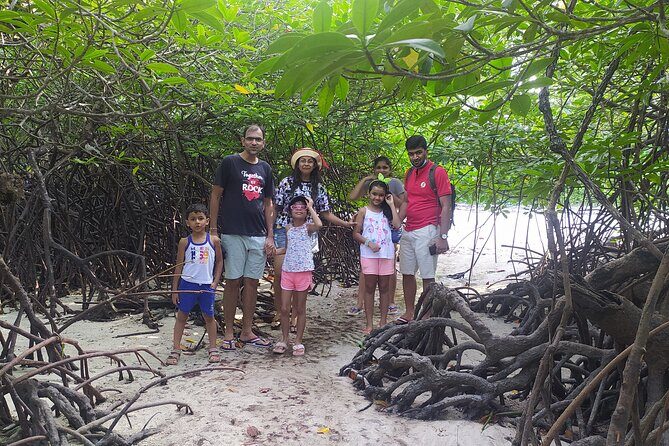
The Marine Trail’s big concept is simple: when the tide drops, you can walk through mangrove, seagrass, and coral reef habitats that are usually underwater. That change—from hidden to exposed—is what makes this feel special.
You’ll explore lagoons formed along the beach on foot. The guide will point out how these habitats connect and what kinds of life you can spot in each area. The tour description specifically calls out learning about corals and their place in the tropical seas, plus marine creatures that live in and around the mangroves.
One smart detail here is that this is presented as a guided introduction to Andaman nature and wildlife. The guide doesn’t just show you animals; the goal is for you to understand why they’re there—how fish, crustaceans, and molluscs fit into the mangrove-and-coast ecosystem you’re walking through.
Creature Spotting: From Sea Urchins to Pipefish
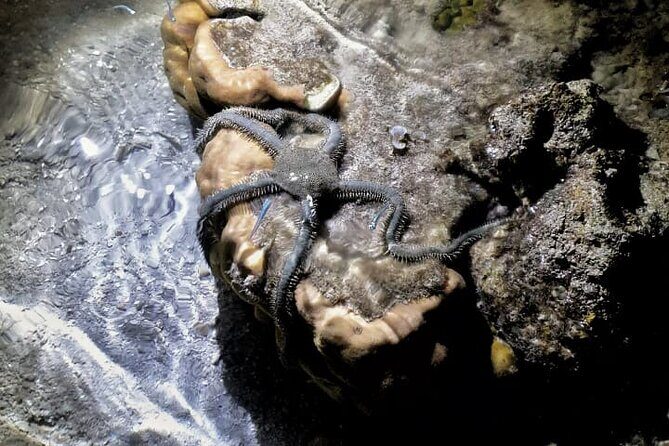
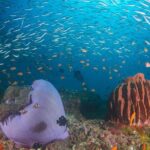
This trail is all about small discoveries. In the shallow water and exposed zones, you might see sea urchins, sea cucumbers, different crabs and shrimps, sea sponges, corals, brittle stars, and sea anemones. If you’re the type who loves learning names and tracking patterns, you’ll probably enjoy how the guide keeps explaining what you’re looking at.
A few highlights from the tour’s list that stand out for me as “wow, that’s real” sightings:
- Pipefish, described as a close relative of sea horses—so you get that mind-bending connection without needing specialized gear.
- Corals and sea anemones, which you see both in normal daytime exploring and, if you go on the right moon phase, later under UV light.
- Brittle stars, which are easy to miss if you’re only scanning for big, obvious animals.
At max ankle-deep depth, your view tends to be downward and close. That means you’ll want patience. The tour keeps things practical: it’s a walking experience, not a long standstill, so you can cover ground and still get time for the guide to help you spot creatures in the calmer, exposed areas.
The Night Version: Full/New Moon Trails With UV Torches
If you visit during full moon or new moon, the tour offers a rare night version. Once it becomes dark, more “alien-like” marine animals come out, and the whole search becomes a different kind of adventure.
The tour description lists possible night sightings such as squids, sea slugs, cone snails, mantis shrimps, and decorator crabs. That’s a great mix because it broadens what you think a “coastal creature walk” could include.
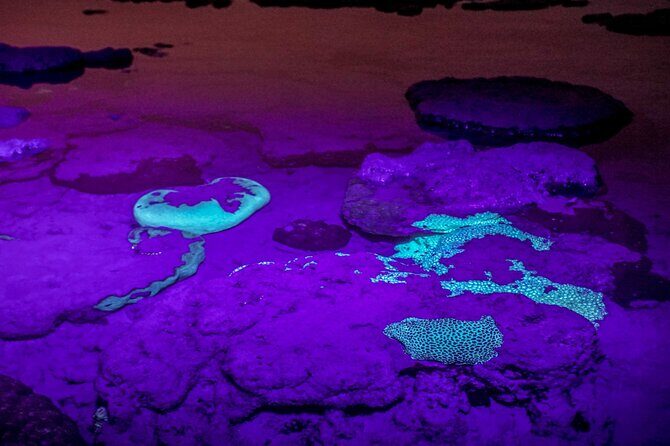
Then there’s the star feature for night: UV torches used to spot biofluorescence. In this experience, corals and sea anemones glow in neon colors, and the area gets lit up with that glow—described as looking like a neon dance floor. The takeaway for you: this is one of those activities where the visuals change completely depending on moonlight and darkness, so it’s worth planning your visit around timing rather than treating it as a random “sometime in the day” add-on.


Why the Guide Matters (and Why It Works for Kids)
The tour emphasizes that it’s led by skilled naturalists who can explain the delicate ecosystem you’re walking through. You’ll hear the guide talk about corals, fish, crustaceans, molluscs, and what you’re seeing around mangroves and the coast.
From my perspective, the guide role is what turns this from a short walk into a real learning experience. With small group size (no more than 20 people), the guide can slow down when someone spots something, and you’re not lost in a crowd trying to see past other bodies. That structure also makes it easier for kids to stay engaged—especially when the guide’s explanations match what they can physically spot in front of them.
You’ll notice the experience is pitched as suitable for the whole family. The activity is walking in shallow water, and it’s designed so most people can participate. If you’re traveling with kids who love animals, this has the right energy: you’re not just looking; you’re searching, noticing, and asking questions.
And yes, it’s clearly run by a team that cares about the experience quality. The activity center manager, Anurag Karekar, is named in the operator’s response, and that kind of visible management usually means they take guest guidance and education seriously.
What to Wear and How to Keep It Comfortable
This is where most people win or struggle: not with swimming skills, but with footwear, balance, and weather.
- Wear something you can walk in for an extended 2-hour stretch. Since water can reach ankle-deep, you’ll want shoes or sandals that can handle wet footing.
- Bring a plan for wetness. Even if it’s described as a dry activity, your feet will get wet and the ground can feel slick.
- The tour requires good balance, and it’s not recommended for travelers with difficulty walking.
Also remember: the experience requires good weather. The operator notes that if it’s canceled due to poor weather, you’ll be offered a different date or a full refund. That matters because a muddy or rough shoreline changes the whole vibe of a shallow-water walk.
If you’re the cautious type, arrive with stable footing in mind. You don’t need athletic gear, but you do need to be comfortable walking on uneven coastal terrain.
Price and Value: $33.55 for Two Hours of Marine Learning
At $33.55 per person for about 2 hours, this can be a strong value for what you get: a small group, a trained naturalist guide, and access to an experience you can’t really replicate on your own. You’re not paying for a long ride or a big production—you’re paying for timing with the tide, guided creature spotting, and (on the right moon dates) UV-torch biofluorescence viewing.
It also helps that the booking lead time averages around 25 days in advance. That suggests this isn’t a “book it the night before and forget it” type of outing, especially if you want a specific time window. If you’re planning ahead for Havelock, this is the kind of activity worth booking early rather than waiting for luck.
I’d call it good value if:
- you enjoy wildlife spotting and learning names
- you want a family-friendly nature activity that doesn’t require swimming
- you like the idea of a night option with neon biofluorescence
It’s less ideal if:
- your balance is limited
- you dislike getting your feet wet
- you’re looking for a long, sightseeing-only tour (this is about the marine life, not big viewpoints)
Who Should Book This and Who Should Skip It
This suits you if you’re traveling with kids or anyone who likes nature and animals more than rides and shopping. It’s also a great fit if you’re trying to see a side of the Andaman that feels slightly off the beaten path: mangrove and reef ecosystems revealed at low tide, guided in a way that helps you understand what you’re actually seeing.
You should skip or reconsider if you have difficulty walking. Even though water stays ankle-deep, this is still a coastal trail. The tour is designed for most travelers, but balance matters.
If you’re a first-time visitor and want something that feels authentic and local—taught by people focused on the marine environment—this is a strong choice. It’s also a smart add-on if you’re already planning other Havelock activities and you want one that’s weather- and tide-driven, but not physically extreme.
Should You Book the Marine Trail on Havelock Island?
Book it if you want a small-group, tide-based wildlife experience that’s guided and genuinely about the ecosystem. The daytime version delivers plenty of interesting shallow-water sightings, and the night version during full/new moon can turn the whole walk into something visually memorable with UV torches and neon biofluorescence.
Skip it if walking comfort is an issue. This isn’t a sit-down show, and the trail depends on exposed shoreline conditions.
One last tip: if your dates line up with full or new moon, consider adjusting your plans to catch the night trail. That’s the main difference-maker here, and it’s what makes the Marine Trail feel truly rare.
FAQ
How long is the Marine Trail?
The tour lasts about 2 hours.
Where does the Marine Trail start and end?
It starts at Swaraj Dweep, Andaman and Nicobar Islands 744211 and ends back at the same meeting point.
Does the Marine Trail happen in water or on land?
It’s a walking activity in max ankle-deep waters. It’s described as a dry activity.
What’s the best time of day to go?
The activity runs within 7:00 AM to 7:00 PM. The exact start depends on when the tide goes low.
Is there a night version?
Yes. If you visit during full moon or new moon, you can experience the night version of the trails.
What animals can I expect to see?
You may see sea urchins, sea cucumbers, crabs, shrimps, sea sponges, corals, brittle stars, sea anemones, and pipefish. In the night version, the tour may include squids, sea slugs, cone snails, mantis shrimps, and decorator crabs.
How big is the group?
The group is capped at a maximum of 20 travelers.
Is a mobile ticket used?
Yes, the experience includes a mobile ticket.
What if weather is poor?
The experience requires good weather. If it’s canceled due to poor weather, you’ll be offered a different date or a full refund.
What is the cancellation policy?
You can cancel for free up to 24 hours before the experience’s start time for a full refund. If you cancel less than 24 hours before, you won’t receive a refund.