REVIEW · JAIPUR
Jaipur Sightseeing Day Trip With Tour Guide
Book on Viator →Operated by Raj India Tours · Bookable on Viator
Jaipur feels like a living timeline. This private, two-day sightseeing format strings together the big Jaipur landmarks with a real guide—Raj Kumar Gupta—and keeps the day practical, not just scenic. I like the way the route links monuments into one story: fort to palace to astronomy to royal everyday life.
I especially like having pickup offered and a guide who works with your pace, not a rushed bus tour. I also like the mix of iconic sights and quick stops—like a short break at Jal Mahal and a free stepwell visit at Panna Meena ka Kund—that helps you recharge between the heavier hitters.
One consideration: admission tickets are not included for most of the main stops, so you’ll want to plan for separate entry costs. Also, the tour is not recommended for travelers with a heart problem, and it depends on good weather.
In This Review
- Key things that make this Jaipur tour work well
- Private guide Raj Kumar Gupta: what you’ll feel in the car and at each stop
- Price and logistics: is $108.02 good value for this route?
- Day 1 route: how the stops connect into one Jaipur story
- Amber Palace (Amber Fort): Hindu-Muslim style plus the elephant ride option
- Jal Mahal on Man Sagar Lake: a quick red-sandstone pause
- City Palace of Jaipur: where royal power became a whole city
- Jantar Mantar: 19 astronomical instruments for measuring time
- Hawa Mahal: the Palace of Wind and the story of the zenana
- Panna Meena ka Kund: the oldest stepwell for a calmer moment
- Day 2 in your plan: confirm the exact second-day stops
- Who should book this Jaipur guided tour
- Practical tips to make the route feel smooth
- Should you book Jaipur Sightseeing Day Trip With Tour Guide?
- FAQ
- How long is the Jaipur sightseeing tour?
- What is the price per person?
- Does the tour offer pickup?
- Do I get a mobile ticket?
- Are admission tickets included for the monuments?
- Is this a private tour?
- What is the start time for the experience?
- Is it suitable for everyone, including people with health issues?
Key things that make this Jaipur tour work well
- Private group with Raj Kumar Gupta for a more personal, question-friendly day
- Pickup offered plus a mobile ticket for easier logistics once you’re in Jaipur
- Amber Fort + City Palace + Jantar Mantar + Hawa Mahal in one guided circuit
- Short, efficient add-ons like Jal Mahal and Panna Meena ka Kund to keep energy high
- Free entry at Jal Mahal (brief) and Panna Meena ka Kund helps stretch your budget
- Weather-dependent scheduling so you don’t end up stuck in bad conditions
Private guide Raj Kumar Gupta: what you’ll feel in the car and at each stop
A good guide changes the whole trip. Raj Kumar Gupta’s background matters here: he worked in tourism for more than 20 years and drove visitors across Northern India and Rajasthan, including groups from the UK, Germany, the USA, Canada, Russia, and the Philippines. That experience shows in how he seems to handle expectations and questions.
You also get the kind of guide presence that’s calm and human. The feedback I saw consistently points to humble, respectful behavior, plus a strong ability to connect what you’re seeing to what it meant to the people who built it. That combination matters at Jaipur’s busiest sites, where it’s easy to lose the plot and just take photos.
Finally, this is a private tour. That’s a big deal in Jaipur, where waiting for everyone to catch up can eat your time. If your group has specific interests—architecture, symbolism, royal life, or even just how the city worked day to day—you’ll likely get more flexibility.
You can also read our reviews of more guided tours in Jaipur


Price and logistics: is $108.02 good value for this route?
$108.02 per person for a two-day private sightseeing setup can be good value, mainly because you’re paying for three things at once: a guide, a private experience, and simpler logistics (pickup offered and a mobile ticket). If you tried to build this itinerary yourself, you’d still pay for transport time, ticket handling, and the mental effort of sequencing stops.
Here’s the key cost reality: admission tickets aren’t included for several major monuments (Amber Palace, City Palace, Jantar Mantar, Hawa Mahal). Jal Mahal and Panna Meena ka Kund are listed as free, and Jal Mahal is only a short stop. So your final spend will depend on how many paid entries you choose and whether any of your group members need extra time.
That said, the tour’s structure helps you keep control. You’re not just hopping from one “must-see” to another. The stops are arranged so you can see how Jaipur’s royal power shaped fortifications, streets, palace life, and even scientific observation.
Day 1 route: how the stops connect into one Jaipur story
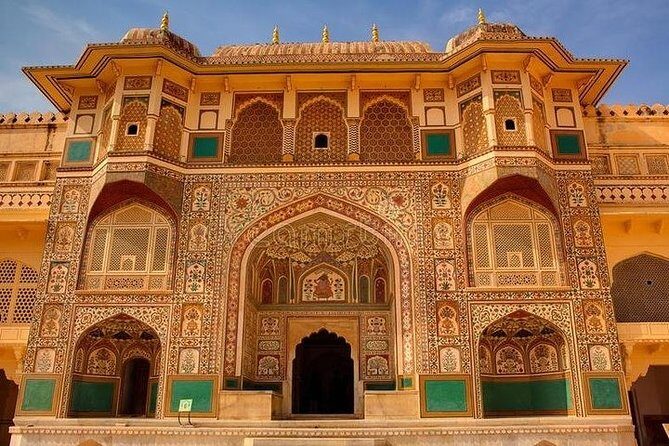
Day 1 is built like a ribbon. You start at Amber, shift to a palace on a lake, move into the royal center of Jaipur, then follow the thread into astronomy and royal architecture—ending with a quick, free stepwell.
That order isn’t random. Amber Fort is about defense and royal presence at a distance. Jal Mahal gives you the visual contrast—grand, scenic, and partially submerged in water. City Palace puts you inside the ruling complex. Then Jantar Mantar and Hawa Mahal show the intellectual and residential side of the same court culture.
If you want your day to feel coherent (instead of a list), this kind of routing is exactly what you’re looking for.
Amber Palace (Amber Fort): Hindu-Muslim style plus the elephant ride option
Amber Palace is the anchor stop. You’ll typically spend around 1 hour 30 minutes here. The standout theme is its blended aesthetics—Hindu and Muslim elements working together—which you can see in the way the palace is built and decorated.
This stop is also known for elephant rides. Even if you don’t plan to ride, it’s good to know that the area is associated with that activity, so expect an environment where elephants are part of the scene and visitor flow. If you do want to consider it, treat it as a separate decision, since the tour information only describes the ride as a known offering and lists entry tickets as not included.
Practical note: Amber Fort is one of the most photographed places in the region, which usually means crowds. A guide helps here by keeping you moving efficiently and helping your group understand what to look for, so you aren’t just wandering.
The main drawback is simple: you’re paying for the experience, and you’ll likely also pay for admission separately. But as the first big monument of the day, it sets the tone for everything else.
Jal Mahal on Man Sagar Lake: a quick red-sandstone pause
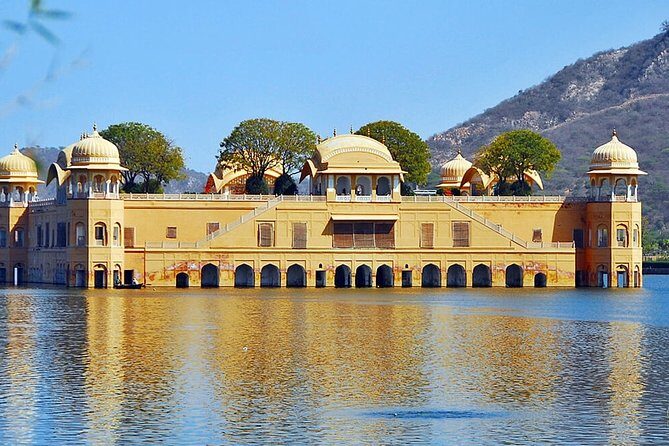
Jal Mahal is a short stop—about 5 minutes—and that’s a good thing. It’s a grand palace structure made of red sandstone, located in the middle of Man Sagar Lake, with most of it submerged. That gives you a very Jaipur-style contrast: royal architecture meeting water in a way that feels both dramatic and calm.
The tour lists free admission here, so it’s a budget-friendly breather. Think of it as your scenic reset before the heavier palace-and-science stops.
A small consideration: because it’s a lake palace and time is limited, you’ll likely get a view focused on exterior appreciation rather than a deep interior experience. In other words, don’t schedule huge expectations for this one. Use it as a visual moment and move on while your group still has energy.
A few more Jaipur tours and experiences worth a look






City Palace of Jaipur: where royal power became a whole city
City Palace is your next major investment of time—about 1 hour 30 minutes—and it’s not just a pretty facade. It was established when the city of Jaipur was founded, by Maharaja Sawai Jai Singh II, who moved his court to Jaipur from Amber in 1727. That date matters because it explains why Jaipur’s royal center feels like an organizing project, not a random collection of buildings.
This is the kind of stop where your guide’s explanations can change what the building means. You’ll likely spend time orienting yourself to how the complex is laid out and how it connects to the life of the court.
One heads-up: admission tickets are not included. So if you’re price-sensitive, plan around that reality rather than being surprised at the gate.
Still, if you want Jaipur to feel grounded in how people actually lived and ruled, City Palace is one of the best places to anchor your visit.
Jantar Mantar: 19 astronomical instruments for measuring time
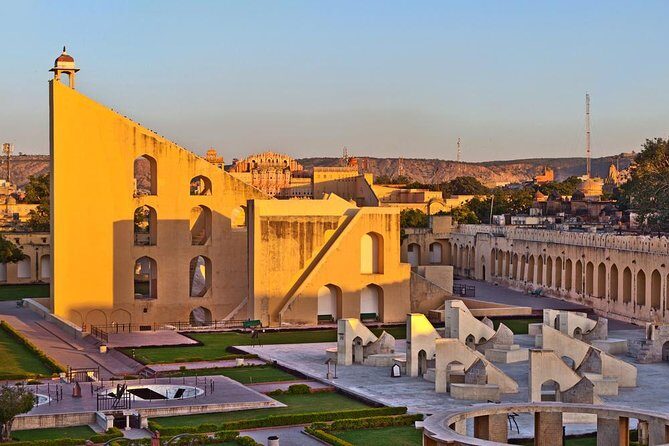
Jantar Mantar is often treated like a photo stop, but it deserves more attention than that. The attraction here is the collection of nineteen architectural astronomical instruments built by the Rajput king for knowing the time and for tracking natural patterns. In practice, what you want from this stop is understanding that this is not just art—it’s measurement turned into architecture.
Expect about 30 minutes. That’s plenty if you have a guide helping you connect shapes and structures to the purpose behind them. Without that context, it can feel like you’re walking among big stone gadgets. With context, it clicks.
Tickets aren’t included here either, so build that into your budget plan. But if your group enjoys science, history, or just the idea of how pre-modern societies studied the sky, this stop is one of the most satisfying uses of time in Jaipur.
Hawa Mahal: the Palace of Wind and the story of the zenana
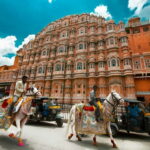
Hawa Mahal is one of the most recognizable Jaipur silhouettes. The building is made of red and pink sandstone, and it sits at the edge of the City Palace complex while extending toward the women’s chambers area, known as the zenana.
You’re scheduled for around 30 minutes. That time can feel short, but it’s enough to see the facade’s design logic—why those windows exist and what they would have allowed in terms of privacy, airflow, and visibility from within the palace edge.
Admission tickets are not included here. The plus side is that, even if you’re careful with money elsewhere, this is still one of those places where you’ll understand why Jaipur earned its nickname of architectural imagination.
One thing to keep in mind: the exterior view is the big draw. If your group expects a long, museum-style experience, you might feel a little rushed. Use your guide’s explanations to slow the experience down, even if the time on-site is short.
Panna Meena ka Kund: the oldest stepwell for a calmer moment
Panna Meena ka Kund is the kind of stop that makes a Jaipur day feel balanced. It’s listed as the oldest stepwell in Amber town, and it’s a short visit of around 10 minutes. Admission is free, which makes it a smart add-on if you want culture without another ticket line or extra cost.
Stepwells are about water management and daily rhythm, and that’s an interesting counterpoint to forts and palaces. You get a glimpse of the practical infrastructure behind the visual grandeur.
It’s also a good “breather” stop. After City Palace and before the day moves on, this can help your group reset. The only consideration is that it’s short by design—so don’t treat it as a full stop if you’re looking for a long pause.
Day 2 in your plan: confirm the exact second-day stops
Your day 2 details weren’t listed with specific stop names in what I received. That’s not a dealbreaker, but it means you should verify what’s on the schedule with Raj India Tours before your trip day arrives.
What you can do right now: assume day 2 is still part of the same private guided experience, and use the same strategy as day 1. Decide in advance what you care about most—architecture, forts, old-city texture, crafts, or viewpoints—and then ask your guide how day 2 supports that.
Because Jaipur can run hot and crowded, having a guide to shape pacing on the second day is exactly the kind of value you want. Just make sure you know where you’re going and how much time each stop will take.
Who should book this Jaipur guided tour
This tour fits best if you want a private group experience with one main guide and a route focused on Jaipur’s top architectural landmarks. It also suits couples, families, and small groups who don’t want the stress of coordinating tickets and sequencing multiple monuments on their own.
It’s specifically not recommended for travelers with a heart problem, so if that’s relevant for anyone in your group, you’ll want to choose a different option or ask for a more suitable pacing plan.
Also, it says most travelers can participate, and it’s near public transportation, which can matter if you need flexibility or a backup plan. And since confirmation happens after booking, you’ll know you’re locked in when you need to plan your days.
Practical tips to make the route feel smooth
Plan your day around ticket timing and weather. The experience requires good weather, and if the conditions are poor, you may be offered a different date or a full refund. That matters because Jaipur days can shift fast—clouds, heat, or rain can change what’s comfortable.
Also, since admission tickets are not included for most key stops, bring some cash or plan payment options for gates and keep your group together so you’re not splitting up.
A final small tip: for a route like this, wear comfortable shoes and keep your expectations realistic. You’ll hit major sights, but the best results come when you let the guide explain what you’re looking at instead of trying to read every sign yourself.
Should you book Jaipur Sightseeing Day Trip With Tour Guide?
Yes, I think it’s worth booking if you want Jaipur’s “greatest hits” handled in a calm, guided way. The biggest strengths are the private format, pickup support, and a guide with long Rajasthan driving and guiding experience—Raj Kumar Gupta—paired with a route that mixes iconic landmarks with quick, smart pauses.
Skip it only if you know you’re sensitive to walking in crowds, you need a strictly accessible/predictable pace (and especially if anyone has a heart condition), or you don’t want to deal with separate admission tickets for several main monuments.
If your goal is to understand Jaipur while still checking off the landmarks—Amber Fort, City Palace, Jantar Mantar, Hawa Mahal—this tour style is a solid value.
FAQ
How long is the Jaipur sightseeing tour?
The tour duration is listed as about 2 days.
What is the price per person?
The price is $108.02 per person.
Does the tour offer pickup?
Yes, pickup is offered.
Do I get a mobile ticket?
Yes, a mobile ticket is included.
Are admission tickets included for the monuments?
Admission tickets are not included for several key stops. Some stops are listed as free, such as Jal Mahal and Panna Meena ka Kund.
Is this a private tour?
Yes. Only your group will participate.
What is the start time for the experience?
The start time is listed as 12:00 am.
Is it suitable for everyone, including people with health issues?
It is not recommended for travelers with a heart problem, while most travelers can participate otherwise.