REVIEW · UDAIPUR
Jaipur City Full Day Tour By Tuk-Tuk
Book on Viator →Operated by Jaipur Tour and Taxi · Bookable on Viator
Nine hours, six big Jaipur stops.
If you want to see the highlights without feeling herded, this Jaipur tuk-tuk full-day tour with guide Imran is a smart way to do it. I like that it keeps the day efficient—Amber Fort, Jantar Mantar, City Palace, Hawa Mahal, plus a calm break at Jal Mahal all fit in—while still leaving room to tune the plan to your interests. I also like the local, conversational pacing as you move through real streets. One possible drawback: entry fees for the main sights are not included, so your final cost depends on how many places you visit with paid tickets.
You’ll get pickup and drop-off from within 5 km of Jaipur’s city limits, plus bottled water and coffee or tea to keep you comfortable during the long circuit. Since lunch is not included, I suggest you plan ahead so hunger does not steer the schedule. For a $9.60 starting price, the value is strongest if you’re okay handling monument tickets yourself and you want a guide-led flow rather than a self-guided checklist.
In This Review
- Key highlights worth knowing before you go
- Why a private tuk-tuk day works in Jaipur
- First stop: Panna Meena Ka Kund before Amber Fort
- Amber Fort: Sheesh Mahal and the Hindu-Muslim mix
- Jantar Mantar UNESCO: yantras that measure the sky
- City Palace of Jaipur: where royal living still lingers
- Hawa Mahal: 953 jharokhas and cool air design
- A free hour in Jaipur: markets, textiles, pottery, and gems
- Jal Mahal near Nahargarh: the lakeside pause you’ll remember
- Price and logistics: how $9.60 becomes a real budget
- What to expect from Imran, and how to get the most out of the day
- Who this Jaipur tuk-tuk tour suits best
- Should you book this Jaipur City Full Day Tour by Tuk-Tuk?
- FAQ
- How long is the Jaipur City Full Day Tour by Tuk-Tuk?
- What does the tour cost?
- Is pickup and drop-off included?
- What’s included in the price?
- Are entrance fees included for the sights?
- Is lunch included?
- Can this tour be customized?
- Who provides the tour and guide service?
- What’s the cancellation and weather situation?
Key highlights worth knowing before you go
- Imran runs a private tuk-tuk day, so your group sets the tone and you’re not stuck with a rushed crowd.
- Panna Meena Ka Kund (stepwell) is included en route to Amber Fort, giving you a less-obvious stop with serious wow-factor.
- UNESCO Jantar Mantar gets real time with the giant yantras—timekeeping and star-tracking tools you can actually spot.
- Hawa Mahal’s 953 jharokhas are easier to enjoy when you know what you’re looking at.
- Jal Mahal adds a scenic photo break near Nahargarh hills without turning the day into a long slog.
- Most major attraction entry fees are extra, so budget for tickets and snacks.
Why a private tuk-tuk day works in Jaipur
Jaipur can feel intense on your own. The streets are busy, the signage is not always clear, and you end up spending time on logistics instead of sight-seeing. A private tuk-tuk day solves a big part of that. You get a dedicated vehicle for your group and a local guide who can steer the route and pace, so you’re not constantly asking where to turn or where to park.
What I especially like about this format is that it’s not just transport—it’s story plus navigation. As you travel, your guide can connect what you’re seeing to the bigger picture: who built it, how it worked, and why it matters. And the tour is described as customizable, which is a big deal if you’re the type who wants more time at forts or less time on photos and more on markets.
Do keep expectations realistic: this is a 9-hour day, and some stops have short time windows. So you’ll want to arrive with a quick plan—what matters most to you: architecture, photo angles, history, or local shopping.
You can also read our reviews of more city tours in Udaipur



First stop: Panna Meena Ka Kund before Amber Fort
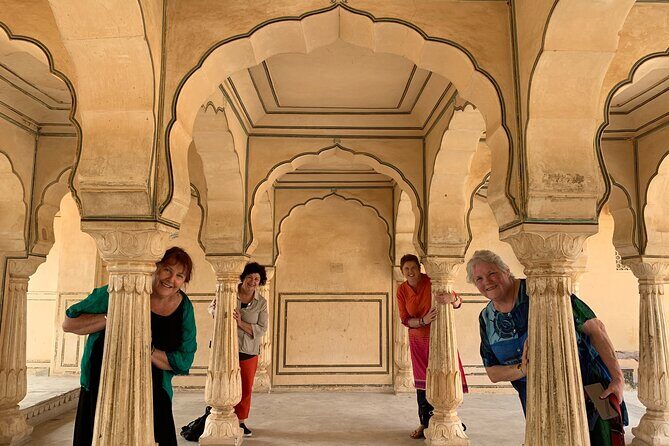
Panna Meena Ka Kund is the kind of place that makes you think, wait, how is this not on every itinerary? The stepwell is built over 400 years ago and it sits along the approach to Amber Fort. You get a chance to slow down before the bigger-ticket sights.
The standout here is the architecture. Stepwells are practical structures, but this one is also built for visual impact: layered staircases, a maze-like feel as you move through the space, and that sense of quiet that hits you right after the street noise. It’s also a smart warm-up for Amber Fort, because it trains your eyes on how Rajasthan’s builders combined function with showmanship.
Time is limited (about 2 hours at this stop), and admission is not included. If you’re the type who likes to take your time, arrive ready to spend a bit of time looking upward and down the stair paths. If you’re more of a quick-glance photographer, you can still get great results without lingering too long.
Amber Fort: Sheesh Mahal and the Hindu-Muslim mix
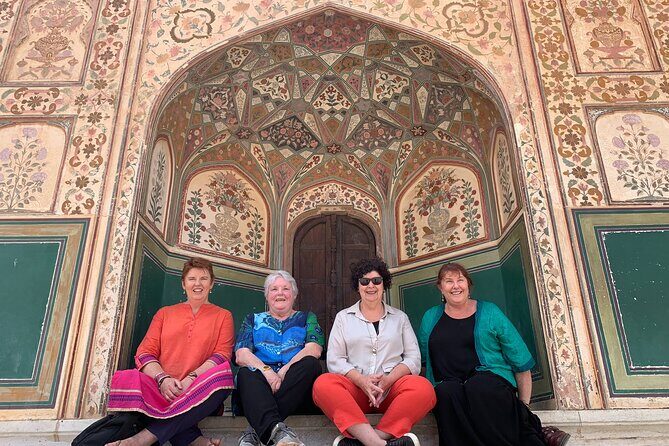
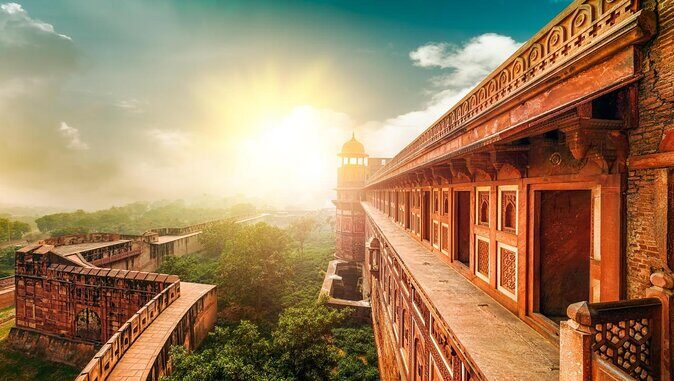
Amber Fort is the headline for many people, and for good reason. It sits about 11 km north of central Jaipur and is a massive fort-palace complex. One detail I’d bookmark: it was built in a hybrid Hindu-Muslim style and served as the palace of the Kachwahas from 1600 to 1727, associated with Raja Man Singh.
Inside, you’ll likely spend time at major highlights such as the Sheesh Mahal. This is the hall that’s known for mirrored décor, and it’s the kind of stop that rewards patience. Even if you’ve seen photos, being there in person changes the feel—light bounces differently, and the carvings and inlay hit harder when you can move around.
A practical heads-up: entry tickets are not included. Also, this part of the day can be physically demanding. You’ll be walking through a complex built for defense and ceremonial life, not comfort. Wear shoes you trust and keep water handy.
Amber Fort is also one of those sites where a guide makes a difference. The fort’s name is tied to the town of Amber and the goddess Amba, and that sort of connection makes the place feel less like a museum and more like a living story.
Jantar Mantar UNESCO: yantras that measure the sky
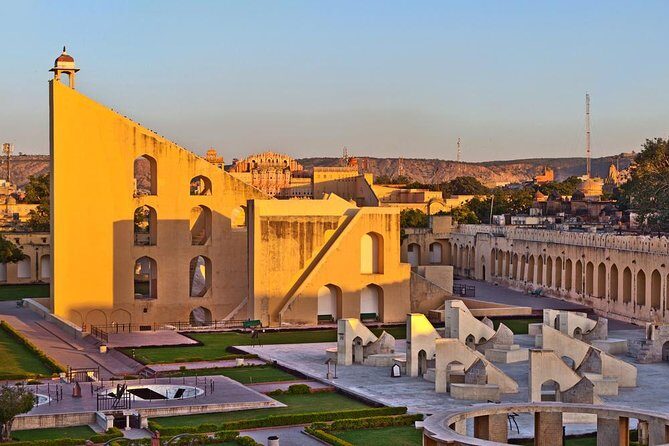
Next up is Jantar Mantar, a UNESCO world heritage site. This observatory was built by Maharaja Jai Singh between 1727 and 1734, and it’s the largest of five observatories of this kind in north India. If you love science-meets-art places, this is the stop that can surprise you the most.
There are fourteen major geometric devices, called yantras, used to measure time, predict eclipses, track stars in their orbits, determine planet declinations, and measure celestial heights. Even if you’re not a math person, you’ll be able to follow along because the guide can point out what each instrument is designed to do—and where to stand to see how it would work.
You get about 45 minutes here. That’s enough for the main points, but not for a slow wander. I recommend you pick one or two yantras you want to focus on and let the rest be guided context. The fun is in matching the real shape in front of you with the purpose your guide explains.
Again, admission is not included, so plan for ticket costs if you want the full site experience. If budget is tight, this is the place where paying is usually worth it because the instruments are the main event.
City Palace of Jaipur: where royal living still lingers

City Palace sits in the heart of old Jaipur, and it’s an architectural mix of Rajput and Mughal styles. It was commissioned by Maharaja Jai Singh II, and you get a look at more than just scenic walls—you can see the living quarters of the former royal family, and some parts are still in private use.
This stop is where the tour stops feeling like a photo route and starts feeling like a place with a pulse. The palace is not only built for display; it’s built for court life. That helps you understand the choices in design: spaces for movement, audience, ceremony, and administration.
You’ll have about 1 hour here. With that time, you should aim to absorb the overall layout and a few key interiors or chambers rather than trying to see everything. With a guide, you’ll also pick up context that turns decorative details into clues about power, culture, and interaction between communities.
Admission is not included, so budget for tickets if you want to go inside. If you’re outside-only or short on funds, you can still enjoy the architecture from accessible areas, but the full experience depends on paid entry.
A few more Udaipur tours and experiences worth a look


Hawa Mahal: 953 jharokhas and cool air design
Hawa Mahal, also called the Palace of Wind, is Jaipur’s most recognizable pink landmark. It rises in five storeys and looks like a delicate honeycomb hive. The big detail is that it has 953 windows called jharokhas.
The windows were designed to let royal women look out while staying out of direct view, and the honeycomb arrangement also helped keep the palace airy and cooler. That’s a practical story—architecture that solves climate, privacy, and social rules at the same time.
Your time here is about 45 minutes. It’s a great stop for photos, but I suggest you also pay attention to the layout. The best images usually come from understanding the facade rhythm and how the windows repeat down the building. A guide can also point out the likely viewing logic, which makes the facade feel less random.
Entry fees are not included, so factor that into your budget. If you’re a stickler for indoor time, you may prefer to prioritize paid entrances at Hawa Mahal over spending on optional shopping stops later.
A free hour in Jaipur: markets, textiles, pottery, and gems
After the monuments, the itinerary includes about 1 hour of free time in Jaipur (with admission listed as free). This is your chance to shift gears from royal stone to everyday Jaipur.
The plan here is intentionally flexible. You can use this time for shopping or simply soaking up the vibe. The tour notes that Jaipur is known for textiles, pottery, and gems, and your guide is happy to suggest a few favorite markets or places depending on what you like buying.
If shopping is your goal, go in with a simple checklist: one item type, a price range, and a willingness to compare. If shopping isn’t your thing, use the hour for a snack break and a slow walk through nearby lanes so the day doesn’t feel like a sequence of entrances.
Keep an eye on the clock. A single hour can disappear fast once you start browsing fabric or gemstones.
Jal Mahal near Nahargarh: the lakeside pause you’ll remember
Jal Mahal is a water palace set against the Nahargarh hills. It’s known for sophisticated design and it has historical ties to royal duck shooting parties, which gives the place a very specific character beyond scenic postcard value.
You get about 30 minutes here, and admission is listed as free. The real payoff is the view. Even with limited time, you can capture the reflective look of Jal Mahal from viewpoints along the water and take in the background of the hills.
This is also a good moment to reset. After forts and palace interiors, the light and open space feel like a breather. If you’re traveling in hot season, a short stop here can be the difference between finishing the day energized or cranky.
Don’t over-plan your photos. Get what you want quickly, then enjoy the view without turning it into a second job.
Price and logistics: how $9.60 becomes a real budget
The starting price is $9.60 per person, and you do get a lot for that money. Your included items are pickup and drop-off from within 5 km of Jaipur’s city limits, bottled water, coffee or tea, and a private tuk-tuk for your group.
But there’s an obvious cost you should plan for: entry fees for the main attractions. Lunch is also not included. So the real question is whether you’re comfortable adding ticket and meal costs to your day plan.
Here’s how I’d think about value:
- If you want a guide to connect the dots and keep you moving efficiently, this pricing can feel like a bargain compared to paying for transport and then separately hiring a guide.
- If you already have a tight plan for the sights and don’t want to pay extra for tickets, your day might be cheaper on your own—but you’d lose the custom pacing and the context your guide adds.
- If you enjoy architecture and want more than a quick photo stop, paying for entries is usually worth it, because these places are built to reward attention.
Also note: this tour is described as private, so you’re not splitting time with strangers. That matters in a place like Jaipur, where a few slow moments can ripple across the day.
What to expect from Imran, and how to get the most out of the day
Imran is mentioned repeatedly in feedback for being helpful, patient, and good at explaining history and culture in a way that fits your pace. One practical detail I liked from the info you provided: he can adapt if your start time slips, and he can wait and regroup without making you feel rushed.
Another helpful point: your guide may suggest food stops like lassi or a lunch place (even though lunch itself isn’t included). If you have dietary needs, bring them up early so the suggestions match your comfort level.
Finally, there can be optional shopping moments. One note mentions a stop with a tailor where commissions might be involved, and it’s described as optional. If you do not want shopping detours, you can simply say no and keep moving. A good rule: treat optional stops as optional, not mandatory.
If you want the most out of the day, I’d show up with:
- A short list of what you want most (fort photos, palace interiors, science instruments, or shopping).
- Comfortable shoes.
- A realistic budget for monument tickets and your meal.
Who this Jaipur tuk-tuk tour suits best
This tour is a good match if you want a structured day without the stress of planning every turn. It’s also ideal for first-timers who want the major monuments in a single circuit and still want a guide who can talk beyond just signage.
It’s especially suitable if:
- You like architecture and want context at each stop.
- You prefer small group vibes (private setup) instead of joining a larger bus day.
- You want a guide to help you avoid wasting time at less relevant stops.
It might not be ideal if:
- You hate paying separate entry tickets and want only free sights.
- You want a slow, long-stay approach with lots of free wandering.
- You’re sensitive to walking on uneven stone, especially at forts.
The tour runs in about 9 hours, so it’s best for people who can handle a full-day pace without needing frequent long breaks.
Should you book this Jaipur City Full Day Tour by Tuk-Tuk?
I’d book it if you want an efficient, guide-led day that hits Amber Fort, Jantar Mantar, City Palace, Hawa Mahal, and Jal Mahal without turning your trip into a logistics game. The private tuk-tuk format, the presence of a guide like Imran, and the inclusion of Panna Meena Ka Kund make it feel more thoughtful than a basic checklist tour.
I’d hesitate only if you’re on a very strict budget for tickets and meals, or if you prefer to wander without structured stops. In that case, you might find better value building your own route—just know you’ll give up the context and pacing.
If you’re ready for a full day and you want Jaipur to feel human—streets, stories, and the big monuments in one run—this is a strong choice.
FAQ
How long is the Jaipur City Full Day Tour by Tuk-Tuk?
The tour lasts about 9 hours.
What does the tour cost?
The price is listed at $9.60 per person.
Is pickup and drop-off included?
Yes. Pickup and drop-off are included from anywhere in Jaipur within 5 km of the city limits.
What’s included in the price?
Bottled water, coffee and/or tea, and a private tuk-tuk are included, along with pickup and drop-off.
Are entrance fees included for the sights?
No. Entry fees for Jaipur attractions are not included.
Is lunch included?
No, lunch is not included.
Can this tour be customized?
Yes. The tour can be customized to suit your interests.
Who provides the tour and guide service?
The experience provider is Jaipur Tour and Taxi, and the guide mentioned is Imran.
What’s the cancellation and weather situation?
Free cancellation is available, and the experience requires good weather. If it’s canceled due to poor weather, you’ll be offered a different date or a full refund.