REVIEW · AGRA
Gwalior Tour – Same Day Tour to Gwalior From Agra
Book on Viator →Operated by My Tour Adviser · Bookable on Viator
Hilltop fort, fast morning starts. A same-day run from Agra to Gwalior delivers big monument energy early, and I really love how Gwalior Fort feels different from the Mughal look you’ll see elsewhere in North India—more raw hilltop, more carved stone, more bite.
You’ll also appreciate the human side of this tour: an A/C vehicle, an English-speaking driver, a personal guide, and a buffered schedule that keeps you from guessing where to go next. The main drawback is the pace: it’s about 12 hours total, with a 7:00 am start, so it’s not for anyone who likes slow mornings and lingering.
In This Review
- Key highlights to know before you go
- Getting from Agra to Gwalior: the 7:00 am start and 120 km reality
- Gwalior Fort: the hilltop stronghold that feels like another world
- What’s especially satisfying here
- The only “watch out”
- Sas Bahu Temple: two temples, one name, and a lot of stonework
- Data Bandi Chhod Qilla Gurdwara: a release story tied to the fort
- Gujari Mahal Archaeological Museum: antiques and aqueduct details
- How to get more out of it
- Jai Vilas Palace Museum: a 19th-century palace with a public-facing side
- Lunch at a historical palace hotel: fueling your fort-and-temple day
- The real value equation: price, what’s included, and what you’ll still need
- Who this fits best
- Practical tips to make the day smoother
- Should you book the Gwalior same-day tour from Agra?
- FAQ
- What time does the tour start?
- How long is the Gwalior tour?
- Is hotel pickup included?
- What stops are included in the day?
- Are monument entrances included?
- Is lunch included?
- Can I cancel for a full refund?
Key highlights to know before you go
- Hilltop Fort first thing: cool morning light helps you take in the steep, dramatic setting.
- A clear mix of faiths: Hindu temples, a Sikh gurdwara story, then palace museums.
- Entrance tickets are handled: monument entries are included, so you spend time looking instead of bargaining.
- Palace lunch on the program: you get a buffet lunch at a historical palace hotel.
- Long day logistics: expect plenty of riding and a tight rhythm between stops.
Getting from Agra to Gwalior: the 7:00 am start and 120 km reality

This tour is built around an early start. You’re picked up from your hotel in Agra at 7:00 am, then you head roughly 120 km toward Gwalior by air-conditioned car. The timing matters here. Leaving early helps you arrive in daylight and gives your brain a head start on place names, stairs, and viewpoints.
You’re not doing this as a do-it-yourself puzzle. The driver handles the road, and your guide meets you at the main sightseeing base. That means you get explanations at the right moments—like what you’re looking at on the fort walls—rather than reading signs after the best photo angle has already passed.
Plan your day around the ride and the schedule rhythm. This isn’t a relaxed “wander and see” kind of outing. It’s closer to a well-run museum-and-monuments day, just stretched across two cities.
You can also read our reviews of more tours and experiences in Agra.


Gwalior Fort: the hilltop stronghold that feels like another world
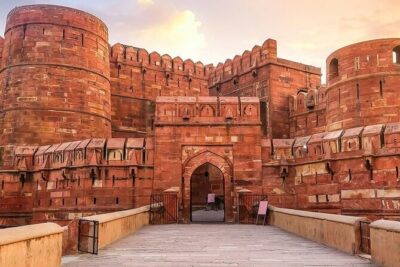
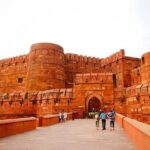
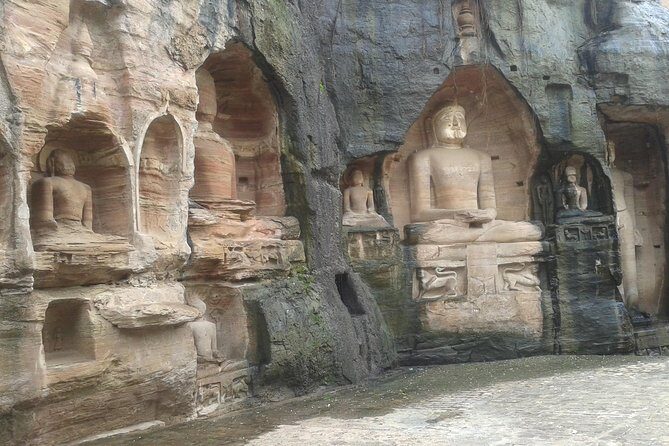
Your first major stop is Gwalior Fort, with a guided walk that starts as soon as you arrive. The fort is known for its steep hill setting—so when you say you’ll see it, you really mean you’ll feel it. The views are part of the point, and the walk lets you understand why defenders chose this kind of ground.
The fort is described as dating back to the 8th century CE, credited to Raja Maan Singh Tomar. Inside, you’ll come across key structures like Man Mandir and Karan Mandir, plus an Archaeological Museum that helps connect objects to the stories of the site.
If you like architecture, pay attention to how the buildings sit against the hill. It’s not just one fortress gate and done. There are layers. There’s also a Gopachal hilltop aspect to it, and the fort complex includes Man Mandir, with beautiful wall art. You don’t need art-history jargon to appreciate it—you just need time to look up and notice.
What’s especially satisfying here
- The contrast: Gwalior Fort reads as a different flavor than the Mughal-style grandeur you might be expecting in the region.
- The variety in one place: temple/royal buildings + museum + viewpoints, all on one major stage.
- Good pacing: the stop is set at about 1 hour, which is long enough to get the big ideas without burning out.
The only “watch out”
You’ll be on a working fort site, which usually means uneven ground and stair climbs. Wear something comfortable and plan to move at fort-walk speed, not city-stroll speed.
Sas Bahu Temple: two temples, one name, and a lot of stonework
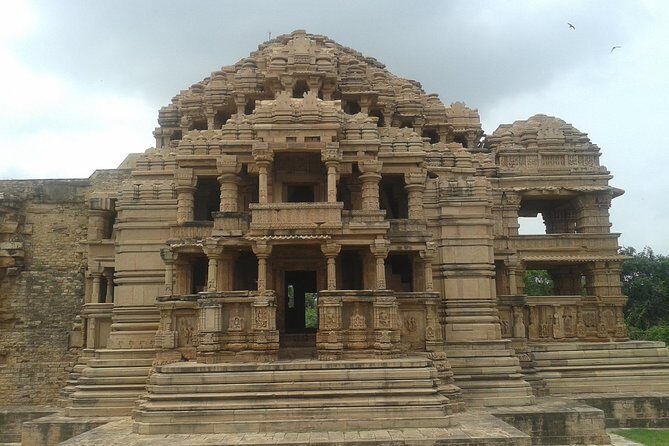
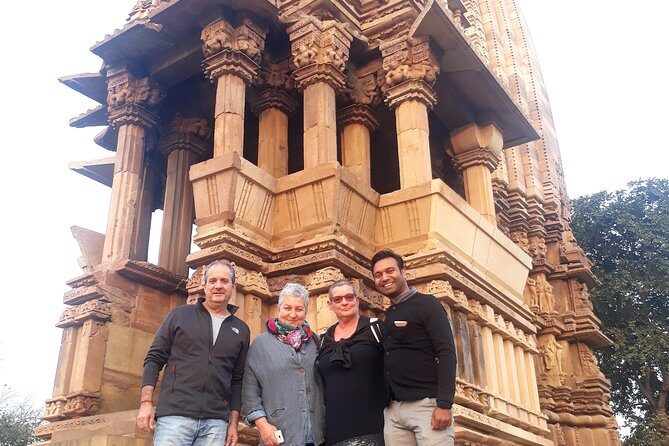
After the fort energy, the tour turns to Sas-Bahu Temple, a pair of conjoint temples dedicated to Lord Vishnu. The name itself is part of the story. Vishnu is linked with Sahastrabahu (the one with many hands), and over time the phrase became Sas Bahu—likely from mispronunciation or misinterpretation.
What I like about this stop is how it’s both simple and detailed. You’re looking at architecture that’s meant for worship, but it also shows off rare craft skill. The construction is credited to King Mahipala, completed in 1092 AD. That date gives you a helpful anchor while you’re looking at carvings and layouts.
You’ll see two temples—one larger and one smaller—often described as the mother-in-law and the daughter-in-law. Even if you don’t get hung up on that exact framing, it’s a good way to remember: two distinct spaces within a single temple complex.
The stop runs about 30 minutes, which is enough time to understand what you’re seeing without rushing through the carvings.




Data Bandi Chhod Qilla Gurdwara: a release story tied to the fort
Next comes the Gurdwara Data Bandi Chhod Qilla in Gwalior. This is the part of the day that shifts your lens from royal power to spiritual history.
This gurdwara is associated with the imprisonment of Guru Har Gobind Sahib in Gwalior Fort and his celebrated release. The story includes that he won the freedom of 52 Rajas (kings) who had been imprisoned in the fort.
Even if you only catch the highlights, this stop changes the tone of the visit. It makes the fort complex feel less like a monument you look at and more like a place where big events happened—political and personal events, not just kings and walls.
Expect about 30 minutes here, which is a good amount of time to step back, read the story context through your guide, and then move on without fatigue.
Gujari Mahal Archaeological Museum: antiques and aqueduct details
Then you head to Gujari Mahal Archaeological Museum. The name sounds like it’s about a single room. It’s actually tied to a royal palace story—and that context helps you enjoy the artifacts more.
The palace of Gujari Mahal is said to have been built by Raja Man Singh Tomar for his wife Mrignayani, described as a Gujar princess. A notable detail: she wanted a separate palace with regular water supply via an aqueduct from the nearby Rai River. That’s not just romance; it tells you how seriously royal homes were planned.
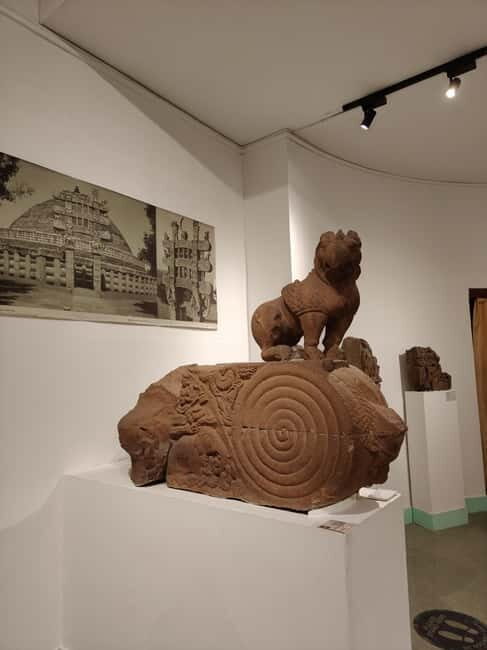
Today, the palace is converted into an archaeological museum. You’ll see rare artifacts such as Hindu and Jain sculptures dated to the 1st and 2nd centuries BCE, plus a miniature statue of Salabhanjika, terracotta items, and replicas of frescoes connected to the Bagh Caves.
This is about 30 minutes, and the goal isn’t to study every item. It’s to leave with a sense that the fort-and-temple area isn’t only medieval fort walls—it’s also a hub of much older artistic traditions.
How to get more out of it
Go in with the attitude of collecting a few standout items in your memory: one sculpture, one terracotta piece, one detail from the fresco replicas. For a short visit, that approach keeps it from feeling like a quick blur.
Jai Vilas Palace Museum: a 19th-century palace with a public-facing side

Your last major museum stop is Jai Vilas Palace. This is a 19th-century palace tied to the Maratha Scindias. It was established in 1874 by Maharaja Dhiraj Shrimant Jayajirao Scindia Alijah Bahadur, the Maharaja of Gwalior.
Part of the palace is now the Jiwajirao Scindia Museum, opened to the public in 1964. Another key point: some parts remain connected to the family residence of descendants of the Scindia dynasty.
What I find useful about this stop is that it bridges time. You get fort-age India, temple-age storytelling, then you jump forward into palace-era power and museum display. The contrast helps you feel the changes in how people lived and showed status.
This segment runs about 1 hour, which gives you enough time to get oriented with the museum layout rather than rushing through rooms just to say you were there.
Lunch at a historical palace hotel: fueling your fort-and-temple day
Between all the monuments and museums, you get buffet lunch at a historical palace hotel in Gwalior. Lunch here isn’t just food. It’s your mental pause in a day that otherwise moves nonstop.
One more practical note: included in the experience are all fees and taxes and your guide/transport support, which is why this lunch slot matters. You’re not hunting for a place while your schedule tightens. You can eat, reset, and get back to walking without losing momentum.
You should still treat the meal like part of the itinerary. Eat what you can quickly, sip water, and don’t plan to sit so long that you fall behind the group timing.
The real value equation: price, what’s included, and what you’ll still need
At $75 per person, this tour is priced for a full-service same-day structure: air-conditioned transport, a personal tour guide, monument entrances, bottled water, Wi-Fi, and buffet lunch.
Is it “cheap”? Not exactly. But it’s not pretending to be a budget DIY either. In my book, the best value here is that you’re paying to remove friction: you’re not organizing tickets, guide explanations, or the order of stops across a long day.
What you’ll still want to budget for:
- Tips and gratuities (not included)
- Any food and drinks beyond the buffet lunch (if you choose extras)
You’re also riding from Agra and back the same day. That means you’re paying for convenience and time savings—not just attractions.
Who this fits best
This is a good match if you:
- Want a first taste of Gwalior without planning.
- Like forts, temples, and museums in one day.
- Prefer English-speaking guidance and clear pacing.
If you’re the kind of traveler who wants to slow down at one site for as long as it takes to feel connected, you might find the schedule tight.
Practical tips to make the day smoother
Here are the small things that will matter on a 12-hour monuments day:
- Start with water: the tour includes bottled water (and you’ll receive it during the day), but you should still carry a bit of awareness about staying hydrated.
- Wear good walking shoes: forts and temple areas can be uneven and stair-heavy.
- Use the Wi-Fi wisely: it’s included, but don’t rely on it to solve navigation in real time—use it for quick messaging or saving offline photos.
- Take breaks strategically: the day has natural breaks at each stop. When you pause, actually pause. It keeps your energy steady for the next climb.
Also, bring patience for the early start. 7:00 am pickup isn’t optional, and your body will appreciate you respecting that.
Should you book the Gwalior same-day tour from Agra?
I’d book it if you want a structured, guided way to see Gwalior’s top stories in one go: Gwalior Fort with its hilltop drama, the Sas Bahu temple complex, the Sikh gurdwara tied to Guru Har Gobind Sahib’s release story, then museum-style palace viewing at Gujari Mahal and Jai Vilas.
Skip it if you hate long days, or if you’re traveling with the expectation that you’ll casually drift from sight to sight. This tour runs on a schedule, and the day is packed.
If you’re planning a trip that already includes Uttar Pradesh or Rajasthan stops, this is a smart add-on. You’re not just ticking a box—you’re getting a real taste of how forts, temples, and royal power stories overlap in central India.
FAQ
What time does the tour start?
The start time is 7:00 am, with hotel pickup in Agra.
How long is the Gwalior tour?
The duration is approximately 12 hours.
Is hotel pickup included?
Yes. Pickup is offered, and you’ll be transferred from your hotel in Agra.
What stops are included in the day?
You’ll visit Gwalior Fort, Sas-Bahu Temple, Gurudwara Data Bandi Chhod Qilla Gwalior, Gujari Mahal Archaeological Museum, and Jai Vilas Palace Museum.
Are monument entrances included?
Yes. The tour includes all monument entrances and associated fees and taxes.
Is lunch included?
Yes. You get a buffet lunch at a historical palace in Gwalior.
Can I cancel for a full refund?
Yes. You can cancel up to 24 hours in advance for a full refund. If you cancel less than 24 hours before the start time, the amount paid is not refunded.