REVIEW · AGRA
Guided Fatehpur Sikri & Abhaneri Tour From Agra To Jaipur By Car
Book on Viator →Operated by Unseen Tours and Travels · Bookable on Viator
Fatehpur Sikri to Jaipur in one long day. It’s a smart way to steal major Mughal sights on the road instead of treating the transfer like dead time. You’ll start in Agra, get a guide-led visit in Fatehpur Sikri, then head to Rajasthan to see the Chand Baori stepwell before ending in Jaipur.
I especially like the private group setup. It’s just your party plus your driver, so you can keep a steady pace without herding. I also like that Fatehpur Sikri is the main guided stop, which helps you understand what you’re looking at instead of wandering red-sandstone buildings with zero context.
One thing to consider is value. At $79 per person, it’s not the cheapest way to travel, so I’d weigh the convenience of door-to-door car time against monument fees that may or may not be included, plus any add-ons that might be offered along the way.
In This Review
- Quick Reasons This Trip Works So Well
- Why This Agra-to-Jaipur Day Feels More Useful Than It Sounds
- The Car Ride Details That Actually Matter
- Fatehpur Sikri: The Guided Stop That Gives Meaning to the Stones
- Buland Darwaza and the Mughal Photo Moments
- Panch Mahal and Jodha Bai’s Palace: Less Famous, Still Worth Your Time
- The Transfer to Abhaneri: A Real Break Before Chand Baori
- Chand Baori in Abhaneri: Self-Guided Geometry You Can’t Stop Photographing
- Getting to Jaipur: Ending Where You Actually Want to Be
- Timing and Pace: What an 8-Hour Day Feels Like on the Ground
- Price and Value: When $79 Makes Sense
- Comfort, Rules, and the Small Stuff That Can Save Your Day
- Who This Tour Best Fits
- Should You Book This Agra-to-Jaipur Combo?
- FAQ
- How long is the guided tour from Agra to Jaipur?
- Where does the pickup happen?
- Is this a private tour?
- Do we get a guide at both Fatehpur Sikri and Chand Baori?
- Are monument entry fees included?
- Is lunch included?
- What should I wear for these sites?
- Is the transfer one-way or round-trip?
Quick Reasons This Trip Works So Well
- Private transport, no fuss: air-conditioned minivan with pickup in Agra and drop-off anywhere in Jaipur.
- A focused guided stop: you get a proper guide for Fatehpur Sikri, not just a quick drive-by.
- Two famous sights, in one route: Buland Darwaza and other Mughal-era structures, plus Abhaneri’s Chand Baori.
- Self-paced time where it counts: Chand Baori is independent, so you can linger for photos or quiet viewing.
- Built for a transfer day: about 8 hours total, so you’re not stuck moving hotels and sights separately.
- Small cap on group size: up to 12 people per booking, with the feel of a private outing for your party.
Why This Agra-to-Jaipur Day Feels More Useful Than It Sounds
Agra to Jaipur is a classic overland move. The trap is wasting most of the day on roads and then rushing the sightseeing once you finally arrive. This tour flips that. You start early, you stack major stops on the way, and you end the day in Jaipur rather than backtracking.
The route also makes practical sense. Fatehpur Sikri sits west of Agra, and Abhaneri lines up on the way before you reach Jaipur. That means your car time is doing real work, not just ferrying you between two cities.
You can also read our reviews of more guided tours in Agra


The Car Ride Details That Actually Matter
This is an air-conditioned minivan transfer with bottled water and professional driver handling. For a day that’s roughly 8 hours, comfort and timing are not small details. A good driver helps keep your schedule realistic, especially when you’re fitting in multiple sites.
The tour is a private group experience with just your party and a driver. That matters in India, where shared tours can turn into a stop-and-go rhythm built around other people’s energy levels. Here, you can keep photo pauses short and move on, or slow down when something catches your eye.
Fatehpur Sikri: The Guided Stop That Gives Meaning to the Stones
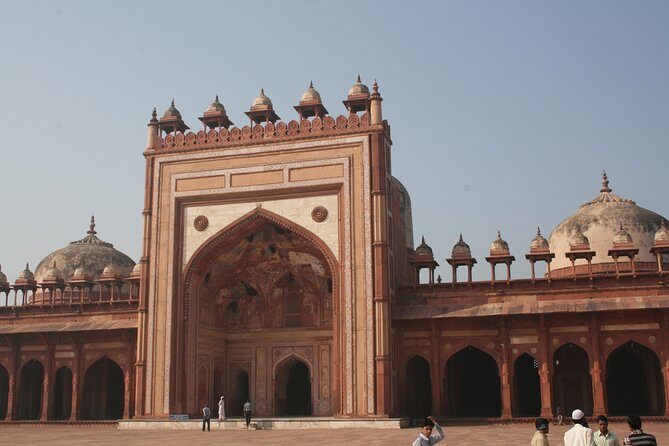
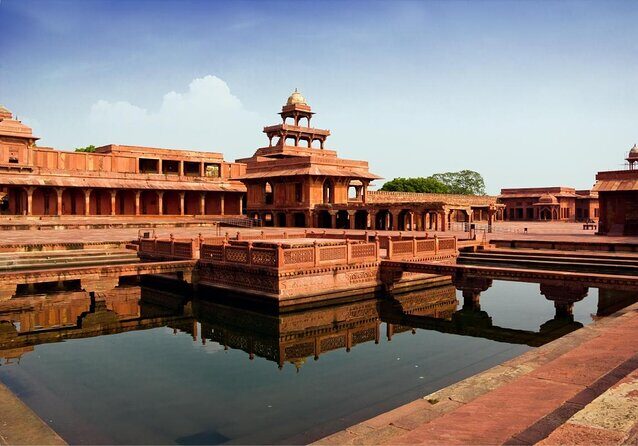
Fatehpur Sikri is a 16th-century Mughal capital city built by the Mughal emperor Akbar. Even if you don’t know much Mughal history, the place pulls you in with its red sandstone buildings and the way the structures group around key spaces.
Your guided time focuses on the most recognizable highlights. The headline stop is Buland Darwaza, the dramatic gateway entrance to the Jama Masjid. It’s built to commemorate Akbar’s victory over Gujarat, and it’s the kind of structure where the scale hits you fast once you’re standing close.
You’ll also visit the Diwan-E-Khas, described as a royal chamber once used by Akbar. The point of this stop is not just seeing a room. It’s understanding why it mattered, and picking out the decorative details that become easier to spot when someone walks you through them.
If you get a guide like Pamod (a name that came up for this kind of Fatehpur Sikri briefing), you may also notice a friendly style that includes helping with photography. In at least one case, the guide even stepped in to help manage someone’s phone-camera moments while the person fumbled with a larger camera. Translation: don’t stress if your gear is awkward. Just keep it ready and ask for a quick positioning check.
Buland Darwaza and the Mughal Photo Moments
Buland Darwaza is short and intense. You get about a 15-minute slot at that gateway, so you’ll want to use it well. Arrive with your plan: one wide shot from far enough back to capture the façade, plus one close-up for carvings and textures.
Monument entry can vary based on your booking choice. In this tour setup, Buland Darwaza’s admission is listed as not included, so you should be ready for possible extra payment on arrival unless you selected an option that covers monument fees.
Also, remember you’re visiting places of worship and historic precincts. Dress smart casual and avoid sleeveless tops and shorts, since access restrictions can happen.
Panch Mahal and Jodha Bai’s Palace: Less Famous, Still Worth Your Time
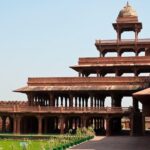
After the big gate moment, the tour moves through other Fatehpur Sikri structures that add variety. Panch Mahal, meaning five-level palace, is one of those stops that helps you see the site as more than just a single landmark.
Then there’s Jodha Bai’s Palace. You’ll see it described as a red sandstone palace with a central courtyard and a mix of Hindu and Mughal styles. Even if you keep your expectations modest, these secondary stops are where you start spotting how the architecture blends functions, aesthetics, and power.
The practical benefit here is pacing. Since Fatehpur Sikri is guided, you don’t have to waste your energy trying to figure out what each building is. You can focus on what you actually care about: design, symmetry, and that red-sandstone palette that photographs well in morning light.




The Transfer to Abhaneri: A Real Break Before Chand Baori
Once you leave Fatehpur Sikri, the day needs a reset. You’ll travel for around 3 hours to Abhaneri, with the drive eating up time that would otherwise be dead travel.
This is also where the private driver helps. You’re not managing navigation or worrying about finding the right vehicle at the right time. You can use the car ride to hydrate, cool down, and arrive at Abhaneri mentally ready to slow your pace.
Chand Baori in Abhaneri: Self-Guided Geometry You Can’t Stop Photographing
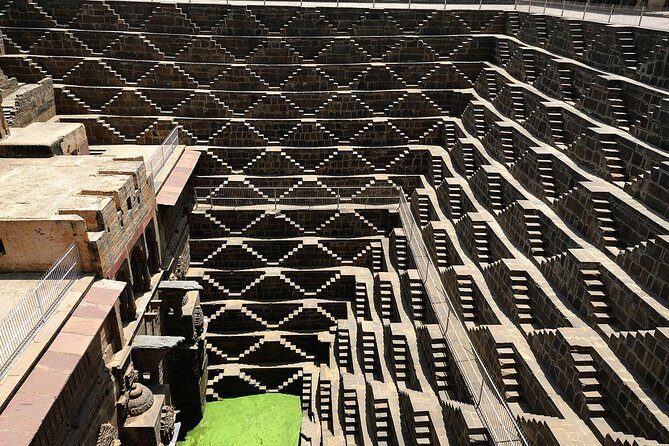
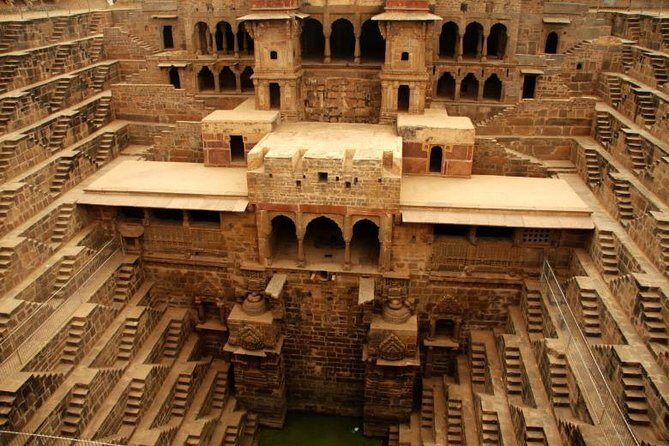
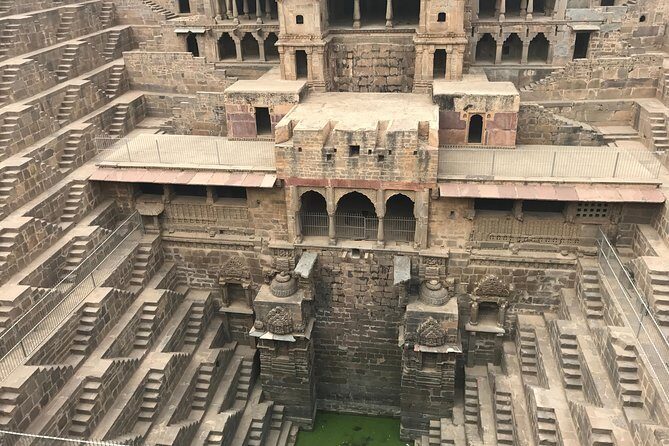
Chand Baori is the star for a different reason. Instead of palace walls and gateways, you’re staring into a massive stepwell. The Chand Baori is described as geometrically symmetrical, built between 800 and 900 by King Chanda, and also noted as over a thousand years old. Whatever the exact framing, you can feel the intention: it’s designed for function, and it’s beautiful because of how the design repeats.
You’ll have independent time here, about 15 minutes. The self-guided format is a plus. With a stepwell, your best photos depend on where you stand and how you angle the symmetry. You don’t want a guide rushing you through. You want a little freedom to test viewpoints.
A quick strategy: choose one viewpoint from the edge that captures the full drop, then move to a closer position for texture and steps. If you like calmer moments, spend a minute looking straight down into the pattern, because the geometry becomes clearer when you stop scanning.
Getting to Jaipur: Ending Where You Actually Want to Be
After Abhaneri, you’ll drive about 1 hour to reach Jaipur and be dropped off at your preferred destination. This one-way format matters if you’re planning to keep sightseeing in Jaipur the same day.
In practical terms, it’s easier to manage your hotel and meal plans because you’re not returning to Agra. You arrive in Jaipur with your energy intact enough to do one or two more things, rather than facing another long transfer later.
Timing and Pace: What an 8-Hour Day Feels Like on the Ground
The tour runs about 8 hours. That includes morning pickup in Agra, time at Fatehpur Sikri, a transfer to Abhaneri, time at Chand Baori, and then the final drive into Jaipur.
The key thing is how the time is distributed. The guided portion concentrates on Fatehpur Sikri highlights, while Abhaneri gives you short independent time. That’s a good balance. You don’t get stuck with a guide at every single stop, and you don’t get trapped wandering the big Fatehpur Sikri complex alone.
The main drawback is that you can’t expect slow travel. If you like lingering for hours in one monument, this route will feel tight. But if you want to check off two iconic sites while moving between two major cities, this is a solid match.
Price and Value: When $79 Makes Sense
At $79 per person, this is priced for people who value convenience and a smooth logistics day. You’re paying for the private car, the driver, bottled water, and a guide only for the Fatehpur Sikri portion.
Whether it’s a bargain depends on what you’d otherwise pay to DIY it:
- If you’d rent your own vehicle and hire a guide for Fatehpur Sikri anyway, this starts to look reasonable.
- If you’re trying to keep costs ultra-low, you might find cheaper options that don’t include a guided Fatehpur Sikri segment or door-to-door pickup/drop-off.
Monument fees can change the final total. The information here notes an approximate additional monument entry fee around $20 per person if the monument entry option isn’t chosen. Buland Darwaza admission is also listed as not included in the schedule, so you should plan for possible extra charges on arrival.
My take: this tour is good value when you want the transfer taken care of without stress, and you want a guide to make Fatehpur Sikri readable fast.
Comfort, Rules, and the Small Stuff That Can Save Your Day
A few practical things help you enjoy the day more:
- Bring respectful clothing. Sleeveless tops and shorts can limit access in religious spaces.
- Wear comfortable shoes for stepwell edges and uneven stone areas.
- If a shopping stop comes up as part of the driver rhythm, keep it optional in your mind. You can often decline, but I’d make your boundaries clear early in the day.
The good news is that the overall vibe is smooth. The car portion is widely praised for being on time and attentive, and the Fatehpur Sikri guide component tends to make the historic sights easier to connect with.
Who This Tour Best Fits
This is a strong fit if you:
- Want an easy way to travel from Agra to Jaipur without losing sightseeing time.
- Like structured stops at the main monuments, then freedom for a specific photo target like Chand Baori.
- Prefer a private setup rather than shared group chaos.
It’s less ideal if you:
- Want lots of free time to wander Fatehpur Sikri on your own for hours.
- Hate paying extra monument fees that may not be included in your selected option.
- Are extremely price-sensitive and would rather manage transport independently.
Should You Book This Agra-to-Jaipur Combo?
If your priority is getting from Agra to Jaipur while still seeing Fatehpur Sikri and Chand Baori without turning the day into a scavenger hunt, I’d book it. The private transport reduces headaches, and the guided Fatehpur Sikri stop gives you context where context really helps.
I’d hesitate only if you’re trying to squeeze every dollar and you know you’ll want to skip monument fees or add-ons. Also, if you’re the type who needs long, slow museum-time, plan for shorter on-site moments in return for seeing more ground.
FAQ
How long is the guided tour from Agra to Jaipur?
It’s about 8 hours total.
Where does the pickup happen?
Pickup is offered from anywhere in Agra.
Is this a private tour?
Yes. It’s private for your party, with your driver included.
Do we get a guide at both Fatehpur Sikri and Chand Baori?
You get a professional guide at Fatehpur Sikri. Chand Baori in Abhaneri is described as self-guided.
Are monument entry fees included?
Some monument entry fees are included depending on the option you select. The schedule also notes that Buland Darwaza admission is not included, and there may be an approximate monument entry fee around $20 per person if you don’t choose the entry-fee option.
Is lunch included?
Lunch is included only if you select the lunch option.
What should I wear for these sites?
Dress smart casual. Avoid sleeveless tops and shorts because you may be restricted from entering places of worship.
Is the transfer one-way or round-trip?
It’s one-way. The tour starts in Agra and ends in Jaipur, without returning to Agra.