REVIEW · NEW DELHI
Golden Triangle Delhi Agra Jaipur Tour from Delhi
Book on Viator →Operated by Travel Creators Of India · Bookable on Viator
Three cities, one smooth route. This Golden Triangle Delhi Agra Jaipur tour strings together the big-ticket sights with hotel pickup, a private guide, and air-conditioned transfers, so your days feel planned instead of chaotic. I like that the guide adds the story behind each place, not just dates and photos.
I also like the practical bundle for the price: private transportation between cities, 5 nights of accommodation, and daily breakfast when you choose the hotels option, plus unlimited water bottles along the way. One consideration: monument fees and most major-ticket entrances are not included, so you should budget extra for tickets once you’re on the ground.
In This Review
- Key highlights worth your attention
- What $185 per person really covers on this Golden Triangle run
- Getting picked up, riding comfortably, and why the guide matters
- Day 1 in Agra: Taj Mahal, Agra Fort, and Baby Taj area stops
- Taj Mahal (most important, but plan for the ticket)
- Agra Fort (UNESCO, and the Taj viewpoint payoff)
- Itmad-ud-Daulah View Point and Tomb area
- Day 2: Fatehpur Sikri on the way to Jaipur, then an easy arrival day
- Fatehpur Sikri (the in-between UNESCO stop you’ll be glad you made)
- Jaipur arrival and downtime
- Day 3 in Jaipur: Amber Fort, City Palace, Jal Mahal, Hawa Mahal, and Jantar Mantar
- Amber Fort (go early for a calmer feel)
- City Palace (museums inside a working palace complex)
- Jal Mahal (a palace in the water landscape)
- Hawa Mahal (quick hit, lots of detail)
- Jantar Mantar (giant instruments from Jai Singh II)
- Day 4: New Delhi reset day that keeps the trip from feeling like a sprint
- Day 5 in Delhi: Old Delhi icons and UNESCO hits in one long day
- Red Fort and Jama Masjid (power and calm contrast)
- Raj Ghat (a quieter stop with a purpose)
- Qutub Minar (UNESCO and that 75-meter scale)
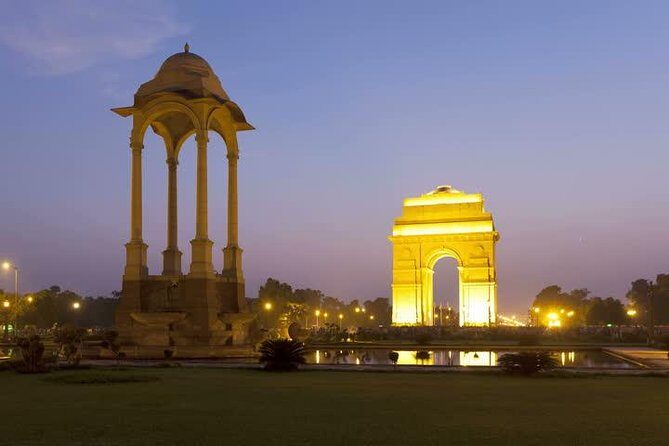
- Humayun’s Tomb and India Gate (finishing with perspective)
- Day 6: Airport or Gurgaon drop-off without the last-day panic
- Who should book this Golden Triangle tour (and who should customize)
- Should you book this tour from Delhi?
- FAQ
- How long is the Golden Triangle Delhi Agra Jaipur tour?
- Is this tour private or shared with other groups?
- What’s included in the price?
- Are monument entrance fees included?
- Do you provide pickup and drop-off?
- What car will I ride in?
- Can the tour be customized?
- Is free cancellation available?
Key highlights worth your attention
- A live, local tour guide who connects the dots between monuments
- Air-conditioned private car with pick-up and drop-off from airport or New Delhi locations
- Agra Fort viewpoint setup across the Yamuna for a classic Taj Mahal angle
- Fatehpur Sikri as the en-route UNESCO stop on the way to Jaipur
- A full Delhi Old + New combo day covering Red Fort, Jama Masjid, Qutub Minar, Humayun’s Tomb, and India Gate
What $185 per person really covers on this Golden Triangle run
At $185 per person, the headline number sounds simple. What matters is what you actually get for it: a private tour experience built around transport, guidance, and sleep. You’re not just buying tickets to monuments. You’re buying a smooth route between New Delhi/Delhi, Agra, and Jaipur, with hotel support and a driver who handles the in-between moments.
Your package includes private transfers by air-conditioned car, hotel or airport pickup and drop-off, tolls and parking, and a live professional guide. There’s also an unlimited water bottle setup, which sounds small until you’re walking in sun and heat and you’re not stuck hunting for drinks.
You’ll only pay extra for items marked as not included: monument fees, meals, tips, and personal expenses. The good news is that some stops do list admission as free. Still, the major sights like the Taj Mahal, Amber Fort, and several Delhi UNESCO sites are not included, so plan for that.
A nice bonus for travelers who like structure: you’re issued a mobile ticket, and this is designed to run as a private activity where only your group participates.
You can also read our reviews of more tours and experiences in New Delhi.



Getting picked up, riding comfortably, and why the guide matters
This tour is set up for low-friction travel. If you fly in, you’ll arrange pickup by sharing your flight details at booking. If you’re already in New Delhi, pickup can work from your selected New Delhi location. Either way, the idea is to start day one without the usual guessing game.
Once you’re moving, the comfort level depends on your group size, but it’s clearly spelled out:
- 1 to 2 people: three-seater sedan (Toyota Etios or similar)
- 3 to 5 people: six-seater wagon (Toyota Innova or similar)
- 6 to 10 people: ten-seater van (Tempo Traveler)
That matters because you’ll spend real time in transit between Delhi–Agra and Agra–Jaipur. A dedicated car also means you’re not stuck waiting on other groups when you want to move on or slow down.
Now the guide. In this kind of trip, monuments can blur together fast. I like the fact that your guide is positioned as your translator for the stories behind each destination—why Shah Jahan built what he built, what a fort location says about power, why an astronomical observatory looks the way it does. Even when you just catch fragments, it makes the whole Golden Triangle feel less like a photo checklist.
If you want to match the right personality, keep an eye on reported guide-and-driver pairings from prior bookings. Names that have come up include Akil for coordination, Zaid for last-minute arrangement help, and the combination of driver Irfan with guide Smith. If that kind of fit matters to you, ask your operator whether you can request the same team.
Day 1 in Agra: Taj Mahal, Agra Fort, and Baby Taj area stops
Agra is where the Golden Triangle starts to feel cinematic. You’ll leave New Delhi in an air-conditioned vehicle and arrive for hotel check-in. After that, your day focuses on the big three zones: Taj Mahal, Agra Fort, and the Itmad-ud-Daulah area.
Taj Mahal (most important, but plan for the ticket)
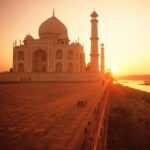
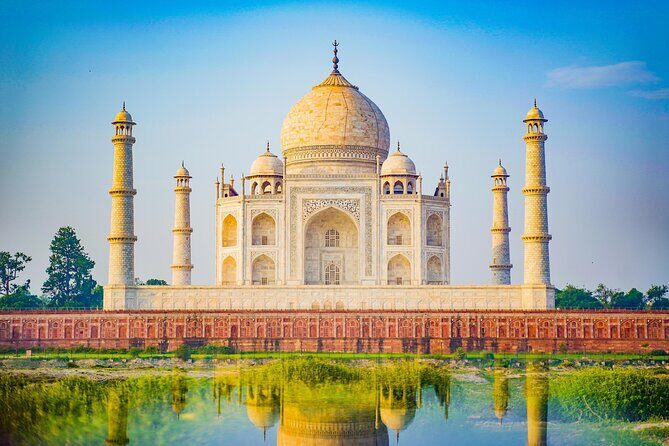
You’ll visit the Taj Mahal first. It’s built by Mughal Emperor Shah Jahan in memory of Mumtaz Mahal and was not fully completed until 1653. The story detail helps, because you’ll understand the complex as more than a pretty postcard.
Important practical note: Taj Mahal admission is not included. So you’ll want cash or an accepted payment method for the ticket when you reach the entry area, and you should also expect lines. Go slow inside. Look not only at the main view, but also at the symmetry and the way the gardens and marble surfaces frame the monument.
Agra Fort (UNESCO, and the Taj viewpoint payoff)
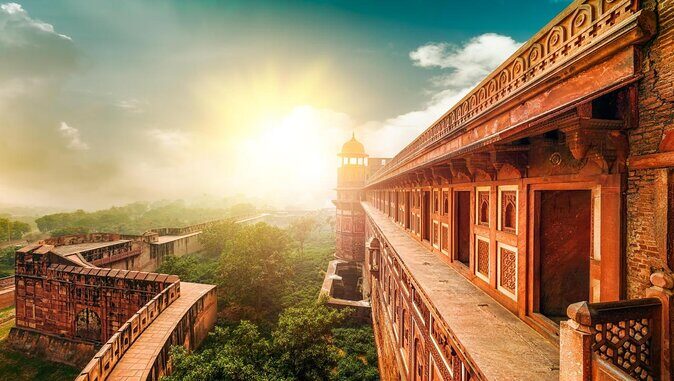
Next comes Agra Fort, another UNESCO World Heritage Site. This is where I start thinking beyond the main attraction. The fort gives you the sense of scale and control—this was power, not tourism—plus the viewing moments.
One of the neat specifics here is the best Taj Mahal view from an octagonal tower across the Yamuna River. That angle is part of why forts feel like more than backups to the main site. It also gives you a second way to appreciate the Taj: not just as a stand-alone monument, but as something that sits inside a larger river-and-fort geography.
Agra Fort admission is also not included, so again: budget and plan for the ticket.



Itmad-ud-Daulah View Point and Tomb area
The day finishes around the Itmad-ud-Daulah zone, sometimes nicknamed Baby Taj. You’ll also see Hall of Public Audience and Royal Pavilions.
Admission is not included here either. The payoff is that this stop gives you a different texture than the Taj: more intimate, more detailed, and often easier to enjoy if you’re monument fatigued.
Quick comfort tip for Agra: wear breathable clothing and plan water breaks. Even with unlimited bottles on the car side of things, you’ll still want to hydrate during walks.
Day 2: Fatehpur Sikri on the way to Jaipur, then an easy arrival day
Day two shifts gears. After breakfast, you check out and head toward Jaipur, stopping along the way at Fatehpur Sikri.
Fatehpur Sikri (the in-between UNESCO stop you’ll be glad you made)
Fatehpur Sikri is UNESCO-listed and built around clusters of red sandstone buildings. The gate highlight is Buland Darwaza, the entrance to the Jama Masjid Mosque. Nearby you’ll find the marble tomb of Salim Chishti.
Admission is listed as free for this stop, which is a small but meaningful value add. It also means you can spend more of your headspace on observation rather than budgeting.
Why it works on this route: it’s not just a detour. It breaks up the long travel day into a cultural milestone. That’s key on Golden Triangle trips, because pure transit can feel like wasted hours.
Jaipur arrival and downtime
Then you reach Jaipur and check into your hotel. The plan includes relaxing time rather than forcing immediate sightseeing.
That downtime is not “missing out.” It’s smart. Jaipur days later are action-packed, and having a softer landing helps you still enjoy the sights without feeling wrecked.
Day 3 in Jaipur: Amber Fort, City Palace, Jal Mahal, Hawa Mahal, and Jantar Mantar
Jaipur is where your camera storage will quietly give up. This day is packed with major stops, and admission tickets are not included for the sights listed.
Amber Fort (go early for a calmer feel)
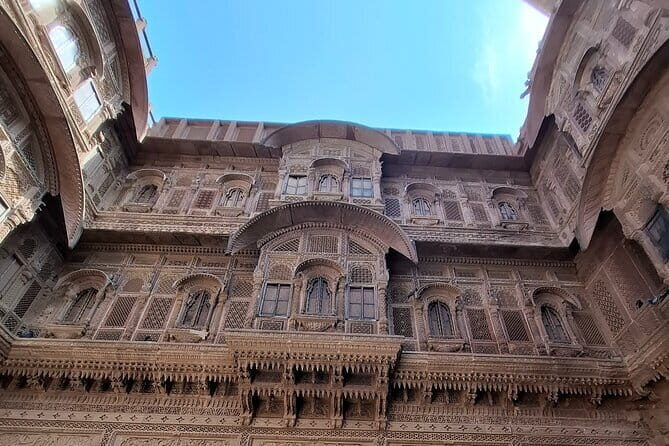
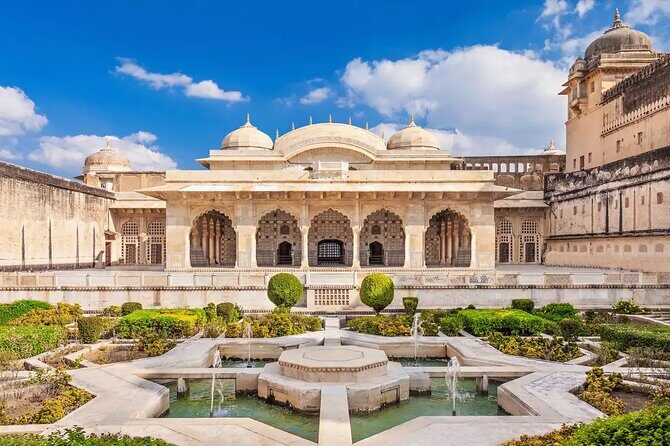
You’ll start at Amber Fort in the morning. It’s UNESCO-listed and known for artistic style featuring Hindu elements, plus cobbled paths, gates, and ramparts.
Admission is not included. Amber Fort can involve a fair bit of walking and uneven footing, so comfortable shoes matter more than you think.
City Palace (museums inside a working palace complex)
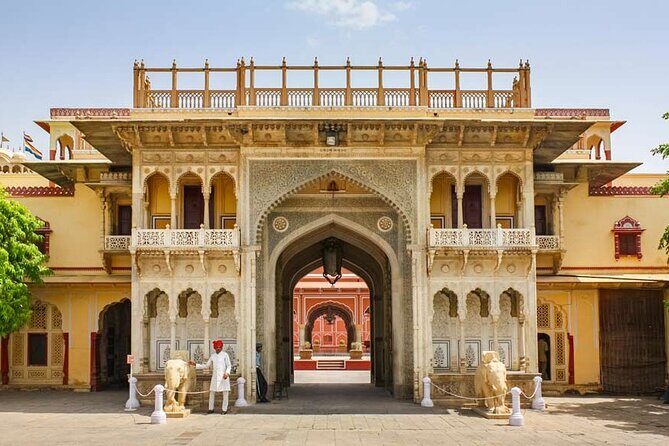
Next is the City Palace of Jaipur. It houses museums with textiles, costumes, weapons, and paintings across courtyards and gardens in the middle of the Old City.
Admission is not included here too. What I like about this stop is that it’s not only architecture. You get objects that help explain daily life and royal display. It’s a good anchor when you’ve been seeing monuments all week.
Jal Mahal (a palace in the water landscape)
Then you visit Jal Mahal near cenotaphs of the maharanis of Jaipur, situated in the watery expanse of Man Sagar. Origins are uncertain, but it’s believed to have been restored or built in 1734.
Admission is not included. This one is short in the schedule (about an hour), and that’s enough. Jal Mahal is about the setting. If you try to turn it into a museum day, you’ll miss the point.
Hawa Mahal (quick hit, lots of detail)
Hawa Mahal, the Palace of Wind, is next. It’s a famous landmark and the stop is listed at about 30 minutes.
Admission is not included. This is ideal for travelers who want a fast photo and then want to keep moving while their energy is still high.
Jantar Mantar (giant instruments from Jai Singh II)
Finally, you end at Jantar Mantar, a UNESCO World Heritage Site and astronomical observatory dating back to the 1700s. It was begun by Jai Singh II in 1728 and looks like a collection of giant sculptures.
Admission is not included. This can feel odd at first glance, but the payoff is that it makes you see science as public space. If you’re the type who likes explanations, ask your guide to point out how the shapes relate to measurement.
Day 4: New Delhi reset day that keeps the trip from feeling like a sprint
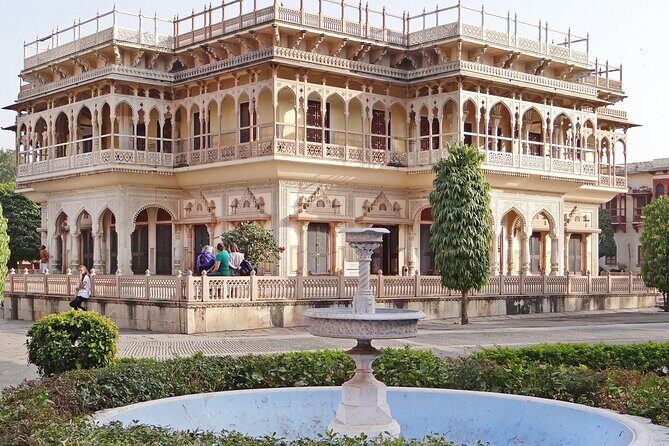
Day four is a breather. You check out from Jaipur, drive back to New Delhi, and check into your hotel. The evening includes leisure time.
Admission is listed as free for this stop block, which mostly reflects the city time rather than a ticketed attraction.
I value this kind of day because Golden Triangle trips can otherwise blur into back-to-back long museum walks. A reset also helps you shift your pace for Old Delhi and the Delhi UNESCO stops on day five.
If you arrive with jet lag, treat this as your recovery buffer.
Day 5 in Delhi: Old Delhi icons and UNESCO hits in one long day
This is your big Delhi sightseeing day, combining Old Delhi heritage and multiple UNESCO landmarks.
Red Fort and Jama Masjid (power and calm contrast)
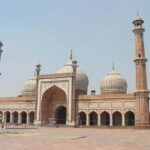
You start with Red Fort, a 17th century Mughal complex built by Shah Jahan. Admission is not included. Then you move to Jama Masjid, described as a pocket of calm at the heart of Old Delhi’s mayhem, and noted as the largest mosque built on a 10-meter elevation.
Admission is not included here either.
I like the pairing because Red Fort feels like authority and walls, while Jama Masjid feels like space and rhythm. The change of tempo helps keep you engaged.
Raj Ghat (a quieter stop with a purpose)
Raj Ghat is next, the place where Mahatma Gandhi was cremated. Admission is listed as free.
This is a shorter stop (about 40 minutes). It’s also a useful emotional pacing moment in the middle of a ticketed-heavy day.
Qutub Minar (UNESCO and that 75-meter scale)
Then comes Qutub Minar, another UNESCO site. It’s described as an example of Afghan architecture built with marble and red-sandstone and stands 75 meters tall.
Admission is not included.
If you’ve been seeing domes and forts all week, Qutub Minar will refresh your eyes with a different vertical language. It also makes a good “stretch” stop between denser Old Delhi zones.
Humayun’s Tomb and India Gate (finishing with perspective)
Humayun’s Tomb is another UNESCO-listed stop, the tomb of the second Mughal King Humayun. Admission is not included.
You finish at India Gate, built in 1931 to commemorate Indian soldiers, with admission listed as free. After that, you’re dropped back at your hotel in New Delhi.
If you’re tired, this is still a good ending. India Gate gives you a broad open-feeling conclusion after days of close details.
Day 6: Airport or Gurgaon drop-off without the last-day panic
On the final day, you’ll have breakfast and then head to Delhi airport or another desired location in Delhi or Gurgaon.
This is a simple close-out, and the big value is that it keeps you from scrambling on your last hours. If you have any flight constraints, this is the moment to confirm timing with your driver and guide.
Who should book this Golden Triangle tour (and who should customize)
This tour fits best if you want:
- a private experience instead of hopping between random groups
- a guided format where you learn why things matter
- hotel-based multi-city travel with air-conditioned transfers
- an efficient route through the core icons of the region
It’s also a good fit if you’re traveling solo or with a small group. Previous travelers even highlighted feeling more comfortable with a trusted driver-and-guide team during a solo trip.
You might consider customizing if:
- you already know you’ll want extra time at specific monuments (the day schedules are structured, not flexible by default)
- you want more time for shopping or food stops between major sights (meals are not included, so you’ll plan your own)
One seasonal note: if your dates overlap the New Year period, a mandatory gala dinner charge applies from 24th December to 05th January at additional INR 3500 per person. That’s not a “maybe,” it’s built into the calendar.
Should you book this tour from Delhi?
I’d book it if you want a classic Golden Triangle that’s guided, organized, and comfortable. The value is in the full package: private transport, live professional guiding, water bottles, and hotel stays, all while hitting the region’s top monuments. If you’re the type who gets more out of stories than checklists, the guide-led approach is a real plus.
I’d hesitate only if you hate ticket budgeting. Since many of the major entrances are not included (including the Taj Mahal and several UNESCO sites), you’ll need to plan extra costs on top of the base price.
If you do book, my practical advice is simple: decide your ticket budget before you go, wear comfortable shoes for fort and tomb days, and ask your operator whether you can request a specific driver/guide pairing like Irfan and Smith if that matters to you.
FAQ
How long is the Golden Triangle Delhi Agra Jaipur tour?
It runs for about 6 days.
Is this tour private or shared with other groups?
It’s a private tour/activity, so only your group participates.
What’s included in the price?
The tour includes a private tour, 5-night accommodation (if you select the hotel option), daily morning breakfast (if you select the hotels option), air-conditioned private car transfers, hotel or airport pickup/drop-off, tolls and parking, unlimited water bottles, and a live professional tour guide.
Are monument entrance fees included?
No. Monument fees are not included, including for major sights like the Taj Mahal, Agra Fort, Amber Fort, and several Delhi UNESCO sites. Some stops do list admission as free, though.
Do you provide pickup and drop-off?
Yes. Pickup and drop-off are included, either from the airport or from your chosen location in New Delhi (and the final drop-off can be to the airport or Delhi/Gurgaon).
What car will I ride in?
Car type depends on group size: three-seater sedan for 1–2 people, Toyota Innova-style six-seater wagon for 3–5 people, and a Tempo Traveler-style ten-seater van for 6–10 people.
Can the tour be customized?
Yes. The tour can be customized as per your requirements.
Is free cancellation available?
Yes. You can cancel up to 24 hours in advance for a full refund.