REVIEW · JAIPUR
Full day sightseeing Jaipur
Book on Viator →Operated by Rajasthan Royal Tour · Bookable on Viator
Jaipur can be a lot in one day. This full-day loop keeps it practical with hotel pickup, an air-conditioned vehicle, and major sights like Hawa Mahal and Jantar Mantar. You’ll move city to city without wrestling with transport.
I especially like the hotel pickup and drop-off. It saves time and reduces stress, especially when Jaipur traffic gets loud. I also like that the day covers top monuments with short, manageable stop times and comfort built in like bottled water and A/C riding.
One thing to plan for: the monument entrance fees are extra (about $35 per person), and the schedule runs a long 8–9 hours. If you want a slow, meandering day with lots of breaks, this may feel busy.
In This Review
- Quick take: what makes this Jaipur day work
- Why this Jaipur day feels easier than DIY
- Price and logistics: what you’re really paying for
- Hawa Mahal: windows made for breezes and secrecy
- City Palace Jaipur: courtyards, pavilions, and temple rooms
- Jantar Mantar: ancient science you can actually see
- Jal Mahal on Man Sagar Lake: a scenic break from monuments
- Ambikeshwar Mahadev Mandir: pillars and a temple with age
- Monkey Temple (Galtaji): springs, kunds, and lots of monkeys
- Where the driver-guide makes a difference
- Timing tips for an 8–9 hour Jaipur loop
- Who this tour is for (and who should skip it)
- Should you book this full-day Jaipur sightseeing?
- FAQ
- What is the duration of the full-day Jaipur sightseeing tour?
- Does the tour include hotel pickup and drop-off?
- Is the tour private?
- Are monument entrance fees included in the price?
- What attractions will I see during the day?
- What’s included in the tour?
- What should I budget for tips?
- What is the cancellation policy?
Quick take: what makes this Jaipur day work

- Door-to-door hotel pickup means you start and end without logistics headaches
- Major Jaipur landmarks in one loop helps you see the city highlights efficiently
- Jantar Mantar’s instruments are hands-on history—time, stars, and eclipses measured in ancient ways
- Jal Mahal on Man Sagar Lake gives you a calm scenic pause in the middle of the day
- A longer temple stop at Ambikeshwar Mahadev Mandir slows the pace for something more spiritual
- High satisfaction score (4.9/5 from 19 ratings) and a private outing for your group
Why this Jaipur day feels easier than DIY

This is the kind of day that makes sense for first-timers. You get a clear route, hotel pickup, and drop-off, so you’re not spending your energy figuring out where to go next or how to get there on time.
The transport setup matters. Jaipur can be unpredictable, and travel time can quietly eat your sightseeing hours. With an air-conditioned vehicle, you keep the day moving while staying comfortable. Plus, bottled water is included, which is a small detail that pays off when the sun is doing its job.
Another smart part is the “private for your group” feel. Even though you may see mentions of group discounts, the outing is still set up as your own experience. That means you can actually follow the pace you need instead of trying to negotiate stops with a large group.
Finally, this day is built for people who want monuments and temples more than shopping marathons. If you like your travel with clear highlights and real time at each stop, this fits well.
A few more Jaipur tours and experiences worth a look


Price and logistics: what you’re really paying for
The tour price is $19.28 per person, and the big value is what comes with it: hotel pickup and drop-off, fuel surcharge, bottled water, and an A/C vehicle. Those are the expensive parts of a day trip if you try to DIY it with taxis all day.
But you also need to budget for what’s not included. Monument entrance fees are listed at about $35 per person (approx.), and driver’s tips are extra. So your realistic total for the day will be the tour price plus those site fees.
Here’s the practical way to think about it: you’re paying to remove the transport planning burden. Your time is bought back. If you’d otherwise spend half the day coordinating rides, waiting, or backtracking, this price structure starts to feel fair quickly.
Hawa Mahal: windows made for breezes and secrecy
You start at Hawa Mahal, the Palace of Wind, and the building itself is the headline. It’s a five-story tower designed so mild breezes can move through the architecture. The facade is known for its latticed windows, not just as decoration, but as a functional feature.
Those windows were also used as a hidden vantage point for royal family women in past times. The idea was simple: you could look down at street life while staying out of direct view. It’s a striking reminder that architecture often solves more than one problem—cooling, privacy, and spectacle all at once.
Plan on about 45 minutes here. Admission isn’t included, so you’ll want to keep an eye on timing so tickets don’t steal your whole visit.
What I like about starting here: it sets your visual expectations for Jaipur right away. You see the city’s signature style up close before you move into the palace-and-observatory phase.
City Palace Jaipur: courtyards, pavilions, and temple rooms
Next is City Palace Jaipur, a complex made of courtyards, buildings, pavilions, gardens, and temples. It’s not one single building you rush through. It’s a whole set of spaces, and that’s why it earns the longer stop time.
You’ll have around 1 hour 30 minutes here, which is a good amount for a place like this. Key areas include Chandra Mahal, Mubarak Mahal, and the City Palace Museum. The museum part is especially helpful if you want context—otherwise, you can still enjoy the architecture, but you may miss some of the story behind the rooms.
Admission isn’t included, so again, plan your entry costs in advance.
A useful tip for this kind of site: take a moment in the courtyards before you chase details. Once you’ve oriented yourself, the pavilions and palace buildings make more sense.
Jantar Mantar: ancient science you can actually see
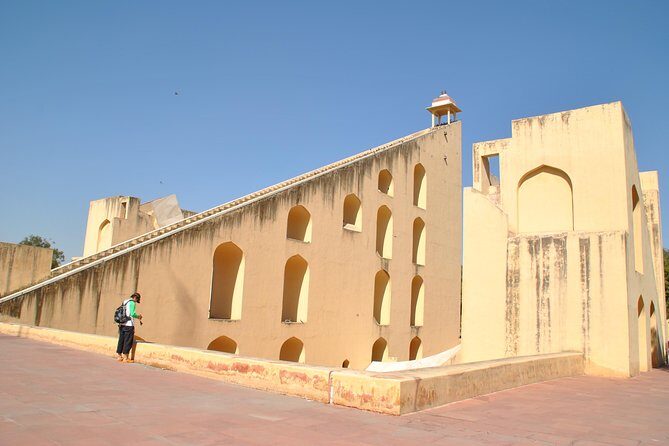
Then you move to Jantar Mantar, an observatory famous for its measuring tools. This isn’t history you have to imagine from a book. The nineteen instruments were designed for practical tasks like measuring time, forecasting eclipses, tracking stars as the Earth cycles around the Sun, and estimating planet declinations.
It also includes calculations for celestial altitudes and ephemerides, which is a fancy way of saying the tools were used to predict and track sky events. Standing in the presence of those instruments gives you a real sense of how observation turned into knowledge long before modern devices.
Expect about 45 minutes at this stop. Admission isn’t included, so budget time for entry and keep your questions ready. If you like science as a human story—people trying to measure the sky—this stop will feel rewarding.
The “drawback,” if you want one: it’s easier to get less out of it if you rush. Give yourself permission to slow down for a few moments and read the instrument explanations carefully.





Jal Mahal on Man Sagar Lake: a scenic break from monuments
Jal Mahal is a different kind of pause. It’s a majestic structure in the middle of Man Sagar Lake, with light sandy-colored stone walls. The contrast between architecture and water is the point, and it’s a pretty effective reset button between heavier stops.
You’ll have about 30 minutes here. Admission isn’t included, so make this a short, focused stop rather than a long linger. Think photos, viewpoints, and a breath of air before you head back into temples and monuments.
Even if you don’t go deep into interpretation, the visual effect works. It’s one of those places where your eyes do most of the thinking for you.
Ambikeshwar Mahadev Mandir: pillars and a temple with age
After the lake stop, you switch gears to Ambikeshwar Mahadev Mandir. This is one of the longer portions of the day at 3 hours, and that matters. A temple stop that long changes the feel of the day from sightseeing sprint to a more reflective pace.
The temple is supported by 14 pillars, and the Shivshila is described as being 5,000 years old and mentioned in Bhagwat Purana. That kind of detail gives you a stronger reason to slow down and take the place seriously, not just as another photo opportunity.
Admission isn’t included, so include that cost in your mental budget.
If you prefer very short stops packed with landmarks, this duration could be the main adjustment. But if you want the day to include more than buildings—if you want a moment that feels spiritual—this stop is a strong fit.
Monkey Temple (Galtaji): springs, kunds, and lots of monkeys
Now you get a temple that many people associate with both myth and real-life nature. Monkey Temple, also known as Galtaji, is about 10 kilometers east of Jaipur in the Aravalli Hills.
The temple is famous for natural springs that collect water into reservoirs called kunds. Bathing in the water at Galtaji is considered auspicious, especially on Makar Sankranti, and many people attend each year.
It’s also called the Monkey Temple because of the large monkey population.
You’ll have about 1 hour 30 minutes here, and admission isn’t included.
Practical advice: expect to share the space with monkeys and plan to keep your hands and items under control. If you carry snacks, phones out in the open, or anything dangling, you might want to put it away to avoid awkward moments.
Where the driver-guide makes a difference
What makes this kind of day trip feel truly smooth is the person steering it. In the kind of service this is, you can end up with a driver-guide who handles traffic calmly, keeps the timing sensible, and explains what you’re seeing without turning the whole day into a lecture.
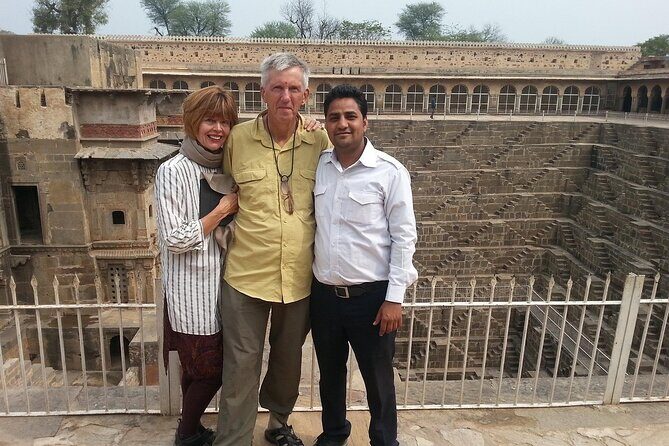
Names that have come up include Sharif and Shahid, described as attentive and friendly, with excellent English and a safe driving approach. Other names that have shown up include Kaleem Khan, Md Khan, and Karan Singh with Pankaj, all described in practical terms like handling chaotic traffic and staying reliable.
Even when the program is fixed, the day can still be shaped by how flexible your driver-guide is. Some guides are the type to help you get the right pacing and even suggest a lunch stop mid-day. That’s useful because a rushed meal can turn a good day into a tired one.
If you care about lunch or you want a photo at a specific angle, don’t be shy about telling your guide early. Ask what time each stop tends to be best and how long you should budget for photos.
Timing tips for an 8–9 hour Jaipur loop
This is an 8–9 hour outing, and it’s built around a sequence of stops that range from 30 minutes to a 3-hour temple segment. That means your energy management matters.
A simple strategy: use the shorter stops (like Jal Mahal at 30 minutes) as quick refresh points. Save your deep attention for the longer stays—City Palace at 1 hour 30 and Ambikeshwar Mahadev Mandir at 3 hours. Jantar Mantar and Hawa Mahal are shorter, so you’ll enjoy them more if you decide what you want to notice first.
Comfort-wise, you should be prepared for a moderate physical level. That doesn’t mean athletic training, but it does mean you’ll likely stand, walk, and move between places at an active pace.
Also, bottled water is included, which helps. Still, plan for sun exposure and wear comfortable footwear. Jaipur can be hot, and a long day punishes poor shoe choices.
Who this tour is for (and who should skip it)
This tour makes the most sense if:
- You have limited time in Jaipur and want the highlights in one day.
- You care about historic monuments, palaces, observatories, and temple visits.
- You don’t want to handle transport planning across multiple stops.
- You like a private, structured day rather than bouncing between places on your own.
It may be less ideal if:
- You want lots of free time to wander without any fixed pacing.
- You strongly dislike paying extra for entrance fees.
- You’re not comfortable with a long day and a moderate walking/standing pace.
- You prefer a more modern, casual sightseeing mix instead of temples and monument-focused stops.
In short: this is built for people who want Jaipur’s icons and key sacred sites, wrapped in a logistics-light package.
Should you book this full-day Jaipur sightseeing?
I’d book it if you’re trying to make the most of a single day and you want your plan to stay easy from start to finish. The biggest win is the hotel pickup and drop-off plus the A/C vehicle—that’s what turns Jaipur from a logistical puzzle into a smooth sightseeing day.
I’d hesitate if entrance fees are a deal-breaker for your budget. With about $35 per person for site tickets plus the tour price, you’ll want to be comfortable with the total cost before you commit. The driver’s tip is also part of the real cost.
If your top priorities are architectural icons and meaningful temple stops, this day is a strong match. If you want a looser, self-paced adventure, you might prefer a lighter plan with fewer scheduled stops.
FAQ
What is the duration of the full-day Jaipur sightseeing tour?
It runs about 8 to 9 hours.
Does the tour include hotel pickup and drop-off?
Yes. Hotel pickup and drop-off are included.
Is the tour private?
Yes. Only your group participates.
Are monument entrance fees included in the price?
No. Entrance fees are not included and are listed as approximately $35 per person.
What attractions will I see during the day?
The day includes stops at Hawa Mahal, City Palace, Jantar Mantar, Jal Mahal, Ambikeshwar Mahadev Mandir, and Monkey Temple (Galtaji).
What’s included in the tour?
Included items are hotel pickup and drop-off, fuel surcharge, bottled water, and an air-conditioned vehicle.
What should I budget for tips?
Driver’s tips are not included.
What is the cancellation policy?
Free cancellation is available up to 24 hours in advance of the experience start time for a full refund. If you cancel within 24 hours, the amount you paid is not refunded.