REVIEW · NEW DELHI
From Delhi: 8 Days Golden Triangle Tour with Varanasi
Book on Viator →Operated by TRAVEL INDIA ONE DAY · Bookable on Viator
The Golden Triangle meets Varanasi, and it works. You get Taj Mahal twice (sunrise and sunset), plus an early boat ride in Varanasi with a front-row seat to Ganga Aarti rhythms. Add Jaipur’s hilltop sights and a private A/C driver, and this route feels like you’re moving through India with a smart plan, not a chaotic scramble.
I like that the itinerary mixes “big-ticket” monuments with genuinely old-city spirituality. I also like the practical side: pickup and drop-off help, private road time in comfort, and guided services when it counts. One thing to keep in mind: this is a packed schedule with early starts, so if you hate being on the move, you may feel squeezed.
In This Review
- Key highlights worth knowing before you go
- Golden Triangle plus Varanasi: what this 8-day route does best
- Private A/C car and personal driver: the real value
- Day 1 and Day 2 in Varanasi: airport transfer, sunrise boat ride, Ganga Aarti
- Sarnath on Day 3: Buddha’s first sermon sites before Jaipur
- Jaipur (Days 4-5): Amer Fort, City Palace, Hawa Mahal, Jantar Mantar
- A flexible Day 5 in Jaipur: explore at your own pace
- Agra (Days 6-7): Agra Fort, Mehtab Bagh, Tonga ride, and Taj Mahal sunrise
- Delhi on Day 7: rickshaw time, Chandni Chowk, Jama Masjid, Qutub Minar
- Price and what to budget beyond the included items
- Who this tour suits best—and who might want a different pace
- A quick note on guides and drivers
- Should you book this tour?
- FAQ
- How long is the Golden Triangle Tour with Varanasi?
- Where does the tour start and end?
- Is pickup and drop-off included?
- Will I travel in an A/C car with a driver?
- Is the Varanasi boat ride included?
- What places will I visit in Jaipur?
- Do we visit the Taj Mahal more than once?
- Are hotels included in the price?
- What is not included in the tour price?
- FAQ
- Can I get a full refund if I cancel?
- What happens if the tour is canceled due to weather?
Key highlights worth knowing before you go
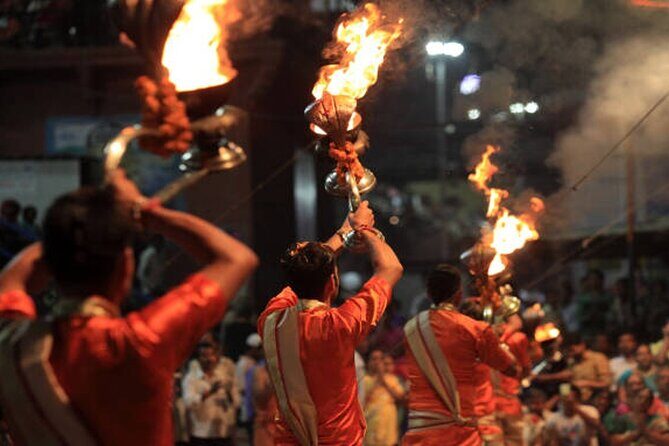
- Ganga Aarti from the water on an early morning Varanasi boat ride
- Two Taj Mahal moments: sunset one day, sunrise the next
- Private A/C car with one driver and flexibility to request quick stops
- Jaipur’s fort-and-palace core: Amer Fort plus City Palace and museum time
- A mix of ancient and Mughal: Sarnath (Buddha’s first sermon area) to Agra’s imperial era
- Delhi added with rickshaw time plus major monuments in a single day
Golden Triangle plus Varanasi: what this 8-day route does best
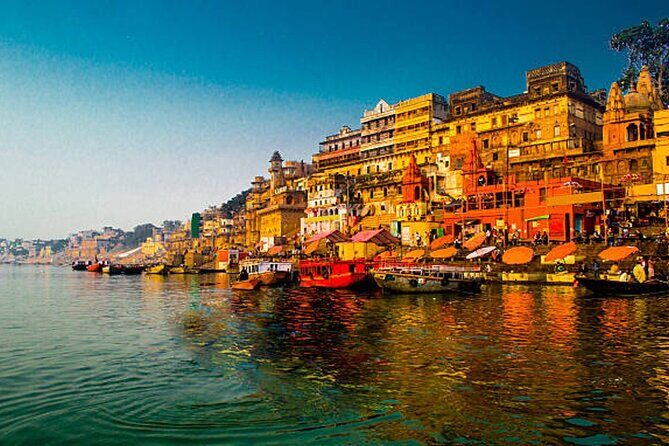
This tour strings together three of India’s most visitable cultural worlds: Mughal grandeur, royal Jaipur planning, and Varanasi’s river-centered life. The big draw is that Taj Mahal isn’t treated like a one-stop photo op. You’ll see it at both golden hour and early morning, when the crowds and light change the feel of the place.
You’ll also get a strong “why this mattered” track, not just list-of-sites sightseeing. In Varanasi you’re in the oldest-city atmosphere along the ghats, and then you shift to Sarnath’s Buddhist heritage, where the stops connect to the Buddha’s early message. After that, Jaipur and Agra do the imperial-story heavy lifting.
The pacing is the main trade-off. You’ll be busy every day, and you’ll rely on the driver and timing to make it all fit. If you like a slow vacation, you may want to leave one extra day unplanned in Jaipur or Delhi.
You can also read our reviews of more tours and experiences in New Delhi.



Private A/C car and personal driver: the real value
In India, comfort and logistics can make or break your trip, especially when you’re doing long days and multiple cities. This tour includes an A/C vehicle with a personal driver and handles parking and tolls. That means fewer delays from paperwork and less time arguing over how to get from A to B.
The other benefit is flexibility. Several past travelers highlight drivers who stay helpful and willing to adjust stops. One traveler praised a driver as someone you can ask for anything and he’ll stop—useful for quick photo breaks, adding a short roadside stop for snacks, or adjusting to how your group feels that hour.
You also get small comfort perks that add up: one mineral water bottle per person per day and hotel stays in the 3-star range for seven nights (one double room per stay). It’s not a luxury package, but it is designed to keep you comfortable enough to enjoy the sights instead of recovering from travel fatigue.
Day 1 and Day 2 in Varanasi: airport transfer, sunrise boat ride, Ganga Aarti
Your trip starts in Delhi, then you transition to Varanasi right away. After arriving at the Varanasi airport, you’ll be transferred to your hotel for an overnight stay—no guesswork, no haggling, just sleep and prep.
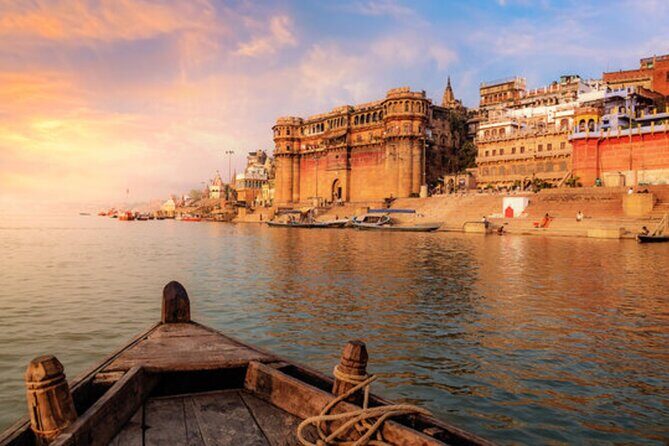
Then comes the reason Varanasi is special: the itinerary builds in an early morning boat ride. You start with the kind of light that makes river life look cinematic, and you’ll see the Ganga ghats as they wake up. After that, breakfast returns you to normalcy for a bit.
The highlight here is the Ganga Aarti experience from a boat. Seeing the ritual from the water changes the perspective: instead of standing shoulder-to-shoulder on a crowded walkway, you experience it as a moving, layered scene across the river. It’s one of those moments where the city’s spiritual rhythm feels practical, not just dramatic.
Practical tip: this part of the day is time-sensitive. If you’re the type who needs extra time to wake up, plan to follow the schedule closely and don’t expect a late start.
Sarnath on Day 3: Buddha’s first sermon sites before Jaipur
Day 3 turns the page from riverfront India to early spiritual history. In Sarnath, you’ll visit the key landmarks tied to Buddha’s first sermon area. The stops listed include Buddha temples, the Dhamekha stupa, the Chaukhandi stupa, and the archaeological museum.
What makes Sarnath valuable is that it’s not only about one monument—it’s about a place where you can connect names and stories to physical sites. Even if you’re not a history buff, the layout helps you understand why pilgrims have walked here for centuries.
After Sarnath, you fly to Jaipur and check in for the night. That flight step matters for keeping the itinerary realistic. It trades some travel hours for more actual sightseeing time, and it helps you arrive in Jaipur ready to explore instead of arriving exhausted.
Jaipur (Days 4-5): Amer Fort, City Palace, Hawa Mahal, Jantar Mantar
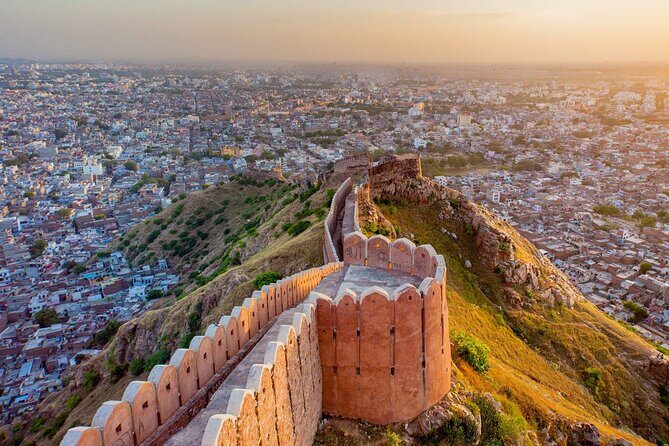
Jaipur is often called the Pink City for a reason, and this itinerary focuses on the core royal geography. On Day 4, you start with Amer Fort, then move into the City Palace area with museum time and an expert guide. In the sightseeing overview, you’ll also cover famous Jaipur landmarks like Hawa Mahal and Jantar Mantar, so your time isn’t limited to just one fort complex.
Amer Fort is your first big “wow” moment of the day. It’s the kind of place where you notice craftsmanship—arches, courtyards, and the logic of how the fort sits above the city. Then City Palace adds context. A museum visit there helps you connect the setting to how the royals lived and collected power.
One nice thing about having an expert guide for at least part of the day: it stops the monuments from becoming just backdrops for photos. Ask questions when you’re inside, because this is the day when explanations can turn architecture into something you actually remember.




A flexible Day 5 in Jaipur: explore at your own pace
Day 5 is your breathing room. You get a full day in Jaipur where you can explore at your own pace. A driver is available if you need help, which is a smart arrangement when you don’t want to overplan.
This is also a good day to adjust based on energy levels. If you wake up motivated, you can do more walking and photo stops. If your feet are protesting (common after forts and sun exposure), you can keep the day lighter and use the car strategically.
Because the tour already covers the main landmark structure across Day 4 and the overview highlights, Day 5 is best for personal rhythm: slow meals, revisiting the views you liked, and grabbing small moments you wouldn’t schedule in a fixed checklist.
Agra (Days 6-7): Agra Fort, Mehtab Bagh, Tonga ride, and Taj Mahal sunrise
Agra is where the itinerary earns its headline. On Day 6, you drive from Jaipur and check into your hotel. Then you start with Agra Fort, which adds a tougher, older layer to the city that’s often overshadowed by the Taj Mahal.
Next is Mehtab Bagh, a garden complex that’s famous for framing views toward the river side and the Taj area. Then the fun included add-on: a Tonga ride. It’s a traditional-style ride, and it helps break the day into a different pace mode—more experience, less pure walking.
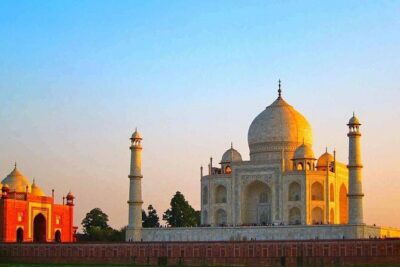
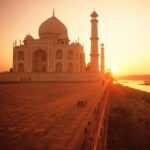
Day 6 ends with sunset at the Taj Mahal, and Day 7 starts with sunrise at the Taj Mahal. Seeing it twice is the smartest part of this route. Light changes the marble look. Morning air also often feels calmer. Even if you’ve seen photos before, the experience on-site feels different each time.
Inside the Taj Mahal, take your time. In similar private-guide experiences, the best results come when you ask about the Mughal story and symbolism while you’re there, not after you leave. If your guide is around, use that moment.
After the second Taj visit, Day 7 includes the Red Fort and then the drive back to Delhi for the night.
Delhi on Day 7: rickshaw time, Chandni Chowk, Jama Masjid, Qutub Minar
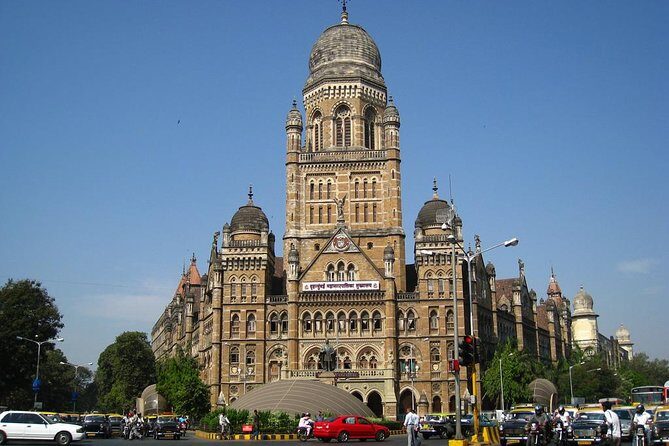
Delhi in one day is intense, but this itinerary chooses major anchors so you’re not wandering without direction. You’ll return to your Delhi hotel, then explore sites including Jama Masjid, Chandni Chowk, Fatehpuri Masjid, Red Fort, Rajghat, Humayun Tomb, Rashtrapati Bhawan, India Gate, and Qutub Minar.
The tour also includes a rickshaw ride in Delhi, which is exactly the kind of change of pace you want in a day filled with monument time. It’s one of the easiest ways to feel the city’s street texture without sacrificing the whole day to traffic.
Practical approach: when you’re stacking many stops, you’ll enjoy the day more if you focus on two or three emotional targets—one mosque, one fort, one “wow tower” like Qutub Minar—and use the rest as context. Otherwise, everything becomes a blur of names.
Price and what to budget beyond the included items
The tour price is listed at $621.11 per person. The value comes from what’s bundled: 3-star hotels for 7 nights, an A/C private vehicle with a personal driver, guided services, parking and toll charges, and the morning boat ride in Varanasi. You also get one bottled water per person per day and hotel pickups and drops.
What’s not included is clearly stated: personal expenses plus gratuities and tips. Also, the listing doesn’t spell out monument entry fees in the included list, so you should assume you may pay some on-site costs depending on your exact arrangements.
So how do you judge value? This package is best if you want to avoid the common headache of arranging trains, local drivers, and timing between cities. Paying for one coordinated route (instead of piecing together your own) is the point here. If you’re comfortable doing that planning yourself, you may find cheaper options. If you’re not, this is the kind of package that buys you time and sanity.
Who this tour suits best—and who might want a different pace
This works well for first-time visitors to India who want a clear, structured route. It’s also a strong choice for solo travelers who prefer private transport and a driver who can handle stop adjustments and timing.
It’s less ideal if you hate early starts. You’ll do sunrise planning in Agra and an early river morning in Varanasi. You’ll also spend long days in transit between cities, even with an A/C car.
If you’re the type who wants a lot of free time for museums, markets, and wandering without a schedule, consider adding extra nights in one city—often Jaipur or Delhi—so the itinerary doesn’t feel like constant checking off.
A quick note on guides and drivers
The most repeated praise in the available feedback is about drivers being safe and helpful, and tour guides being patient with questions and explanations. Names that come up include Raj (planning help), Dinesh (explaining on the way), Sanjay (driving and explanations), Manu (polite, helpful, and extra logistics help), and Amir Khan (history explanations around Taj Mahal). You may or may not be assigned the same people, but it’s a good sign that communication matters with this operator.
Should you book this tour?
If you want a confident, guided route through Taj Mahal, Jaipur, Agra, and Varanasi without juggling transport, I’d say yes. Seeing the Taj Mahal at sunrise and sunset alone is a strong reason to consider it, and the Ganga boat ride with Ganga Aarti is the kind of experience that’s hard to replicate on your own planning.
Book it if you can handle a busy week and you’re okay with 3-star comfort as the baseline. Don’t book it if you want a slow trip with lots of downtime, or if you know you’ll resent early mornings.
If you do book: be ready to move, bring comfortable walking shoes, and treat the sunrise plans as the core moments of the trip, not optional extras.
FAQ
How long is the Golden Triangle Tour with Varanasi?
The duration is listed as about 7 to 8 days.
Where does the tour start and end?
It starts in Delhi, India, and your departure is also from Delhi.
Is pickup and drop-off included?
Yes. The tour includes assistance during pickup and drop-off.
Will I travel in an A/C car with a driver?
Yes. You’ll have an A/C vehicle with a personal driver.
Is the Varanasi boat ride included?
Yes. A morning boat ride in Varanasi is included.
What places will I visit in Jaipur?
You’ll see Amer Fort and City Palace, and the plan also highlights Hawa Mahal and Jantar Mantar.
Do we visit the Taj Mahal more than once?
Yes. You’ll visit for sunset and also for sunrise.
Are hotels included in the price?
Yes. The tour includes 3-star hotel accommodation for 7 nights (one double room).
What is not included in the tour price?
Personal expenses are not included, and gratuities and tips are not included.
FAQ
Can I get a full refund if I cancel?
You can cancel up to 24 hours in advance for a full refund.
What happens if the tour is canceled due to weather?
If it’s canceled due to poor weather, you’ll be offered a different date or a full refund.