REVIEW · NEW DELHI
Four-Day Private Luxurious Golden Triangle Tour to Agra & Jaipur
Book on Viator →Operated by INDIA TRIP DESIGNER India · Bookable on Viator
Four days in India’s Golden Triangle feels like a greatest-hits tour. You’ll cover Delhi, Agra, and Jaipur with private transport and local guides, hitting major sights without spending your time figuring routes.
What I love most is the way the itinerary stacks iconic architecture back-to-back, so the stories of the Mughal era and Rajasthan royalty make sense fast. The second big win: Taj Mahal admission is included, plus a few other stops list free entry like Jama Masjid and Jal Mahal.
One thing to consider: only some entrance fees are included, and the rest are listed as not included. So you’ll want to budget extra for monuments, especially if you plan to linger at each stop.
In This Review
- Key Highlights You’ll Actually Feel in Your Schedule
- The Golden Triangle Plan Works Because It’s Built Around Geography
- Day 1 in Delhi: Mughal Masterpieces, Jama Masjid, and the Lotus Temple Reset
- Day 2 to Agra: Taj Mahal Entry Included, Agra Fort’s Scale, and Fatehpur Sikri En Route
- Day 3 in Jaipur: Amber Fort, Jal Mahal Views, Hawa Mahal Photos, and Jantar Mantar’s Stone Math
- Day 4 Near Jaipur: Galtaji Temples and the Return Drive to Delhi
- Guides and Drivers: Why Names Like Monu, Surendra, Sunny, and Ajay Matter
- Price and Value: What $195 Covers, and What You’ll Need to Budget Separately
- Practical Tips So You Don’t Feel Rushed on Monument Days
- Who This Tour Suits Best (And Who Might Want Something Different)
- Should You Book This 4-Day Private Golden Triangle Tour?
- FAQ
- What cities does this Golden Triangle tour include?
- How long is the tour and how many nights are included?
- Is pickup included?
- Is this tour private?
- Are meals included?
- Which ticket entry is specifically included?
- Are any sights marked as free admission?
- Is the tour ticket mobile?
- What is the cancellation policy?
- Are there any guidance notes about participation for kids?
Key Highlights You’ll Actually Feel in Your Schedule
- Private tour with hotel pickup: less hassle, smoother starts, and no waiting around in the middle of the city
- Taj Mahal admission included: one major ticket checkbox already handled
- Free-entry stops sprinkled in: Jama Masjid, Fatehpur Sikri, and Jal Mahal are marked free
- A strong balance of Mughal and Rajput sights: Delhi monuments, Agra forts, and Jaipur’s forts + astronomy
- Guides named in past experiences: support from people like Mahendrapal (Delhi) and Ajay (Agra)
- Long but manageable driving days: roughly 3 hours to Jaipur after Agra, then about 5 hours to Delhi on Day 4
The Golden Triangle Plan Works Because It’s Built Around Geography
This 4-day route is a classic for a reason: Delhi to Agra to Jaipur is a straight line through some of India’s most famous layers of history. You get to see major monuments in each city instead of hopping around randomly.
I like that the tour is set up as private with pickup and a driver, so you can keep moving even when Delhi traffic tries to bully your timetable. And because it’s designed around three nights of lodging, you’re not constantly changing hotels or doing mid-trip check-ins.
You can also read our reviews of more private tours in New Delhi


Day 1 in Delhi: Mughal Masterpieces, Jama Masjid, and the Lotus Temple Reset
Day 1 gives you a concentrated Delhi hit, starting with some of the best-known Mughal-era sites.
First up is Humayun’s Tomb (about 1 hour). It’s a 16th-century monument associated with Humayun, who died in 1556, and it was built by Hamida Begum, the wife of the second Mughal emperor Humayun. This stop is a great warm-up because the architecture sets the tone for what comes later in Agra.
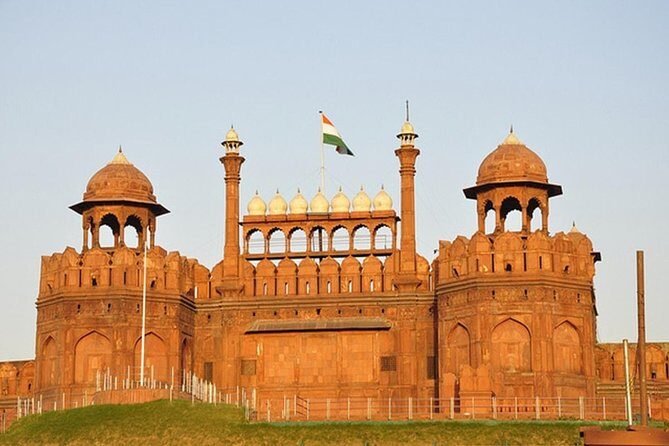
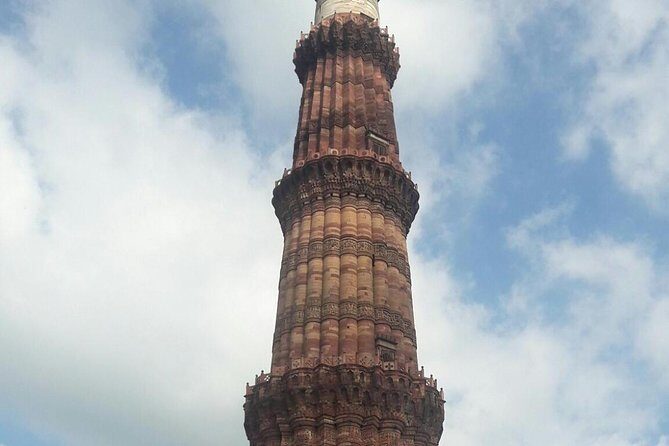
Next comes Qutub Minar (about 1 hour). It’s part of the Qutb complex, a UNESCO World Heritage site in the Mehrauli area. The minaret is visually dramatic even if you’re not a trivia person, and it’s an easy way to get your bearings in Delhi’s older districts. Admission is listed as not included here, so plan accordingly.
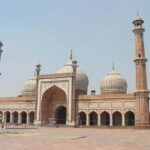
Then you’ll head to Jama Masjid (about 1 hour). This is one of India’s largest mosques and was built by Mughal emperor Shah Jahan. The tour lists admission as free, which is a nice bonus, and it’s a powerful place to watch how the scale of worship spaces works in real life.
You also stop at India Gate on the Rajpath axis. It’s short, but it helps connect Delhi’s Mughal past with the country’s modern identity.
Finally, there’s Lotus Temple (about 30 minutes). It’s a Bahá’í House of Worship dedicated in December 1986, known for its flowerlike shape. I treat this as your mental reset: after dense history sites, it gives you a calmer, more architectural photo moment.
Day 2 to Agra: Taj Mahal Entry Included, Agra Fort’s Scale, and Fatehpur Sikri En Route
Day 2 is where the trip starts feeling like the movie version of India, especially with Taj Mahal.
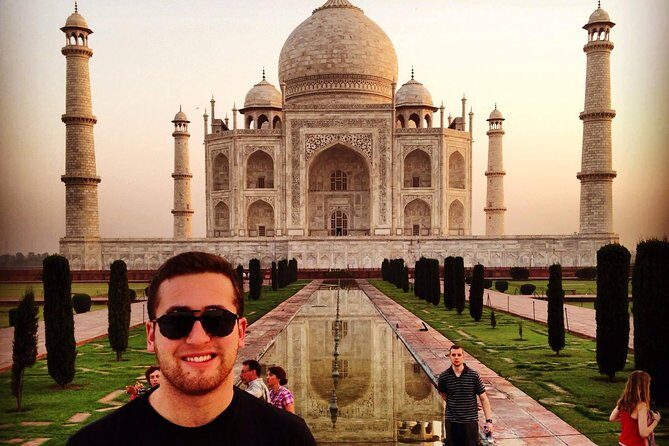
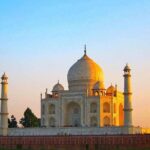
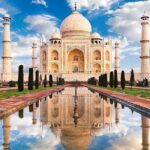
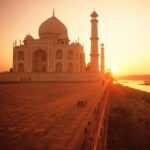
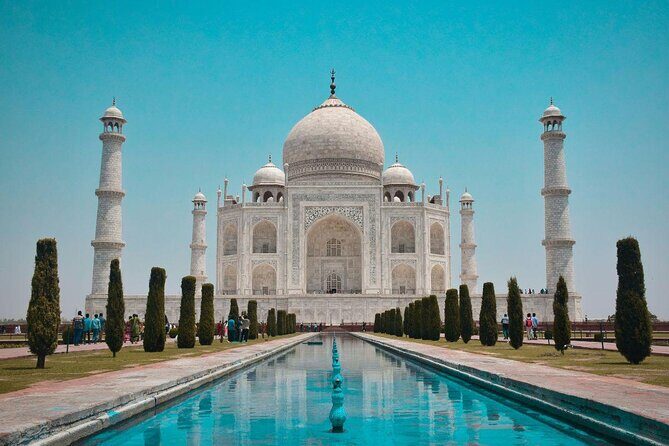
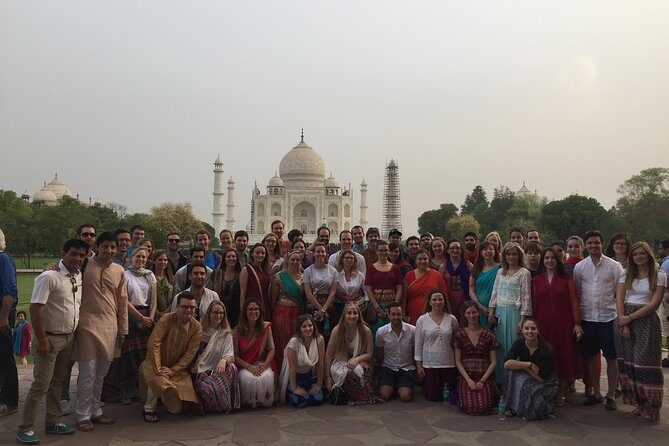
The tour lists Taj Mahal as admission included, with a short time slot noted. Even if your time is limited, prioritize seeing it in steady light: walk the grounds, look for symmetry, then zoom out for the full white-marble effect. Taj Mahal was commissioned in 1632 by Shah Jahan for Mumtaz Mahal, and it also houses Shah Jahan’s tomb. That story hits harder once you’re standing there.
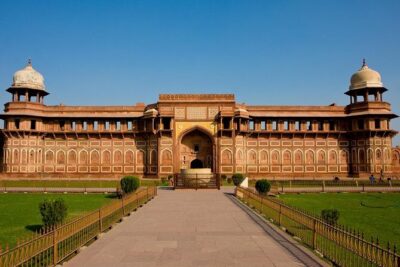
Next is Agra Fort (about 1 hour, admission not included). It served as the main residence of Mughal emperors until 1638, when the capital shifted to Delhi. If you want a contrast to Taj Mahal’s elegance, Agra Fort is all about defenses, power, and the “ruling from here” vibe.
After Agra, the itinerary includes Fatehpur Sikri en route to Jaipur, with admission marked free. It’s described as a 16th-century Mughal-founded city made from red sandstone clusters. Key spots mentioned include Buland Darwaza gate (entrance to the Jama Masjid mosque), the marble Tomb of Salim Chishti, Diwan-E-Khas with its carved central pillar, Jodha Bai Palace with a Hindu and Mughal mix, and the five-story Panch Mahal. You’ll feel how planned the whole site is.
Then you drive toward Jaipur for the overnight stay, with the drive time noted as about 3 hours.
Day 3 in Jaipur: Amber Fort, Jal Mahal Views, Hawa Mahal Photos, and Jantar Mantar’s Stone Math
Jaipur day is where Rajasthan personality shows up in full color and costume-like architecture, especially around the forts and palaces.
Start with Amber Palace (Amer Fort), about 2 hours, with admission not included. It sits high on a hill, and the fort is the principal tourist attraction in Jaipur. This stop pays off if you like seeing how power and design work together—big walls, sweeping views, and a sense of elevation that changes the whole feel of the city.
Next is Jal Mahal (about 30 minutes, admission free). It’s a palace in the middle of Man Sagar Lake. The time you get here is usually for quick views and photos, but it’s also a useful breath after the fort, because you shift from stone-and-history to water-and-light.
Then comes Hawa Mahal (about 1 hour, admission not included). The Palace of Wind is made from red and pink sandstone and extends toward the zenana or women’s chambers. It was built in 1799 by Maharaja Sawai Pratap Singh. Even from street level, the facade reads instantly, and it’s one of those “yes, it looks like postcards” moments.
After that you’ll visit City Palace of Jaipur (about 1 hour, admission not included). The complex includes Chandra Mahal and Mubarak Mahal palaces, and it served as the seat of the Maharaja of Jaipur. If you want a calmer, more grounded palace experience than Amber, this is a good choice.
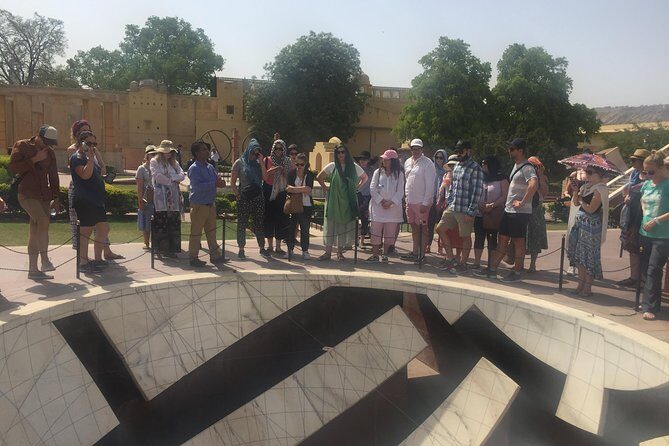
Finally, Jantar Mantar (about 2 hours, admission not included). It’s a UNESCO World Heritage site featuring 19 architectural astronomical instruments built by Sawai Jai Singh II and completed in 1734. The description notes the world’s largest stone sundial. I love this stop because it’s different from the usual fort-and-palace circuit. It also helps you understand that this region wasn’t only building for spectacle—it was building for measurement and observation.
Day 4 Near Jaipur: Galtaji Temples and the Return Drive to Delhi
Day 4 is lighter on the palace circuit and more about spirituality and scenery near Jaipur.
The first stop is Galtaji / Monkey Temple (about 2 hours, admission not included). This ancient Hindu pilgrimage site is described as about 10 km away from Jaipur. Temples sit in a narrow crevice in the ring of hills surrounding the city. The terrain detail matters because it affects how you move through the area and how shaded or exposed you feel.
After Galtaji, you’ll drive back toward Delhi for your departure. The itinerary notes around a 5-hour drive to the Delhi airport based on your flight schedule and driver transfer.


Guides and Drivers: Why Names Like Monu, Surendra, Sunny, and Ajay Matter
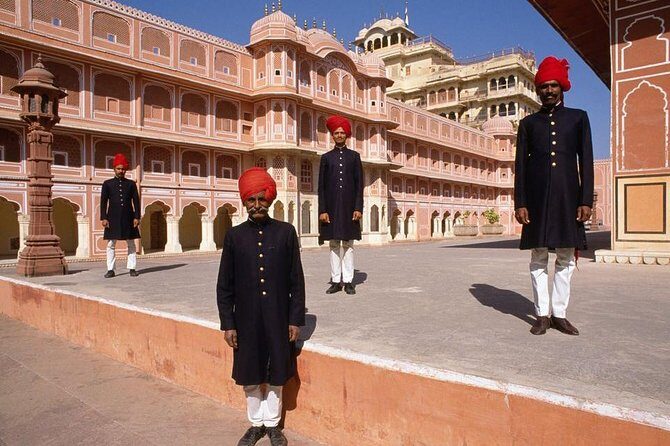
A private tour only feels good when you have someone who can steer the day. That’s where past experiences shine.
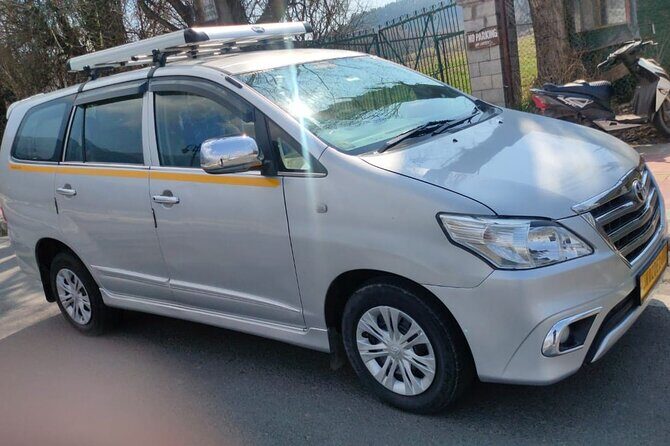
I’ve seen this tour run smoothly with drivers like Monu and Surendra, described as professional and helpful during the long drives between cities. Safety and comfort came up as real wins, which makes sense when you’re moving between Delhi, Agra, and Jaipur without switching transport.
Guides also make a difference by city. Past bookings mention Mahendrapal as the Delhi guide, with strong history context, and Ajay as a knowledgeable guide in Agra. In Jaipur, Sunny is specifically called out for being fun and for making the sightseeing feel like more than just a checklist.
One balanced note: English ability can vary by guide and driver. In at least one experience, communication was sometimes difficult due to language differences. The good news is the tour structure still runs on time, and you’ll have a local guide to keep things moving.
Price and Value: What $195 Covers, and What You’ll Need to Budget Separately
At $195 per person, the value depends on how you see the trade-offs: included logistics versus extra monument tickets.
What’s included is clear and important: 3 nights of shared accommodation, a local guide, hotel pickup, a private tour, and breakfast for 3 days. That’s a lot of “reduce your stress” value, especially on a fast-paced itinerary like the Golden Triangle.
What’s not included: alcoholic drinks (available to purchase) and food and drinks unless specified. Entrance tickets are mixed. The tour lists Taj Mahal as included, and also lists free entry at Jama Masjid, Fatehpur Sikri, and Jal Mahal. Other major monuments—like Humayun’s Tomb, Qutub Minar, Agra Fort, Amber Palace, Hawa Mahal, City Palace, Jantar Mantar, and Galtaji—are marked as not included, so you should plan for additional ticket spending.
If you’re the kind of traveler who loves to linger, the ticket budget matters more. If you want fast photo stops and clean explanations, this itinerary is already structured for that rhythm.
Practical Tips So You Don’t Feel Rushed on Monument Days
This tour is designed to keep you moving, which is great—just don’t fight the day.
Wear comfortable shoes and plan for sun and heat. Many stops are outdoors for longer than the listed time suggests, and Jaipur + Agra days can feel intense if you come unprepared.
At mosques and religious spaces like Jama Masjid, expect rules around dress and entry flow. Bring clothing that helps you follow local norms without turning sightseeing into a stressful outfit change.
For tickets, mentally separate your day into two buckets: “tickets included or free” and “tickets not included.” That helps you avoid surprise spending when you’re already tired from driving.
Finally, keep your phone charged for mobile ticket access and updates. One less thing to manage is the whole point of paying for a tour like this.
Who This Tour Suits Best (And Who Might Want Something Different)
This is a smart fit if you want the Golden Triangle highlights without DIY logistics. The private format and pickup reduce the common headaches of public transport, finding guides, and figuring out timing across cities.
It’s also a good match if you like variety: Mughal sites in Delhi, imperial monuments in Agra, then the forts, palaces, and astronomy tools of Jaipur. The itinerary’s mix keeps the days from blurring together.
If you’re a monument purist who wants deep, slow exploration at each stop, you might find the pacing brisk. In that case, you could consider adding extra time in one city—but that flexibility would need to be discussed with the tour planner.
Should You Book This 4-Day Private Golden Triangle Tour?
I think this is worth booking if you want a smooth, guided route through Delhi, Agra, and Jaipur with key costs handled upfront. The big reasons are practical: hotel pickup, private transport, breakfast included, and Taj Mahal admission already taken care of.
Skip it (or ask for a modified plan) if you strongly prefer long stays inside each monument. Also double-check how you feel about the shared accommodation setup, since that’s part of what’s included at this price.
If you’re aiming for a first-time Golden Triangle trip with minimal friction, this one is built for exactly that.
FAQ
What cities does this Golden Triangle tour include?
It covers New Delhi, Agra, and Jaipur over 4 days, with sightseeing in all three cities.
How long is the tour and how many nights are included?
The tour is 4 days and includes 3 nights of accommodation.
Is pickup included?
Yes. Hotel pickup is included, and the tour offers pickup.
Is this tour private?
Yes. It’s listed as a private tour/activity, so only your group participates.
Are meals included?
Breakfast is included for 3 days. Food and drinks beyond that are not included unless specified.
Which ticket entry is specifically included?
Taj Mahal admission is included. Other stops are listed as admission not included, while a few are marked free.
Are any sights marked as free admission?
Yes. The itinerary lists Jama Masjid (Delhi) as free, Fatehpur Sikri as free, and Jal Mahal as free.
Is the tour ticket mobile?
Yes. The tour includes mobile ticket.
What is the cancellation policy?
It offers free cancellation if you cancel up to 24 hours in advance for a full refund.
Are there any guidance notes about participation for kids?
Yes. Children must be accompanied by an adult. The tour also states that most travelers can participate.