REVIEW · PANAJI
Explore the Old Panjim City: Guided Walking Tour by Foot
Book on GetYourGuide →Operated by Lets Go Far · Bookable on GetYourGuide
Panjim is best slow-walked. This Old Panjim City tour strings together Portuguese-influenced landmarks, colorful back lanes, and big hilltop views in just 2 hours. I like the mix of Fontainhas UNESCO streets and the calm, respectful stop at St. Sebastian’s Chapel, then it crosses into Hindu shrines without feeling forced. One thing to plan for: it’s real walking on uneven stairs and narrow lanes, so it can be tiring in heat.
You’ll meet at the stairs of Our Lady of the Immaculate Conception Church and follow a guide who speaks English and Hindi. The small group (up to 10) keeps it relaxed, and the best part is getting insider route choices and local context—people like Feivel have a reputation for making the pacing easy and the stories clear.
In This Review
- Key highlights you’ll feel right away
- Why this Old Panjim walk works so well
- Meet at the Immaculate Church: a Portuguese-Baroque start on real stairs
- Tobacco Square: how trade shaped Panjim’s city center
- Fontainhas: UNESCO lanes where Portuguese details are still visible
- St. Sebastian’s Chapel: a quieter kind of Goa faith
- Shree Mahalaxmi Temple: switching faiths without losing the thread
- Altinho Hill and the Maruti Temple: panoramic payoff
- Pace, comfort, and what you should pack
- Price and value: what $19 buys you in real terms
- What it’s like with a guide like Feivel
- Who should book this walking tour?
- Should you book the Old Panjim City guided walk?
- FAQ
- Where do I meet for the tour?
- How long is the walking tour?
- How big is the group?
- What languages will the guide speak?
- What should I bring with me?
- Is the tour suitable for wheelchair users or pregnant women?
Key highlights you’ll feel right away
- Starts at Our Lady of the Immaculate Conception Church with sweeping staircases and a Portuguese-Baroque look
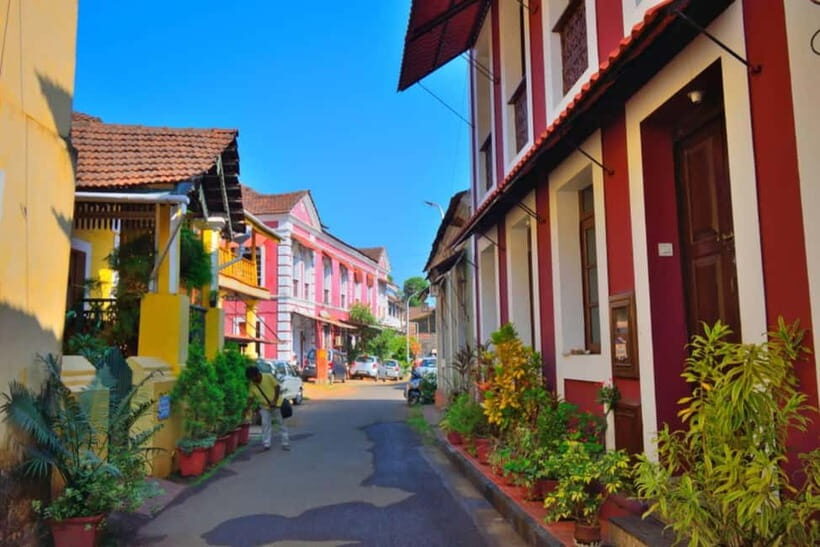
- Fontainhas (UNESCO): narrow lanes with painted Portuguese houses, red-tiled roofs, and ornate balconies
- Tobacco Square: a quick but meaningful link to Goa’s colonial trade world
- Cross-cultural route: St. Sebastian’s Chapel to Shree Mahalaxmi Temple in one walking flow
- Altinho Hill viewpoints from the Maruti Temple area for city-scale perspective
- Small group pacing (max 10) with humor, conversation, and local “how to see it” tips
Why this Old Panjim walk works so well
Panjim can feel like a postcard from a distance. Up close, it’s about textures: stair edges worn smooth, painted shutters, small shrines at street corners, and the way the city shifts from Portuguese-colonial architecture to living Goan culture.
This tour is designed for that shift. It’s not just a checklist of famous stops. The route moves from a hilltop church down into older neighborhood streets, then back up again toward viewpoints. That loop matters because it changes what you notice at every step—views, then street life, then temple silhouettes, then wide city angles again.
The other reason I like this experience is the guide-led approach. With a live guide and a small group, you’re not stuck reading plaques while people shuffle past. You get explanations in plain terms, plus practical advice for how to spend the rest of your time in Fontainhas after the tour ends.
There’s no “sit and listen for two hours” vibe here. It’s a steady walk with stops—enough movement to stay alert, but not so rushed that you miss the details.
You can also read our reviews of more walking tours in Panaji

Meet at the Immaculate Church: a Portuguese-Baroque start on real stairs
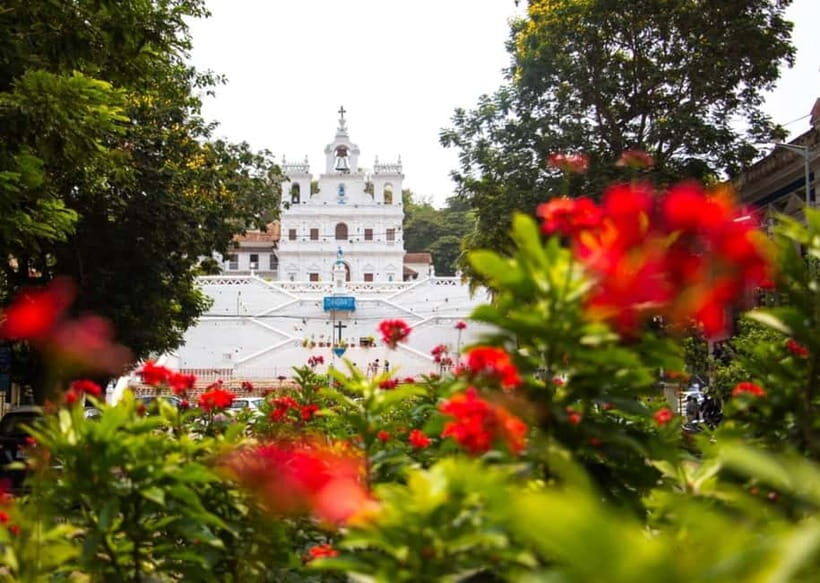
Your walk begins at the stairs of Our Lady of the Immaculate Conception Church. This is a strong starting choice because the setting does two things at once: it gives you the scale of the hill, and it frames Goa’s colonial past immediately.
Expect:
- A whitewashed, church-on-a-hill feel that anchors your sense of place
- Portuguese-Baroque facade styling that signals what you’re about to see in the streets below
- Sweeping stairways that set your pace—slow down and look while you climb
Practical tip: even if the tour is only 2 hours, you still want comfortable shoes for the stair-and-lane rhythm. This is one of those tours where footwear affects how much you enjoy the route, not just how safely you walk.
Also, since the meeting point is on stairs, arriving on time matters. If your group starts late, the whole flow tightens, and you’ll feel it more than you’d expect.
Tobacco Square: how trade shaped Panjim’s city center
From the church area, the route heads toward Tobacco Square, historically tied to the tobacco trade during the colonial period. It’s a small stop compared with the big landmarks, but it’s the kind of moment that adds meaning to everything you see afterward.
What I like about this kind of “context stop” is that it turns architecture into evidence. When you know tobacco was once a central colonial trade, you start noticing how maritime connections and commerce helped shape Panjim’s development. In other words: you’re not only looking at old buildings—you’re learning why the city grew into the shape it has now.
This part also gives you a gentle tempo reset. After the hilltop church, Tobacco Square feels flatter and easier to take in. It’s a good breather before you enter the tighter neighborhood streets later.
Fontainhas: UNESCO lanes where Portuguese details are still visible
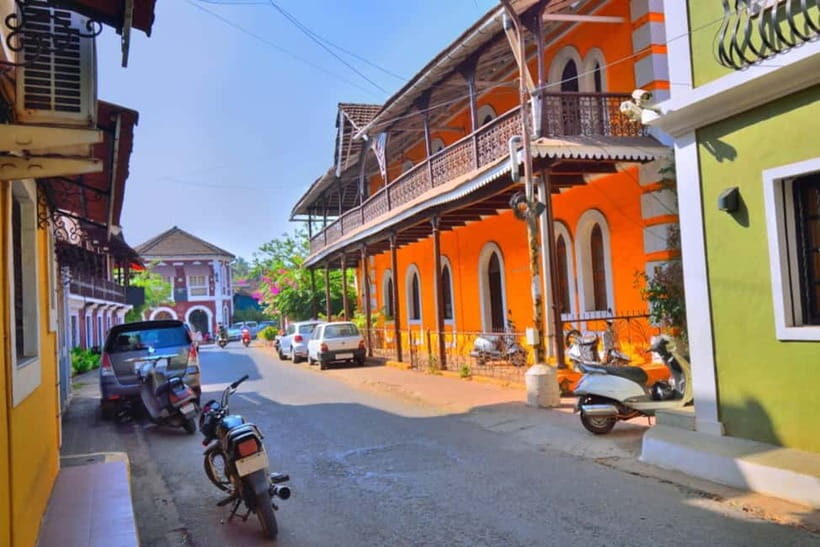
Fontainhas is the star of the walk. This UNESCO-recognized old quarter is where Goa’s Portuguese influence becomes visually obvious, but in a way that still feels lived-in.
As you wander, you’ll see:
- Narrow lanes that naturally slow your pace
- Brightly painted Portuguese houses—color as part of the architecture, not just decoration
- Red-tiled roofs and ornate balconies, which make the neighborhood feel layered and old-world
- Streets that invite you to stop, look up, and then look sideways again
One thing I appreciate is the tour’s pacing here. You don’t just pass through. You get time to absorb what makes this area unique, then you get to return to it again at the end—so it doesn’t feel like a quick photo sprint.
After the final return to Fontainhas, it’s the right moment to do something simple: pause for a coffee or take a few more photos from streets you particularly liked. The guide’s earlier tips help you notice what to choose on your own.
If you’re wondering whether this will feel touristy: it shouldn’t. The street structure and the small group format keep it conversational rather than crowded.
St. Sebastian’s Chapel: a quieter kind of Goa faith
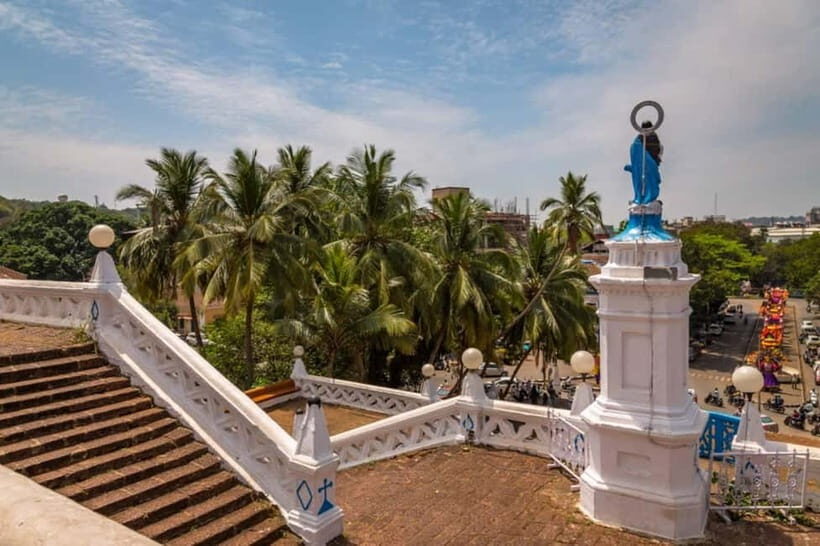
Next on the route is St. Sebastian’s Chapel, described as serene and decorated with traditional Goan Catholic icons. This is a change of mood from the lane-level bustle of Fontainhas.
Why it’s worth your attention:
- You get a slower, reflective pause in the middle of walking
- The icons and church setting help you understand Goa’s Catholic culture as something that’s still actively present
- It adds balance to the route, so the religious stops feel like part of a spectrum, not a single note
Practical note: chapels and religious spaces often ask you to be respectful with your tone and behavior. This tour also has clear rules—no smoking and no intoxication—so you’ll have a calmer environment.
For photography: bring your camera, but also watch the flow. In small sanctuaries, it’s easy to get in the way if you treat it like a street photo set.
You can also read our reviews of more guided tours in Panaji

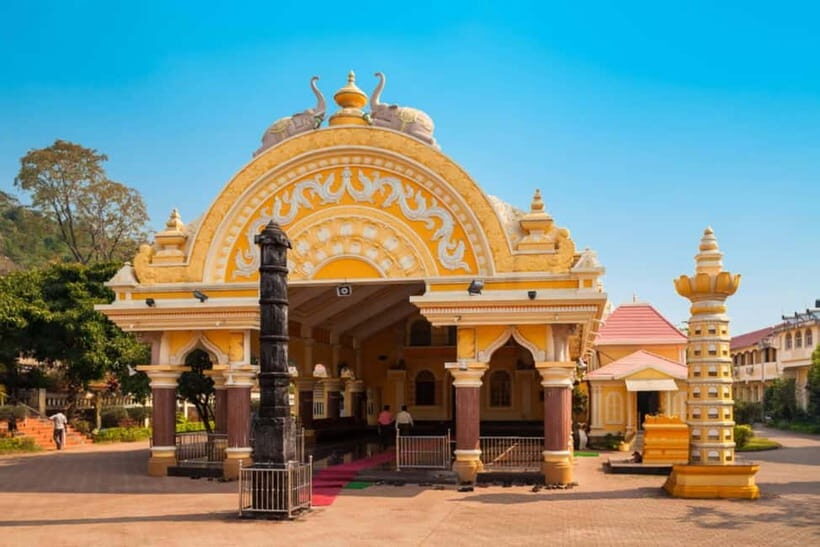
Shree Mahalaxmi Temple: switching faiths without losing the thread
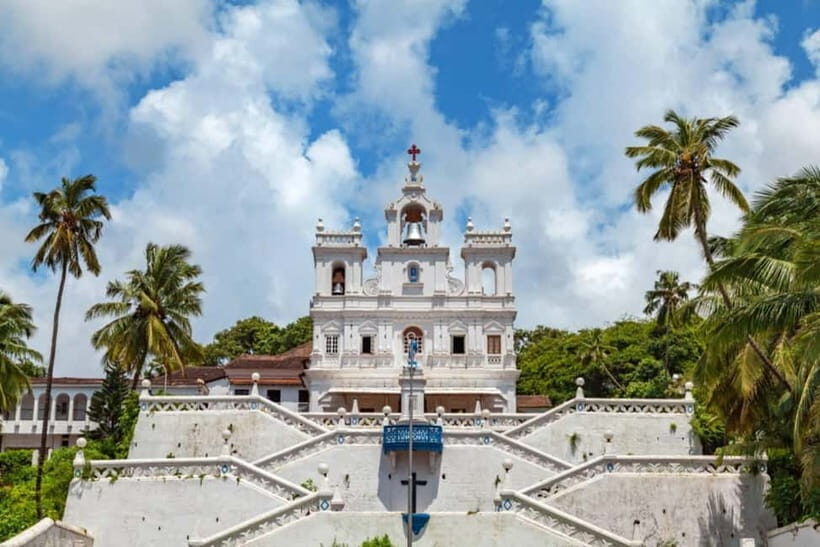
After St. Sebastian’s Chapel, the walking route crosses cultural lines to Shree Mahalaxmi Temple, a Hindu shrine. The point of this stop is not just to show you another landmark—it’s to show how Goa’s religious life can sit close together in everyday space.
The temple stop is described as vibrant in spirit and devoted to Mahalaxmi, and you’ll feel the energy change as you approach. This is where the guided context matters most: you’ll get help noticing what’s significant there, and how that fits with the neighboring Catholic presence you just saw.
As a visitor, you’ll get the best experience if you treat this as a respectful observation stop. You’re walking with a group, in a place of worship, and the guide’s explanations should shape how you look and listen.
Altinho Hill and the Maruti Temple: panoramic payoff
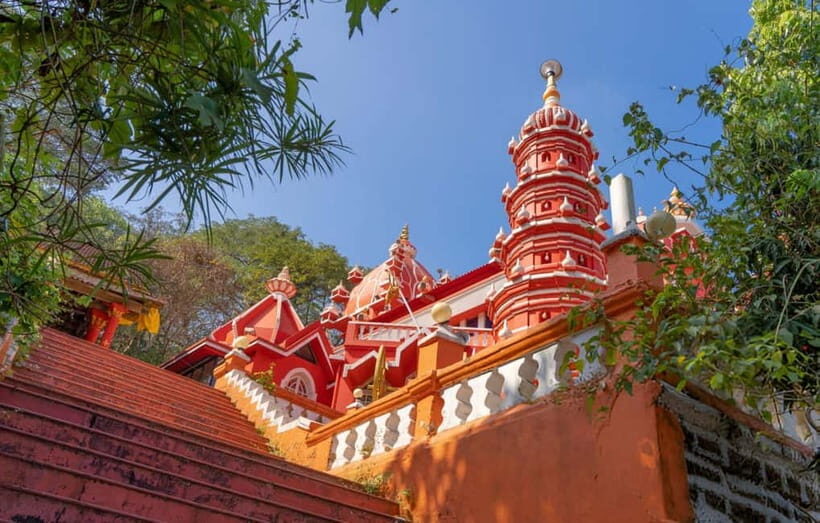
The tour finishes with viewpoint time at the Maruti Temple on Altinho Hill. This is an important design choice for a walking tour: after time in tight lanes and clustered landmarks, you finally get space.
Expect panoramic views of the city from the hill. Even if you think you know what Panjim looks like, you’ll usually be surprised by how the city’s different layers connect from above: the old quarter’s street pattern, the way the neighborhoods spread, and where major landmarks sit in relation to each other.
This is also the moment when you’ll appreciate the 2-hour length. You’re not hiking all day. You’re getting the payoff view while the rest of the tour keeps your energy steady.
Pace, comfort, and what you should pack
This tour is 2 hours, small group, and includes walking through narrow lanes and stair areas. That means your comfort choices matter.
Bring:
- Comfortable shoes (non-negotiable for stair-and-street footing)
- Water to stay steady in warmer conditions
- Sunglasses and sunscreen plus a sun hat if you’re sensitive to heat
- A camera for photos, especially around the church and hilltop viewpoint areas
Also note the route rules: smoking isn’t allowed, and intoxication and alcohol/drugs are not allowed. In practice, that usually means the group stays focused and respectful, which helps the whole experience feel smoother.
Who should take extra care:
- If you’re easily tired by stairs or uneven ground, plan to move slowly and ask the guide for a comfortable pace.
- This tour is not suitable for wheelchair users and is not suitable for pregnant women, based on the walking and terrain.
Price and value: what $19 buys you in real terms
At $19 per person for a 2-hour guided walking tour, the value comes less from “how many stops” and more from how the guide helps you see those stops.
Here’s what you’re paying for:
- A live English/Hindi speaking guide
- Insider route choices, including hidden alleys and tucked-away gems locals know
- Conversation and a friendly, story-driven approach
- Small group size capped at 10 participants, which usually means more interaction and fewer distractions
If you’re already visiting Panjim and want to understand the colonial and local cultural layers quickly, this is a strong deal. You’re getting a structured route, but you’re also getting guidance that helps you explore on your own after the tour ends—especially around Fontainhas where you’ll likely want more time for photos and cafes.
What it’s like with a guide like Feivel
The name Feivel shows up in the strongest feedback, and it makes sense. A guide who’s friendly and enthusiastic changes the whole experience. You’re more likely to ask questions, slow down when something catches your eye, and actually remember what you learned instead of just collecting photos.
One of the best parts of the tour description is that the guide brings humor and real connection, not just lectures. The conversations help you understand why a place matters, which is the difference between seeing a building and understanding a neighborhood.
For peace of mind, the small group feel also matters. A guided walk can make a city center feel more comfortable, especially when you’re moving through older lanes and religious spaces.
Who should book this walking tour?
I think this tour is a great match if you:
- Want a short, guided introduction to Panjim’s Portuguese colonial core
- Like neighborhood walking where you can linger for photos
- Enjoy cultural context—Catholic icons one minute, a Hindu temple the next
- Prefer smaller groups and a relaxed pace
It’s not the best choice if you need step-free access or if your health limits walking through narrow lanes and stairs.
Should you book the Old Panjim City guided walk?
If you want a smart, time-efficient way to understand Panjim—churches on a hill, Fontainhas street-life, and a viewpoint finish—this tour is an easy yes. At $19 for 2 hours with a small group and a bilingual guide, it’s good value, especially because you also get insider tips for what to do in Fontainhas right after.
I’d only hesitate if stairs and uneven lanes are a big concern for you. Otherwise, plan for comfortable footwear, bring water and sun protection, and treat it like a guided stroll through the layers of Panjim rather than a hurried sightseeing route.
If that sounds like your style, you’ll likely leave with better bearings and more respect for how Goa’s colonial past and living traditions overlap in everyday streets.
FAQ
Where do I meet for the tour?
You meet at the stairs of Our Lady of the Immaculate Conception Church.
How long is the walking tour?
The tour lasts 2 hours.
How big is the group?
It’s a small group with a maximum of 10 participants.
What languages will the guide speak?
The live tour guide speaks English and Hindi.
What should I bring with me?
Wear comfortable shoes and bring sunglasses, a sun hat, sunscreen, water, and a camera for photos.
Is the tour suitable for wheelchair users or pregnant women?
No. It is not suitable for wheelchair users or pregnant women.