REVIEW · NEW DELHI
Delhi: Private Old & New Delhi Tour – Full or Half Day
Book on GetYourGuide →Operated by TRAVELOGAMY · Bookable on GetYourGuide
Delhi goes from Mughal glory to traffic fast. This private tour stitches Old and New Delhi together in one clean route, with a live guide and air-conditioned car so you’re not stuck figuring it out. It’s a great way to see top sights without spending your day juggling tickets and transport.
I love the rickshaw ride through Chandni Chowk because it drops you right into the street-level rhythm of Old Delhi. I also like that guides such as Ali, Owais, and Faez explain what you’re seeing in plain language and even help with great photos.
One watch-out: start times matter, because if you begin after 11:00 AM, the day becomes New Delhi only and you’ll miss the Old Delhi highlights.
In This Review
- Quick takeaways
- Old and New Delhi, stitched into one practical route
- Red Fort: Mughal power in stone, plus an early-day win
- Chandni Chowk by rickshaw: street energy you can actually feel
- Jama Masjid: where the biggest mosque in India feels personal
- Lunch break and then the capital changes gears
- Qutub Minar and Humayun’s Tomb: two ways to feel Mughal influence
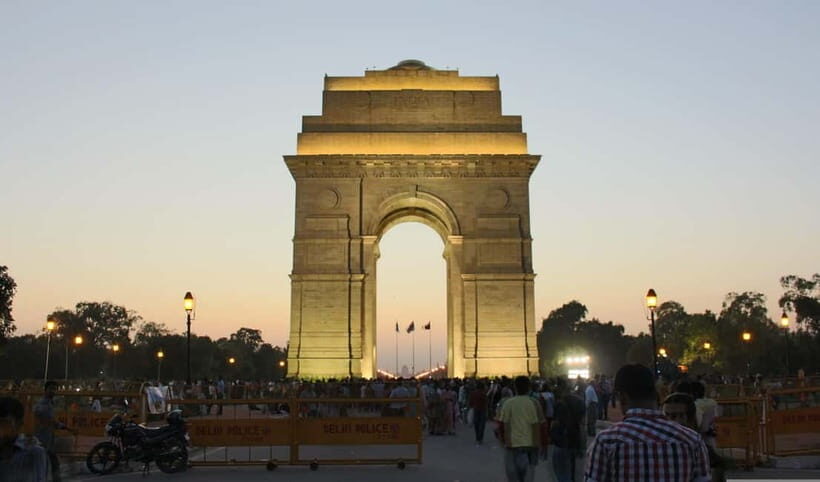
- India Gate: a World War I memorial that anchors the route
- Lotus Temple: modern design that still feels spiritual
- Parliament and Presidential House drive-by: see the power line from the road
- Guides matter: what Ali, Owais, and Faez add to the day
- Price and logistics: why this costs so little for what you get
- Who this Old & New Delhi tour suits best
- Should you book this tour
- FAQ
- How long is the Delhi Old and New Delhi private tour?
- What’s included in the tour price?
- Are entrance tickets included for all monuments?
- Is there a way to avoid ticket lines?
- What if I start the tour after 11:00 AM?
- Are Red Fort and Lotus Temple open every day?
- Where can the tour pick me up?
- What languages are the guides available in?
Quick takeaways
- Rickshaw + history in the same morning: A short ride through Chandni Chowk, then straight into major monuments.
- Jama Masjid without the confusion: The largest mosque in India gets you big, clear context from your guide.
- Mughal and memorials side by side: Red Fort, Humayun’s Tomb, India Gate, and Qutub Minar in one sweep.
- Two-pace options for your schedule: Full Old + New if you start before 11:00 AM, otherwise New Delhi sights only.
- Guides that actually manage your time: People have noticed how friendly and photo-helpful guides are.
- Value is in the basics: Car, bottled water, live guide, and rickshaw ride are included (tickets depend on the option).
Old and New Delhi, stitched into one practical route
Delhi is huge, and “I’ll just do it on my own” usually turns into a lot of waiting, wrong turns, and wasted daylight. This private tour is designed to string the city’s biggest landmarks together with minimal friction. You get pickup and drop-off, an air-conditioned car with driver, and a live guide to keep the day moving.
What makes it especially smart is the pacing split. If you choose a start time before 11:00 AM, you cover Old Delhi plus New Delhi. If you start after 11:00 AM, the itinerary shifts to New Delhi sights only, including India Gate, Parliament House, Humayun’s Tomb, Qutub Minar, and Lotus Temple. In a city like this, that’s not a small detail, it’s the difference between a full “history to modern capital” day and a shorter highlight loop.
You’ll also appreciate that it’s private. Even though there’s a car and a guide for the full route, you’re not dealing with big group herding. That makes it easier to ask questions, adjust for pace, and take photos without feeling rushed.
You can also read our reviews of more private tours in New Delhi


Red Fort: Mughal power in stone, plus an early-day win
Your morning begins with pickup, then you head to the Red Fort, one of Delhi’s most iconic landmarks. It was built by Emperor Shah Jahan, the same emperor associated with the Taj Mahal, and it’s a vivid reminder that this city once ran on Mughal authority and spectacle.
The practical advantage here is timing. Red Fort is a major stop, and seeing it earlier helps you stay ahead of the crush that can build later in the day. You’ll also be able to keep your focus, because your guide will link it to what you’ll see next in Old Delhi. In other words, this isn’t just a photo stop, it’s the start of a story arc.
One note: Mondays are special. On Mondays, the Red Fort and Lotus Temple are closed, and the tour swaps in Gurudwara Bangla Sahib instead. If you’re planning a Monday visit, don’t assume you’ll hit every single headline monument.
Chandni Chowk by rickshaw: street energy you can actually feel
After Red Fort, you go to Chandni Chowk and take a rickshaw ride through its lanes. This is the part of the day that feels most like real Delhi. The roads and sidewalks are packed with the everyday, and your guide helps you understand what you’re walking through without you having to translate the chaos yourself.
I like rickshaw rides here because they slow you down just enough to notice details, like the way the lanes channel movement and the way shopfronts and daily errands stack together. It’s not a “quiet sightseeing” experience, and that’s the point. If you’re the type who wants monuments only, you might find it loud. If you want the city as a living place, this is where you get that.
From the reviews, the rickshaw and photo moments tend to land well. For example, Ali was praised for helping with photos, which matters because the angles and motion can be tricky. If you care about pictures, wear comfortable shoes and keep your camera ready, but don’t sprint ahead. You’ll enjoy it more if you let your guide set the pace.
Jama Masjid: where the biggest mosque in India feels personal
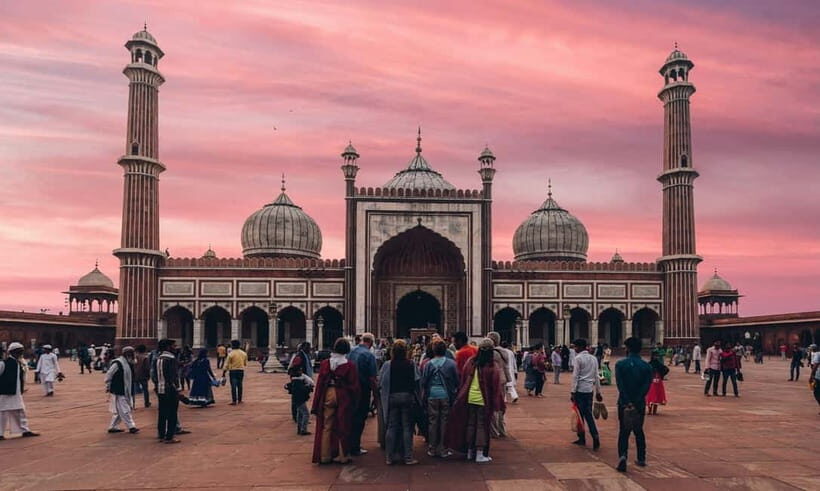
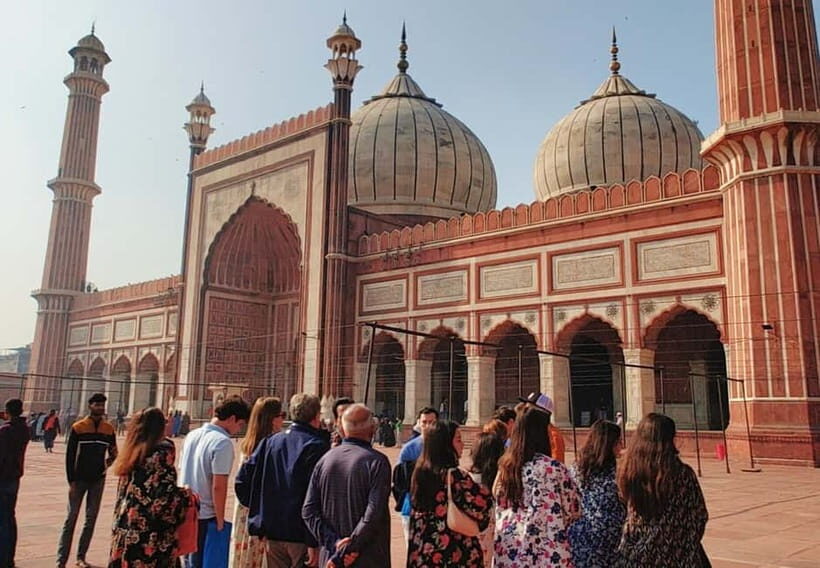
Next up is Jama Masjid, described as India’s largest 17th-century mosque. This is one of those places where the scale can hit you all at once. Even if you’ve seen photos, being inside the grounds changes your sense of size and structure.
What I like about having a guide here is the “how to look” part. The guide doesn’t just name features, they connect the mosque to the broader religious and cultural role it plays. And because you’re moving with a group, you’re less likely to wander into confusion while trying to spot the best vantage points.
The day is also balanced around this stop. After Red Fort and the rickshaw ride, Jama Masjid gives you a strong reset: a calm, ceremonial-feeling space after street-level motion. That contrast is a big reason this route works so well.
Lunch break and then the capital changes gears
At some point after Old Delhi, you’ll have a lunch break. Food and drinks are not included, so you’re choosing based on what you want, what’s nearby, and what your guide recommends. In practice, this is a good setup because it lets you avoid the trap of being stuck with a meal you didn’t want.
This is also where the tour’s rhythm shifts from Old Delhi character to New Delhi set pieces. Once you leave lunch behind, you’ll get the feeling of Delhi as a planned capital: broad roads, big memorials, and signature architecture.
If you’re sensitive to heat or big walking days, this is where you can pace yourself. You’re still traveling by car, but you’ll be doing enough sightseeing on foot that comfy shoes really matter.





Qutub Minar and Humayun’s Tomb: two ways to feel Mughal influence
In New Delhi, you start with Qutub Minar, known as the world’s tallest brick minaret. It’s the kind of structure that looks almost impossible from a distance, and up close it becomes a lesson in how bold architectural choices can shape a whole skyline.
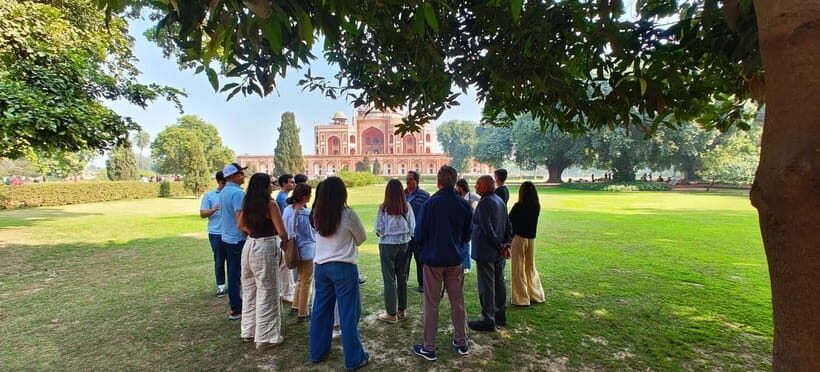
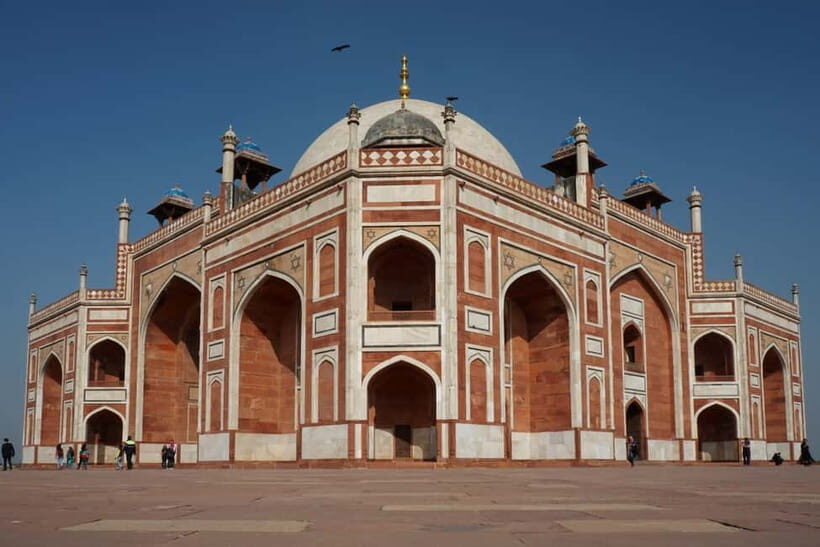
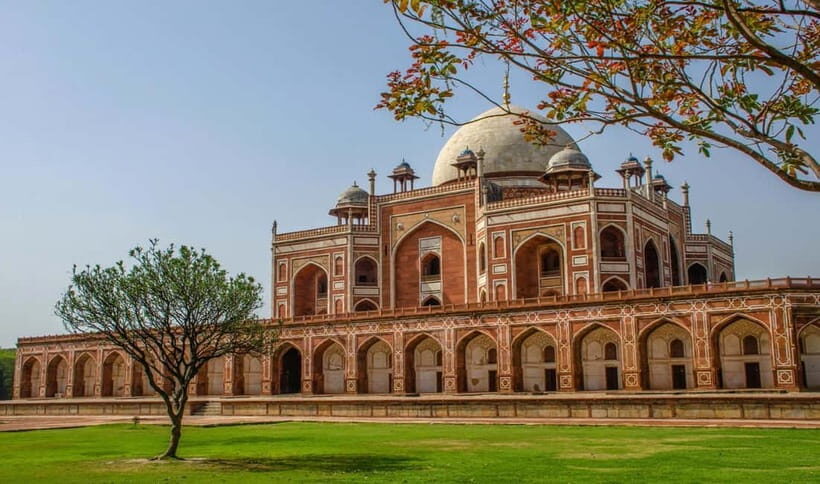
Then you visit the Tomb of Emperor Humayun. It’s often described as an architectural inspiration for the Taj Mahal, and that connection helps you understand why this site matters beyond just “it’s old.” Your guide will help you spot the design ideas that make Humayun’s Tomb such a landmark.
I especially like pairing these two sights. Qutub Minar gives you vertical drama. Humayun’s Tomb gives you a composed, human-scale monument experience. Together, they give you a broader sense of Mughal design and how power showed up in both religious and royal spaces.
A review note worth taking seriously: Humayun’s Tomb was called out as impressive by visitors, and that matches how the site tends to register emotionally. It’s not just a structure, it’s a place with presence.
India Gate: a World War I memorial that anchors the route
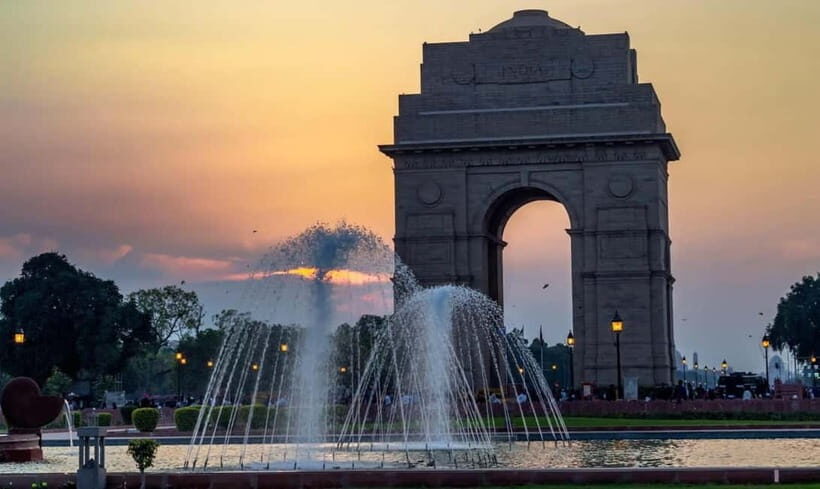
Next is India Gate, a World War I memorial. It’s a different kind of stop than the Mughal sites: reflective, more open, and designed for remembrance rather than conquest.
This stop works well as a breather. After tight lanes and monumental architecture, India Gate’s broader setting helps your brain reset. You can look, read, and understand the memorial tone without feeling like you’re constantly stepping around crowds.
It also builds a theme for the tour: Delhi isn’t only about ancient empires. It’s also about the modern state and what it chooses to remember, even when the city feels like motion all day long.
Lotus Temple: modern design that still feels spiritual

Then you visit Lotus Temple, famous for its lotus-flower shape. Even if you’re not religious, the design is worth seeing because it’s instantly readable. It looks calm, intentional, and modern, which makes the contrast with older sites feel even stronger.
Because your guide is with you, you’re not stuck wondering what you’re looking at or why it’s important. The goal is to make the symbolism understandable, not just to point at architecture and move on.
One key planning detail: the Lotus Temple is closed on Mondays, just like Red Fort. So if you’re visiting on a Monday and you were counting on the Lotus Temple photo, the schedule will redirect you to Gurudwara Bangla Sahib instead.
Parliament and Presidential House drive-by: see the power line from the road
Near the end of the tour, you’ll get a drive past the Presidential House and Parliament Buildings. This is one of those “see it even if you don’t go in” moments. You get the visual sense of where India’s political heart lives, and it ties the day together: Old Delhi’s authority, New Delhi’s state, and the city’s national identity.
The tour doesn’t position these as long sightseeing walks, which makes sense. The value is in the connection—your guide can point out context while you’re already in the car and moving toward the final drop-off.
Guides matter: what Ali, Owais, and Faez add to the day
This tour works because it has a live guide and the guide does real work beyond facts. In the reviews, Ali stood out as friendly and full of knowledge, with help on photos. Owais was praised for explaining details and for blending historical and national-interest stops with shopping time. Faez was noted for making sure people understood the history and cultural significance of each place, not just the highlights.
That’s what you want from a private guide. You want someone who can turn the monuments into meaning, and also someone who can keep your schedule under control in a city that loves delays. When the guide is good, you’ll feel like the day is “one story,” not six separate errands.
Tour guides are available in multiple languages, including English, French, German, Japanese, Russian, and Spanish. If you’re choosing based on comfort, pick the language you’ll actually understand on a tired day.
Price and logistics: why this costs so little for what you get
The price shown is $12 per person for a tour lasting 4 to 8 hours, depending on your start time and how much of the day you cover. That cost is surprisingly low for a private route that includes transport, a live guide, a rickshaw ride, bottled water, and monument entrance tickets when that ticketed option is booked.
Here’s the value math that matters to you:
- You’re paying for time saved: a driver and route planning plus guided stops.
- You’re paying for less friction: skip-the-ticket-line is included.
- You’re paying for fewer “oops” moments: your guide helps you interpret what you’re seeing.
- Your day comes with built-in essentials: bottled water and air-conditioned comfort.
The main logistical consideration isn’t the price. It’s the schedule shape. If you start after 11:00 AM, the tour becomes New Delhi-only, so your Old Delhi monuments like Red Fort won’t be part of your day. Choose your start time based on the experience you want: full Old-to-New arc or a New Delhi highlight set.
Also, food isn’t included. That’s normal for a tour at this price, and it’s fine as long as you plan for your lunch break on your own.
Who this Old & New Delhi tour suits best
This works best if you want a concentrated Delhi introduction with minimal planning. If you’re short on time, this is a smart way to hit big-name sites in a single day. If you like understanding what you’re looking at, you’ll enjoy the guide-led explanations at Red Fort, Jama Masjid, Qutub Minar, and Humayun’s Tomb.
It also fits well if you want a mix of “big monuments” and “real street life.” The rickshaw through Chandni Chowk is the bridge between those worlds.
If you dislike crowds or street noise, you might find parts of Old Delhi intense. But the tour keeps you moving with a guide, and you’ll be able to duck into the most important spaces efficiently.
Should you book this tour
Yes, if your goal is to see Old Delhi and New Delhi highlights in one guided day without stress. The value is strong for the inclusions, and the presence of friendly, photo-helpful guides like Ali, Owais, and Faez makes it feel more like a local plan than a checklist.
I’d only hesitate if you’re visiting on a Monday and you specifically want Red Fort and Lotus Temple. The schedule swap to Gurudwara Bangla Sahib is still meaningful, but it changes the lineup. And if you can’t start before 11:00 AM, make peace with the fact that you’re choosing New Delhi-only sights for this booking.
If you want a smooth, guided Delhi day with real context and a practical route, this is an easy one to recommend.
FAQ
How long is the Delhi Old and New Delhi private tour?
The duration is 4 to 8 hours, depending on the start time and which parts of the day you cover.
What’s included in the tour price?
It includes pickup and drop-off, transport via an air-conditioned car with driver, a live tour guide, bottled mineral water, and all taxes. A rickshaw ride in Old Delhi is included, and monument entrance tickets are included if you book the option that includes them.
Are entrance tickets included for all monuments?
Monument entrance tickets are included only if you select the option where tickets are included.
Is there a way to avoid ticket lines?
Yes. Skip the ticket line is included.
What if I start the tour after 11:00 AM?
After 11:00 AM, the tour includes New Delhi sights such as India Gate, Parliament House, Humayun’s Tomb, Qutub Minar, and Lotus Temple, and it does not cover the Old Delhi stops.
Are Red Fort and Lotus Temple open every day?
No. On Mondays, the Red Fort and Lotus Temple are closed, and the itinerary swaps to Gurudwara Bangla Sahib.
Where can the tour pick me up?
Pickup is optional in Delhi, Gurugram, Ghaziabad, Noida, Faridabad, or any Airport and Railway Station.
What languages are the guides available in?
Live tour guides are available in English, French, German, Japanese, Russian, and Spanish.