REVIEW · NEW DELHI
Delhi: Gurudwara Bangla Sahib Tour with Langar Meal
Book on GetYourGuide →Operated by Multi Tours India · Bookable on GetYourGuide
Gurdwara Bangla Sahib feels personal fast. In about 3 hours, you’ll hear Sikh prayer, learn the meaning of key traditions, and join a meal system built for everyone. I like how the tour pairs history with what’s happening right now inside the gurdwara, not just facts on a page. You’ll also get a hands-on chance in the Langar Hall, where volunteers serve free vegetarian meals on a big scale. One thing to consider: you must go barefoot inside, and you should plan your clothing and footwear accordingly.
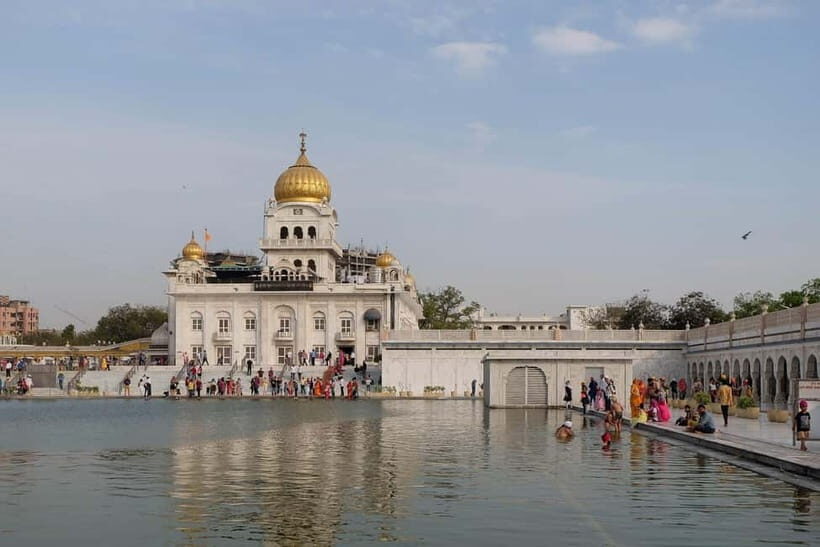
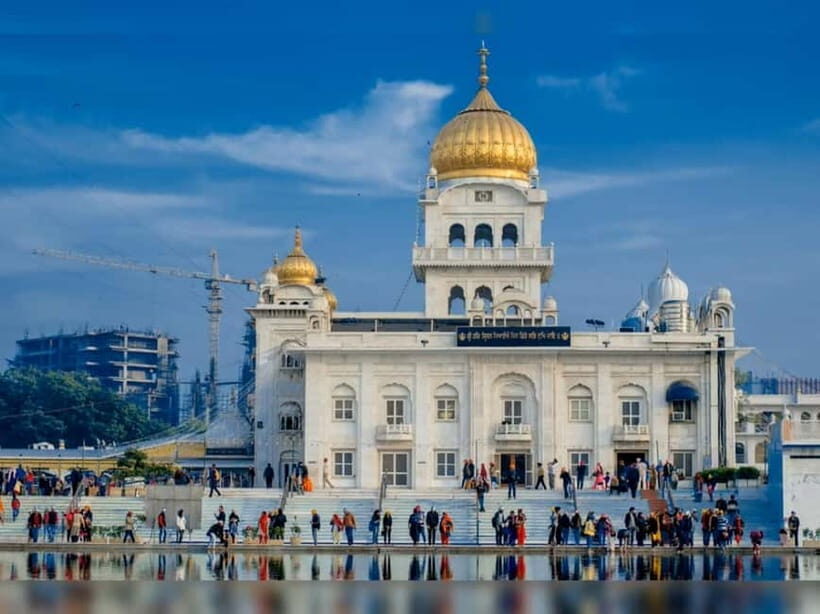
What impressed me is the calm you get walking through the white marble corridors toward the golden dome and the peaceful sarovar (holy pond), while prayer chants continue around you. Another strong point is the guide’s clear, respectful way of explaining daily Sikh life—especially the story tied to Guru Har Krishan and the gurdwara’s role as a symbol of healing during a 17th-century outbreak. A possible drawback is that if you’re expecting a quiet, museum-style stop, the experience is more participatory and active than that.
If you’re open to rules of worship, you’ll leave with a better sense of how Sikhs practice equality in real life, not just as an idea. The tour also runs on a straightforward route—pickup from multiple nearby areas, time for prayer, and then the langar meal. If you hate crowds or don’t like being close to ongoing rituals, this may feel busy at peak times.
In This Review
- Key things to know before you go
- Bangla Sahib: Why this Delhi gurdwara matters
- Walking barefoot through white marble corridors
- The prayer chants and Sikh customs you’ll actually notice
- Inside the Langar Hall: the free community kitchen concept
- How the 3-hour format keeps it realistic
- What you’ll learn: Guru Har Krishan, healing, and daily devotion
- Practical value: is $50 a fair deal for Delhi?
- What to bring, what to expect, and the rules that matter
- Who this tour suits best (and who should think twice)
- Should you book the Gurudwara Bangla Sahib + Langar tour?
- FAQ
- How long is the Gurudwara Bangla Sahib tour with langar meal?
- Is the langar meal included in the price?
- Can I help with food preparation or serving?
- Do I need to bring a headscarf?
- Will I have to walk barefoot?
- Where are the pickup and drop-off locations?
- Is it refundable if I cancel?
Key things to know before you go
- Barefoot entry: You’ll walk inside without shoes, so plan your comfort and pace.
- Guru Har Krishan and 17th-century healing: You’ll hear how the site became linked to compassion during an outbreak.
- Prayer chants in real time: You’re not just looking at the hall—you’re listening to it.
- Langar at scale: The Langar Hall is described as the world’s largest free community kitchen.
- Optional volunteering: You can help prepare or serve, or simply eat and watch respectfully.
- Guide support in multiple languages: Live guides include English, Russian, Spanish, German, Japanese, and French; one guide named Nikhil was noted for gentle, professional explanations.
Bangla Sahib: Why this Delhi gurdwara matters
Gurudwara Bangla Sahib is one of the Delhi places where spirituality isn’t locked behind velvet ropes. The experience is built around action: people arrive, bow and listen, and the community keeps the rhythm going. That’s why the visit works so well as a short tour. You’re not trying to squeeze in too many stops; you’re focusing on one site with an ongoing purpose.
The story you’ll hear connects the gurdwara to Guru Har Krishan, the eighth Sikh Guru. The key detail is the site’s association with healing and compassion during a smallpox and cholera outbreak in the 17th century. That’s not trivia. It explains why people treat this space as more than architecture. The gurdwara’s role becomes moral and practical at the same time: care for others, offered consistently, regardless of background.
And that’s the tone you’ll notice inside. The atmosphere tends to feel warm, welcoming, and communal. This isn’t a place where you stand off at a distance waiting for permission to understand. You learn by being there while daily worship and service are happening.
You can also read our reviews of more tours and experiences in New Delhi.



Walking barefoot through white marble corridors
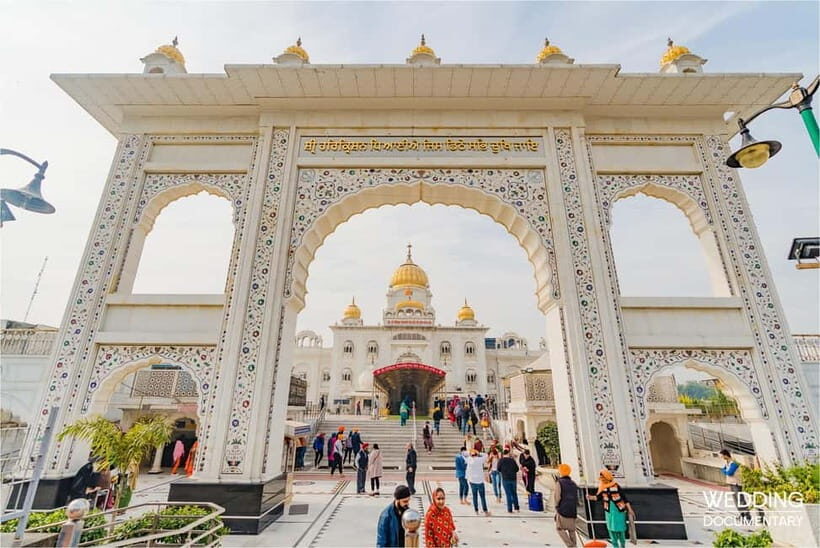
One of the most memorable parts is also the simplest: you’ll walk barefoot through the gurdwara’s interior. That’s not an extra “tourist activity.” It’s part of how the space works. You’ll likely feel the temperature difference, and you’ll want to pace yourself. If your feet tire easily, go slow at the start so you don’t rush and then regret it.
As you move through the white marble corridors, pay attention to the geometry and how the space guides you. It naturally funnels your attention toward the worship areas and the golden dome you’ll see as a strong focal point. Near the main compound, the sarovar (holy pond) adds a softer visual pause—calm water, reflections, and a sense that people come here to settle rather than “sightsee fast.”
You’ll also notice how everyone behaves around prayer. People don’t treat it like background noise. Even if you don’t understand every word, you’ll feel the structure: how people sit, when they stand, and how attention is directed during chants.
The prayer chants and Sikh customs you’ll actually notice
A guided visit makes the difference here. You’re surrounded by sound and ritual, and a good guide helps you connect what you see to what it means. The tour is designed so you can observe the ongoing prayer chants while learning the customs that shape the experience.
You’ll get explanations about Sikh practices you might not catch on your own—like the significance of the Granth Sahib, the holy scripture. You’ll also learn how the gurdwara functions as part of daily life for many Sikhs, not just a special event location.
Here’s what you can do to get more out of this portion: watch small moments. Notice how people respond during chanting. Look at how the space is used by worshippers who arrive for routine devotion. The tour isn’t about pretending you’re part of the religion—it’s about respectfully understanding it.
The payoff is personal. Hearing chants in the actual hall changes the way you interpret the site. You’ll stop viewing the gurdwara as a photo stop and start seeing it as a living spiritual center.
Inside the Langar Hall: the free community kitchen concept
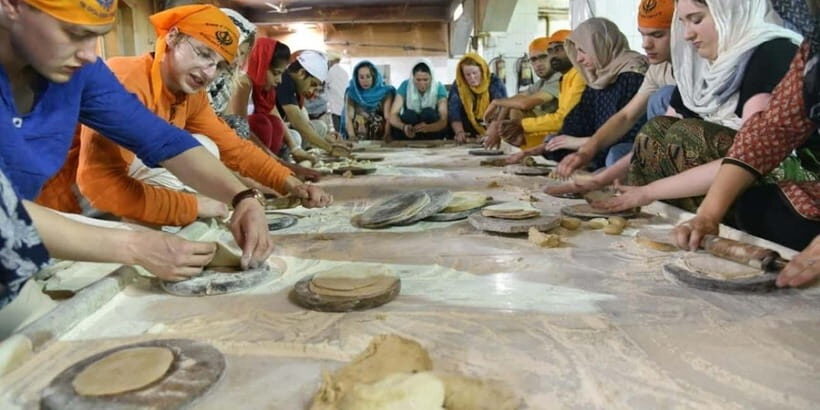
Then comes the heart of the community side: the Langar Hall. The tour description calls it the world’s largest free community kitchen, and even if you’ve heard the term langar before, seeing it in action helps it click.
Langar is not “free food for tourists.” It’s a system of equality. Volunteers serve free meals to anyone, regardless of caste, religion, or background. That message is central, and it’s one reason this stop isn’t just cultural—it’s ethical. People eat together. People help together. And the food is vegetarian only, aligning with the hall’s shared meal tradition.
If you want a more active experience, you can participate in food preparation or serving. If you’d rather not get hands-on, you can still eat and observe respectfully. Either way, you should treat it with the right mood: this is service work, not a show.
And don’t miss the social side. You’ll see people moving with purpose—volunteers coordinating, guests taking their places, and the flow of trays and seating. It’s organized enough that thousands of people can be fed, yet it still feels human. That balance is part of why the Langar concept is so powerful.
How the 3-hour format keeps it realistic
This tour is built for a short day in Delhi. You’ll get picked up from one of seven areas: Delhi, New Delhi, Noida, Gurugram, Faridabad, Ghaziabad, or Greater Noida. That matters because Bangla Sahib can be easier to reach with local transportation planning than you might think. You also get drop-off back in the same general region list, so you don’t have to solve the “how do I get back?” part yourself.
Once you arrive, most of your time is spent at the gurdwara: the guided visit runs about 2 hours 20 minutes, and the full tour experience totals around 3 hours. That pacing is actually ideal. You get enough time to see the worship spaces, observe chants, and then settle into langar without feeling rushed or worn out.
A small but important practical note: the experience includes time on foot inside the gurdwara and barefoot movement between areas. If you’re doing other Delhi stops afterward, plan for a calm next block. Your feet will tell you when you should stop.




What you’ll learn: Guru Har Krishan, healing, and daily devotion
The guide’s job is to translate what you’re seeing into meaning. Based on what was shared about a guide named Nikhil, the best value comes from listening to the story with a calm, respectful tone and then watching how people live those ideas on-site.
You’ll learn about the connection between Guru Har Krishan and the outbreak-era history of the gurdwara, where the emphasis is on healing and compassion. That story gives a moral context for the rituals. It also helps you understand why the gurdwara has become a symbol people visit for comfort and renewal, not just sightseeing.
You’ll also hear what the customs aim to do day to day—how the gurdwara supports community life, and how scripture (through the Granth Sahib) is treated with reverence. The tour doesn’t ask you to memorize doctrine; it helps you recognize the structure of Sikh worship and why it shapes behavior.
If you’re the type who likes to understand before you photograph, this format is a good fit. It’s also good if you’re coming with zero Sikh background. You’ll leave with a clearer mental map.
Practical value: is $50 a fair deal for Delhi?
At $50 per person, the price lands in the “worth it if you want a guided, respectful experience” category. Here’s why.
You’re paying for:
- A live English-language tour guide (plus multiple other languages)
- Time with context at the gurdwara (not just entry)
- The Langar Hall visit
- A vegetarian meal included as part of langar
- Optional support for food preparation or serving
If you tried to do this on your own, you’d still have to figure out entry norms, what to look for, and how to understand the chants and scripture references without help. The guide bridges that gap quickly. That’s where value usually sits in religious-cultural tours: the difference between “I saw it” and “I understood it.”
Also, the tour includes a structured way to handle movement and timing within a short visit window. For many visitors, time in Delhi is the real cost. This trip compresses the experience into a manageable block so you don’t lose half a day figuring things out.
What to bring, what to expect, and the rules that matter
This is where you set yourself up for a smooth visit.
Bring
- A headscarf (listed as a recommended item)
- Comfortable clothes
- A camera if you want photos (nothing else is listed besides camera)
What to remember:
- You’ll be required to walk barefoot inside the Gurudwara.
- The langar meal is vegetarian only.
- Food prep or serving is optional.
Not allowed:
- Smoking (and smoking in the vehicle is also not allowed)
- Alcohol and drugs
These rules aren’t there to make your day harder. They protect the atmosphere and help keep the focus where it belongs. If you want to participate respectfully, you’ll be glad you planned ahead.
If you’re sensitive to noise or large groups, note that the tour includes time where prayer is ongoing. This is a functioning place of worship, not a staged performance.
Who this tour suits best (and who should think twice)
This works especially well if you:
- Want a short, meaningful Delhi experience focused on one major site
- Like learning through guided context rather than wandering blindly
- Appreciate the idea of equality in action (langar serves anyone)
- Are comfortable following basic rules like dressing modestly and walking barefoot
Consider whether it’s your style if you:
- Prefer quiet, low-activity visits
- Hate being around crowds or ongoing ceremonies
- Want a purely exterior sightseeing route with minimal involvement
On the other hand, if you’re open to participating—either by helping in langar or simply by being present with the worship rhythm—this tour can be surprisingly moving for such a short time.
Should you book the Gurudwara Bangla Sahib + Langar tour?
Book it if you want a guided, respectful intro to a living Sikh center, with the standout bonus of eating langar after you understand what it represents. The format is efficient, the content is focused, and the meal inclusion makes the experience feel complete.
Skip or reconsider if barefoot walking and ongoing prayer crowds would make you uncomfortable. But if you can handle that one main rule, you’ll get a strong mix of atmosphere, history tied to compassion, and a practical look at how community service works at scale.
If you’re traveling through Delhi with limited time, this is a smart way to spend a few hours doing something more grounded than a typical checklist stop.
FAQ
How long is the Gurudwara Bangla Sahib tour with langar meal?
The total duration is 3 hours, with the guided visit to the Gurudwara lasting about 2 hours 20 minutes.
Is the langar meal included in the price?
Yes. You’ll have a vegetarian meal at the Langar Hall as part of the experience.
Can I help with food preparation or serving?
Yes, participation is optional. You can choose to help with preparation or serving, or simply enjoy the meal.
Do I need to bring a headscarf?
The tour lists a headscarf under what to bring, so it’s a good idea to bring one for your visit.
Will I have to walk barefoot?
Yes. Visitors are required to walk barefoot inside the Gurudwara.
Where are the pickup and drop-off locations?
Pickup options include Delhi, New Delhi, Noida, Gurugram, Faridabad, Ghaziabad, and Greater Noida. Drop-off locations are the same set of areas.
Is it refundable if I cancel?
Yes. Free cancellation is available up to 24 hours in advance for a full refund.