REVIEW · NEW DELHI
Delhi Day Trip
Book on Viator →Operated by Kumar Taj Mahal Tour · Bookable on Viator
One day, two Delhis, no stress. I like the private guide who helps you connect the dots, and I like the air-conditioned transfers that keep the day moving instead of turning into a cab hunt. The only real drawback to plan around: several major monuments charge extra entrance fees on the spot.
You’ll get a full-day loop of the classic hits, plus the kind of context you miss when you wander solo. On days like this, I also appreciate when guides can adapt. In past trips with Dan Kumar, the tone was friendly and accommodating, with photos and pose help built in. (You’ll also see the calm, careful-driving style of Mr. Singh mentioned for the road portion.)
One more note: Humayun’s Tomb is listed as a very short stop in the schedule. Even if it’s quick, you can still make it meaningful by deciding in advance what you want to notice—layout, symmetry, and why people compare it to the Taj Mahal story.
Key things that make this Delhi day trip worth your time
- Private group only: you’re not mixed into a crowd of strangers.
- Air-conditioned pickup and transfers: less time fighting traffic.
- English-speaking local guide: stories that make the monuments click.
- Classic Old + New Delhi loop: you cover major stops in one day.
- Water and comfort included: one bottle per person, plus parking and taxes handled.
- Entry fees extra at select sights: budget a little for Qutub Minar, Humayun’s Tomb, and Red Fort.
In This Review
- Why a private Delhi loop beats piecing it together
- The smart logistics: pickup, AC transport, and real-world pacing
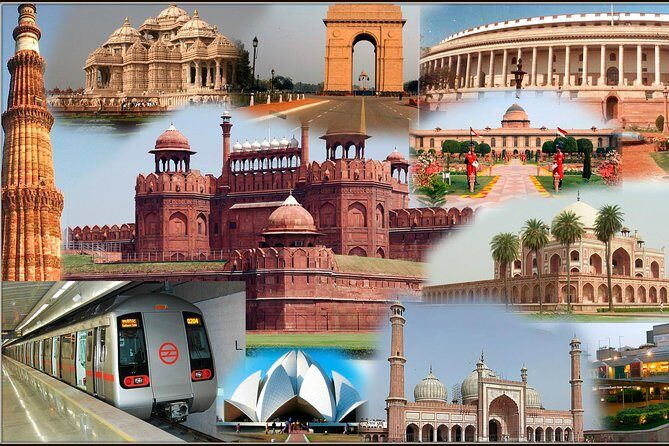
- Stop-by-stop: Qutub Minar, Lotus Temple, Humayun’s Tomb, and beyond
- Qutub Minar: UNESCO tower views and the big shape
- Lotus Temple: a calm break with a design you can’t ignore
- Humayun’s Tomb: where the Taj Mahal comparison starts
- Jama Masjid: Old Delhi scale and a working mosque vibe
- Raj Ghat: Gandhi’s memorial and the river-story connection
- Red Fort: Mughal power, from residence to national icon
- Guide power: what a pro adds to your photos and your understanding
- Tickets and total cost: the $40 price and what to expect
- Old Delhi vs New Delhi: how the route balances mood and meaning
- Who this tour fits best (and who should rethink it)
- Small tips that make the day easier
- Should you book this Delhi day trip?
- FAQ
- Is this tour private?
- How long is the Delhi day trip?
- Where does pickup and drop-off happen?
- Is the transportation air-conditioned?
- Do I need to pay entrance fees for the monuments?
- Which stops are free to enter?
- Does the tour include a guide?
- Are water bottles included?
- What’s not included in the price?
- What is the cancellation policy?
Why a private Delhi loop beats piecing it together

Delhi is big, and it can be exhausting to plan on the fly. This kind of private day trip works because it saves you from the usual problems: guessing where to go next, trying to translate signage while traffic changes every few minutes, and losing time to “wait, is this the right entrance?” moments.
What I like most is the structure. You get picked up, dropped off, and guided through a set of landmarks that cover both New Delhi’s monumental side and Old Delhi’s spiritual and historical core. That means you see the places people put on their wish list, but you also get the why behind them.
And the guide piece matters. A good guide doesn’t just point. They explain what you’re looking at, why it was built, and how it fits into the bigger story of the city. In this itinerary, those explanations can turn stone and arches into something you actually understand—especially at Qutub Minar, Humayun’s Tomb, and Red Fort.
The smart logistics: pickup, AC transport, and real-world pacing
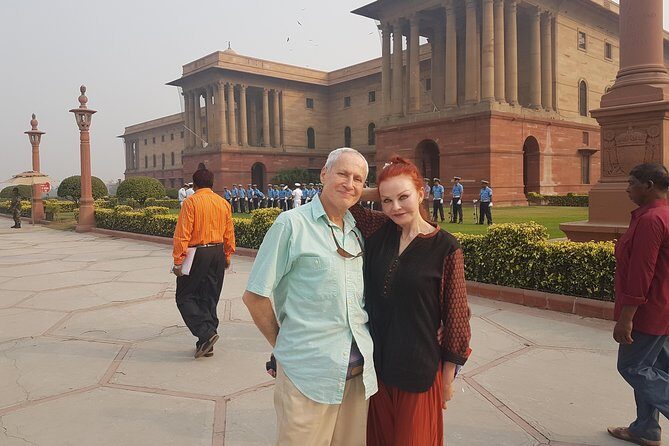
This tour runs about 12 hours, with air-conditioned transport for the whole day. Pickup can happen from your hotel, train station, or airport, and you get a return transfer at the end. That’s the kind of setup that’s surprisingly valuable if you’re short on days or you’re not feeling “figure it out” energy.
A few practical comforts are included:
- One drinking water bottle per guest/day
- Parking fees, toll-related costs, and driver allowances handled
- Bottled water (not just tap-water bravery)
- GST and taxes included in the package price
You can also expect a professional English-speaking local guide, with the possibility of a multi-lingual guide. If you’re traveling with family, or you just want the day to flow without awkward misunderstandings, that’s a big win.
The pacing is designed to hit a lot of must-sees in one go. The tradeoff is that some stops can feel brief depending on the day’s movement through the city. Plan to stay flexible and focus on quality moments rather than trying to do museum-level reading everywhere.
A few more New Delhi tours and experiences worth a look



Stop-by-stop: Qutub Minar, Lotus Temple, Humayun’s Tomb, and beyond
This route is built around recognizable landmarks, but each stop has a different mood—tower, garden-like worship space, Mughal-era tomb complex, a massive mosque, Gandhi’s memorial, and then a grand Mughal fort.
Qutub Minar: UNESCO tower views and the big shape
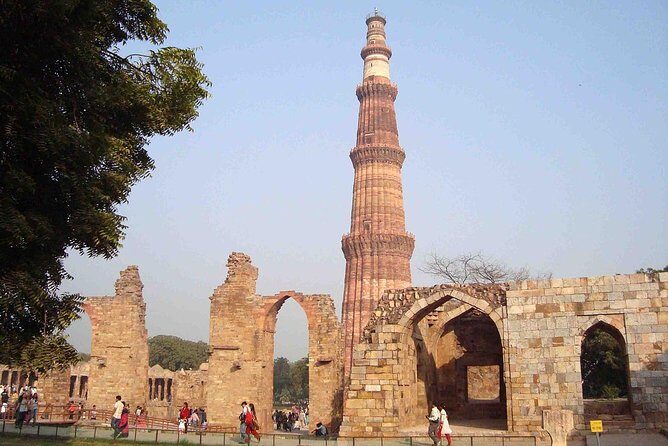
Qutub Minar is the first major stop, and it’s famous for a reason. It’s a tall stone tower and listed as a UNESCO World Heritage site. If you’ve only ever seen it in photos, seeing it in person helps you understand why people keep pointing upward—this tower dominates the area, and the details are easier to appreciate once you’re close.
Because admission isn’t included, you should assume you’ll pay the ticket at the site. Budget extra time for the entry process too, since tickets and security checks can add a few minutes.
What to watch for:
- How the tower draws your eyes vertically
- The stone texture and layered structure up close
Lotus Temple: a calm break with a design you can’t ignore
Lotus Temple (also referred to as Bahai House) is next. This is a relief valve in the day’s schedule: it’s known for its lotus-shaped design made of marble stone, completed in 1986.
The best part for planning is that admission is free here. That means you can spend your time looking rather than doing the math on extra ticket costs.
It’s also a place where you’ll likely feel a slower rhythm, because the architecture invites quiet attention. Even if you’re not religious, the structure is the star: petals, symmetry, and the way light shifts across the building.
Humayun’s Tomb: where the Taj Mahal comparison starts
Humayun’s Tomb is a short stop on this day plan, and it’s still worth your attention. It was built by Humayun’s widow, Queen Haji Begum, in the 16th century. The major hook: it’s often described as a prototype of the Taj Mahal at Agra.
That Taj Mahal link is the reason people rush to the spot. But you don’t need a long stay to get value. Even in a quick visit, focus on:
- The garden-tomb concept and symmetry
- How the layout supports the monument’s presence
Also, admission isn’t included, so expect a ticket here too.






Jama Masjid: Old Delhi scale and a working mosque vibe
Jama Masjid is one of the largest mosques in India, and it’s a true Old Delhi landmark. This is where the city feels dense and alive, with a religious center that’s not just for sightseeing.
Admission is free, so you’ll mainly be managing your time and comfort. A mosque visit is often less about speed and more about getting the rules right—dress and behavior tend to matter. Since the tour includes a guide, that helps a lot if you’re unsure.
Try to take in the scale. Even if you’ve seen other major mosques, this one’s size lands differently when you’re standing inside the complex.
Raj Ghat: Gandhi’s memorial and the river-story connection
Raj Ghat is dedicated to Mahatma Gandhi, and it has a special twist. It was originally the name of a historic ghat in Old Delhi on the banks of the Yamuna River.
The tone here is reflective. It’s not a monument you race through. Even on a time-limited day, you’ll get more out of a slower walk and a few quiet moments than you would by trying to tick it off.
Admission is free, which makes it an easy win in the itinerary.
Red Fort: Mughal power, from residence to national icon
The final big landmark on the list is the Red Fort. This is a historic fort and was the main residence of Mughal emperors for nearly 200 years, until 1856.
Red Fort is one of those places where a guide can save you from missing the main idea. The scale of the fort walls, the sense of authority in the layout, and the shift in meaning over time all land better when someone explains the structure and timeline.
Admission isn’t included, so again, plan for a ticket. On days when you want the most value from your entrance fee, prioritize time at the areas your guide points out as the key views.
Guide power: what a pro adds to your photos and your understanding
This tour includes a professional English-speaking local guide. That’s the heart of the experience. Without a guide, you might still see the monuments, but you would miss the connections that make the whole day feel like a coherent story.
In particular, guides tend to personalize in small ways. Past experiences with Dan Kumar were described as friendly and accommodating, with help on pictures and even different posing suggestions. It might sound silly until you’re standing in front of Qutub Minar or Red Fort and you realize you don’t know where to stand for a clean shot.
Also, having a local guide helps you read what you’re seeing in real time—what part is the focal point, why an element exists, and how to move efficiently so you’re not backtracking.
Tickets and total cost: the $40 price and what to expect

The tour price is $40.00 per person, and it includes pickup/return transfers, air-conditioned transport, the English-speaking local guide, one water bottle per person, and a long list of operational costs like taxes and parking.
But admission fees are extra. Based on the day plan, you should expect tickets for:
- Qutub Minar
- Humayun’s Tomb
- Red Fort
Lotus Temple, Jama Masjid, and Raj Ghat are free.
So the smartest budgeting move is to treat $40 as the base cost for guided logistics, and then add on a separate amount for entrance tickets at the paid stops. If you hate surprises, ask your provider ahead of time which admission fees you’ll face at each monument that day.
Old Delhi vs New Delhi: how the route balances mood and meaning
I like that this day trip doesn’t force you to choose. You get New Delhi monuments that feel more spaced out and planned, then you shift into Old Delhi’s heavier, more grounded atmosphere.
That contrast is the point. Delhi’s identity isn’t one thing. It’s layers: towering heritage, devotional spaces, memorial quiet, and an imperial fort that still shapes the skyline.
Even if you only have a single day, you’ll leave with a clearer sense of the city’s two sides.
Who this tour fits best (and who should rethink it)
This is best for you if:
- You want to see major landmarks without spending your day figuring out routes
- You prefer a guide for context and smoother movement
- You have limited time and want a structured, private full-day plan
- You value AC comfort during long transfers
You might rethink it if:
- You hate group scheduling and wish you could linger for long periods at every stop
- You want all entrance fees fully included in the price (here, several are extra)
- You’re very sensitive to short time at a specific monument (Humayun’s Tomb is listed as a very brief stop)
Small tips that make the day easier
A few practical choices can keep this day comfortable:
- Wear shoes you can walk in for the mosque and fort areas
- Keep a little cash or card access for entrance fees at the paid stops
- Bring a lightweight layer, since air-conditioned vehicles and hot/outdoor transitions can feel different minute to minute
- Use the guide’s photo help. It’s usually faster and gives you better angles than experimenting on your own
Should you book this Delhi day trip?
If you want a high-value Delhi sampler—Old and New Delhi in one day—with a guide who adds meaning and air-conditioned comfort, I’d say it’s a smart booking. The $40 price is attractive for what you’re getting, especially because pickup, transfers, and guide time are covered.
Just go in with eyes open: admission fees are extra at key sites, and one stop is scheduled very briefly. If you can accept that and you want the convenience of not wrestling the city, this is an efficient way to see the landmarks that define Delhi.
FAQ
Is this tour private?
Yes. It’s a private tour/activity, and only your group will participate.
How long is the Delhi day trip?
It’s about 12 hours (approx.).
Where does pickup and drop-off happen?
Pickup and return transfers are included from your hotel, train station, or airport.
Is the transportation air-conditioned?
Yes. You’ll travel in an air-conditioned vehicle for transfers and sightseeing.
Do I need to pay entrance fees for the monuments?
Entry fees are not included. Admission fees are at your expense for some stops.
Which stops are free to enter?
Lotus Temple, Jama Masjid, and Raj Ghat are listed as free.
Does the tour include a guide?
Yes. It includes one professional English-speaking local guide for sightseeing.
Are water bottles included?
Yes. There is one drinking water bottle for each guest/day, and bottled water is included.
What’s not included in the price?
Personal expenses like gratuities for guides, tipping to drivers, and porters are not included.
What is the cancellation policy?
You can cancel for free up to 24 hours in advance for a full refund. If you cancel less than 24 hours before the experience starts, the amount paid is not refunded.