REVIEW · NEW DELHI
Colourful Rajasthan Tour with Taj Mahal
Book on Viator →Operated by My Travelcon · Bookable on Viator
A map doesn’t prepare you for Rajasthan’s colors. This 15-day private circuit strings together Delhi, painted havelis, forts, desert sands, and the Taj Mahal—without you wrangling tickets or transfers. I particularly like the private chauffeur + guide setup, plus the way the route mixes famous monuments with smaller, vivid stops like Mandawa’s murals. One drawback to weigh: you’ll spend a lot of time in the car, since many legs run long (often 10–12 hours).
The care shows in the practical stuff: meals are included (dinner and 14 breakfasts), and hygiene and food quality are repeatedly praised. You’ll also get hands-on guidance at big sites, including the chance to meet a guide like Mr Hemender in Agra, who’s known for making Taj Mahal and Agra Fort click. The only real consideration is pacing—this is a lot of sightseeing, so you’ll want a steady routine and comfy shoes.
In This Review
- Key Highlights (Why This Trip Works)
- Private Rajasthan + Taj Mahal: The Big Picture
- Price and Value: What $3,000 Covers (and What It Doesn’t)
- Day 1–2: Landing in New Delhi and Getting Oriented Fast
- Day 3–4: Mandawa Havelis and Nawalgarh’s Painted Faces
- Day 5: Bikaner and Junagarh Fort’s Palace Power
- Day 6–7: Jaisalmer, the Rat Temple Detour, and Desert Night Energy
- Day 8–9: Jodhpur’s Palaces and Fort Views
- Day 10–11: Udaipur + Ranakpur Jain Temple and a Lake Pichola Boat Ride
- Day 12–13: Jaipur Village Views, Amber Fort, and Jantar Mantar Time
- Day 14–15: Fatehpur Sikri, Taj Mahal by Horse Cart, and Agra Fort
- Hotels, Meals, and the Small Comforts That Matter
- Who This Tour Fits Best (and Who Might Feel Crowded)
- Practical Tips to Get More Out of Every Stop
- Should You Book This Rajasthan + Taj Mahal Tour?
- FAQ
- What’s the duration of the Colourful Rajasthan Tour with Taj Mahal?
- How much does it cost, and is it per person?
- Is the tour private or shared with other groups?
- Do I get airport pickup in New Delhi?
- Is transportation provided with air conditioning?
- Are entry tickets included for the monuments?
- What meals are included?
- Are tips included for the guide and driver?
- Is there a mobile ticket?
- Can I cancel for a full refund?
Key Highlights (Why This Trip Works)
- Private, air-conditioned car with a chauffeur for day-to-day stress control.
- Mandawa and Nawalgarh havelis where painted facades do most of the talking.
- Deshnok’s Rat Temple at Deshnok for a surprising detour on the way to Jaisalmer.
- Jaisalmer + camel ride to Sam sand dunes for that desert-change-of-gear feeling.
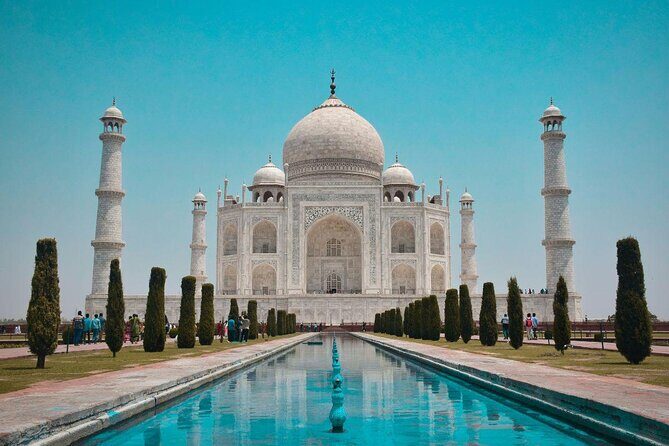
- Agra with Taj Mahal + Agra Fort, plus a Fatehpur Sikri stop en route.
Private Rajasthan + Taj Mahal: The Big Picture
This isn’t just a monuments tour. It’s a storyline, told in stops across Rajasthan and then capped with the Taj Mahal and Agra Fort. You start in Delhi for a classic orientation, then move through the painted world of Mandawa, the fort-heavy cities of Bikaner and Jaisalmer, the palace-and-fort vibe of Jodhpur and Udaipur, and the fort-and-bazaar spectacle of Jaipur—before ending in Agra.
What I like is that it’s built around how you travel, not only what you see. You’re picked up, driven in an air-conditioned car, and guided through the main sights. That means you spend your energy looking at things instead of figuring out logistics when heat, crowds, and traffic show up.
If you’re thinking of doing Rajasthan on your own, this tour is basically the shortcut version: fewer decisions, smoother pacing between regions, and guided context that helps you understand what you’re seeing.
You can also read our reviews of more tours and experiences in New Delhi.



Price and Value: What $3,000 Covers (and What It Doesn’t)
At about $3,000 per person for ~15 days, you’re paying for a private structure: chauffeur-driven transport, a guide for city days, and a set schedule that includes meals. Dinner is included, and you get 14 breakfasts, which matters more than most people expect on long drive days.
Admissions are listed as free on some days and included on others, so you’re not totally on the hook for every ticket along the way. Tips for guide and driver aren’t included, so that’s the one predictable extra cost. If you like the idea of “I show up, I go,” the value is strongest when you actually use the guide time on the major monuments.
Also, the price is private-tour pricing. If you can only travel in a small group, that private comfort and planning can be worth it.
Day 1–2: Landing in New Delhi and Getting Oriented Fast
On your late arrival, you’re met at New Delhi International Airport and taken to your hotel so you can reset quickly. The afternoon is kept open for you to relax, or to head out to a local market with your driver if you want an easy first taste of India.
The next day is a solid Delhi sampler with a guide. You’ll hit major landmarks like Red Fort, Jama Masjid, Chandni Chowk, Qutab Minar, and India Gate, with stops that help you understand how Delhi layers history and daily life in the same space. It’s a lot, but it’s also the right move at the start: once you have the basics, the rest of the trip feels easier.
Practical note: Delhi days can mean heat and crowds. If you’re traveling with kids, plan for breaks and hydration early, not after everyone’s cranky.
Day 3–4: Mandawa Havelis and Nawalgarh’s Painted Faces
Mandawa is where the trip starts feeling visually unforgettable. You check in at Hotel Radhika Haveli and then take a guided city tour focused on the famous haveli mansions—the ones with frescos, carvings, and mirror work.
This is the kind of place where you’ll get more out of a guide than by wandering alone. A guide helps you understand why certain details were used and what makes one haveli feel different from another. It’s also easier with a driver, because these areas can be spread out.
Day 4 adds a short excursion to Nawalgarh (28 km). You’ll see Poddar Haveli, now a museum, and you’ll also visit other havelis like Aath Haveli and Morarka Haveli. Poddar Haveli is especially interesting because it highlights murals that have been carefully restored and includes display themes like Rajasthan wedding costumes unveiled for visitors.
One more thing: the whole Mandawa stretch feels like a slow-down moment compared with the big-city pace. It’s an easy place to notice craftsmanship.
Day 5: Bikaner and Junagarh Fort’s Palace Power
You drive to Bikaner and settle into Hotel Golden Haveli. The sightseeing day leans hard into Junagarh Fort, a strong choice because it connects palaces, courtyards, and how ruling families lived and displayed power.
Inside the fort, you’ll see standout areas like Anup Mahal and Badal Mahal, known for open courtyards and marble seating where Maharaja used to sit. You’ll also encounter Har Mandir, tied to royal wedding ceremonies, and you get time for Lallgarh Palace.
If you want a city that feels less about one famous landmark and more about how everything fits together, Bikaner is that stop.
Tip for your photos: forts are easier when you arrive ready for angles. Give yourself time in shade and bright sun so you can catch both exterior detail and interior forms.



Day 6–7: Jaisalmer, the Rat Temple Detour, and Desert Night Energy
On the way to Jaisalmer, you stop at Deshnok’s Rat Temple, which is known for unusual worship connected to rats. It’s a quick “wait, what is this?” moment, and those are the memories people keep.
Then you reach Jaisalmer and stay at Hotel Golden Haveli. Day 7 is a full guide-led tour of Jaisalmer Fort, including key points like Dussehra Chowk, RajMahal, and seven Jain temples inside the fort area. You’ll also visit Gadisar, the tank that historically supported water supply for the city.
For haveli lovers, Patwon Ki Haveli is a highlight. It’s described as the most elaborate 19th-century haveli and notably large, plus there are other notable haveli stops like Salim Singh Ki Haveli and Nathmal Ki Haveli.
In the evening, you head for a camel ride to the Sam sand dunes, described as about a 45 km ride. Even if you don’t love animals, this is still a strong experience because it changes the feel of the evening—open sky, desert quiet, and that slow shift from city rock to sand.
Bring practical basics: sunscreen, light layers, and water. Desert light can be brutal.
Day 8–9: Jodhpur’s Palaces and Fort Views
You travel to Jodhpur and check in at Bijolai Palace (by Inde Hotels & Resorts). Day 8 is leisure, which is smart here. With so many long drives already, having a softer day helps you keep energy for the next morning.
Day 9 is where Jodhpur shows off. You’ll visit Umaid Bhawan Palace, the Mehrangarh Fort, Jaswant Mahal, and Mandore Garden. The payoff is context: you start to see how the city’s power sits in the fort and how the palaces and garden spaces connect to that story.
If you want views, Mehrangarh is the place. You’ll also appreciate the guide’s role here, because forts are more than walls once you understand what you’re looking at.
Day 10–11: Udaipur + Ranakpur Jain Temple and a Lake Pichola Boat Ride
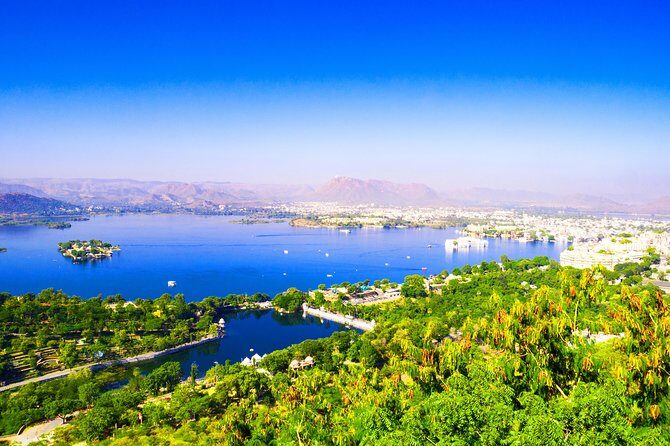
Driving from Jodhpur to Udaipur includes an important en-route stop: Ranakpur Jain Temple. The site is described as an extensive complex covering 3,600 sq. metres, with 29 halls and 1,444 pillars. The sheer scale is a big part of the experience, and the carving details get better when you slow down and let the guide explain.
Then you arrive in Udaipur and stay at Aaram Baagh (by Pachar Group). Day 11 is the city highlight day: City Palace (with its large complex tied to multiple Maharajas), plus Jagdish Temple. You’ll also visit the City Palace museum and Crystal Gallery, and you can add time for places like Bagore ki Haveli, Monsoon Palace, and references to Udaipur’s Seven Sister and a Vintage Cars collection.
In the evening, you get a boat ride at Lake Pichola. This is a smart way to close a busy sightseeing day because it slows everything down. You’re not standing in crowds; you’re watching palaces and temples from the waterline.
If you’re traveling with kids, this boat part is often the easiest buy-in because it feels like a break, not another stop.
Day 12–13: Jaipur Village Views, Amber Fort, and Jantar Mantar Time
Jaipur begins with a drive through village scenery and photo stops along the way. Day 12 is more flexible—shopping time and colorful bazaars on your schedule, with options to explore by rickshaw.
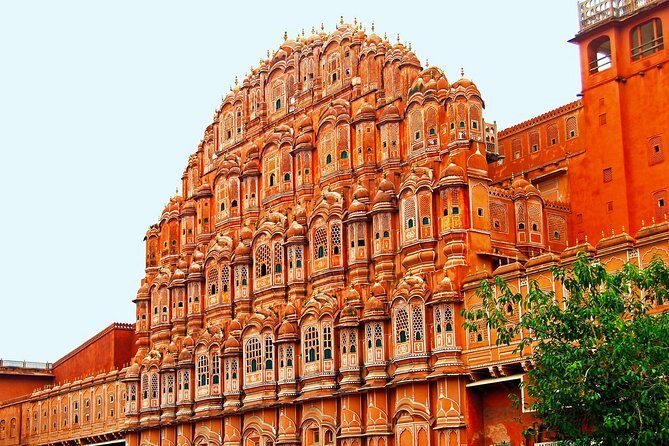
Then day 13 is the big Jaipur day, guided and packed but focused: Amber Fort, Shiladevi Temple, Jantar Mantar observatory, Hawa Mahal, Albert Hall Museum, and City Palace.
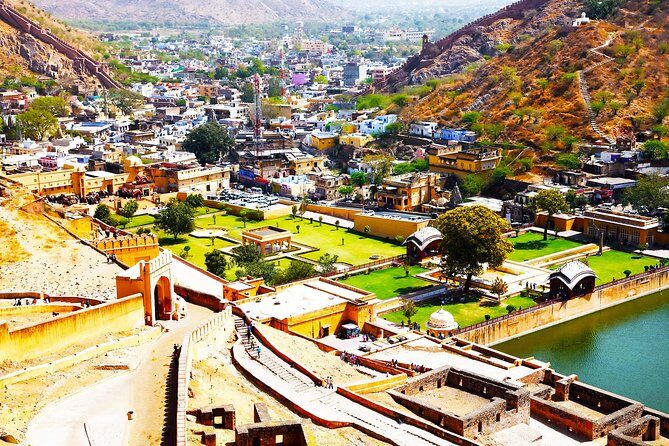
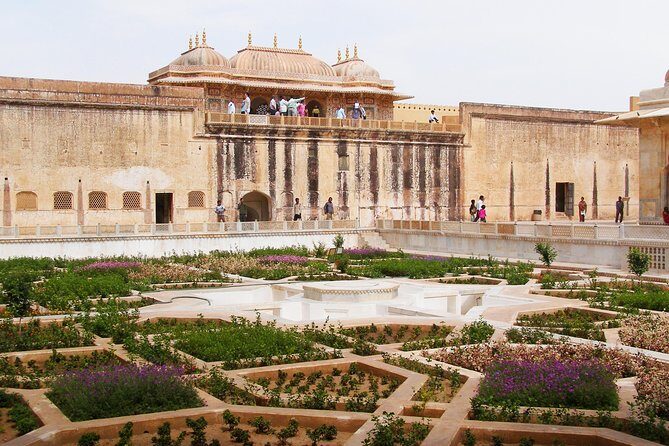
Amber Fort is given extra time in the plan, with the note that you can climb by your own car or by jeep and enjoy views over the city. That’s valuable because the fort experience improves when you get the view-and-scale moment, not just the entry.
Jantar Mantar adds a different angle to Jaipur—math and astronomy shown in stone form. Even if you’re not into science, it’s a good mental reset between palace facades and market streets.
Day 14–15: Fatehpur Sikri, Taj Mahal by Horse Cart, and Agra Fort
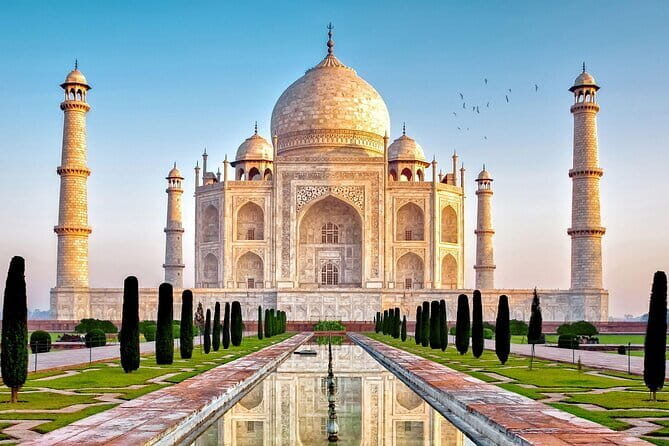
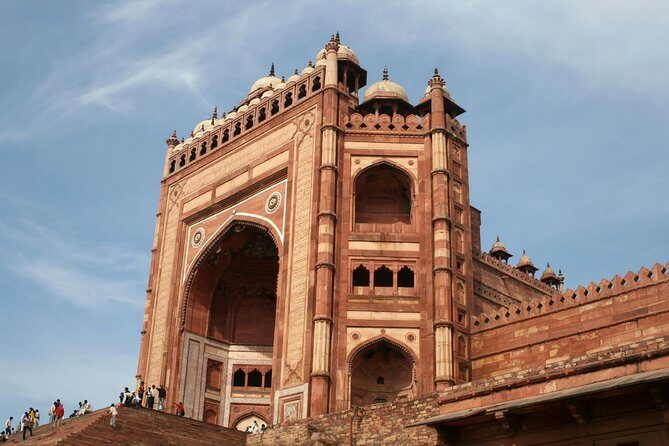
Agra is the climax. Before you reach it, there’s a stop at Fatehpur Sikri, a heritage site built of red sandstone. Akbar is mentioned here as choosing it as a capital for about 14 years before it was deserted due to lack of water. It’s a strong stop because it provides context: the Taj Mahal doesn’t appear from nowhere.
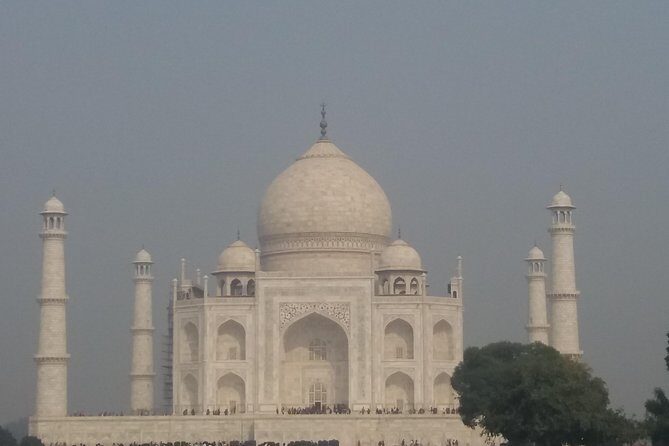
Once you arrive in Agra, you stay at Sarovar Crystal. Day 15 starts early with Taj Mahal. There’s also a fun practical detail: a horse cart transfer from the hotel to the Taj entrance gate. That can be a nice change of pace from the car and helps with the first stretch.
Then you visit Agra Fort, constructed with red sandstone. Both the Taj Mahal and Agra Fort are called World Heritage structures in the plan, and that label matters because it reflects the global significance of what you’re seeing.
Finally, you’re assisted back to New Delhi International Airport based on your flight schedule.
Heat tip: plan your Taj Mahal timing carefully. Early is usually your friend, and you’ll want water and a hat even if the day looks mild.
Hotels, Meals, and the Small Comforts That Matter
This tour includes dinner and breakfasts, and the food and hygiene quality are praised in feedback. That’s not a minor detail in India, especially on a packed route. When you’re eating well, you can keep your pace without feeling drained.
The hotel names are clearly part of the experience: Hotel Radhika Haveli in Mandawa, Hotel Golden Haveli during Bikaner and Jaisalmer nights, Bijolai Palace in Jodhpur, Aaram Baagh in Udaipur, Nahargarh Haveli in Jaipur, and Sarovar Crystal in Agra. I like that the stays are varied, matching each region’s vibe instead of using the same type of property everywhere.
Also, you’ll have downtime built in on several days. That might sound small on paper, but it helps you recover from traffic days.
Who This Tour Fits Best (and Who Might Feel Crowded)
This is a great fit if you want a guided Rajasthan plus Agra circuit with private transport, included meals, and a schedule that hits the big sights without you coordinating everything yourself.
It’s also marked as family and kids friendly, and you’ll see why: there’s a camel ride, a boat ride, major monuments, and calmer haveli afternoons mixed with active fort days.
If you hate long car days, you might feel stretched. The schedule includes many long drive blocks (often 10–12 hours). In that case, consider whether you prefer fewer cities or a slower pace.
Practical Tips to Get More Out of Every Stop
Bring comfy shoes. Forts, palaces, and haveli courtyards mean constant walking.
Use sun protection every day. Rajasthan and Agra can be unforgiving even when the sky looks friendly.
Ask your guide before you leave each morning. A quick plan for priorities makes you feel in control.
For Taj Mahal day, pack light. You’ll want focus on the entrance experience and the monument itself.
Should You Book This Rajasthan + Taj Mahal Tour?
If you want a private, chauffeur-driven tour that covers Delhi, Rajasthan’s best-known forts and painted towns, and ends with the Taj Mahal and Agra Fort, this is a strong choice. The biggest reason to book is simplicity: you get guides, included meals, and a route that balances big names (Taj Mahal, Amber Fort) with more visually rewarding stops (Mandawa havelis, Ranakpur).
I’d book it if you like structured days and you’re okay with long drives.
I’d think twice if you want total flexibility or you prefer to travel at a slower pace with fewer transfers.
If this matches your travel style, you’ll get a full India snapshot—without having to constantly negotiate the logistics.
FAQ
What’s the duration of the Colourful Rajasthan Tour with Taj Mahal?
It’s listed as approximately 15 days.
How much does it cost, and is it per person?
The price is $3,000.00 per person.
Is the tour private or shared with other groups?
It’s a private tour/activity, meaning only your group participates.
Do I get airport pickup in New Delhi?
Pickup is offered, and you’re met at New Delhi International Airport on arrival.
Is transportation provided with air conditioning?
Yes. The tour includes a private air-conditioned car with a chauffeur.
Are entry tickets included for the monuments?
The schedule notes admission tickets as free on some days and included on others, depending on the stop.
What meals are included?
Dinner is included, and breakfast is included for 14 days.
Are tips included for the guide and driver?
No. Tips to the guide and driver are not included.
Is there a mobile ticket?
Yes, mobile tickets are listed as a feature.
Can I cancel for a full refund?
You can cancel up to 24 hours in advance for a full refund.