REVIEW · FATEHPUR SIKRI
Book Official Tour Guide for Fatehpur Sikri.
Book on GetYourGuide →Operated by Taj Tour Guide · Bookable on GetYourGuide
Fatehpur Sikri has the feel of a city paused mid-sentence. What makes this tour work is that you get a government-approved local guide and a skip-the-line route that gets you inside without the usual hassle.
I especially like how the walkthrough is organized around the big architectural set-pieces: you move through the complex and your guide connects what you’re seeing to what it meant under Emperor Akbar’s rule. I also like that you’re not stuck in a generic checklist; the tour includes the key sights in a tight 2-hour window, including the Sheikh Salim Chishti tomb area and the famous mosque visit with Qawwali.
One consideration: entrance tickets are not included, so you’ll want to plan for ticket purchase separately. Also, bring your ID or passport, since that’s required before entry.
In This Review
- Key highlights I’d prioritize
- Fatehpur Sikri: why this “deserted capital” feels different
- Agra Gate meet-up and the value of skip-the-line entry
- A tight 2-hour route that still covers the core sights
- Red sandstone highlights: Panch Mahal to Rang Mahal
- Dewan halls and the Indo-Islamic story your guide ties together
- Buland Darwaza: the gateway moment you shouldn’t rush
- The tomb of Sheikh Salim Chishti: where meaning adds weight
- Qawwali at the mosque: a cultural moment, not a checkbox
- Price and what you actually get for $17 per group
- What to bring and how to avoid the common friction points
- Who this tour suits best
- Should you book this Fatehpur Sikri guide?
- FAQ
- How long is the Fatehpur Sikri guided tour?
- Where do we meet the tour guide?
- Is skip-the-line entry included?
- What languages are available for the live guide?
- Are entrance tickets included in the price?
- Is the tour wheelchair accessible?
- Do I need to carry my ID or passport?
Key highlights I’d prioritize
- Skip-the-line entry with a separate entrance, so you waste less time waiting.
- Agra Gate meet-up and a clear starting point inside the area.
- A focused 2-hour route through the red sandstone monuments of Akbar’s shifted capital.
- Stops like Panch Mahal, Dewan E Aam, Dewan E Khas, Rang Mahal, Harem Sara, Buland Darwaza, and the tomb of Sufi Sheikh Saleem Chishti.
- A cultural stop tied to the mosque: Qawwali-style classical sufi song.
- Private group up to 5 with a live guide in English, Italian, Spanish, or French.
Fatehpur Sikri: why this “deserted capital” feels different
Fatehpur Sikri is one of those places where the stone still holds the story. This former seat of Emperor Akbar’s court was created when the Mughal power center shifted from Agra, and it’s now covered in those thick, enclosing walls that make it feel enclosed—almost secretive.
The main reason I think this tour is a smart way to visit is that you’re not just looking at monuments. You’re getting the “how the pieces fit” explanation—especially around the Indo-Islamic architecture you’ll see as you move from courtyard spaces to palace structures and religious sites. That context turns photos into understanding.
In a place that’s visually striking but easy to wander through blindly, a good guide saves you from the classic mistake: walking up to tall gateways and moving on without catching the meaning. With this tour, you get a guided thread from start to finish.
You can also read our reviews of more guided tours in Fatehpur Sikri
Agra Gate meet-up and the value of skip-the-line entry
You meet your guide at Agra Gate, which is helpful because Fatehpur Sikri isn’t a “show up and guess” kind of site. Having a fixed meeting point is one less thing to stress about when you’re trying to keep your visit efficient.
The biggest practical advantage here is the separate entrance for skip-the-line entry. Lines at major heritage sites can eat time, and time matters because your total guided visit is only 2 hours. If you get delayed at the gate, the day gets chopped up and you lose the chance to see the full set of highlights while the light is still good.
If you like a plan that respects your schedule, this setup is designed for that. You get in, you go, you learn—and you don’t need to spend half the morning stuck in paperwork-land at the entrance.
A tight 2-hour route that still covers the core sights
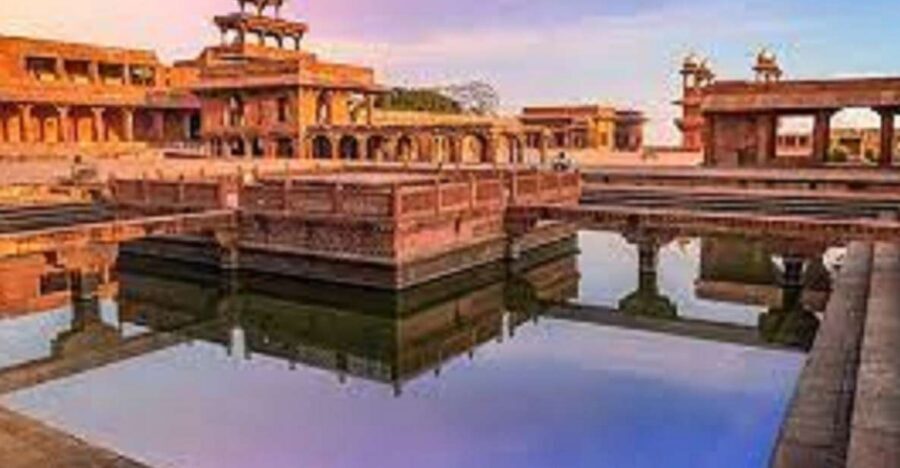
This tour is built to deliver a lot without dragging. The total time on-site is about 2 hours, which means your guide needs to be efficient and your group needs to stay together.
Here’s what you’ll actually do during that window:
1) You start at Fatehpur Sikri with your guide and begin exploring the enclosed, historic complex.
2) You work through the main architectural highlights—palatial areas, audience halls, residential quarters, and religious structures.
3) The visit ends back at the same starting area you began from.
Because the route is concentrated, it’s ideal if you’re visiting Fatehpur Sikri as part of a longer trip (for example, pairing it with Agra or a day trip from nearby cities). It’s also ideal if you’re the type who wants the highlights covered with explanation, not a slow drift where you end up knowing only what your camera can show.
Red sandstone highlights: Panch Mahal to Rang Mahal
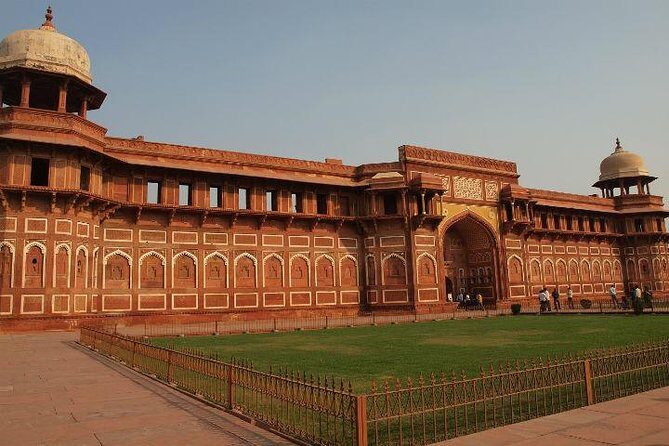
Fatehpur Sikri is famously built with red sandstone, and once you’re inside, that color does something to your perception. It makes the structures feel cohesive—like one designed world rather than a random pile of monuments.
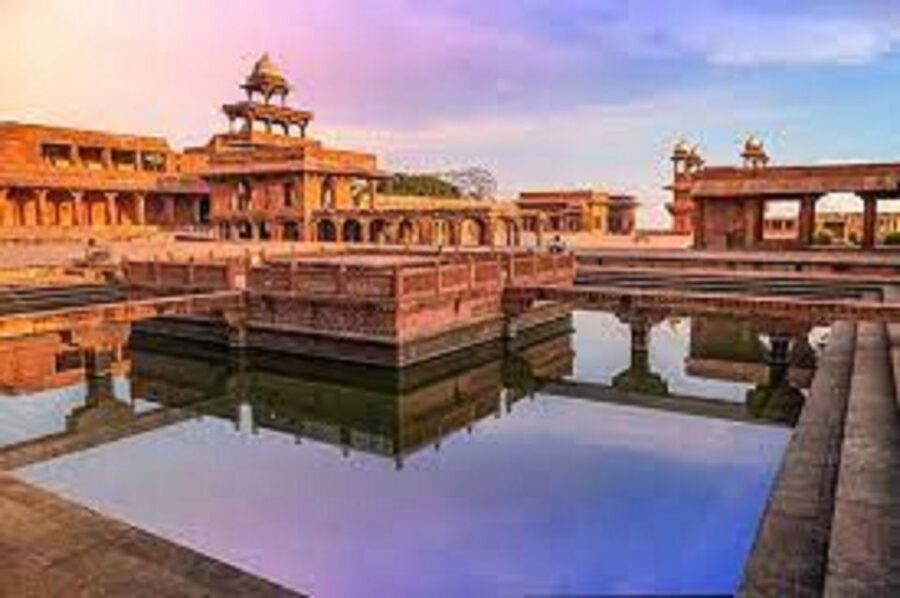
The tour takes you through standout groupings of buildings, including Panch Mahal, Dewan E Aam, Dewan E Khas, Rang Mahal, and Harem Sara. This is the “palace and power” side of the complex, and your guide’s job is to explain how the different spaces relate to the overall Indo-Islamic style.
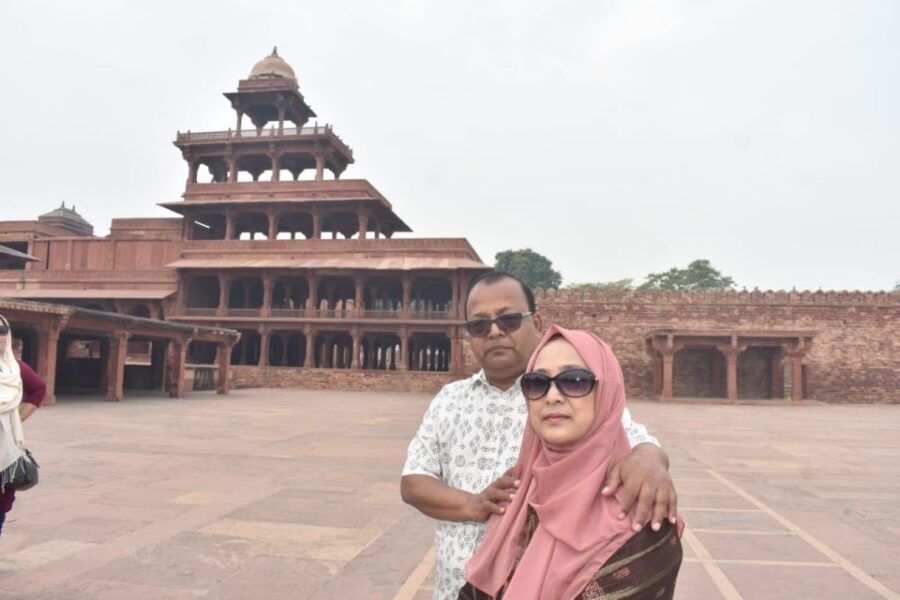
- Panch Mahal: You’ll see it as part of the larger complex rather than a lone attraction. With a guide, you can connect it to the way the Mughals structured elite spaces within the fortified capital.
- Dewan E Aam and Dewan E Khas: You’ll get the distinction in how these audience-related halls fit into the visitor experience. Even if you don’t know the terms yet, your guide will translate the feel of the architecture into understandable context.
- Rang Mahal and Harem Sara: These stops help balance the tour so it’s not only about gateways and courtyards. You get the palace-living side of the story, where architecture turns into a sense of how daily life and court life might have been organized.
One reason I like this pacing: it keeps your eyes moving between different kinds of spaces. You’re not just staring at one big monument for too long. You’re comparing, noticing patterns, and letting the guide fill in the meaning.
Dewan halls and the Indo-Islamic story your guide ties together
This is where the tour becomes more than sightseeing. The listing highlights that your guide will explain the history and the features of Indo-Islamic architectures, and that matters because Fatehpur Sikri isn’t “one style.” It’s a blend, and the blending is the point.
In practical terms, you benefit because your guide can point out what to pay attention to as you move: how the design choices show up across the complex, not just at one building. Instead of leaving with only names, you leave with a mental map of relationships—palace areas linked to audience spaces, and religious spaces linked to the cultural center of the site.
The guides listed here are live and multilingual. The languages offered are English, Italian, Spanish, and French, so you can match the tour to your comfort level. And from the way guides are described in past bookings, the best result comes from getting a guide who’s patient and enthusiastic—two qualities that show up clearly in the feedback for guides such as Mr Imam and Tony/Mr Toni.





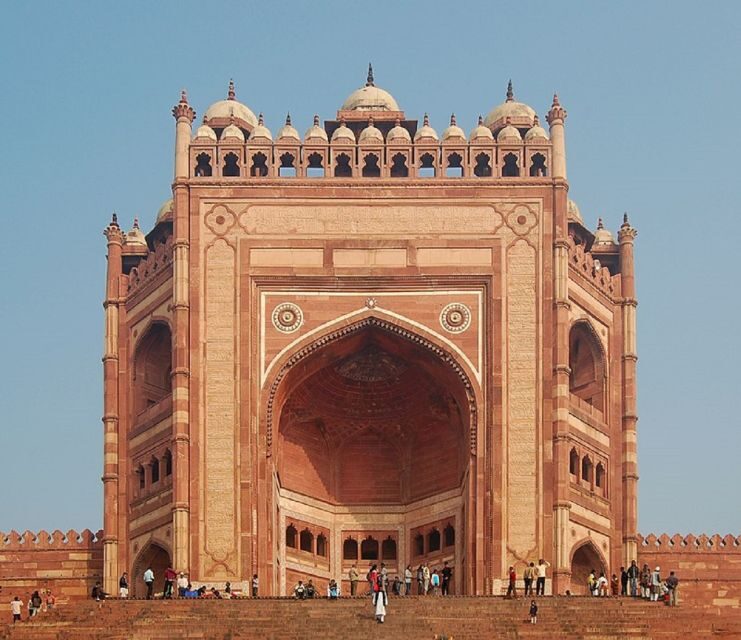
Buland Darwaza: the gateway moment you shouldn’t rush
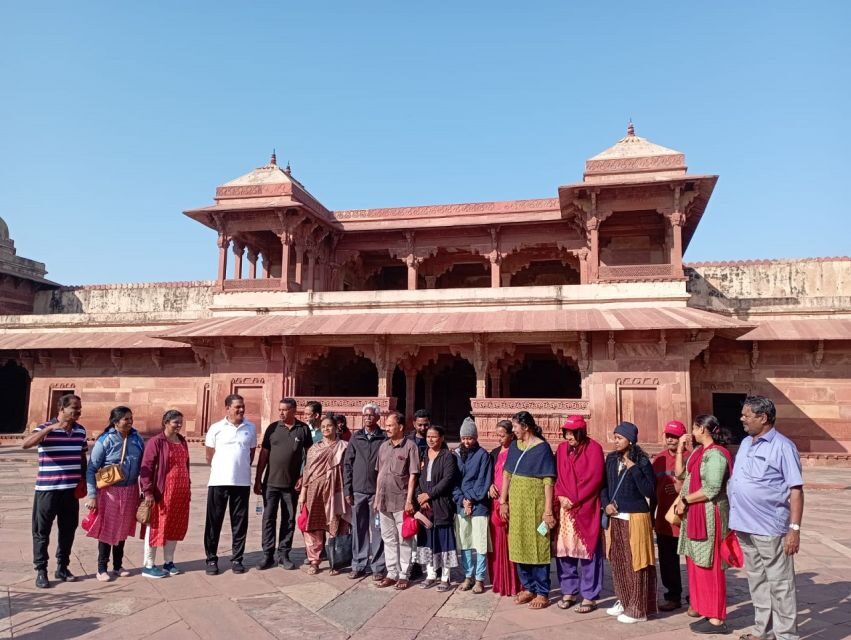
If you want one “pause for photos” stop, Buland Derwaza is it. Even without deep prior knowledge, it’s the kind of monument that makes your brain go quiet for a second.
With a guided visit, you’ll also understand why the gateway matters within the bigger complex. You’ll experience it as part of the route, not as a separate “detour attraction.” That matters because the emotional impact is stronger when you connect it to what came before and after—especially when your guide is still actively explaining the architecture.
Because your time is limited, don’t treat Buland Derwaza like you’ll revisit it later. Use the short moment to look closely: try to notice how the design transitions between different levels and surfaces. Your guide’s explanation is most valuable right when you’re standing there, not after you’ve walked away.
The tomb of Sheikh Salim Chishti: where meaning adds weight
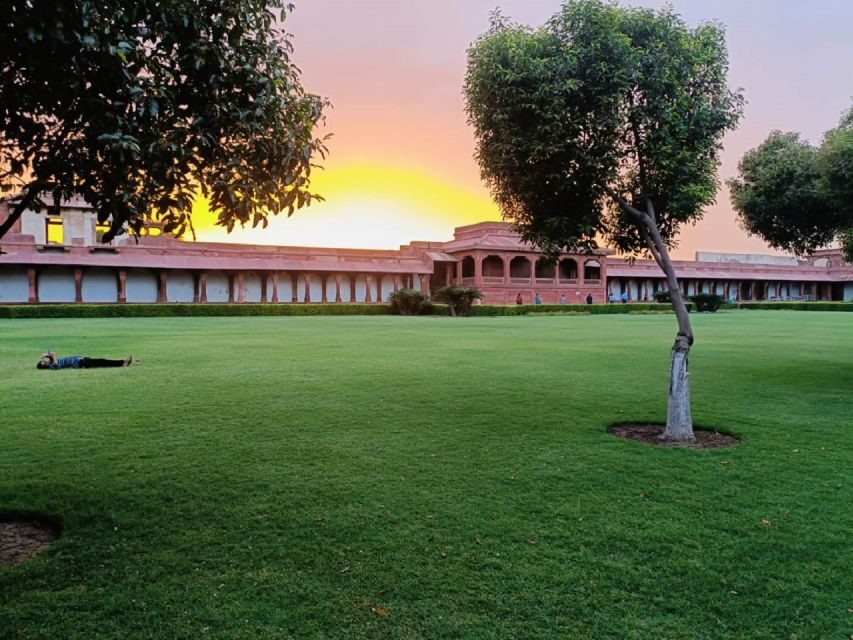
A major anchor of the visit is the renowned tomb of Sufi Seikh Saleem Chisti. Religious sites in India often feel more than “tour stops,” and this one is no exception. Your guide helps bring the story into focus so you can read the space with more than curiosity.
This part of the tour also gives the visit emotional range. After palace and audience spaces made for power and ceremony, you shift into a spiritual center where meaning is the main feature. If you’re the kind of traveler who likes history, you’ll appreciate the careful explanation. If you’re the kind of traveler who likes atmosphere, you’ll also appreciate the change in tone.
If you’re visiting with kids, or with friends who get tired of monuments, the tomb area is usually the point where interest clicks because it feels personal, not just architectural.
Qawwali at the mosque: a cultural moment, not a checkbox
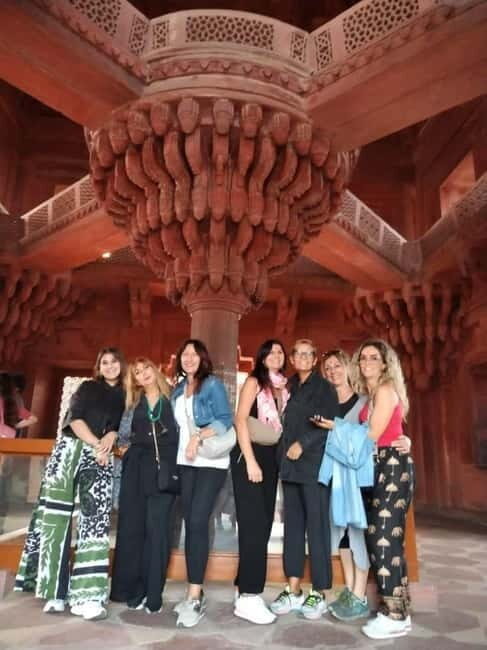
One of the most distinctive elements here is the mosque experience paired with Qawwali—a classical sufi song style. The tour specifically mentions enjoying the mosque and the Qawwali connection, which makes this stop more than a quick glance.
This is valuable for two reasons:
First, it adds a sound-and-spirit layer to a site that’s mostly experienced visually. Even if your group isn’t big on musical performances, it helps you connect the architecture to lived culture.
Second, it breaks up the tour so it doesn’t feel like only buildings and names. You get a sensory contrast—stone, then music—before you move back into the rest of the complex.
I’d suggest keeping your expectations realistic. If you’re hoping for a specific type or duration of performance, the tour data doesn’t promise that level of detail. But as a cultural highlight woven into the visit, the mosque-plus-Qawwali moment is one of the strongest reasons to choose this tour instead of a plain walking route.
Price and what you actually get for $17 per group
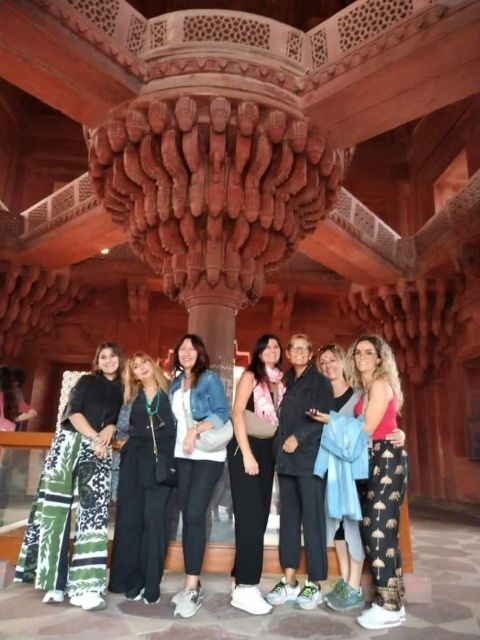
The price is listed as $17 per group up to 5, with an about 2-hour duration. That’s one of those deals that can make sense fast—especially if you’re traveling with friends or family and want a private experience without paying private-guide rates that scale per person.
Here’s the value breakdown you should keep in mind:
- You get a Govt Approved Local Tour Guide specifically for Fatehpur Sikri.
- You get skip-the-line entry, which can save real time.
- You get a guided explanation through key sites, including the mosque/Qawwali component.
The main “watch out” is that entrance tickets are not included. So the final cost will depend on what you pay separately for entry. If you plan ahead and budget for tickets, the $17 per group is a solid way to get a structured visit without feeling rushed or overcharged.
Also note: the tour is described as private and wheelchair accessible. Private group means you can move at a reasonable pace with your guide, which tends to lead to better questions and clearer explanations.
What to bring and how to avoid the common friction points
This tour comes with a few easy-to-miss practical notes:
- Bring your ID or passport.
- Entrance tickets are not included.
- Your guide works in English, Italian, Spanish, and French, so confirm your language before you show up.
- The tour is private group and lasts 2 hours, so use comfortable walking shoes. Fatehpur Sikri involves enough walking that you’ll feel it if you’re in sandals with no support.
One more practical tip: if you’re doing this as part of a longer travel day, build in buffer time. Past experiences show guides like Tony/Mr Toni were willing to wait when road timing ran late, but you’ll still have the best experience if you arrive with minimal stress.
Who this tour suits best
This is a great fit if you:
- Want a guided highlights tour rather than a self-guided wander.
- Prefer a private group (up to 5) so questions don’t get lost.
- Care about getting the “why” behind Indo-Islamic architecture, not only the “what.”
- Have limited time and want a focused 2-hour visit.
It’s also a good choice if you like cultural moments. The mosque visit tied to Qawwali gives the tour character beyond standard palace-and-gateway stops.
If you’re the type who thrives on total independence and doesn’t want to follow a set route, you might feel constrained by the timed 2-hour plan. In that case, you’d likely want a different style of visit. But if you want direction and explanation, this one makes sense.
Should you book this Fatehpur Sikri guide?
If you want the highlights of Fatehpur Sikri with clear guidance and less waiting at the entrance, I’d say yes—book it, especially given the skip-the-line setup and the fact that you’ll be with a live guide in your chosen language.
Choose it if you value efficiency and explanation in a short window. The guide names that have come up positively—Mr Imam, Tony, and Mr Toni—are repeatedly associated with being informative, enthusiastic, patient, and accommodating when timing gets messy.
Skip it only if you already have entrance access handled perfectly and you’re determined to do this fully on your own with no need for history-to-architecture translation. Otherwise, this tour is one of the more straightforward ways to see Fatehpur Sikri without turning your visit into guesswork.
FAQ
How long is the Fatehpur Sikri guided tour?
The tour duration is 2 hours.
Where do we meet the tour guide?
You meet your guide at Agra Gate.
Is skip-the-line entry included?
Yes. The tour includes skip-the-line entry through a separate entrance.
What languages are available for the live guide?
The live guide is available in English, Italian, Spanish, and French.
Are entrance tickets included in the price?
No. Entrance tickets are not included.
Is the tour wheelchair accessible?
Yes, the tour is wheelchair accessible.
Do I need to carry my ID or passport?
Yes. You should carry your IDs or passport.