REVIEW · AGRA
Book Govt. Approved Tour Guide For Taj Mahal & Fort
Book on GetYourGuide →Operated by Taj Tour Guide · Bookable on GetYourGuide
Agra’s monuments get way better with a real guide. This private tour is built around a government-approved guide and a story-led walk through the places that made the Mughal era famous. I like that you’re not just looking at marble and red sandstone—you’re getting the who/why behind the design, and names of emperors and builders so the sites make sense fast. If you land with guides like Wahid or Riyaz, you also get a friendly, photo-helpful approach that’s a big win for solo travelers.
One thing to plan around: Taj Mahal remains closed on Fridays, and parts of your time can feel tight because Taj and Agra Fort are packed into a half-day schedule (with lunch having a break but not being included).
In This Review
- Key highlights I’d zoom in on
- What you’re really buying: a govt-approved, private story in Agra
- Taj Mahal: the speed-run for understanding what you’re seeing
- What I like about the Taj visit on this tour
- A realistic note
- Agra Fort’s red sandstone and Indo-Islamic details (Akbar’s 1565 legacy)
- Baby Taj (Itmad-ud Daulah): the optional stop that adds a softer mood
- Who should choose the optional Baby Taj?
- Lunch break in Agra: what’s included and what’s on you
- Local bazaar free time: a small taste of everyday Agra
- How the logistics work: golf cart, shoes covers, and skip-the-line flow
- Entrance fees and camera fees: plan for extra costs
- City car coordination (important)
- Timing, meeting point, and language support that actually helps
- Photo help and staying comfortable: the “small things” that matter
- My comfort checklist for Taj and Fort days
- Who this tour suits best (and who might not love it)
- Should you book this Taj Mahal & Agra Fort tour?
- FAQ
- How long is the Taj Mahal and Agra Fort tour?
- Is Taj Mahal included in the tour?
- Is Agra Fort included?
- Is Baby Taj included?
- Are entrance fees included?
- Does the tour include lunch?
- Is Taj Mahal closed on certain days?
- What languages are available for the guide?
Key highlights I’d zoom in on
- Skip-the-line convenience via a separate entrance, plus the guide handles the flow
- Official guide context for Taj Mahal, Agra Fort, and optional Itmad-ud Daulah (Baby Taj)
- Practical extras at the gates: shoes covers, water bottles, and a golf cart to the Taj area
- Good photo strategy helped by guides who know where to stand (Wahid and Riyaz both got praise here)
- Indo-Islamic architecture focus at Agra Fort, not just quick sightseeing
- Flexibility options like the bazaar break and optional Baby Taj stop
What you’re really buying: a govt-approved, private story in Agra

You could do Agra on your own. But this is the smoother option: a private group with a government-approved tour guide who meets you in Agra and then walks you through the Mughal landmarks in an ordered way.
The big value isn’t just that the guide is official. It’s that the tour is structured like a narrative: Taj Mahal first, then Agra Fort, then Baby Taj if you want the extra layer. That sequence matters. You’ll start with the famous love story and the architectural principles, then you’ll see how the empire’s power and defense show up in the fort’s red sandstone and Indo-Islamic details.
And because the tour is private, your guide can adjust to your pace. Even the wording around the experience points to group-level adaptation, like one guide (Iqbal) who was said to match the tour rhythm to the visitors.
You can also read our reviews of more guided tours in Agra


Taj Mahal: the speed-run for understanding what you’re seeing

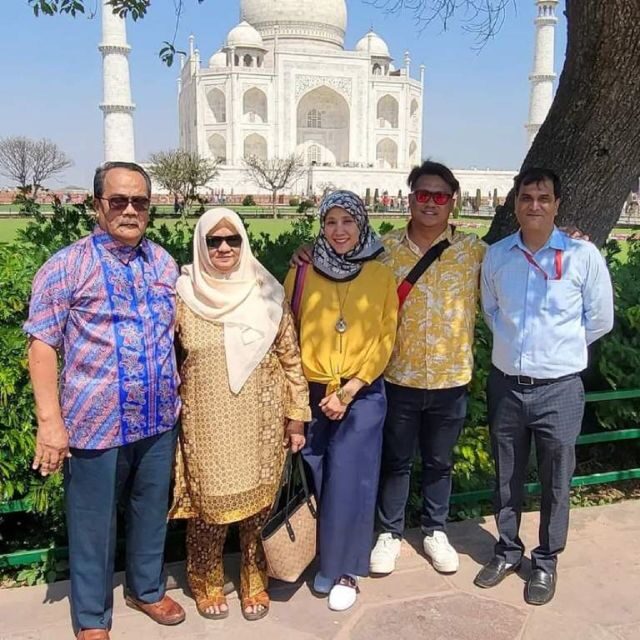
The tour begins with the symbol of love: Taj Mahal, the white marble mausoleum built by Emperor Shahjahan in memory of his beloved queen. Seeing it is one thing. Understanding the “how” and “why” while you’re standing there is what makes the visit stick.
With an official guide, you’ll get explanations tied to the architects and the design logic. That’s useful because Taj Mahal can look like it’s all about decoration. A good guide helps you notice patterns: the symmetry, the way the complex is designed as a single visual statement, and why certain choices feel both formal and emotional.
What I like about the Taj visit on this tour
- A guided walk that’s timed (about 2.5 hours for this stop), so you don’t wander too long without purpose.
- Practical planning for crowds, since the tour includes skip-the-line access with a separate entrance. That means more time looking, less time waiting.
A realistic note
Taj Mahal takes time even when you’re efficient. If you’re the type who reads every plaque and wants extra angles, the standard time can feel like a “see it, then move” pace. Still, the guide support helps you prioritize what matters most.
Agra Fort’s red sandstone and Indo-Islamic details (Akbar’s 1565 legacy)

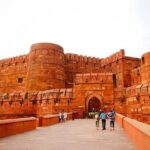
After a break and lunch time, the tour heads to Agra Fort, built by Emperor Akbar in 1565. This site is a different mood than Taj Mahal. Instead of romance and marble, you get a monumental fortress made from red sandstone, with a strong mix of Indo-Islamic architecture.
Your guide’s job here is important: Agra Fort is large, and it’s easy to miss the connections if you’re only scanning. When you have the Mughal story explained—rulers, purpose, and how the architecture communicates power—you start to see the fort as part of a whole political and cultural system, not just a scenic backdrop.
The guided portion is about 75 minutes, which is just enough time to grasp the highlights without turning it into an endurance event. You’ll likely appreciate the pacing if you’ve got limited time in Agra.




Baby Taj (Itmad-ud Daulah): the optional stop that adds a softer mood

Then there’s Itmad-ud Daulah—often called Baby Taj—and it’s optional. If you add it, you’ll visit a mausoleum built by Noor Jahan in memory of her parents.
I like this stop because it changes the tone again. It’s less about the absolute headline of Taj Mahal and more about craftsmanship and atmosphere. It’s also a chance to compare: same general Mughal language of funerary architecture, but with its own personality.
Who should choose the optional Baby Taj?
- If you want a calmer follow-up after Taj and fort sightseeing
- If you enjoy architecture and design details more than crowds
- If you’ve got a few extra hours and want to see more than the obvious checklist
If you skip it, you still get a complete Taj + Fort day, which is already a strong combo.
Lunch break in Agra: what’s included and what’s on you
The schedule includes time for lunch (about an hour break), and the tour description says you’ll take lunch in the best restaurant. Still, lunch itself isn’t listed as included, so you should expect to pay for your meal.
This break is a good thing. Taj Mahal and Agra Fort are mentally intense. You’ll want water, a short sit-down reset, and a chance to cool off.
If you’re picky about food, consider using this hour to choose what works for you rather than feeling locked into one plan. If you’re not picky, let your guide point you toward what’s convenient and suited for your group.
Local bazaar free time: a small taste of everyday Agra
There’s also an optional free time slot to visit the local bazaar. This can be a pleasant contrast to the monument-heavy schedule.
A practical tip: wear shoes you can walk in comfortably. Bazaar time often means quick turns, uneven pavement, and fast bargaining if you decide to buy anything. The tour guide can help you avoid getting pulled in the wrong direction, and guides on this experience have been praised for keeping visitors comfortable and steering away from hassle.
How the logistics work: golf cart, shoes covers, and skip-the-line flow

This tour mixes walking with smart shortcuts. It’s a walking tour, but you also get a golf cart to Taj Mahal, which helps you conserve energy for the main walking sections.
You’ll also get shoes covers and water bottles. That’s small, but it matters when you’re dealing with crowds, heat, and the usual rules at major sites.
Entrance fees and camera fees: plan for extra costs
The tour includes a camera fee, but entrance fees are not included. That means you’ll still need to cover tickets/entry costs separately. If you show up expecting everything to be paid already, you may get surprised at the gates—so budget for entrance.
City car coordination (important)
You might wonder how you move between sights. The note says the guide will join you in your pre-booked car for city tour. Also, a car for city sightseeing is included only if an option is selected.
So, before you go, make sure you know whether you’re arranging transport on your side or using the included option. It affects timing and where you meet.
Timing, meeting point, and language support that actually helps

You’ll meet your guide in Agra at a location you share during coordination. The key is to send your location clearly so the meetup is quick.
The experience is designed for multiple languages, including English, French, Japanese, Spanish, Italian, German, Chinese, and Russian. That’s a big deal at Taj Mahal and Agra Fort, where the meaning of design choices can get lost if the translation is thin. Some visitors specifically praised the Japanese guidance, which suggests the language support is genuinely used, not just listed.
Duration is listed as 2.5 to 6 hours, depending on starting time and your chosen add-ons (like Baby Taj and bazaar time). If your schedule is tight, you’ll want to pick a start time that leaves buffer for entry lines, restroom breaks, and photo stops.
Photo help and staying comfortable: the “small things” that matter

A lot of monument tours fail at the practical level: where to stand, when to move, and how to avoid getting mobbed.
This tour includes guidance that can help with all three. In particular, guides such as Wahid were praised for taking amazing photos, and Riyaz was described as helpful with keeping peddlers at bay—exactly the kind of support that keeps your focus on the site instead of the noise around it.
My comfort checklist for Taj and Fort days
- Bring water (you’ll get bottles, but bring your own if you run hot)
- Wear breathable clothes and plan for sun and walking
- Use your guide’s photo points instead of fighting the crowd
- Keep your schedule flexible if you add Baby Taj
Who this tour suits best (and who might not love it)
This fits best if you:
- Want a private guided experience rather than roaming and guessing
- Like learning the story behind Mughal architecture while you’re still standing in front of it
- Are short on time in Agra and want Taj Mahal and Agra Fort in one go
- Care about photo results and visitor comfort (solo travelers have flagged this as a key plus)
It may be less ideal if you:
- Want an unhurried, independent stroll where you never move on a schedule
- Expect entrance fees to be fully covered
- Are visiting on a Friday and can’t shift your plans, since Taj Mahal is closed that day
Should you book this Taj Mahal & Agra Fort tour?
If your priority is understanding—plus avoiding crowd friction—this is a strong booking. The mix of government-approved guidance, skip-the-line access, and site pairing (Taj Mahal + Agra Fort, with Baby Taj as an extra) is exactly how you get more meaning per hour.
I’d book it if you want the Mughal story told in plain terms while you’re seeing the real shapes and materials. Just double-check two things first: whether you’re traveling on a Friday (Taj closure), and what entrance fees you’ll still need to pay.
If you can align those, you’ll get a focused Agra day that feels guided, not rushed—and that’s the difference between a checklist photo and a lasting memory.
FAQ
How long is the Taj Mahal and Agra Fort tour?
The duration is listed as 2.5 to 6 hours, depending on the starting time and options you choose (like the optional Baby Taj and bazaar time).
Is Taj Mahal included in the tour?
Yes. The tour includes a guided visit to Taj Mahal with an allotted time (about 2.5 hours for the Taj stop).
Is Agra Fort included?
Yes. You’ll also have a guided visit to Agra Fort (about 75 minutes).
Is Baby Taj included?
Baby Taj (Itmad-ud Daulah) is included as an optional stop.
Are entrance fees included?
No. Entrance fees are not included in the tour.
Does the tour include lunch?
Lunch time is included as a break, but lunch is not included.
Is Taj Mahal closed on certain days?
Yes. Taj Mahal remains closed on Friday.
What languages are available for the guide?
The tour offers live guides in English, French, Japanese, Spanish, Italian, German, Chinese, and Russian.