REVIEW · NEW DELHI
Best of Delhi and Taj Mahal: 1 Day Agra and 1 Day Delhi Tour
Book on Viator →Operated by Kaimur Holidays · Bookable on Viator
Tight schedule, big sights. This 2-day Delhi and Agra tour is built around a private guide who makes the route feel simple, plus an air-conditioned car that keeps the day moving without cooking in traffic. My favorite part is how it strings together Old Delhi lanes, Mughal landmarks, and the Taj Mahal with clear explanations. One thing to plan for: several top sites have admission fees not included, and Taj Mahal is closed Fridays.
You start in Delhi with an early-ish 9 am hotel departure, then work your way through Old Delhi first. You’ll see major religious sites like Jama Masjid and Bangla Sahib, and you get a rickshaw ride for that hands-on, street-level feel.
On the Agra day, the focus tightens on Taj Mahal and the surrounding sights that help you understand the bigger picture of Mughal-era power and craft. If you want value for time and zero stress on directions, this setup works well—just wear shoes that can handle some uneven walking.
In This Review
- Key things I’d watch for
- How this Delhi + Agra 2-day plan actually helps
- Hotel pickup, private air-conditioned car, and a schedule you can trust
- Old Delhi first: Jama Masjid, Chandni Chowk, and the rickshaw ride
- Khari Baoli and the Gandhi Museum: spices and real context
- Humayun’s Tomb and Qutub Minar: Mughal architecture with meaning
- Lotus Temple, India Gate, and Bangla Sahib: faith and public space
- Agra day starts with the Taj Mahal you can actually understand
- Agra Fort, Itmad-ud-Daula, and Mehtab Bagh for a full Mughal picture
- Tickets, closures, and what is included so you can budget calmly
- Value check: is $75 per person worth it?
- Who should book this tour (and who might not love it)
- Should you book this Delhi and Agra tour?
- FAQ
- What’s included in the tour price?
- Do I get pickup from my hotel or the airport?
- Is this a shared group tour?
- What time does the Delhi day start?
- Which sites require extra admission tickets?
- Are any attractions closed on certain days?
- How long is the tour?
- Is there a fitness requirement?
- Can I cancel and get a refund?
Key things I’d watch for

- Private-only pace: your group stays together, so you’re not stuck moving at someone else’s speed
- Rickshaw + markets: Old Delhi includes Chandni Chowk and a spice-market route that feels like real life
- Mughal and faith in one loop: Humayun’s Tomb, Qutub Minar, Jama Masjid, Lotus Temple, and Bangla Sahib are all included
- Agra photo viewpoints: Mehtab Bagh is built in for a Taj photo angle from across the river
- Guide Q&A energy: multiple guides credited for answering questions and tailoring the plan to what you want to see
- Admission-ticket mix: some stops are free, others are ticketed and not included
How this Delhi + Agra 2-day plan actually helps

Delhi and Agra are not hard to visit, but doing them efficiently is the trick—especially if it’s your first time. This tour is designed to cut out the decision fatigue. You’re not figuring out which monument first, how to get between neighborhoods, or how long security lines might steal from your day. A guide handles the story and the flow; a private driver handles the driving.
The best part is the mix: Old Delhi gives you the sights and sounds of the bazaar corridor, while New Delhi Mughal monuments add the architectural scale. Then you switch to Agra, where the Taj Mahal day is paired with Agra Fort and a “Baby Taj” style stop at Itmad-ud-Daula, plus a riverfront view at Mehtab Bagh. It’s a smart way to make two days feel like you saw more than two checklists.
The tour also includes pick-up and drop-off from Delhi airport or your hotel, which matters a lot on a short trip. No extra scrambling when you’re jet-lagged or trying to catch a flight.
A few more New Delhi tours and experiences worth a look



Hotel pickup, private air-conditioned car, and a schedule you can trust

The tour includes a private air-conditioned car with a driver, plus taxes, parking, and fuel charges. Practically, that means you’re paying for transport that’s part of the experience—not a separate “figure it out later” expense.
You’ll also have a local tour guide for the sights, and packaged drinking water bottles are included. That’s not just comfort; it helps you stay functional when you’re walking in heat and doing a packed route.
Your Day 1 starts at 9 am from your hotel. That early start is a feature, not a flaw. Old Delhi and its markets move fast, and starting earlier often means you spend more time seeing and less time waiting.
One more detail that’s worth noticing: the tour is private-only—only your group participates. If you’re traveling with family, friends, or you just hate being stuck with a large group rhythm, this format tends to feel smoother.
Old Delhi first: Jama Masjid, Chandni Chowk, and the rickshaw ride
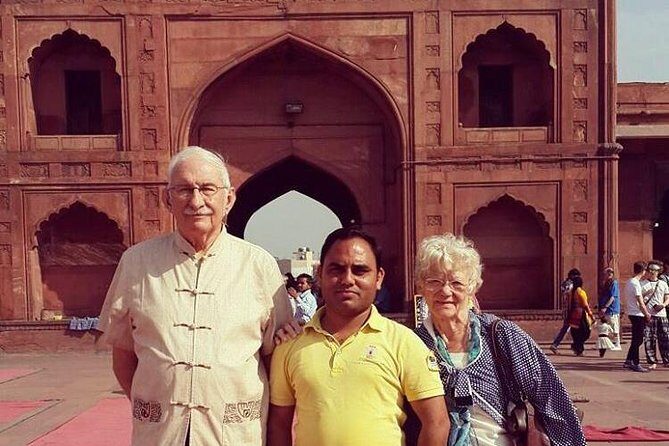
Your Delhi day begins in Old Delhi with Jama Masjid, one of the biggest and most significant mosques in the city. You get about 2 hours here, and admission is free. With a guide, it’s not just sightseeing—you’ll get context for why the mosque sits in this neighborhood and how it connects to daily life around it.
Next comes the street corridor around Chandni Chowk and the local bazaars. This is where the tour gives you the kind of time and direction that you can’t easily recreate solo without losing an hour to wrong turns.
A rickshaw ride is included, which is one of the best ways to absorb Old Delhi’s scale quickly. You get the motion and the street texture without having to negotiate every turn.
What to expect: sights move from open courtyards to narrow lanes with crowds and shops, plus lots of photo moments. If you’re easily overwhelmed by people density, go slow and let your guide choose the best angles for photos.
A practical note: keep your schedule flexible in your own head. Old Delhi is lively and sometimes slow-moving, even when you’ve planned well.
Khari Baoli and the Gandhi Museum: spices and real context
After the big Old Delhi focus, the tour adds Khari Baoli, often described as one of Asia’s biggest spice markets. You’ll have around 30 minutes and free admission, and the guide will point out corners worth stopping for photos. This is the part that makes the day feel grounded. You’re not only looking at monuments; you’re seeing trade, storage, and the everyday economy of the city.
Then you shift to the National Gandhi Museum, where you spend about 45 minutes. Admission is free here too. The museum is in Gandhi’s last-days residence area and helps connect the modern political story to the physical places where it unfolded.
This stop works because it interrupts the “only visual monuments” feeling. After mosques and markets, the museum gives you a calmer, more reflective break—something you’ll feel in your energy level later in the day.
Humayun’s Tomb and Qutub Minar: Mughal architecture with meaning
Two major UNESCO World Heritage sites anchor the rest of your Delhi morning and afternoon: Humayun’s Tomb and Qutub Minar.
- Humayun’s Tomb (about 1 hour): admission is not included. Your guide explains Mughal connections and the idea of monumental design as a political and personal statement—especially the way the monument was built as a tribute.
- Qutub Minar (about 1 hour): admission is also not included. This complex marks the arrival of Islam in India, with sultans building mosques and tombs across the area. Your guide’s job is to help you read the architecture instead of just photographing it.
Here’s the main value of having a guide at these sites: architecture can look pretty generic at first glance. With commentary, you start noticing proportions, materials, and how the complex fits the broader story of power shifts.
The only drawback: these two stops are ticketed on your own (since admission isn’t included), and they’re time-heavy. If you’re the type who wants to linger for hours, you’ll need to accept the tour’s “see a lot in a day” pace.






Lotus Temple, India Gate, and Bangla Sahib: faith and public space
Delhi isn’t only tombs and mosques. This tour adds three stops that show how people use the city.
Lotus Temple (about 30 minutes) is open to all and admission is free. Your guide takes you inside so it’s not just a photo from outside. This is also one of those places where you’ll notice how quiet the experience can feel compared with the traffic and markets you just visited.
India Gate (about 20 minutes) is quick but meaningful. It’s a British colonial-era war memorial, and the tour includes time to see it as part of the Lutyens-zone style political center—plus a drive-by of the President’s Estate.
Then the day closes with Gurudwara Bangla Sahib (about 45 minutes). Admission is free, and you get to see the Sikh temple and experience the community kitchen concept. This stop is often a highlight because it’s not only about architecture; it’s about living practice—sharing food, welcoming people, and learning what Sikhism means through the daily rhythm.
Closure to know: Lotus Temple and the Gandhi Museum are closed every Monday. If you’re building your trip around a Monday, swap expectations for that day.
Agra day starts with the Taj Mahal you can actually understand
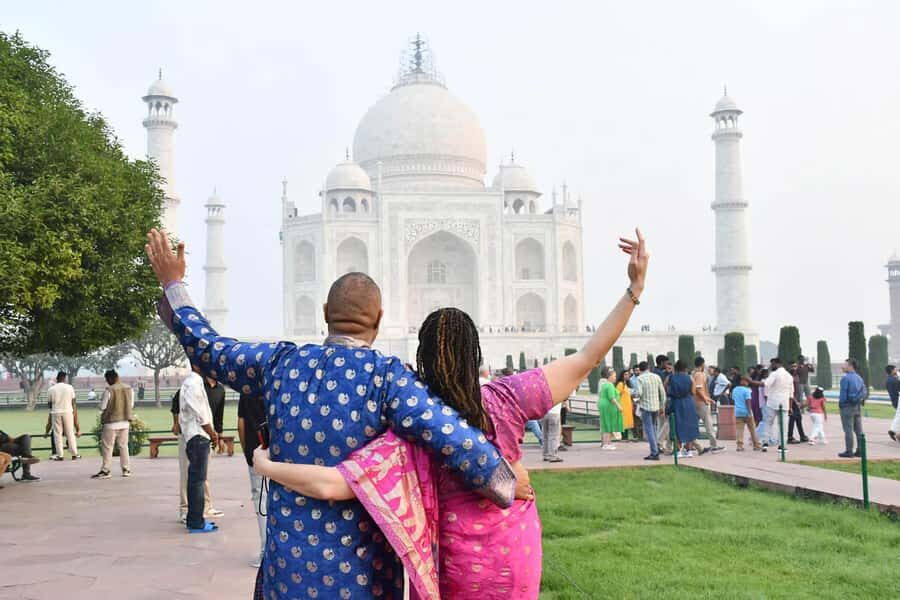
Agra is where the story tightens. Your Taj Mahal visit is about 2 hours, guided, and admission is not included. Even if you’ve seen pictures before, this is one of those sites where a good guide changes your experience.
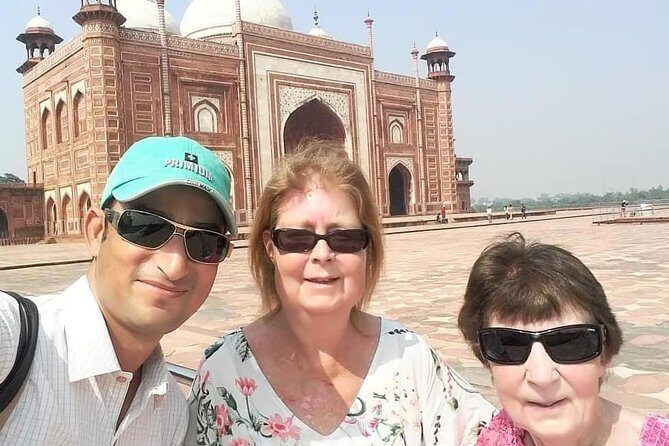
Your guide covers the history and architecture of the monument and talks about the Mughal dynasty behind it, plus the artists and craft traditions that supported the building. That’s how you start seeing the Taj Mahal as more than a beautiful face—it becomes evidence of how luxury, authority, and art worked together.
Important planning note: the Taj Mahal remains closed every Friday. If your trip includes a Friday in Agra, you’ll want a backup plan and to confirm how the operator handles that change.
Time tip: plan to arrive mentally ready for crowds and security. The tour gives you a solid chunk of time, but the real Taj experience comes from balancing viewing with reflection—don’t try to sprint through it.
Agra Fort, Itmad-ud-Daula, and Mehtab Bagh for a full Mughal picture
After the Taj focus, the tour adds three more stops that round out your understanding of Mughal-era power and craft.
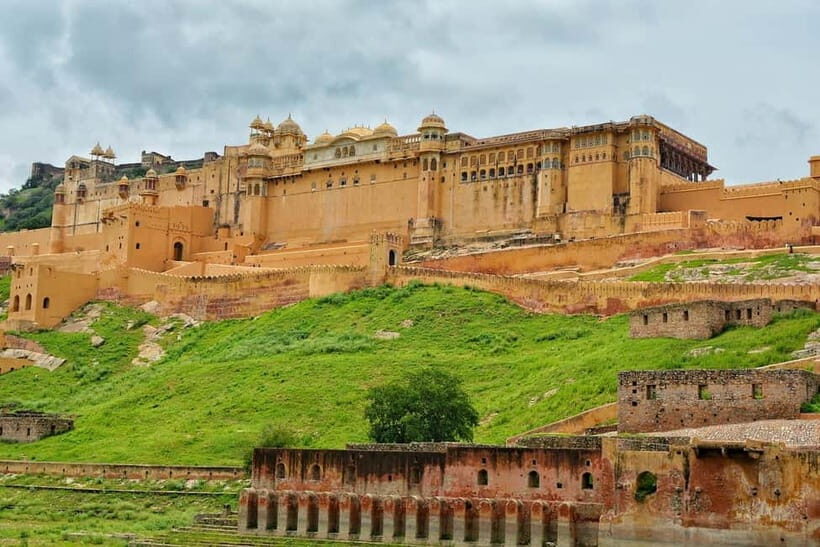
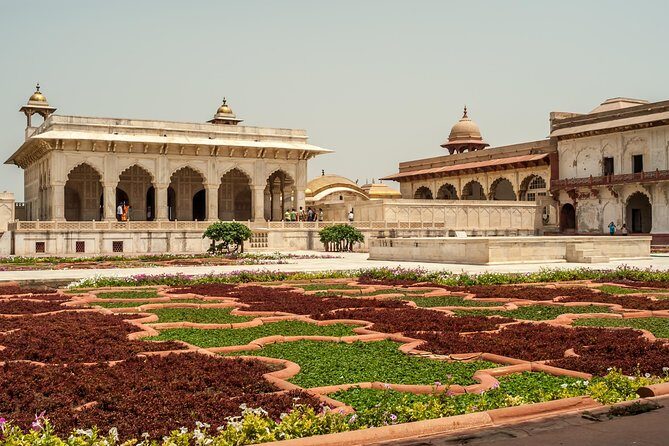
Agra Fort (about 1 hour)
Admission is not included. Your guide explains history and architecture and how the fort and its palaces fit the Mughal luxury-and-authority narrative. If the Taj is the emotional centerpiece, Agra Fort is the military-political backdrop.
Itmad-ud-Daula, the Baby Taj (about 30 minutes)
Also not included admission. This stop is short but purposeful. Your guide will explain the “mystery” and the artistry behind it. It’s the kind of monument that rewards attention to detail more than scale, especially if you like seeing how styles evolve.
Mehtab Bagh (about 30 minutes)
Admission is not included. This is a garden across the river behind the Taj Mahal, and the big payoff is photo time from a different viewpoint. It’s also a place you can stay until sunset, depending on timing and conditions.
The smart part of this trio is that you’re not just repeating Taj Mahal angles. You’re shifting from palace and fort to garden and river view, which makes the day feel more complete.
Tickets, closures, and what is included so you can budget calmly
This tour includes a lot of the “day to day” costs, but admission fees are split.
Included
- private air-conditioned car with driver
- local tour guide
- all kind of taxes and parking
- packaged drinking water bottles
- fuel charges
- pickup and drop-off from Delhi airport/hotel
- mobile ticket
- private-only group
Free admission stops (as listed)
- Jama Masjid
- Khari Baoli
- National Gandhi Museum
- Lotus Temple
- India Gate
- Gurudwara Bangla Sahib
Admission tickets not included (as listed)
- Humayun’s Tomb
- Qutub Minar
- Taj Mahal
- Agra Fort
- Itmad-ud-Daula
- Mehtab Bagh
So yes, budget for those site entries. The price you pay for the tour is mostly for transport + a guide + organization, not for every monument’s entry fee.
Also keep closure days in mind:
- Taj Mahal closed every Friday
- Lotus Temple and Gandhi Museum closed every Monday
Those two closure details can make or break a short trip, so build your schedule around them.
Value check: is $75 per person worth it?
At $75 per person for roughly two days, the value comes from the combination: private driver + air-conditioned car + a local guide + entrance-ticket handling by planning (even though several admissions aren’t included).
If you were to DIY this, you’d still spend money on transport, and you’d spend time figuring out routes, timing, and explanations. That matters because Delhi and Agra can be tiring fast. This tour buys back energy with a planned route and guided commentary.
The main “value trade-off” is that the tour moves efficiently and gives limited time per site (like 20 minutes at India Gate, 30 minutes at Khari Baoli and Itmad-ud-Daula). If you’re the type who wants long, unstructured stays, you might feel rushed. But if you want a clear highlight route with minimal hassle, this pricing can feel fair.
Who should book this tour (and who might not love it)
I think this is a strong fit for:
- first-time visitors who want the big Delhi and Agra landmarks without getting lost
- people short on time and trying to see both cities in a tight window
- anyone who values guide explanations (the Taj Mahal and UNESCO sites are more meaningful with context)
- small groups who prefer a private-only schedule
It might be less ideal if:
- you plan to visit on a Friday in Agra (Taj Mahal closure) or a Monday in Delhi (Lotus Temple and Gandhi Museum closures)
- you need long stays at each monument and don’t like time-boxed visits
- you prefer fully independent travel with no driver or guide
One more consideration: the tour notes moderate physical fitness. That usually means expect some walking and uneven surfaces, even if it’s not an extreme hiking day.
Should you book this Delhi and Agra tour?
If your goal is to see the Taj Mahal and the key Delhi highlights in two days with less stress, I’d book it. The private car and hotel/airport pickup remove the most annoying parts of planning. The route also includes the kind of stops that make Delhi feel like a real place—spice markets, Bangla Sahib’s community kitchen, and street-level Old Delhi—not just monuments behind ropes.
I’d only hesitate if your dates hit Friday in Agra or Monday in Delhi, since closures affect major stops. And I’d check how you’ll handle admission fees for ticketed sites like Humayun’s Tomb, Qutub Minar, Taj Mahal, Agra Fort, Itmad-ud-Daula, and Mehtab Bagh.
If those details line up with your schedule and you want a guided highlight run, this is a solid, practical choice.
FAQ
What’s included in the tour price?
You get a local tour guide, a private air-conditioned car with driver, all taxes and parking, packaged drinking water bottles, fuel charges, and pickup and drop-off from your Delhi airport or hotel. The tour also provides a mobile ticket.
Do I get pickup from my hotel or the airport?
Yes. The tour includes pickup and drop-off from Delhi airport or your hotel.
Is this a shared group tour?
No. This is a private tour/activity, and only your group participates.
What time does the Delhi day start?
Day 1 starts at 9 am from your hotel.
Which sites require extra admission tickets?
Admission tickets are not included for Humayun’s Tomb, Qutub Minar, Taj Mahal, Agra Fort, Itmad-ud-Daula, and Mehtab Bagh. Admission is listed as free for Jama Masjid, Khari Baoli, National Gandhi Museum, Lotus Temple, India Gate, and Gurudwara Bangla Sahib.
Are any attractions closed on certain days?
Yes. Taj Mahal remains closed every Friday. Lotus Temple and the Gandhi Museum are closed every Monday.
How long is the tour?
The duration is approximately 2 days.
Is there a fitness requirement?
The tour notes that travelers should have a moderate physical fitness level.
Can I cancel and get a refund?
Yes. You can cancel for free up to 24 hours in advance for a full refund. If you cancel less than 24 hours before the start time, the amount is not refunded.