REVIEW · AGRA
Agra Private City Tour: Customize your own
Book on Viator →Operated by Keeper Landwey · Bookable on Viator
Agra can feel like a checklist city, but this private tour keeps it human by letting you steer the day. You pick your stops, and you get a local guide, an A/C car, and smooth transfers built around your timing.
I like two things most: you get private flexibility (not just a fixed circuit), and the day runs with real comfort—air-conditioned car + bottled water and umbrellas.
One thing to consider: because it’s customizable, you’ll want to confirm the exact sites (and order) you want before you set off, especially if there are popular add-ons you care about.
In This Review
- Key things to know before you go
- A private day in Agra that you can actually steer
- Where your day starts: Taj Mahal, Baby Taj, or a quieter warm-up
- Taj Mahal and Agra Fort: the two big stops, with different moods
- Taj Mahal: plan for details, not just the silhouette
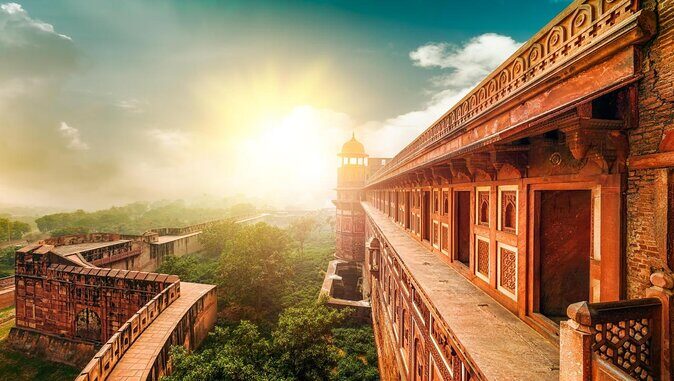
- Agra Fort: the royal walls behind the fame
- Itimād-ud-Daulah’s Tomb: the “Baby Taj” that teaches you how to look
- Fatehpur Sikri: Agra’s Ghost Town stop that slows the pace
- Akbar’s Tomb and the Mughal garden-and-geometry vibe
- Dayalbagh and Guru ka Tal: the spiritual Agra side
- How the 8 hours tend to feel: pacing, walking, and heat
- Price and value: what $35 buys you in real terms
- Getting the most from your guide and your photo stops
- Should you book this Agra private city tour?
- FAQ
- What’s included in the tour?
- How long is the Agra private city tour?
- Is the tour private or shared?
- What sites can I choose from?
- Is Taj Mahal open every day?
- Do I get an air-conditioned vehicle?
- Are water and umbrellas provided?
- Are meals included?
- Do I have to pay extra tips?
- Can I cancel for a refund?
Key things to know before you go
- Pickup and drop-off flexibility: transfers are included so you’re not wrestling with taxis between sites
- A/C car with chauffeur: less heat stress, more time looking closely
- Live local guide: expect clear explanations and practical help planning the route
- Friday Taj Mahal closure: plan your Taj day accordingly
- Bring comfortable shoes: lots of walking through courtyards and tomb areas
- Custom schedule control: you can mix the big names with quieter Mughal and spiritual stops
A private day in Agra that you can actually steer
A lot of tours in India feel like a moving conveyor belt: get in, get out, photo, repeat. This one is different because it’s set up as a private, customizable plan. That matters in Agra, where travel time between monuments can eat hours if your route is awkward.
You’ll get a local guide plus an A/C car and chauffeur, and you can shape the day around what you care about most. Love the famous stuff? Great. Want more than the Taj Mahal photo? Also great. The tour is designed to blend classic Mughal sights with lesser-seen places like gardens and religious sites.
The best part is how it helps you think like a local for a day: your guide can nudge the order based on timing and crowd movement, so you’re not just reacting to lines and traffic.
You can also read our reviews of more city tours in Agra



Where your day starts: Taj Mahal, Baby Taj, or a quieter warm-up
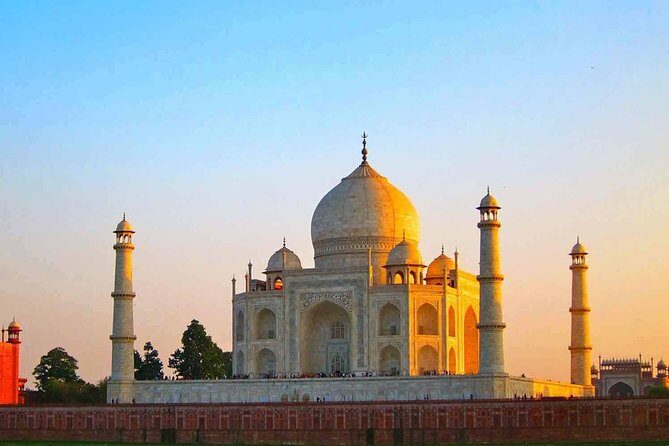
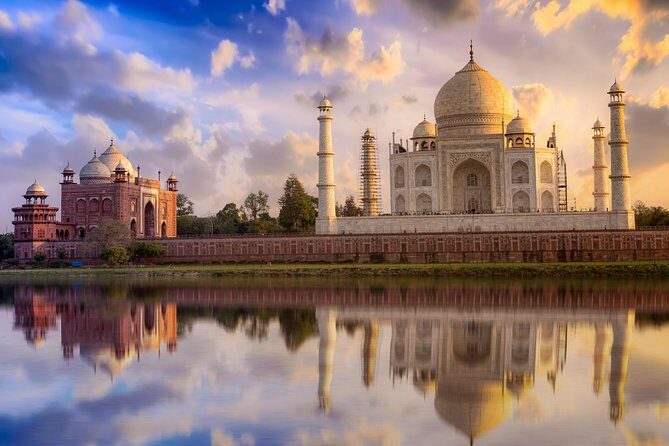
The most common way to start Agra is with the Taj Mahal. It’s the headline, built in the 17th century by Shah Jahan for Mumtaz Mahal. Going first (or at least early) usually helps, because you get the monument before your energy tanks.
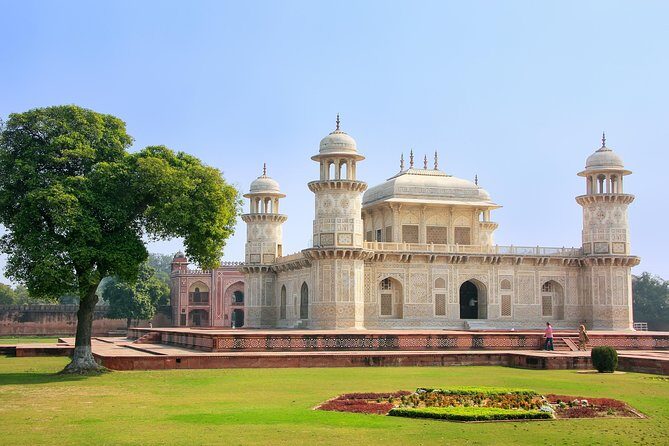
But I also love the smart alternative: start with Itimād-ud-Daulah’s Tomb, often called the Baby Taj. It’s smaller, still elegant, and set around gardens and outbuildings that make it easier to slow down and look. One guide route even used Itimad-ud-Daulah as the warm-up, then moved on to Akbar’s Tomb and Fatehpur Sikri—an order that can help you avoid the worst traffic moments.
Here’s the practical way to choose:
- If your priority is the iconic view and you want the full Taj experience, plan the Taj early and don’t treat it like a quick stop.
- If you want Mughal artistry with fewer time pressures, begin with Itimad-ud-Daulah, then build toward the big sights.
Also keep the key scheduling note in mind: Taj Mahal is closed on Friday. If your dates fall on a Friday, you’ll want your guide to shift the day to other monuments like Agra Fort, Akbar’s Tomb, or Fatehpur Sikri.
Taj Mahal and Agra Fort: the two big stops, with different moods
Taj Mahal: plan for details, not just the silhouette
Even if you’ve seen pictures, the Taj Mahal’s impact comes from proportion and materials—white marble, inlay work, and the way the complex flows. In a private format, you can ask your guide the kind of questions you’d usually skip on a group tour: what to look for first, where the best viewpoints are, and how the site layout supports the symmetry.
The tour’s biggest help here is time management. With an A/C ride and a guide who can help you navigate the grounds, you’re spending energy on the monument—not on figuring things out.
Agra Fort: the royal walls behind the fame
Agra Fort is often described as the Red Fort, and it’s worth treating it as its own experience rather than a side dish. It’s an Indo-Persian styled “walled city,” and walking the fort gives you a different angle on Mughal power—more daily-life energy than the Taj’s romantic icon status.
This stop also pairs well with Jama Masjid, built by Shah Jahan for his daughter in 1648. It sits opposite Agra Fort and is called the Friday mosque. If you’re curious about how religion, politics, and architecture sat together in Mughal times, this is a strong pairing.
A quick consideration: fort and mosque areas still involve walking and sun. You’ll be happier if you wear comfortable clothes and shoes, and you use the complimentary umbrellas if weather turns.
You can also read our reviews of more private tours in Agra




Itimād-ud-Daulah’s Tomb: the “Baby Taj” that teaches you how to look
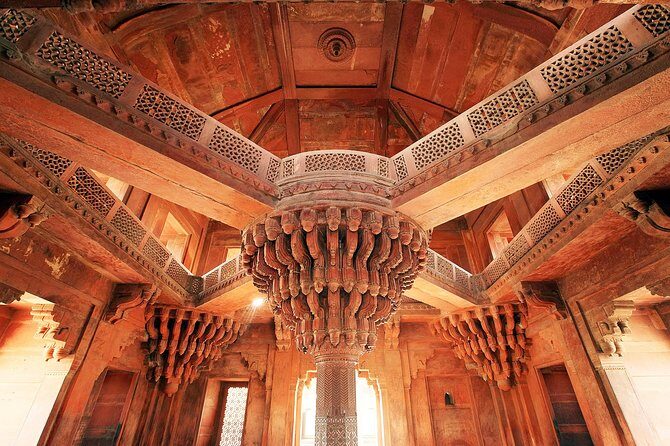
The Baby Taj nickname is popular because the tomb’s style feels related to the Taj Mahal, but the experience is different. It’s a chance to see Mughal design at a scale that encourages slower attention—gardens, water-adjacent planning, and decorative elements that can be easier to appreciate without rushing.
I like this stop because it helps you understand the Taj Mahal rather than just stare at it. When you’ve already seen Itimad-ud-Daulah, the Taj feels less like a postcard and more like the top of a design ladder: same aesthetic DNA, different execution.
If you’re booking a day that includes multiple monuments, this tomb is also a good “anchor” stop. It gives your schedule a beautiful center, so the rest of the day doesn’t feel like you’re chasing one photo after another.
Fatehpur Sikri: Agra’s Ghost Town stop that slows the pace
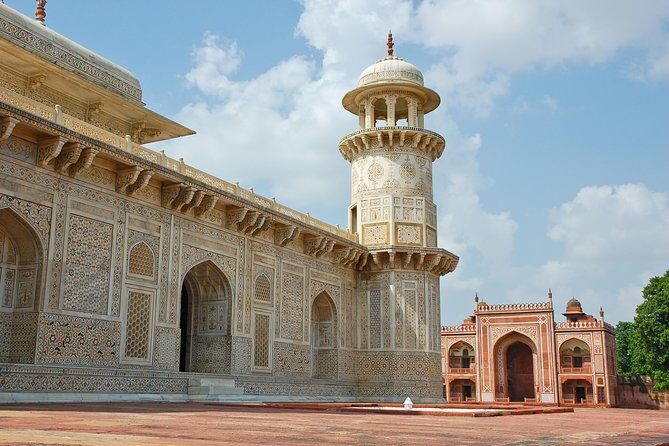
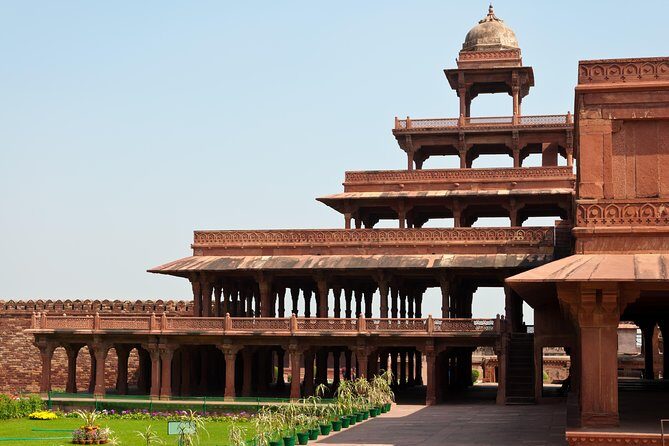
Then there’s Fatehpur Sikri, the 16th-century Mughal complex often called the Ghost Town. The name fits because much of it feels strangely quiet and expansive compared to the Taj area. It’s built from red sandstone, and once you’re there, you get that sense of a once-grand place now resting in the open air.
This is exactly the kind of stop that makes a customizable tour feel worth it. A fixed “Taj + Fort only” day can feel like Agra is about two buildings. Adding Fatehpur Sikri changes the whole story: you get the broader Mughal ambition, not just the crown jewel.
Practical advice: if you care about Fatehpur Sikri, ask your guide about timing. One guide route logic I like is chaining sights to reduce traffic stress—starting with Itimad-ud-Daulah, then Akbar’s Tomb, then Fatehpur Sikri. The goal is simple: fewer bottlenecks, more time in the sites.
Akbar’s Tomb and the Mughal garden-and-geometry vibe
Akbar’s Tomb covers a large area—around 119 acres—and it’s built with red sandstone and geometric patterns. Even if you don’t consider yourself a “tomb person,” it’s a sight that rewards a steady pace.
This is also a stop where a guide really helps. You’ll get the basic context (Akbar as a Mughal emperor, the tomb as a resting place), but more importantly you’ll get help reading the layout—how space, walls, and approach routes contribute to how the monument feels.
If you’re mixing big and small sites, Akbar’s Tomb works as the bridge. It’s substantial enough to feel like a major attraction, but it’s not as relentlessly photographed as the Taj, so you can slow down and enjoy it.
Dayalbagh and Guru ka Tal: the spiritual Agra side
Not every Agra day needs to be about marble and red sandstone. If you want something different, you can include Dayalbagh, known as the Garden of the Merciful. It’s more than a sightseeing spot—it’s described as a full-fledged colony where people stay together, so the experience is grounded in daily life.
Another optional site is Guru ka Tal, a Sikh pilgrimage connected to the 17th century, built in memory of the ninth Sikh Guru, Sri Guru Tegh Bahadur Ji. For me, the value of adding these places is balance. You’re seeing Agra as a living city, not just a stage for famous monuments.
The only real caution is mindset: these stops aren’t “photo backdrops” in the same way. Go in ready to be respectful, observe quietly, and let the experience feel more personal.
How the 8 hours tend to feel: pacing, walking, and heat
The tour runs about 8 hours (approx.), which is a realistic window for a strong highlights day. The trick is how the route is handled: too many sites can make you feel rushed. Too few sites and you’ll wonder where the day went.
Because it’s private, you can choose a reasonable mix. A practical approach is:
- Pick one “big draw” (Taj Mahal or Agra Fort)
- Add one or two supporting stops (Itimad-ud-Daulah, Akbar’s Tomb, Jama Masjid)
- Decide whether you want the longer-feeling detour (Fatehpur Sikri)
Also, plan around sun and walking. You’ll be spending time outdoors across multiple complexes. The tour helps with bottled water and umbrellas, but you’ll still want comfortable shoes and a good attitude toward heat.
One more timing note: Friday matters because of the Taj Mahal closure. If your schedule includes the Taj, build your day around a day when it’s open, or have backup monuments chosen ahead of time.
Price and value: what $35 buys you in real terms
At $35 per person, this tour is priced to be approachable—especially for what you get: pickup and drop-off, an A/C vehicle with chauffeur, and a live local guide. For many travelers, that combination is the value win. You pay to remove friction: figuring out transport, lining up guides, and trying to stitch together multiple sites alone.
What you should know about spending:
- Meals aren’t included, so budget for lunch or snacks.
- Tips aren’t included, so decide your comfort level.
- You’ll likely want to carry a little cash for small purchases if they’re part of your day.
Also, remember the tour is customizable. That’s value, but it comes with a simple responsibility: make sure your must-sees are clearly confirmed. When plans get fuzzy, that’s when days can feel rushed or incomplete.
Getting the most from your guide and your photo stops
The guide is a major part of the experience. In Agra, having someone local isn’t only about facts—it’s about navigation, explanations, and pacing.
You may encounter guides with excellent English and a talent for photography and practical photo direction. Some guides are also flexible about adjusting the day to match your interests, and that’s a real quality-of-life upgrade.
If you’re someone who likes structure, you’ll probably appreciate guides who walk you through the story step by step—especially at the Taj Mahal and Agra Fort, where the details can get technical fast. If you’re more relaxed and just want the best views, ask your guide where the viewpoints are and how to time photos without rushing.
One practical “heads up”: some schedules can include stops connected to demonstrations or shopping areas. If you don’t want that, tell your guide upfront and keep your day focused on monuments and gardens.
Should you book this Agra private city tour?
I think this is a strong choice if you want control. If you’re traveling solo, on a short schedule, or you dislike big group energy, a private customizable day with an A/C car and guide is exactly the kind of comfort that makes Agra feel manageable.
Book it if:
- Taj Mahal is on your list, but you want help with timing and navigation
- You want more than the usual two stops (like Fatehpur Sikri or Akbar’s Tomb)
- You value clear explanations and a guide who can shape the route
Skip or reconsider if:
- You need a very strict, pre-set monument list with no room for changes
- You hate any shopping or detours and want zero surprises—then confirm your preferred stops clearly before pickup
- Your day falls on a Friday and you specifically only want the Taj Mahal; you’ll need a plan B
FAQ
What’s included in the tour?
The tour includes pickup and drop-off to anywhere in Agra, sightseeing in a private air-conditioned car with chauffeur, a private live tour guide, bottled water, complimentary water bottles and umbrellas, and all parking fees, tolls, fuel, and taxes.
How long is the Agra private city tour?
It runs about 8 hours (approx.).
Is the tour private or shared?
It’s private. The experience is described as private and customizable to your interests.
What sites can I choose from?
The listed options you can customize include Taj Mahal, Agra Fort, Itimād-ud-Daulah’s Tomb (Baby Taj), Fatehpur Sikri, Guru ka Tal, Akbar’s Tomb, Jama Masjid, and Dayalbagh.
Is Taj Mahal open every day?
No. Taj Mahal is closed on Friday.
Do I get an air-conditioned vehicle?
Yes. You travel in a private air-conditioned vehicle with a chauffeur.
Are water and umbrellas provided?
Yes. Bottled water is included, and complimentary umbrellas are provided.
Are meals included?
No. Meals are not included, and you’ll need to plan your own food breaks.
Do I have to pay extra tips?
Tips and gratuities are not included.
Can I cancel for a refund?
Yes. Free cancellation is available if you cancel up to 24 hours in advance for a full refund. If you cancel less than 24 hours before the start time, the paid amount is not refunded.